The Jeep Trackhawk is not just another SUV. It’s a symbol of raw power and bold engineering. For many car fans, the Trackhawk is famous because it blends everyday comfort with supercar-like performance. But what year did this beast first appear? Let’s explore how the Trackhawk made history, what made it unique, and why it matters even today.
The Launch Of The Jeep Trackhawk
The Jeep Grand Cherokee Trackhawk was officially launched in 2017 as a 2018 model. This moment surprised the automotive world. Jeep, known for rugged off-road vehicles, suddenly brought a high-performance SUV that could compete with sports cars. The decision to use their popular Grand Cherokee as the base showed Jeep’s confidence in combining practicality with extreme speed.
The Trackhawk was unveiled at the 2017 New York International Auto Show. By mid-2017, customers could order the Trackhawk, and deliveries started later that year. Its arrival was a game-changer, as it was the first Jeep with the famous Hellcat supercharged V8 engine. This engine was already well-known among muscle car fans, but seeing it in an SUV shocked many people.
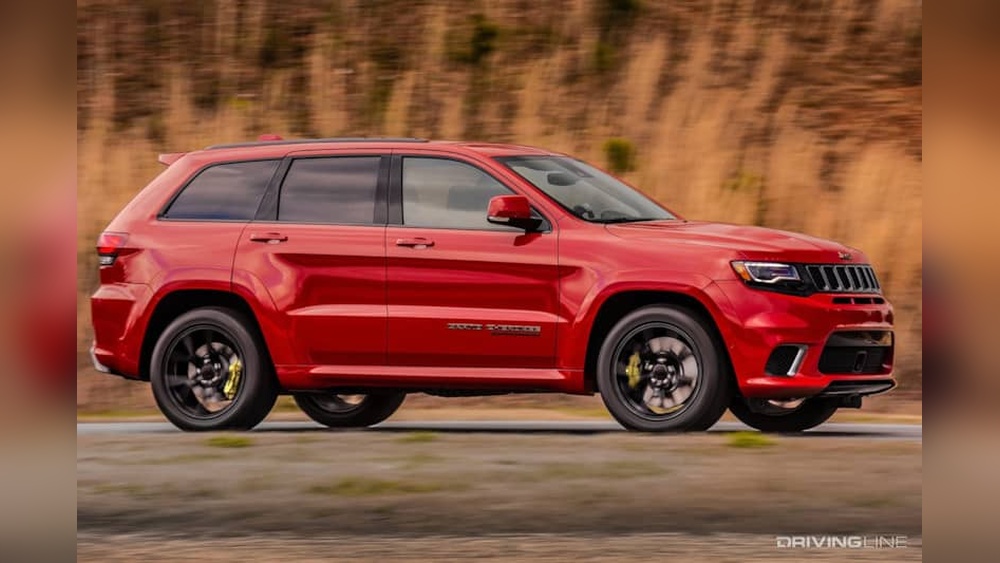
Before the Trackhawk, high-power SUVs were mostly from European brands. Jeep’s entry into this segment challenged ideas about what an American SUV could be.
The company showed that it could push boundaries and compete globally, not just on rough trails but also on city streets and highways.
What Made The Trackhawk Unique?
The Trackhawk stood out because of its incredible engine and advanced features. Here’s what made it special:
- Engine: The 6.2-liter supercharged V8, borrowed from the Dodge Hellcat, produced 707 horsepower and 645 lb-ft of torque. This engine was not only strong but also smooth and responsive, giving drivers instant acceleration at almost any speed.
- Performance: It could accelerate from 0-60 mph in just 3.5 seconds. This made it one of the fastest SUVs in the world. For context, many sports cars—like the Chevrolet Corvette or Porsche 911—have similar numbers, but the Trackhawk could carry five people and groceries just as easily.
- All-wheel drive: Unlike the rear-wheel-drive Hellcat cars, the Trackhawk had all-wheel drive for better grip. This system was specially tuned to handle the engine’s power, sending it to all four wheels and making launches quicker and safer, even in bad weather.
The Trackhawk also included upgrades in brakes, suspension, and cooling systems. Jeep engineers added Brembo brakes, adaptive suspension, and a special cooling system to handle the engine’s heat. These changes were necessary, as a supercharged V8 can get very hot during hard driving. The adaptive suspension adjusted itself depending on the road and driving style, helping the heavy SUV feel agile in corners.
One detail many people overlook is the reinforced drivetrain. Jeep upgraded parts like the driveshaft and axles to withstand the engine’s power, which is much higher than a normal Grand Cherokee.
These changes made the Trackhawk not only fast but also reliable for daily use.
Trackhawk Vs Other Performance Suvs
When the Trackhawk came out, it competed with other high-performance SUVs like the Porsche Cayenne Turbo and BMW X5 M. Here’s a quick comparison of the Trackhawk and its rivals:
| Model | Horsepower | 0-60 mph | Price (2018) |
|---|---|---|---|
| Jeep Trackhawk | 707 hp | 3.5 sec | $86,000 |
| Porsche Cayenne Turbo | 541 hp | 3.9 sec | $124,600 |
| BMW X5 M | 567 hp | 4.0 sec | $104,000 |
The Trackhawk offered more power at a lower price. This was a key reason it became popular among enthusiasts.
Many buyers saw it as the best “bang for the buck” unmatched performance without paying the premium for a German badge.
Another thing that set the Trackhawk apart was its straightforward, “muscle car” approach. While its rivals focused on luxury and handling, the Jeep’s main goal was raw speed and excitement.
It didn’t have as many high-end options as some competitors, but its focus on power won over many fans.
Key Features And Technologies
Jeep included several advanced technologies and comfort features in the Trackhawk. Let’s look at some main highlights:
- Uconnect Infotainment: The 8.4-inch touchscreen system offered navigation, Apple CarPlay, Android Auto, and performance pages to monitor speed and engine stats. These “Performance Pages” let drivers see real-time data like G-forces, lap timers, and horsepower output—a unique feature for an SUV.
- Safety Features: Included adaptive cruise control, blind-spot monitoring, and lane departure warning. These systems helped keep the powerful SUV safe and easy to drive, even for those not used to high-speed vehicles.
- Interior: The Trackhawk had leather seats, premium audio, and unique badging. The seats were designed to hold you in place during fast driving but were also comfortable for long trips. Some models offered suede or carbon-fiber trim for a sportier look.
A detail many new owners discover is the “Launch Control” feature. With this mode, the Trackhawk could make perfect, repeatable fast starts from a stop.
This was something usually found in sports cars, not family SUVs, and it made the Trackhawk especially fun at the drag strip.
These features made the Trackhawk suitable for daily driving, not just racing. You could drive to work, take the kids to school, and then surprise everyone at a stoplight with supercar performance.
Trackhawk Production Timeline
The Trackhawk was produced from 2017 to 2021. Jeep did not make major changes to the engine during its run, but there were small updates to technology and interior options.
| Year | Major Changes |
|---|---|
| 2018 | Launch year, full Hellcat engine, new tech features |
| 2019 | Minor updates, new interior colors |
| 2020 | Added more driver-assist features |
| 2021 | Final production year, limited updates |
After 2021, Jeep stopped making the Trackhawk. This was partly due to new emissions rules and changing demand.
The move toward hybrid and electric SUVs also made it harder to keep selling such a powerful gasoline engine. As a result, the Trackhawk became a “last of its kind” a high-horsepower SUV in a world moving toward greener cars.
Another interesting note is that some owners started collecting Trackhawks as investments, expecting their value to rise as high-power gas SUVs become rare.
Surprising Insights Most People Miss
- The Trackhawk’s engine was not just powerful, it was also reliable. Many supercharged engines can overheat or wear out quickly, but Jeep’s cooling and engineering made the Trackhawk suitable for daily use. Some owners have driven them for over 100,000 miles with only regular maintenance, showing that this SUV wasn’t just a “weekend toy.”
- Most buyers did not use the Trackhawk for off-roading, even though it’s a Jeep. Its ground clearance and tires were designed for speed and handling, not mud or rocks. In fact, its weight and power could make it tricky on rough trails. Instead, owners enjoyed it on highways, racetracks, or as a special weekend car.
Another lesser-known fact: insurance costs for the Trackhawk were often much higher than regular SUVs because of its speed and repair costs. This surprised some new owners who were expecting typical Jeep rates.

Why The Trackhawk Still Matters
Even after production ended, the Trackhawk’s legacy is strong. It proved that SUVs can be exciting, not just practical. Its mix of muscle car power and family-friendly features inspired other brands to make faster SUVs. Cars like the Lamborghini Urus and Aston Martin DBX followed, showing the world that high-speed SUVs were here to stay.
Used Trackhawks are still in demand. Prices remain high, and many owners treat them like collectibles.
The Trackhawk also shows how car makers push boundaries, blending different vehicle types to create something new.
For many car fans, the Trackhawk is a “future classic. ” Its combination of rarity, power, and bold design means it will be remembered long after quieter SUVs take over.
It also stands as a reminder that sometimes, breaking the rules leads to something truly special.
Frequently Asked Questions
When Was The Jeep Trackhawk First Released?
The Trackhawk was released in 2017 as a 2018 model. It was unveiled at the New York Auto Show, and sales began later that year.
What Engine Does The Trackhawk Use?
It uses the 6.2-liter supercharged V8 from the Dodge Hellcat, making 707 horsepower and 645 lb-ft of torque.
Is The Trackhawk Good For Off-roading?
Not really. The Trackhawk is built for speed and handling, not off-road driving.
Its tires and suspension are meant for pavement.
How Fast Can The Trackhawk Go?
It can go from 0-60 mph in 3.5 seconds. Its top speed is about 180 mph.
Is The Trackhawk Still Being Made?
No, Jeep stopped making the Trackhawk after the 2021 model year. It is now available only as a used vehicle.
The Trackhawk’s story is a reminder that sometimes, car makers surprise us. By mixing supercar performance with SUV comfort, Jeep created something special. If you want more details, you can visit the Wikipedia page for the Trackhawk. Whether you’re a car lover or just curious, the Trackhawk’s history is worth knowing.




















