Many Jeep Wrangler owners wonder about the right temperature for their engine. Knowing the correct range keeps your vehicle running smoothly and helps prevent serious engine damage.
If you’re new to Jeeps or just want to make sure your Wrangler is healthy, understanding normal operating temperature is a key part of ownership.
Let’s look at what temperature your Jeep Wrangler should run at, why it matters, and what to do if things seem off.
Normal Operating Temperature For A Jeep Wrangler
Most Jeep Wranglers are designed to run between 195°F and 220°F (about 90°C to 104°C). This range applies to both older models (like the TJ and YJ) and modern JK and JL models. The exact temperature may change a bit based on your engine size, year, and the type of thermostat used.
Here is a quick look at typical operating temperatures for different Wrangler generations:
Model Year | Engine Type | Normal Temp Range (°F) |
|---|---|---|
YJ (1987–1995) | 2.5L, 4.0L | 195–210 |
TJ (1997–2006) | 2.5L, 4.0L | 195–210 |
JK (2007–2018) | 3.6L, 3.8L | 200–220 |
JL (2018–present) | 2.0L, 3.6L, 3.0L Diesel | 200–220 |
It’s normal for your Wrangler’s temperature gauge to move a bit, especially in hot weather or heavy traffic. As long as it stays within this range, your engine is likely operating as it should.
Why Engine Temperature Matters
Your Jeep’s engine needs to stay warm enough for efficient combustion but not so hot that it causes damage. Modern engines are designed to run hotter than older engines, but going too far above the normal range can lead to:
Overheating, which can warp cylinder heads and damage gaskets
Reduced engine life from constant high heat
Poor fuel economy and performance issues
On the other hand, running too cool can also cause problems. If your thermostat is stuck open and the engine stays below normal temperature, your Wrangler may:
Use more fuel
Produce more emissions
Have weak heater performance
Factors That Affect Wrangler Engine Temperature
Several things can cause your Jeep Wrangler’s temperature to change. Some are normal, while others signal a potential problem.
1. Weather And Climate
High outside temperatures or heavy stop-and-go traffic can push the needle higher. In winter, the engine may take longer to reach normal temperature.
2. Towing Or Off-roading
Pulling a trailer or climbing steep trails puts extra load on the engine, raising the temperature. This is usually fine if it doesn’t go above 220°F.
3. Cooling System Health
A clogged radiator, failing water pump, or stuck thermostat can cause overheating. Coolant that’s old or too low can also make your engine run hotter.
4. Aftermarket Modifications
Larger tires, lift kits, or performance upgrades may increase engine stress. Some owners also install lower-temperature thermostats, but this can cause the engine to run too cool, hurting efficiency.
What To Do If Your Wrangler Runs Too Hot
If you notice your Jeep’s temperature gauge climbing above the normal range, act quickly:
Turn off the A/C and turn on the heater to help pull heat from the engine.
Pull over safely if the temperature keeps rising or you see steam.
Check coolant level after the engine cools. Never open a hot radiator cap.
Look for leaks under the vehicle or in the engine bay.
If the problem keeps happening, it’s best to have a mechanic check for issues like a faulty radiator, bad thermostat, or blown head gasket.
here Are Some Common Causes Of Overheating:
Cause | How to Check | Solution |
|---|---|---|
Low Coolant | Check reservoir | Refill with correct coolant |
Stuck Thermostat | Gauge stays cold or spikes | Replace thermostat |
Clogged Radiator | Visible debris, hot engine | Flush or replace radiator |
Broken Fan | No fan sound, overheating at idle | Repair or replace fan |
Tips To Keep Your Jeep Wrangler At The Right Temperature
Check coolant at least twice a year, before summer and winter.
Flush the cooling system every 3–5 years or as the manual suggests.
Inspect hoses and belts for cracks or leaks.
Replace the thermostat if you notice the engine warms up too slow or too fast.
Watch for small leaks: Even a tiny drip can lead to overheating over time.
Many beginners overlook the importance of using the correct coolant type. Mixing different types can cause sludge and blockages. Another tip: Always check the radiator cap. A weak cap can let pressure escape, causing overheating even if everything else looks fine.
How To Read Your Wrangler’s Temperature Gauge
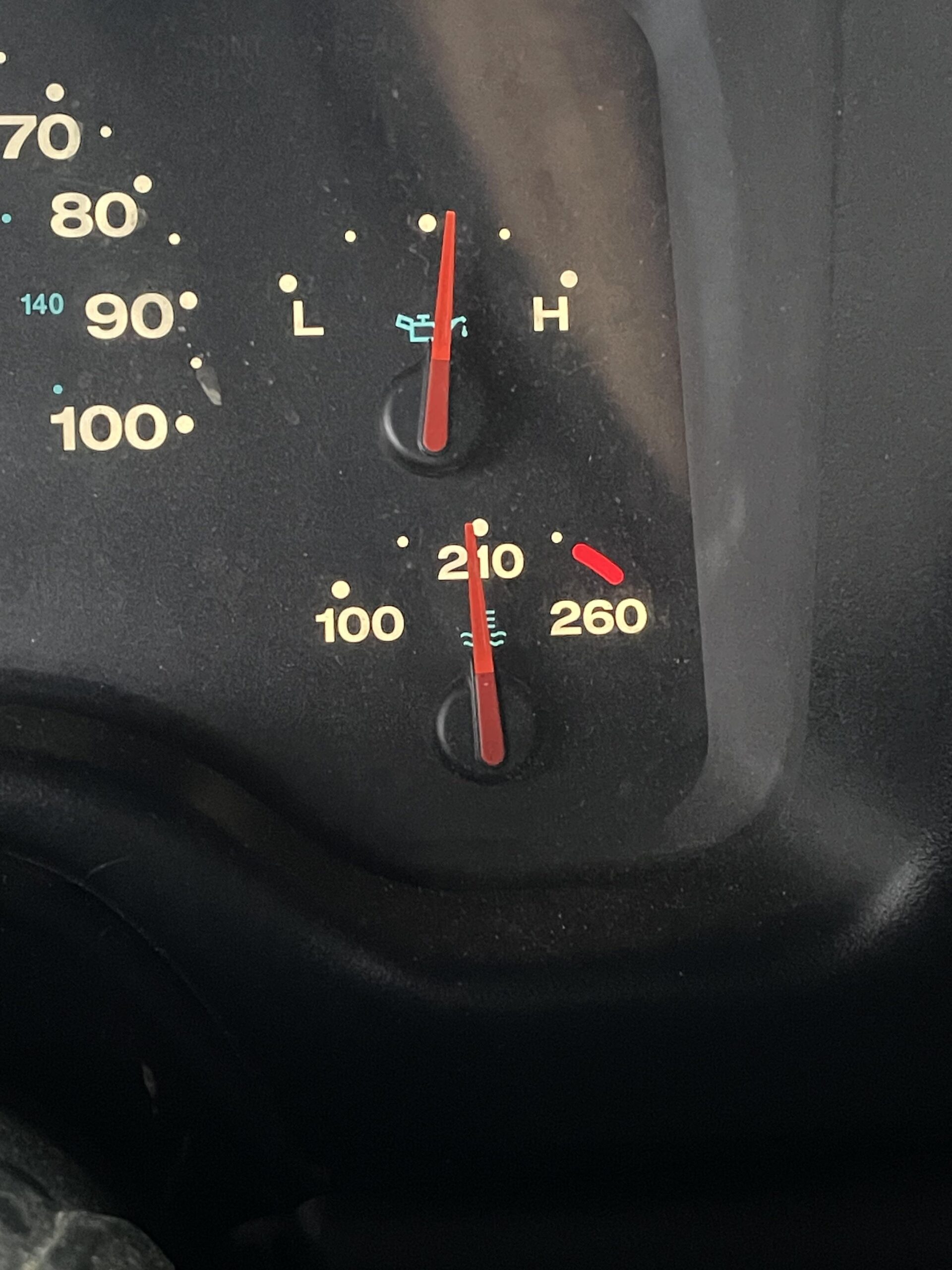
Most Jeep Wranglers have a dashboard temperature gauge. The needle should stay near the center when driving.
If your Jeep shows digital readouts, look for numbers between 195°F and 220°F.
here’s A Quick Guide To Reading Your Gauge:
Gauge Reading | What It Means |
|---|---|
Below 195°F | Engine cold or thermostat stuck open |
195–220°F | Normal range |
Above 220°F | Potential overheating |
If your Wrangler’s gauge often goes past the normal range, don’t ignore it. Long-term overheating can lead to expensive engine repairs.
What Is The Ideal Temperature For A Jeep Wrangler?
The ideal temperature for most Jeep Wranglers is 195°F to 220°F. Some slight variation is normal, but staying in this range means your cooling system is working well.
Can I Drive My Wrangler If It’s Running Hotter Than Normal?
You should avoid driving if your Wrangler is running above 220°F for long periods. Heat can damage engine parts. If you can’t fix the issue right away, drive only short distances and keep a close eye on the gauge.
How Can I Lower My Wrangler’s Engine Temperature?
Check coolant level, make sure the radiator and fan are clean, and replace the thermostat if it’s old. Installing an auxiliary transmission cooler can also help if you tow often. For more details, see Coolant.
Is It Normal For Temperature To Rise In Traffic?
Yes, it is normal for engine temperature to go up in heavy traffic, especially with the A/C on. As long as it stays under 220°F and returns to normal when moving, it’s usually not a problem.
Should I Use A Lower-temp Thermostat In My Jeep?
Some owners try lower-temp thermostats thinking it will help cooling. In most cases, this is not needed and can make the engine run too cold, hurting fuel efficiency and emissions.
Stick with the factory-recommended thermostat unless you have special needs.
Keeping your Jeep Wrangler at the right temperature is simple if you follow these tips. Regular checks and quick action if something looks wrong will help you avoid costly repairs and keep your Jeep running strong for years.