The Jeep Wrangler stands out as an icon of off-road adventure and rugged style. But for many buyers and owners, one question always comes up: What mileage does a Jeep Wrangler get?
The answer is not as simple as one number. It depends on the model, engine, driving conditions, and even how you drive.
In this guide, you’ll discover real-world fuel economy numbers, what affects them, and how to make sense of the data—so you know exactly what to expect before you hit the road.
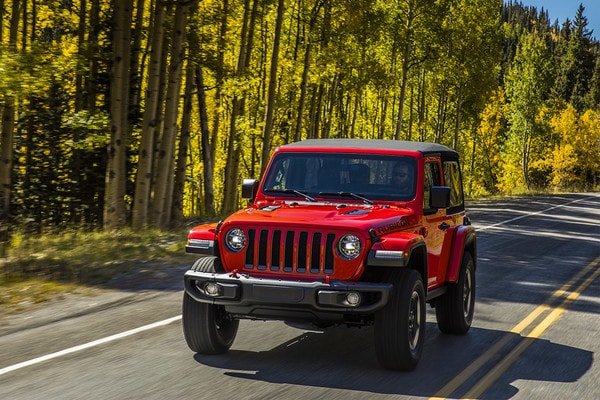
Jeep Wrangler Mileage By Model And Engine
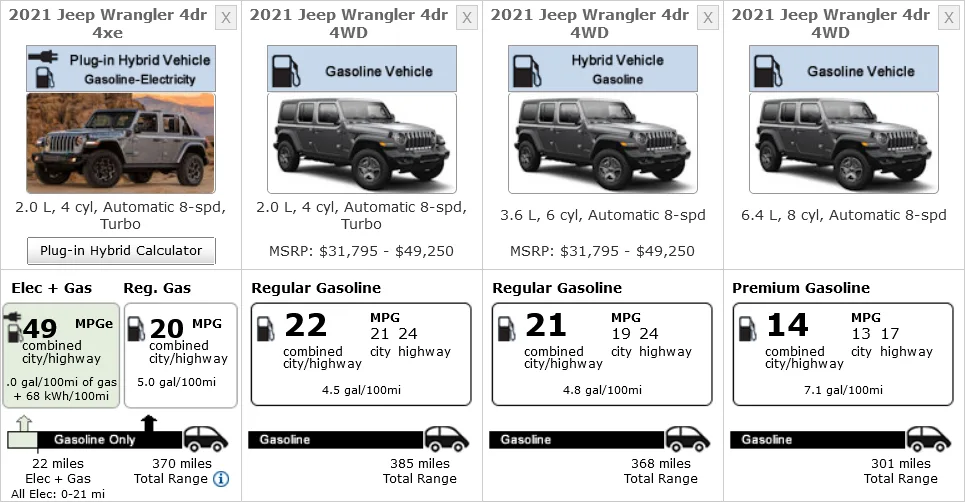
Jeep Wranglers come in different shapes and sizes, with several engines to choose from. Each combination gives a different fuel economy.
Let’s break down the numbers for the most popular models.
| Model Year | Engine | Transmission | MPG (City) | MPG (Highway) | MPG (Combined) |
|---|---|---|---|---|---|
| 2023 | 3.6L V6 (Gas) | Automatic | 19 | 24 | 21 |
| 2023 | 2.0L Turbo (Gas) | Automatic | 21 | 24 | 22 |
| 2023 | 3.0L EcoDiesel | Automatic | 22 | 29 | 25 |
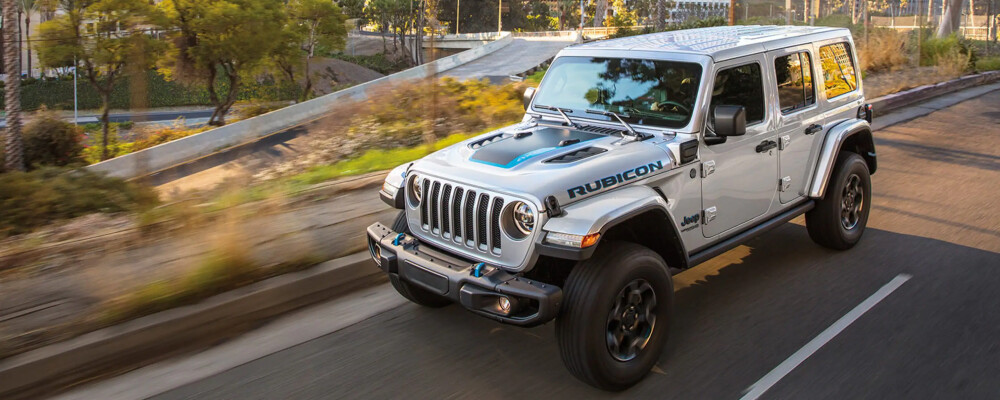
| 2023 | 4xe Plug-in Hybrid | Automatic | 49 MPGe* | Unlimited (Electric + Gas) | 20 (Gas only) |
*MPGe (Miles Per Gallon Equivalent) means the hybrid can run on electric power for up to 21 miles before switching to gasoline.
Key insight: The EcoDiesel and 2.0L Turbo engines offer better fuel efficiency than the classic V6. The 4xe hybrid is most efficient for short, electric-powered trips.
Real-world Jeep Wrangler Gas Mileage
Official numbers are helpful, but the real world is less perfect. Owners report that actual mileage can be a few miles per gallon lower than what’s on the sticker, especially for city driving.
| Condition | Reported MPG Range | Comments |
|---|---|---|
| Highway (steady speed) | 20-27 | Best-case scenario, light load |
| City (stop-and-go) | 15-20 | Frequent stops, short trips |
| Off-road | 10-16 | Low speeds, rough terrain |
Non-obvious insight: Many Wrangler owners add larger tires, roof racks, or lift kits. These changes can cut fuel economy by 2–5 MPG or more, especially at higher speeds.
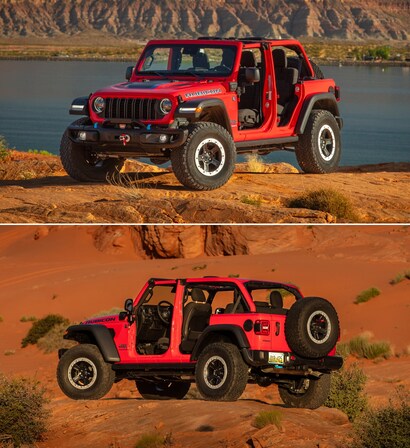
What Affects Jeep Wrangler Mileage?
Several factors play a role in how far your Wrangler goes on a gallon of gas.
1. Engine And Transmission
Turbo and diesel engines usually use less fuel. Automatic transmissions can sometimes be more efficient than manuals in newer models.
2. Driving Style
Fast acceleration, heavy braking, and high speeds all lower MPG. Smooth, steady driving helps.
3. Weight And Accessories
Heavy bumpers, winches, or carrying gear on the roof can increase drag and weight. More weight means lower mileage.
4. Tire Size And Type
Off-road tires and bigger wheels look cool but add rolling resistance. This means the engine works harder and uses more fuel.
5. Weather And Terrain
Cold weather, strong winds, and mountain driving all hurt fuel economy. Off-roading uses much more fuel than driving on pavement.
Practical tip: If you want the best Jeep Wrangler gas mileage, keep your tires at the right pressure and avoid unnecessary weight.
How Jeep Wrangler Mileage Compares
It’s helpful to compare the Wrangler to other SUVs. While it’s not the most fuel-efficient in its class, its off-road ability is unmatched.
| Vehicle | Engine | Combined MPG | Notes |
|---|---|---|---|
| Jeep Wrangler (V6) | 3.6L Gas | 21 | Best for off-road |
| Ford Bronco (4-cyl) | 2.3L Turbo | 20 | Similar size |
| Toyota 4Runner | 4.0L V6 | 17 | More power, less efficient |
| Subaru Outback | 2.5L 4-cyl | 29 | More efficient, less capable off-road |
Non-obvious insight: While many SUVs beat the Wrangler in fuel economy, few can match its combination of removable roof, true 4WD, and aftermarket support.
Tips To Get Better Mileage In Your Jeep Wrangler
If you want to improve your Wrangler’s gas mileage, these strategies can help:
- Drive at moderate speeds. Wind resistance increases a lot above 60 mph.
- Avoid carrying heavy or bulky items unless you need them.
- Use cruise control when possible for steady speed.
- Keep tires inflated to the recommended pressure.
- Remove roof racks or light bars when not in use.
- Choose all-terrain tires over aggressive mud tires for daily driving.
Even small changes can add 1 2 MPG over time.
Is The Jeep Wrangler Worth It Despite The Mileage?
If fuel economy is your top priority, the Wrangler might not be your first choice. But if you value off-road ability, durability, and a strong community, it’s hard to beat. Many owners accept the trade-off. They know that few other vehicles can climb rocks, cross rivers, and still drive to work every day.
Before you buy, ask yourself how much you’ll be off-roading, and how much you care about saving on gas. For many, the adventure is worth a few extra fill-ups.
Frequently Asked Questions
What Is The Average Mpg Of A Jeep Wrangler?
Most recent Jeep Wranglers get around 20–22 MPG combined, depending on the engine and model. Diesel and hybrid models can be higher, while older or modified models might be lower.
Does Lifting A Jeep Wrangler Reduce Gas Mileage?
Yes, adding a lift kit or bigger tires usually reduces fuel economy. More weight and air resistance make the engine work harder.
Which Jeep Wrangler Engine Is Best For Fuel Economy?
The 3.0L EcoDiesel and 2.0L Turbo engines are the most fuel-efficient gas and diesel choices. The 4xe plug-in hybrid is best for short trips with regular charging.
How Far Can A Jeep Wrangler Go On A Full Tank?
A standard Wrangler has a gas tank of about 17–21 gallons. With average MPG, you can expect 350–400 miles per tank on the highway, less in the city or off-road.
Where Can I Find Official Fuel Economy Ratings For Jeep Wranglers?
For the most accurate and up-to-date numbers, visit the U.S. Department of Energy’s Fuel Economy site.
The Jeep Wrangler may not win fuel economy contests, but its unique blend of character and capability keeps drivers coming back. With the right engine choice and a few smart habits, you can enjoy the ride and keep fuel stops to a minimum.



















