New Wheels For Your Jeep Tj: A Comprehensive Guide To Upgrades
The Jeep TJ, produced from 1997 to 2006, is a legendary off-road machine. Its solid front and rear axles, coil spring suspension, and classic body-on-frame design make it a favorite for adventurers.
One of the most impactful upgrades you can make to a TJ is fitting it with new wheels. Wheels aren't just about looks; they directly affect your Jeep's performance, handling, and capability, both on and off the pavement.
Choosing the right wheels can transform your TJ, making it better suited for your specific needs, whether you're tackling rugged trails, cruising down the highway, or aiming for a unique aesthetic.
This guide will walk you through everything you need to know about selecting new wheels for your Jeep TJ. We’ll cover essential specifications like bolt pattern, backspacing, offset, and diameter, discuss different materials and styles, and explore how wheel choices impact tire fitment and overall performance.
By the end, you’ll have a clear understanding of what to look for to give your TJ the perfect set of new shoes.
Understanding Jeep Tj Wheel Specifications
Before you start browsing flashy designs, it’s crucial to understand the technical details that define a wheel’s fitment and function on your Jeep TJ. Getting these right ensures your new wheels will bolt on correctly and perform as expected.
Bolt Pattern: The Foundation Of Fitment
The bolt pattern is the most fundamental aspect of wheel fitment. It describes the diameter of the circle on which the lug holes are located. For the Jeep TJ, the standard bolt pattern is 5×4.5 inches (or 5×114.3mm). This means there are five lug nuts evenly spaced around a 4.5-inch diameter circle.
It's essential to match this bolt pattern precisely. While adapters exist to change bolt patterns, they add complexity, potential failure points, and can alter your Jeep's suspension geometry.
Sticking to the factory 5×4. 5 pattern is almost always the best approach for TJ owners.
Always double-check your TJ’s specific bolt pattern, though this is highly consistent across the TJ generation.
Backspacing And Offset: Crucial For Tire Clearance
Backspacing and offset are two related measurements that determine how a wheel sits in relation to your Jeep’s hub and suspension components. They are critical for ensuring your new wheels and tires don’t rub against fenders, suspension arms, brake calipers, or other parts.
- Backspacing: This is measured from the back of the wheel (the mounting surface that sits against the hub) to the outer lip of the wheel. A lower backspacing value means the wheel sits further out from the hub assembly. This is generally desirable when fitting larger tires, as it moves the tire away from suspension components. For a TJ, common backspacing values for aftermarket wheels range from 3.75 inches to 5.5 inches. A typical recommendation for TJs, especially those running 31-33 inch tires without significant suspension modification, is around 4 inches of backspacing.
- Offset: This measures the distance from the wheel’s centerline to the mounting surface.
- A negative offset means the mounting surface is closer to the outside of the wheel. This pushes the wheel outward, similar to low backspacing.
- A positive offset means the mounting surface is closer to the inside of the wheel, tucking the wheel in.
- A zero offset means the mounting surface is exactly at the wheel’s centerline.
The relationship between backspacing and offset can be confusing, but the key takeaway is that lower backspacing and more negative offset generally push the wheel and tire outward. This is often necessary to clear larger tires and suspension components, especially when lifting a TJ.
Pro Tip: When choosing wheels, consider the tire size you intend to run. A wheel with less backspacing (e.g., 3.75 inches) is often preferred for larger tires (33 inches and up) to maximize clearance. However, too little backspacing can cause rubbing on fender flares or body panels at the front of the wheel well.
Wheel Diameter: Balancing Style And Function
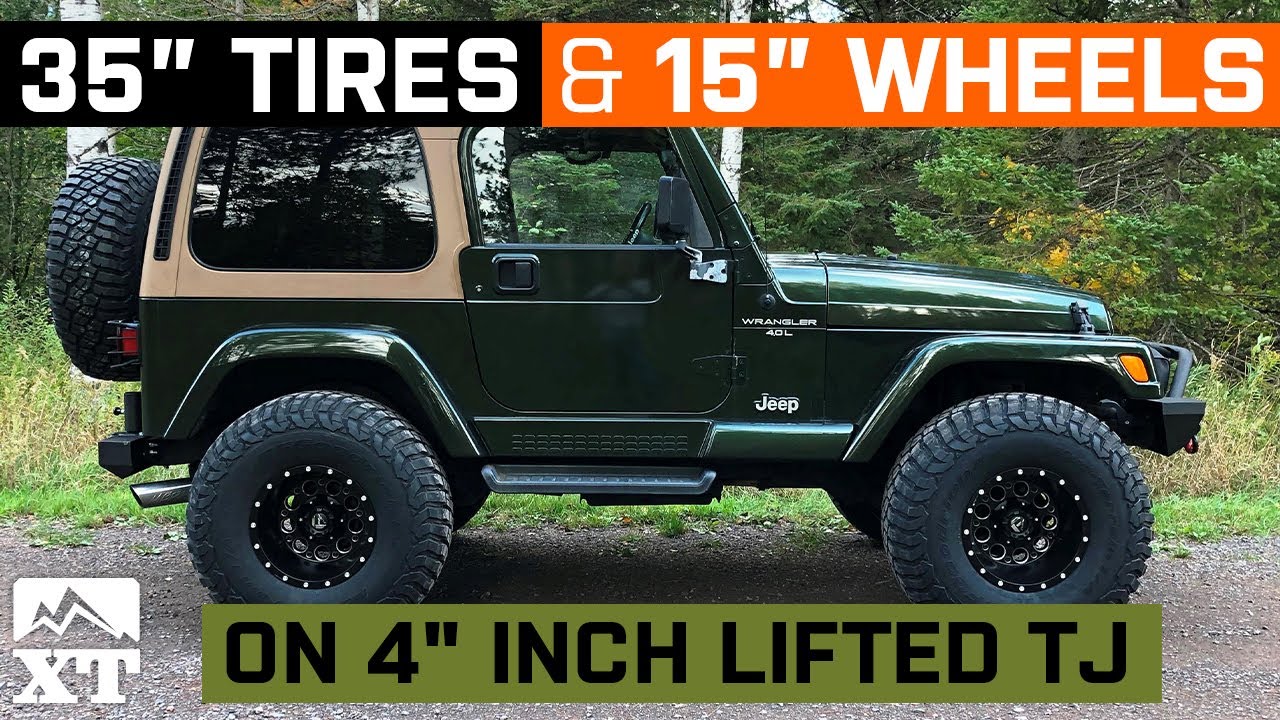
Wheel diameter, measured in inches, refers to the overall size of the wheel. Common diameters for Jeep TJs include 15, 16, 17, and even 18 inches.
- 15-inch wheels: These are the most traditional choice for Jeep TJs, especially for off-roading. They allow for a taller sidewall on the tire. Taller tire sidewalls offer several advantages:
- Better ride comfort: They act as a cushion, absorbing bumps and vibrations.
- Improved off-road performance: Lower tire pressures can be used for better traction and flexibility on rough terrain without risking damage to the wheel rim.
- Enhanced appearance: Many enthusiasts prefer the classic look of a 15-inch wheel with a substantial tire.
- Cost-effectiveness: Tires for 15-inch wheels are often less expensive than those for larger diameters.
The main limitation is brake clearance. Larger aftermarket brake systems might not fit inside a 15-inch wheel.
- 16-inch and 17-inch wheels: These offer a compromise. They allow for slightly lower profile tires (shorter sidewalls) which can provide sharper on-road handling and reduced tire flex during aggressive cornering. They also offer more clearance for larger brake components. Off-road, the shorter sidewall is more susceptible to damage from impacts.
- 18-inch wheels and larger: These are generally less common and less practical for serious off-roading on a TJ. They result in very short tire sidewalls, severely limiting off-road performance and ride comfort. They are typically chosen for a street-focused or show Jeep.
For most Jeep TJ owners looking for a balance of off-road capability and on-road manners, 15-inch or 16-inch wheels are the sweet spot.
Material Matters: Choosing The Right Wheel Construction
Wheels are made from various materials, each with its own pros and cons regarding weight, strength, durability, and cost.
Steel Wheels: The Workhorse
Steel wheels are the most traditional and often the most affordable option for Jeep TJs.
- Pros:
- Durability: Steel is incredibly strong and can withstand significant impacts. When bent or dented on the trail, they can often be hammered back into shape.
- Cost: They are typically the least expensive type of wheel.
- Repairability: Minor damage can often be repaired trailside or by a local shop.
- Cons:
- Weight: Steel wheels are significantly heavier than alloy wheels. This added unsprung weight negatively impacts acceleration, braking, fuel economy, and suspension performance.
- Corrosion: They are prone to rust, especially in areas with harsh winters or coastal environments, unless properly coated or maintained.
- Limited Designs: They generally come in fewer aesthetic styles compared to alloy wheels.
Steel wheels are a popular choice for hardcore off-roaders who prioritize ruggedness and repairability over weight savings.
Alloy Wheels: Lightweight And Stylish
Alloy wheels are made from a combination of aluminum and other metals. They are the most popular choice for aftermarket upgrades due to their advantages in weight and aesthetics.
- Pros:
- Weight Savings: Alloy wheels are considerably lighter than steel wheels. This reduces unsprung weight, leading to improved acceleration, braking, handling, and fuel efficiency. Lighter wheels also allow the suspension to react more quickly to terrain.
- Aesthetics: They are available in a vast array of designs, finishes, and colors, allowing for significant customization of your Jeep’s look.
- Corrosion Resistance: Generally more resistant to rust and corrosion than basic steel wheels, though finishes can still be damaged.
- Cons:
- Cost: Alloy wheels are typically more expensive than steel wheels.
- Brittleness: While strong, some alloys can be more prone to cracking or shattering upon severe impact compared to the bending of steel. However, modern manufacturing techniques have greatly improved their durability.
- Repair Difficulty: Significant damage like cracks or severe bends can be difficult or impossible to repair, often requiring replacement.
Most TJ owners opt for alloy wheels for their blend of performance benefits and styling options.
Beadlock Wheels: For Serious Off-roaders
Beadlock wheels are a specialized type of wheel designed to physically clamp the tire bead to the wheel rim. This is crucial for extreme off-roading where very low tire pressures are used.
- Function: By clamping the bead, beadlock wheels prevent the tire from “unseating” or coming off the rim when running extremely low pressures (e.g., 5-10 PSI) for maximum traction on rocks and sand.
- Types:
- Internal Beadlocks: These are integrated into the wheel’s structure and are generally more complex and expensive.
- External Beadlocks: These use a ring bolted around the outside of the wheel to clamp the tire bead. They are more common for aftermarket applications.
- Pros:
- Tire Security: Absolutely essential for preventing tire de-beading at very low pressures.
- Maximum Traction: Enables running the lowest possible tire pressures for superior grip.
- Cons:
- Cost: Significantly more expensive than standard wheels.
- Weight: Can be heavier due to the added clamping mechanism.
- Legality: In some regions, external beadlock wheels may not be street legal due to safety regulations. Always check local laws.
- Maintenance: Require more maintenance to ensure the bolts are tight and seals are in good condition.
Beadlock wheels are a niche product for dedicated rock crawlers and extreme off-road enthusiasts.
Popular Wheel Styles And Designs For Jeep Tjs
The aesthetic appeal of new wheels is a major driving factor for many TJ owners. Here are some popular styles that complement the TJ’s rugged image:
Classic 5-spoke Designs
These timeless designs offer a clean, strong look that never goes out of style. They are available in various finishes, from matte black to polished aluminum.
Their open design also aids in brake cooling.
Multi-spoke And “x-spoke” Designs
Offering a more intricate and aggressive look, multi-spoke wheels can add a modern flair. Many feature “X” patterns or complex spoke arrangements that highlight the wheel’s construction and can make a Jeep stand out.
Beadlock-style Wheels (non-beadlock)
Many manufacturers offer wheels that mimic the aggressive look of true beadlock wheels, complete with a simulated beadlock ring around the outer edge. These provide the rugged aesthetic without the cost and complexity of actual beadlocks, making them a popular choice for daily drivers and moderate off-road use.
Simplicity And Strength: Plain Or “rock Crawler” Style
These wheels often feature a simple, robust design, sometimes with a thick outer lip or minimal spokes. They emphasize strength and durability, often resembling classic steel wheels but made from lighter alloys.
They are practical and look the part for a trail-ready Jeep.

Tire And Wheel Size Combinations: Finding The Right Fit
The size of your wheels dictates the size of the tires you can fit, and vice-versa. This combination is crucial for performance and clearance.
Common Tire Sizes For Jeep Tjs
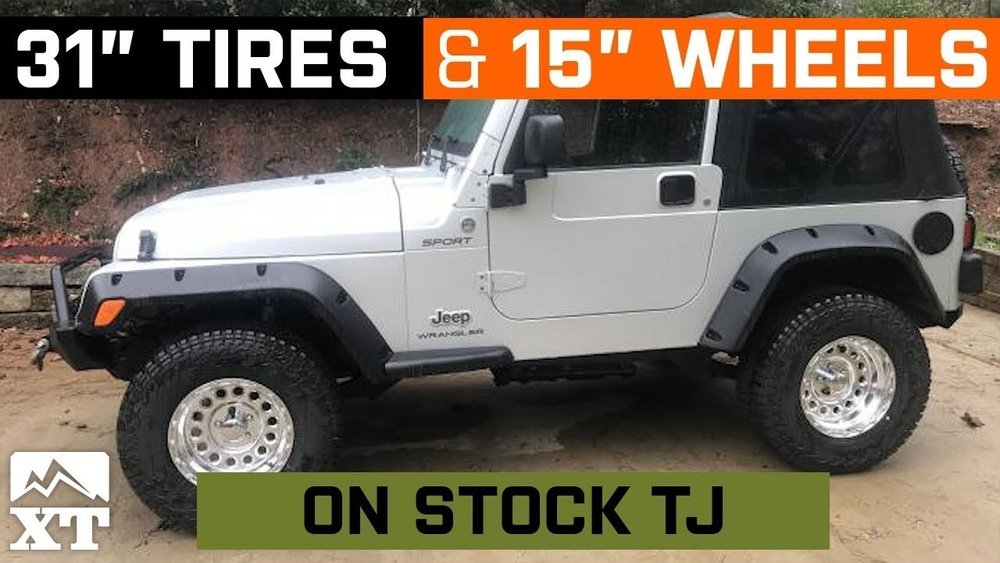
- 30-31 inches: These are often considered the “stock” upgrade size for TJs, fitting with minimal or no modification, especially with a 2-inch lift.
- 32-33 inches: This is a very popular size for TJs, offering a significant increase in ground clearance and off-road capability. It typically requires at least a 2-3 inch suspension lift and possibly some minor fender trimming or a “high-line fender” conversion.
- 35 inches: This is a common target for serious off-roaders. It requires significant modifications, including a suspension lift (4+ inches), potential suspension geometry correction (e.g., adjustable control arms), fender cutting or high-line fenders, and often axle upgrades.
- 37 inches and larger: These are for extreme builds and demand substantial modifications, including reinforced axles (e.g., Dana 44 or Ford 9-inch), significant suspension articulation, and extensive bodywork.
Wheel Size And Tire Sidewall Height
- 15-inch wheels: Best paired with tires that have taller sidewalls (e.g., 31″, 32″, 33″). This provides a better ride and more flex off-road.
- 16-inch wheels: Can accommodate slightly shorter sidewalls, offering a balance. Often paired with tires in the 32″-35″ range.
- 17-inch wheels: Typically used with shorter sidewalls, often seen on Jeeps prioritizing on-road handling or those running 35″+ tires where the sidewall height becomes less critical relative to the overall tire diameter.
Calculating Required Backspacing For Larger Tires
As you move to larger tires (33" and up), you'll likely need wheels with less backspacing (e. g.
, 3. 75") to clear the Jeep's suspension components.
However, excessively low backspacing can cause the tire to rub on the fenders or fender flares.
Example: A 33×12.50R15 tire on a 15×8 wheel with 3.75″ backspacing will stick out further than the same tire on a 15×8 wheel with 4.5″ backspacing. The former offers more suspension clearance but might require fender modification, while the latter tucks in more but might rub on the control arms or frame at full steering lock.
Performance Implications Of New Wheels
Your choice of wheels impacts more than just the look of your TJ. It influences its performance in several key areas.
Unsprung weight refers to the mass of components not supported by the suspension, including wheels, tires, brakes, and parts of the axles. Reducing unsprung weight is a significant performance enhancement.
- Benefits of Lower Unsprung Weight:
- Improved Acceleration: Less mass for the engine to move.
- Better Braking: Less rotational inertia to overcome.
- Enhanced Suspension Response: The suspension can react more quickly to bumps and imperfections in the terrain, leading to better traction and a smoother ride.
- Increased Fuel Economy: Less energy required to get the vehicle moving.
Lighter alloy wheels, especially when paired with lighter tires, can make a noticeable difference in how your TJ drives and performs.