The Jeep TJ Wrangler is a legendary off-road vehicle, known for its iconic design and trail-conquering capabilities. Among the many modifications enthusiasts undertake, fitting larger tires is one of the most common and impactful.
When it comes to tire sizes for a TJ, the term "Mammoth Boulder Wheels" often comes up in discussions about extreme builds. This phrase generally refers to significantly oversized tires, pushing the limits of what a Jeep TJ can handle without extensive modifications.
Choosing and installing these oversized tires on a Jeep TJ isn’t a simple bolt-on affair. It requires careful consideration of various factors, including suspension, gearing, axle strength, and body modifications. This article will explore what “Mammoth Boulder Wheels” typically means in the context of a Jeep TJ, the challenges involved, the necessary modifications, and how to achieve this aggressive look and capability while maintaining a degree of practicality and reliability. We’ll break down the components needed, the potential pitfalls, and offer insights for those looking to equip their TJ with truly massive tires.
Understanding “mammoth Boulder Wheels” For A Jeep Tj
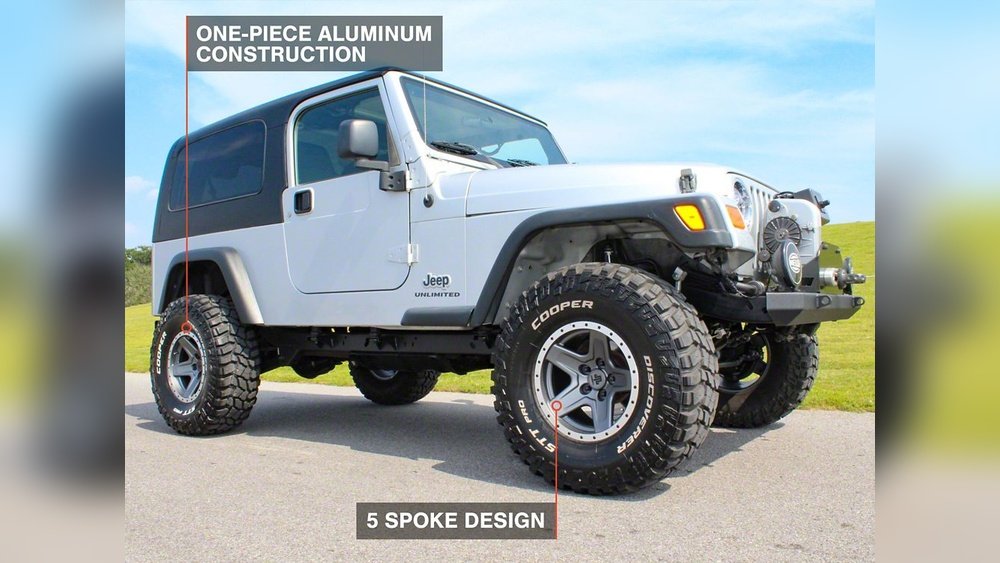
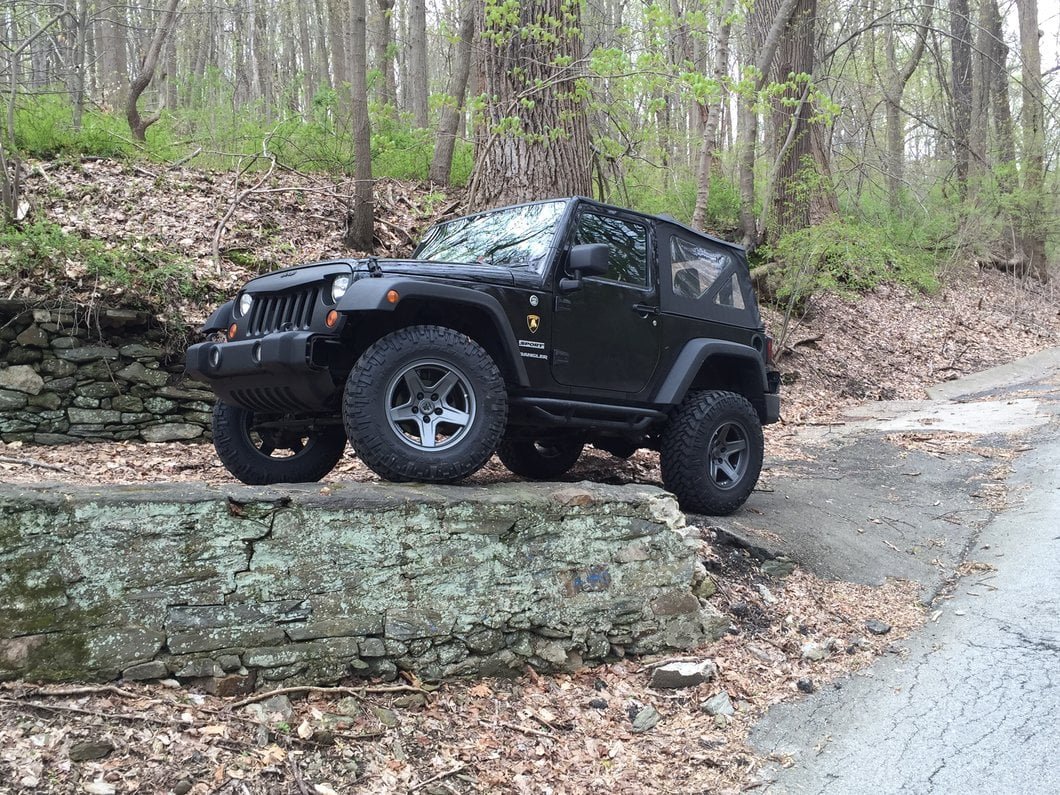
When off-roaders talk about “Mammoth Boulder Wheels” on a Jeep TJ, they are usually referring to tires that are significantly larger than stock. For a TJ Wrangler, stock tires are typically around 30-31 inches in diameter. “Mammoth” in this context often implies tires in the 35-inch to 40-inch range, and sometimes even larger for highly specialized builds. These aren’t just slightly bigger tires; they represent a substantial increase in size, demanding more from the vehicle’s drivetrain and suspension.
The term itself is informal and evocative, painting a picture of tires so large they could roll over boulders. It signifies a commitment to extreme off-road performance, where ground clearance and the ability to absorb large obstacles are paramount.
These tire sizes are not chosen for fuel efficiency or daily driving comfort; they are selected for their ability to tackle the toughest terrain.
Tire Size Considerations
The diameter of the tire is the most critical factor. A larger diameter tire provides several advantages off-road:
- Increased Ground Clearance: The most obvious benefit. A bigger tire lifts the Jeep’s axles and body higher off the ground, allowing it to clear larger rocks, logs, and other trail obstacles.
- Improved Obstacle Negotiation: Larger tires have a greater ability to “roll over” obstacles rather than getting high-centered. Their larger contact patch can also provide better traction on uneven surfaces.
- Aggressive Stance: For many, the imposing look of massive tires is a significant part of the appeal.
However, larger tires also come with drawbacks that must be addressed:
- Increased Stress on Drivetrain: Larger tires have more mass and require more torque to turn. This puts significant strain on the axles, driveshafts, transfer case, and engine.
- Reduced Fuel Economy: More rolling resistance and a heavier tire mean the engine has to work harder, leading to lower MPG.
- Impact on Handling: Larger tires can make steering heavier and affect the vehicle’s on-road handling characteristics, potentially making it feel less responsive.
- Rubbing Issues: Without proper modifications, oversized tires will rub against the fenders, control arms, and frame, especially when the suspension is articulated.
Essential Modifications For Mammoth Tires
Fitting tires larger than 33 inches on a Jeep TJ typically requires more than just a suspension lift. A comprehensive approach is needed to ensure the vehicle is not only capable but also reliable.
Suspension Lift Kits
A suspension lift kit is the most fundamental modification. For tires in the 35-37 inch range, a 4-inch suspension lift is often the minimum starting point. For 37-inch tires and larger, 5-6 inches or more of suspension lift might be necessary. These kits typically include:
- New Springs: Longer coil springs to raise the body.
- Shock Absorbers: Longer shocks designed to work with the new spring height.
- Brake Lines: Extended stainless steel braided brake lines to prevent them from stretching or breaking.
- Track Bar Relocation Brackets or Adjustable Track Bars: To recenter the axles under the frame after lifting, maintaining proper steering geometry.
- Transfer Case Drop Kit: To correct the angle of the transfer case output shaft and reduce vibrations.
Pro Tip: While a simple body lift can create space for larger tires, it doesn’t improve suspension articulation or ground clearance under the axles. For true off-road performance with mammoth tires, a suspension lift is far more beneficial.
Body And Fender Modifications
Even with a significant suspension lift, larger tires can still rub against the Jeep’s body, especially at full suspension flex. Common modifications include:
- Fender Trimming: Cutting away portions of the fenders to provide more clearance. This is a common and effective way to gain a few extra inches of tire clearance without drastically altering the suspension.
- High-Fender Conversion: Replacing the stock fenders with aftermarket units designed to provide more tire clearance. This often involves relocating the turn signals and side markers.
- Bumper Modifications: Aftermarket bumpers, especially stubby or high-clearance designs, can offer more tire clearance at the front and rear corners of the Jeep.
- Corner Guards: These metal plates protect the rear quarter panels and can also be shaped to allow for more tire clearance.
- Shackle Flip Kits: For leaf-sprung vehicles (not typically TJs, but relevant for some Jeep models), these kits can lift the rear by relocating the shackle pivot point. For TJs, this is usually part of a suspension system upgrade.
Re-gearing The Axles
One of the most critical, yet often overlooked, modifications for large tires is re-gearing the axles. The factory gear ratios in a TJ Wrangler are designed for stock or slightly larger tires. When you significantly increase the tire diameter, the effective gear ratio becomes much “taller” (numerically lower).
- Impact on Performance: This makes the Jeep feel sluggish, significantly reduces acceleration, and puts immense strain on the engine and transmission. Hill climbing becomes difficult, and the Jeep may struggle to maintain speed on the highway.
- Common Gear Ratios for Large Tires:
- 35-inch tires: Often paired with 4.56 or 4.88 gear ratios.
- 37-inch tires: Typically require 4.88 or even 5.13 gear ratios.
- 40-inch tires: Often necessitate 5.38 or higher (numerically lower) gear ratios.
The correct gear ratio depends on the engine (4-cylinder vs. 6-cylinder), transmission (manual vs.
automatic), and intended use. An automatic transmission generally requires a numerically lower gear ratio than a manual transmission for the same tire size to compensate for the torque converter's inherent slippage.
Axle Strength And Upgrades
The factory Dana 30 front axle and Dana 35 rear axle found in most Jeep TJs are not designed for the stresses of significantly oversized tires, especially when combined with aggressive off-road driving.
- Dana 30 (Front): This axle is generally considered adequate for up to 33-inch tires. With 35-inch tires, it becomes a weak point, especially if lockers are installed or hard wheeling is performed. Upgrades like chromoly axle shafts and stronger universal joints (U-joints) are highly recommended. For 37-inch tires and beyond, a Dana 44 axle (often sourced from a Rubicon TJ or aftermarket) or a stronger aftermarket axle like a Ford Dana 50/60 or an aftermarket Dana 60 becomes a necessity.
- Dana 35 (Rear): This is the Achilles’ heel of many non-Rubicon TJs. It is prone to bending C-clips and breaking axle shafts with larger tires and aggressive use. If you plan on running 35-inch tires or larger, upgrading to a Ford 8.8 rear axle (a popular and robust option) or a Dana 44 rear axle is strongly advised. These stronger axles can handle more abuse and are better suited for larger tires and lockers.
- Lockers: If you’re fitting mammoth tires for serious off-roading, you’ll likely want differential lockers. These devices lock both wheels on an axle together, ensuring power goes to both when one wheel loses traction. Common options include selectable lockers (like ARB Air Lockers or Eaton E-lockers) which can be engaged or disengaged, or automatic lockers (like Detroit Lockers or Aussie Lockers) which are always engaged. Lockers, especially when combined with large tires and aggressive driving, put even more stress on the axles, reinforcing the need for stronger axle components.
Wheel And Tire Specifics For Mammoth Builds
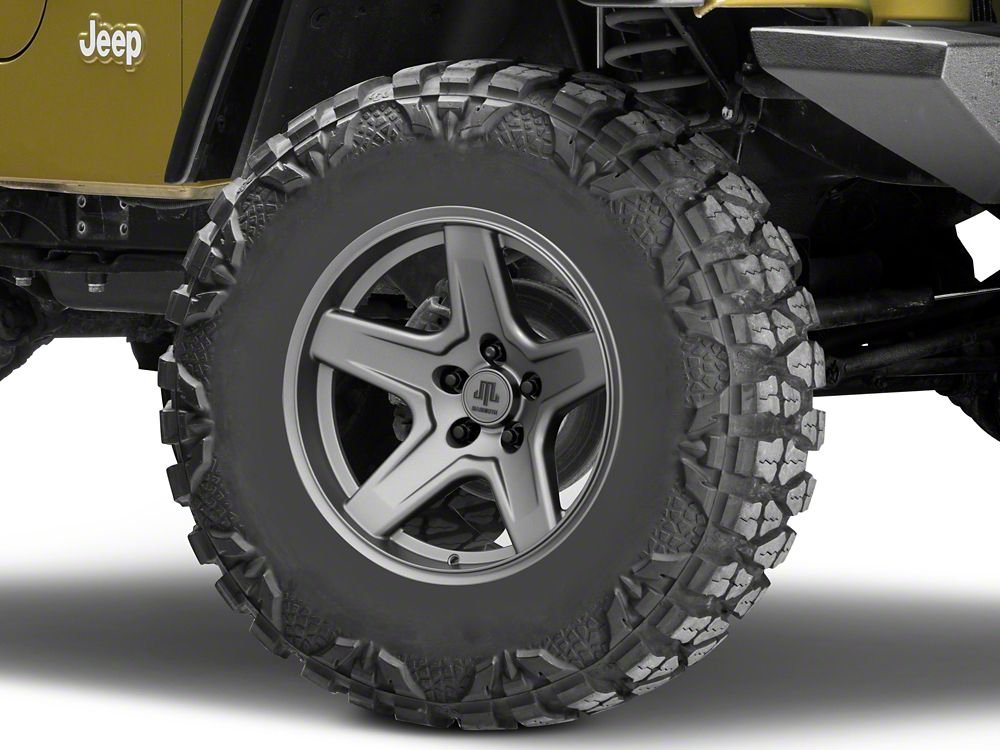
Choosing the right wheels and tires is crucial for a successful mammoth build. It’s not just about the tire’s outer diameter; the wheel’s width, backspacing, and beadlock capability play significant roles.
Wheel Width And Backspacing
- Wheel Width: Tires need to be mounted on wheels of appropriate width. A wider wheel provides better support for the tire’s sidewall, especially at lower tire pressures used for off-roading. For example, a 37-inch tire might be recommended for a 8.5-inch or 9-inch wide wheel.
- Backspacing: This refers to the distance from the rear mounting surface of the wheel to the outer lip. Lower backspacing (or higher positive offset) pushes the wheel and tire further out from the suspension components. This helps clear control arms and brakes and can also reduce the stress on wheel bearings by increasing the scrub radius. Many off-road wheels designed for lifted Jeeps have low backspacing (e.g., 3.5 to 4.5 inches).
Beadlock Wheels
For extreme off-roading with very large tires, beadlock wheels are often considered.
- Function: Beadlock wheels have a ring that bolts onto the outside of the wheel, clamping the tire’s bead (the edge that seals against the rim) to the wheel. This allows the tire to be run at extremely low air pressures (sometimes single digits) without the risk of the tire “debeading” or coming off the rim.
- Benefits: Lower tire pressures significantly increase the tire’s contact patch, improving traction and allowing the tire to conform to terrain and wrap around obstacles.
- Considerations: Beadlock wheels are heavier, more expensive, and can be illegal for street use in some regions due to safety regulations. They also require more maintenance, as the bolts can loosen and the seals can be damaged.
Tire Types And Tread Patterns
The type of tire chosen depends heavily on the intended use:
- All-Terrain (AT): A good compromise for a mixed-use vehicle. They offer reasonable on-road manners and decent off-road traction. However, for truly “mammoth” tires tackling extreme terrain, ATs might lack the aggressive bite needed.
- Mud-Terrain (MT): These tires feature aggressive, widely spaced tread blocks designed for maximum traction in mud, rocks, and loose surfaces. They are typically louder on the road, wear faster, and offer a harsher ride than AT tires. For mammoth builds focused on capability, MTs are the most common choice.
- Hybrid Terrain: Tires that attempt to blend the best of AT and MT characteristics. They offer aggressive tread but with some design elements for better on-road manners.
- Tread Depth and Lug Design: Look for tires with deep, aggressive lugs and a design that allows for good self-cleaning (shedding mud and debris).
Other Important Considerations For Mammoth Tire Builds
Beyond the core modifications, several other factors are crucial for a well-rounded and functional mammoth tire build on a Jeep TJ.
Braking System Upgrades
Larger, heavier tires significantly increase the vehicle's rotational mass and inertia. This means it takes more effort to slow down and stop.
The stock TJ brakes, especially on non-Rubicon models, may become inadequate.
- Common Upgrades:
- Brake Rotor and Pad Upgrades: Larger, performance-oriented rotors and pads can provide better stopping power.
- Brake Caliper Upgrades: Sometimes, larger calipers with more pistons can be installed.
- Brake Line Replacement: As mentioned earlier, longer, braided steel lines are essential with a lift.
- Big Brake Kits: For extreme builds, complete “big brake kits” are available that offer significantly larger rotors, multi-piston calipers, and custom mounting brackets.
Steering System Reinforcement
The increased tire size and potential for hitting obstacles with the tires put extra stress on the steering system.
- Steering Stabilizer: A heavy-duty steering stabilizer is almost always recommended with larger tires. It helps dampen steering wheel kickback caused by the tires hitting bumps or uneven terrain.
- Tie Rod and Drag Link: The factory tie rod and drag link can bend or break under extreme stress. Upgraded, heavy-duty steering components, often with larger diameter rods and stronger ends, are a wise investment. Some kits include a flipped drag link to correct steering geometry with a lift.
- Steering Box: For very large tires (40″+), the stock steering box might struggle to provide enough assist, making steering heavy. Upgraded steering boxes or hydraulic assist steering systems can be considered.
Cooling System
Larger tires and increased off-road strain mean the engine works harder. This can lead to higher operating temperatures, especially in hot weather or during demanding climbs.
- Radiator: An upgraded, high-capacity radiator can help dissipate heat more effectively.
- Cooling Fan: A more powerful electric fan or a heavy-duty mechanical fan can improve airflow through the radiator.
- Transmission Cooler: If the Jeep has an automatic transmission, an auxiliary transmission cooler is highly recommended to prevent overheating, as the transmission will work harder with larger tires.
Body Armor And Protection
When you’re running tires that can roll over large obstacles, it’s likely that the rest of the Jeep will encounter them too.
- Rock Sliders: These protect the rocker panels (the sides of the Jeep’s body just below the doors) from damage when sliding over rocks.
- Skid Plates: Robust skid plates for the transfer case, oil pan, fuel tank, and differentials are essential to protect vital components from impacts.
- Fender Flares: While some fender trimming is common, larger fender flares might be needed to cover the wider track width created by the larger tires and wheels, helping to keep mud and debris from being thrown onto the vehicle and surrounding traffic.
Real-world Examples And Insights
Building a Jeep TJ with “Mammoth Boulder Wheels” is a journey, not just a single modification. It often involves a phased approach, starting with basic upgrades and progressing as the owner