The Jeep XJ Cherokee is a legendary vehicle, renowned for its ruggedness, capability, and distinctive style. For owners looking to enhance their XJ's electrical system, understanding the intricacies of its components is key.
One such critical component, often overlooked until it causes an issue, is the 4-wheel drive indicator light, specifically how it relates to the IRSGOV CP30A fuse. This fuse, while small, plays a vital role in the functionality of the 4WD system's dashboard illumination.
This article will break down what the IRSGOV CP30A fuse is, its connection to the 4-wheel drive light, common issues, troubleshooting steps, and how to ensure your XJ's indicator system works as it should.
Understanding The Irsgov Cp30a Fuse
The IRSGOV CP30A fuse is a specific type of fuse found in the electrical system of certain Jeep models, including some XJ Cherokees. The designation “IRSGOV” likely refers to an internal fuse designation within the fuse box or electrical harness, possibly relating to the Interior System Government or a similar internal coding. “CP30A” is the specific part number or identifier for that particular fuse. These fuses are typically mini blade fuses, common in automotive applications, designed to protect electrical circuits from overcurrents.
The primary purpose of any fuse is safety. It acts as a sacrificial element. If there’s a sudden surge of electricity, or a short circuit in the wiring, the fuse will blow (melt and break the circuit). This prevents damage to more expensive or critical components like the wiring harness, the transfer case control module, or the dashboard instrument cluster.
The CP30A fuse in question is often linked to the instrument cluster and specifically powers certain indicator lights, including the 4-wheel drive engagement light. When the 4WD system is engaged, a signal is sent to the instrument cluster, which then illuminates the corresponding indicator light. The fuse provides the necessary power for this illumination circuit to function.
The Role Of The Irsgov Cp30a In The 4-wheel Drive Light
The 4-wheel drive (4WD) indicator light on your Jeep XJ’s dashboard is more than just a pretty light. It’s an essential piece of information, telling you definitively when your vehicle is actively engaged in 4WD mode. This is crucial for several reasons:
- Confirmation of Engagement: It confirms that the transfer case has successfully shifted into 4WD. This is particularly important in low-traction situations where you need that extra grip immediately.
- System Health Indicator: While not a diagnostic tool for all issues, a functioning 4WD light suggests that the basic electrical pathway for engagement confirmation is intact.
- Preventing Damage: Driving in 4WD on high-traction surfaces (like dry pavement) can cause damage to the drivetrain. The indicator light helps drivers remember they are in 4WD, prompting them to disengage it when not needed.
The IRSGOV CP30A fuse directly supports the illumination of this critical light. It supplies power to the circuit that controls the 4WD indicator. If this fuse blows, the 4WD indicator light will not illuminate, even if the 4WD system is correctly engaged. This can lead to confusion and potential issues if the driver is unaware the light isn’t working.
Several problems can arise that point to the IRSGOV CP30A fuse or its associated circuit. Recognizing these symptoms is the first step towards a solution.
1. The 4wd Light Doesn’t Turn On
This is the most direct symptom of a blown IRSGOV CP30A fuse. When you engage 4WD, the light on the dashboard remains stubbornly dark.
- Why it happens: The fuse has blown, interrupting the flow of electricity to the indicator light circuit.
- Important Note: It’s crucial to distinguish this from a situation where the 4WD system itself is not engaging. If you engage 4WD and feel no change in how the vehicle drives, the problem might be with the transfer case actuator, shift linkage, or another mechanical/electrical component, not just the indicator light fuse. However, if you can feel the 4WD engaging (e.g., a slight binding sensation, heavier steering, or increased traction in loose surfaces) but the light *still* doesn’t come on, the fuse is a prime suspect.
2. Intermittent 4wd Light Functionality
Sometimes, the 4WD light might flicker, come on sporadically, or only work after jiggling the dashboard or turning the ignition on and off.
- Why it happens: This often indicates a loose connection somewhere in the circuit, or a fuse that is partially blown or not seated correctly. It could also be a sign of corrosion on the fuse terminals or in the fuse box. The electrical connection is inconsistent, leading to an unreliable light.
3. Other Dashboard Lights Acting Strangely
While less common, a failing or improperly seated fuse can sometimes affect adjacent circuits, especially if they share a common power source or ground.
- Why it happens: If the fuse holder itself is damaged, or if the fuse is only partially blown, it might create resistance in the circuit. This can lead to voltage drops that affect other sensitive electronic components in the instrument cluster. You might notice other warning lights behaving erratically or dimming.
4. Blown Fuse Triggers
A fuse doesn’t usually blow for no reason. It’s a symptom of an underlying electrical problem.
- Why it happens: The most common cause is a short circuit. This occurs when the insulation on a wire is damaged, allowing it to touch a metal part of the vehicle or another wire. This creates a low-resistance path, causing a massive current flow that blows the fuse to protect the system. Another possibility is a faulty component drawing too much current. In the case of the 4WD light circuit, this could be a short within the light bulb socket, the wiring harness leading to it, or even a fault in the transfer case position sensor that’s sending an incorrect signal.
Troubleshooting The Irsgov Cp30a Fuse And 4wd Light
When faced with a non-functioning 4WD indicator light, a systematic approach to troubleshooting is essential.
Step 1: Locate The Fuse Box And The Irsgov Cp30a Fuse
Jeep XJs typically have multiple fuse boxes. The main fuse box is usually located under the hood, near the battery.
Some models might also have a fuse panel inside the cabin, often on the driver's side dashboard or under the steering column.
Consult your Jeep XJ owner’s manual to identify the exact location of the fuse box that houses the IRSGOV CP30A fuse. The manual will also have a diagram showing the layout of the fuses and their corresponding circuits. The IRSGOV CP30A is often a 30-amp fuse, indicated by the “30A” marking.
Step 2: Visually Inspect The Fuse
Once you’ve located the fuse, carefully pull it out using a fuse puller (often found in the fuse box) or a pair of needle-nose pliers. Hold the fuse up to a light source and inspect the metal filament inside.
- Good Fuse: The metal filament will be intact, forming an unbroken loop.
- Blown Fuse: The metal filament will be broken, appearing as a gap within the loop.
Step 3: Replace A Blown Fuse
If you find the IRSGOV CP30A fuse is blown, replace it with a new fuse of the exact same amperage rating. Using a fuse with a higher amperage can damage the electrical system and is a fire hazard. Using one with a lower rating will likely blow again immediately.
- Pro Tip: Keep a few spare fuses of common ratings (like 10A, 15A, 20A, 30A) in your glove box. They are inexpensive and can save you from being stranded.
After replacing the fuse, turn on the ignition and engage 4WD. Check if the indicator light now illuminates.
Step 4: Test Drive And Observe
If the new fuse works, take your Jeep for a short test drive. Engage 4WD on a safe, low-traction surface (like a dirt road or gravel) and check if the light comes on.
Disengage 4WD and ensure the light turns off.
Step 5: Investigate If The Fuse Blows Again
If the new fuse blows shortly after installation, or if the light still doesn’t work, it indicates an underlying electrical problem that needs further investigation. This is where things can get more complex.
- Check Wiring: Inspect the wiring harness connected to the transfer case and the instrument cluster for any signs of damage, chafing, or loose connections. Pay close attention to areas where the wires might rub against the frame or other components.
- Inspect Connectors: Ensure all electrical connectors related to the 4WD system and instrument cluster are clean, secure, and free from corrosion.
- Test the Indicator Light Bulb: The bulb itself could be faulty, or its socket could be corroded. Sometimes, simply cleaning the socket or replacing the bulb can resolve the issue.
- Transfer Case Position Sensor: The 4WD system has sensors that tell the vehicle’s computer (or directly the instrument cluster) when 4WD is engaged. If this sensor is faulty or misaligned, it might cause electrical issues or prevent the light from activating correctly.
- Instrument Cluster Issues: In rare cases, the problem might lie within the instrument cluster itself. This is usually the most expensive and difficult fix.

Credit: www.bobhowardcjd.com
Understanding The 4wd System Components And Their Relation To The Fuse
To truly understand why the IRSGOV CP30A fuse is important, it helps to have a basic grasp of how the Jeep XJ’s 4WD system operates. Most XJs from the mid-80s onwards use a part-time 4WD system with a Command-Trac or Selec-Trac transfer case.
Command-trac Nv231 Transfer Case
This is the most common transfer case in XJs. It offers three modes:
- 2WD High: Power to rear wheels only.
- 4WD High: Power to all four wheels. This mode is for slippery conditions.
- Neutral: Drivetrain is disconnected from wheels.
- 4WD Low: Provides maximum torque for slow-speed crawling.
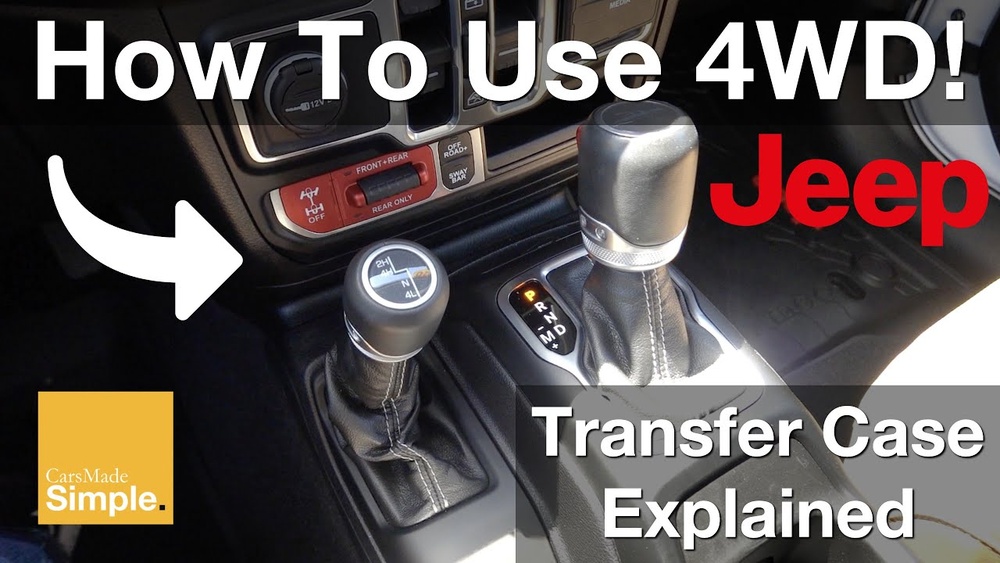
When you shift the lever into 4WD High or 4WD Low, it physically moves a linkage inside the transfer case to engage the front driveshaft. Simultaneously, a 4WD indicator switch (or sensor) on the transfer case is activated. This switch sends an electrical signal to the instrument cluster. The IRSGOV CP30A fuse provides the power necessary for the instrument cluster to light up the 4WD indicator bulb based on this signal.
Selec-trac Nv242 Transfer Case
Some XJs, particularly later models, came with the Selec-Trac system. This offers an additional mode:
- Full-Time 4WD: Power is always distributed to all four wheels, with a default bias (e.g., 48% front, 52% rear). This mode can be safely used on dry pavement.
The Selec-Trac system also has a 4WD indicator switch, and its operation relies on the same principle: the transfer case position triggers a switch, which signals the instrument cluster, powered by fuses like the IRSGOV CP30A, to illuminate the indicator.
Electrical Considerations And Best Practices
When working with the electrical system of your Jeep XJ, especially around fuses and indicator lights, several best practices will help you avoid further issues.
1. Always Use The Correct Amperage Fuse
As mentioned, this is critical. A fuse is designed to blow at a specific current.
Using a fuse with too high an amperage rating means it won't blow when it should, allowing excessive current to flow, which can melt wires, damage components, and even start a fire.
Using one with too low an amperage will cause it to blow prematurely, making the system unreliable.
2. Ensure A Clean Connection
Corrosion is the enemy of electrical systems. If the fuse contacts in the fuse box, or the terminals on the fuse itself, are corroded, they can cause resistance.
This leads to voltage drops, intermittent operation, and potentially overheating.
- Cleaning: You can clean fuse box terminals carefully with a small wire brush or electrical contact cleaner. Ensure the power is off before cleaning.
3. Check For Short Circuits Thoroughly
If a fuse blows repeatedly, do not simply keep replacing it. You must find the cause of the short circuit. This often involves:
- Visual Inspection: Look for wires that are pinched, cut, or have their insulation rubbed off.
- Continuity Testing: Using a multimeter, you can test for continuity between the wire in question and ground, or between wires that shouldn’t be connected. A reading of near zero ohms indicates a short.
- Component Testing: If you suspect a specific component (like the 4WD switch), you might need to test it individually to see if it’s drawing too much current or has an internal short.
4. Understanding The Fuse Panel Diagram
The diagram in your owner's manual or printed on the fuse box cover is your best friend. It tells you what each fuse is for.
Sometimes, the IRSGOV CP30A might be labeled differently, or it might be part of a larger circuit labeled for the instrument cluster or interior lights.
Always cross-reference with your manual.
5. Consider Professional Help
If you’re not comfortable working with automotive electrical systems, or if you’ve replaced a fuse and it blows again, it’s wise to take your Jeep to a qualified mechanic. They have the tools and experience to diagnose complex electrical issues safely and efficiently.
Comparison Of 4wd Indicator Light Scenarios
To illustrate the importance of the IRSGOV CP30A fuse, let’s look at different scenarios of 4WD engagement and the indicator light’s behavior.
| Scenario | 4WD System Engagement | IRSGOV CP30A Fuse Status | 4WD Indicator Light | Likely Cause |
|---|---|---|---|---|
| **Normal Operation** | Engaged | Good | ON | System functioning correctly. |
| **Fuse Blown** | Engaged | Blown | OFF | Blown IRSGOV CP30A fuse. |
| Transfer Case Not Engaging | Not Engaged | Good | OFF | Mechanical issue with transfer