The Jeep Wrangler JK thermostat is a small but vital part of your vehicle's cooling system. It controls the flow of coolant, ensuring your engine reaches and maintains its optimal operating temperature.
When this component fails, it can lead to a cascade of problems, from poor engine performance to serious overheating. Understanding how the thermostat works, common issues, and how to replace it is crucial for any JK owner looking to keep their Jeep running smoothly.
This guide will cover everything you need to know about the thermostat in your Jeep Wrangler JK.
Understanding The Function Of Your Jeep Wrangler Jk Thermostat
At its core, the thermostat acts like a gatekeeper for your engine’s coolant. When you start your Jeep JK from cold, the thermostat remains closed. This prevents coolant from flowing to the radiator. Why? Because it helps your engine warm up much faster. A cold engine is less efficient, burns more fuel, and produces more emissions. By keeping the coolant circulating only within the engine block, the thermostat allows the engine to reach its ideal operating temperature quickly.
Once the coolant reaches a specific temperature, usually between 180°F and 205°F (82°C and 96°C) depending on the thermostat’s rating, a wax pellet inside the thermostat begins to expand. This expansion pushes a valve open, allowing the hot coolant to flow from the engine to the radiator. In the radiator, the coolant is cooled by airflow before being pumped back into the engine. This continuous cycle, regulated by the thermostat, keeps your engine from overheating.
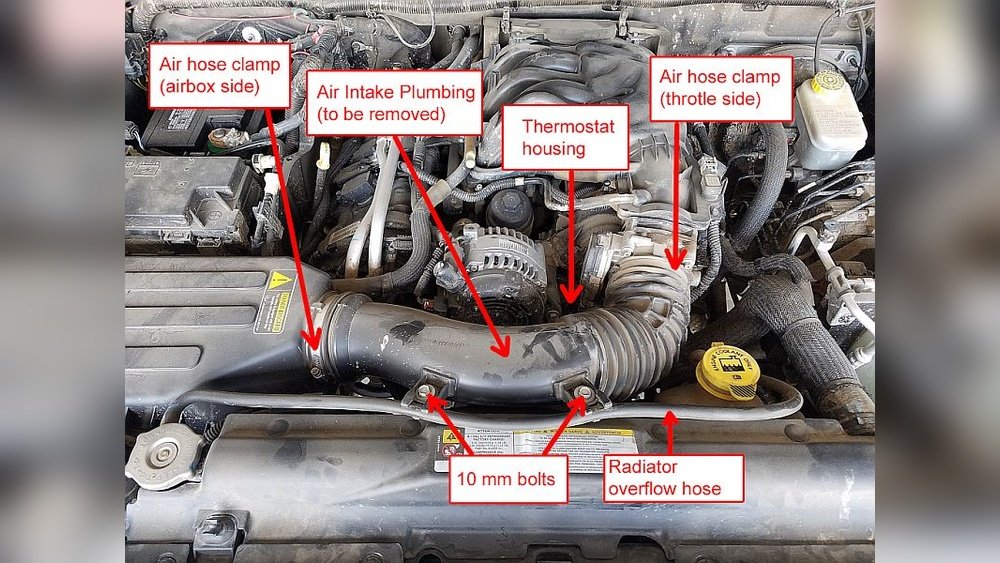
The Jeep Wrangler JK thermostat is typically located in a thermostat housing, which is usually bolted to the front of the engine, near where the upper radiator hose connects. It’s a relatively simple mechanical device, but its precise operation is critical for the health of your engine. Without it, your engine would either take too long to warm up or, more commonly if it fails in an open position, it would struggle to reach operating temperature at all, leading to poor performance and fuel economy. If it fails in a closed position, overheating is almost immediate.
Common Problems With Jeep Wrangler Jk Thermostats
Like any mechanical part, the thermostat in your Jeep Wrangler JK can fail over time. Several common issues can arise, each with its own set of symptoms.
Recognizing these problems early can save you from more significant engine damage.
One of the most frequent failures is the thermostat sticking open. This means the valve remains permanently open, even when the engine is cold. The most noticeable symptom is your engine struggling to reach its normal operating temperature. You might see the temperature gauge hover at the lower end of the dial, even after a long drive. Other indicators include:
- Poor heater performance: Because the engine isn’t getting hot enough, the heater core won’t receive sufficiently hot coolant, resulting in weak or no heat inside the cabin.
- Reduced fuel economy: An engine that runs too cool is not as efficient. The engine control unit (ECU) might try to compensate by enriching the fuel mixture, leading to higher fuel consumption.
- Check Engine Light: In some cases, the ECU can detect that the engine is running outside its optimal temperature range for too long and will trigger a Check Engine Light. The diagnostic trouble code (DTC) might be something like P0128 (Coolant Temperature Below Thermostat Regulating Temperature).
The opposite failure is the thermostat sticking closed. This is a much more dangerous situation because it prevents coolant from circulating to the radiator. The engine will overheat very quickly, often within minutes of starting. Symptoms are dramatic and immediate:
- Rapid temperature gauge rise: The temperature needle will shoot into the red zone very quickly.
- Steam or boiling sounds: You might hear hissing or boiling sounds from under the hood.
- Overheating warning: The dashboard will likely display an overheating warning.
- Potential engine damage: If this situation is not addressed immediately, it can lead to severe engine damage, including warped cylinder heads and blown head gaskets.
Another less common issue is a thermostat that opens at the wrong temperature. It might open too early, leading to the symptoms of a stuck-open thermostat, or it might open too late, causing the engine to overheat partially before coolant flow is restored.
Finally, the thermostat housing itself can develop leaks. While not a failure of the thermostat’s internal mechanism, a cracked or corroded housing will lead to coolant loss, which can indirectly cause overheating and thermostat malfunction.
Choosing The Right Thermostat For Your Jeep Wrangler Jk
When it’s time to replace your thermostat, choosing the correct part is important. While most replacement thermostats are designed to be direct fits, there are a few things to consider.
The most critical factor is the temperature rating. Your Jeep Wrangler JK came from the factory with a specific thermostat designed to allow the engine to operate within its optimal temperature range for emissions and performance. For most JK models, this is typically around 195°F (90.5°C). It’s generally recommended to stick with the OEM (Original Equipment Manufacturer) temperature rating unless you have a specific reason to change it.
Why might you consider a different rating? Some off-road enthusiasts or those who frequently tow heavy loads might opt for a slightly cooler thermostat (e.g., 180°F or 82°C). The theory is that a cooler thermostat will help keep engine temperatures down under extreme conditions, potentially reducing the risk of overheating. However, this can also lead to the engine running too cool during normal driving, affecting fuel economy and emissions. It might also trigger a Check Engine Light if the ECU is programmed for the stock temperature.
Conversely, a hotter thermostat is rarely recommended for a JK. It would further delay the engine reaching operating temperature and could exacerbate overheating issues.
When purchasing a replacement, ensure it’s specified for your exact year and engine of Jeep Wrangler JK. While many parts are interchangeable across JK generations (2007-2018), there can be subtle differences. Look for reputable brands. While OEM thermostats from a Jeep dealership are the safest bet, many aftermarket brands offer quality replacements. Some popular and reliable brands for automotive cooling system parts include Mopar (OEM), Stant, Gates, and Motorcraft (though Motorcraft is for Ford, their quality is often comparable and sometimes used).
It’s also a good idea to consider replacing the thermostat gasket or seal at the same time. Many thermostats come with a new gasket, but if yours doesn’t, make sure to purchase one. Using a new, properly seated gasket is crucial to prevent coolant leaks. Some thermostats have rubber seals integrated, while others use a separate paper or rubber gasket.
Finally, consider the quality of the thermostat itself. A cheap, no-name thermostat might seem like a bargain, but it could fail prematurely or not perform accurately. Investing in a quality part from a trusted manufacturer is usually a wise decision for long-term reliability.
Here’s a quick comparison of common thermostat types:
| Feature | Standard/OEM Thermostat | Lower Temperature Thermostat (e.g., 180°F) | Higher Temperature Thermostat (e.g., 205°F) |
|---|---|---|---|
| **Purpose** | Maintains optimal engine operating temperature | Aims to keep engine slightly cooler | Rarely used, can cause issues |
| **Ideal Use** | All-around daily driving, stock performance | Heavy towing, extreme off-roading (with caution) | Not generally recommended for JK |
| **Pros** | Best for fuel economy & emissions, no ECU issues | Potentially lower temps under load | None significant for JK |
| **Cons** | May run slightly warmer under extreme load | Reduced fuel economy, potential ECU codes, poor heater | Engine runs cooler, poor fuel economy, ECU codes |
| **Common Temp** | ~195°F (90.5°C) | ~180°F (82°C) | ~205°F (96°C) |
| **Recommendation** | **Highly Recommended for most JK owners** | Use with caution, understand potential downsides | Not recommended |
Replacing The Thermostat In Your Jeep Wrangler Jk: A Step-by-step Guide
Replacing a thermostat on a Jeep Wrangler JK is a manageable DIY project for those with basic mechanical skills. However, it does involve working with the cooling system, so taking precautions is essential.
Tools and Materials You’ll Need:
- New thermostat (correct temperature rating for your JK)
- New thermostat gasket or seal
- Coolant (appropriate type for your JK, typically HOAT coolant)
- Drain pan or bucket
- Pliers (for hose clamps)
- Socket set or wrenches (to remove the thermostat housing bolts)
- Screwdriver (flathead, for prying gently if needed)
- Rags or shop towels
- Gloves and eye protection
- Funnel
Safety First:
- Never work on a hot engine. Allow the engine to cool completely before starting.
- Coolant is toxic. Handle it with care and dispose of it properly.
- Wear safety glasses to protect your eyes from splashes.
Steps:
- Drain the Coolant: Place your drain pan underneath the radiator drain plug (usually a petcock valve at the bottom of the radiator). Open the plug and allow all the old coolant to drain out. You can also open the radiator cap to speed up the draining process. Once drained, close the plug.
- Locate the Thermostat Housing: The thermostat housing is typically found on the front of the engine, where the upper radiator hose connects to the engine block. It’s usually held in place by two bolts.
- Remove the Upper Radiator Hose: Use pliers to loosen the clamp on the upper radiator hose where it connects to the thermostat housing. Carefully twist and pull the hose off the housing. Be prepared for a small amount of residual coolant to spill out.
- Remove the Thermostat Housing: Using the appropriate socket or wrench, remove the bolts holding the thermostat housing to the engine. Once the bolts are out, gently pry the housing away from the engine. You might need a flathead screwdriver to break the seal, but be careful not to damage the mounting surface.
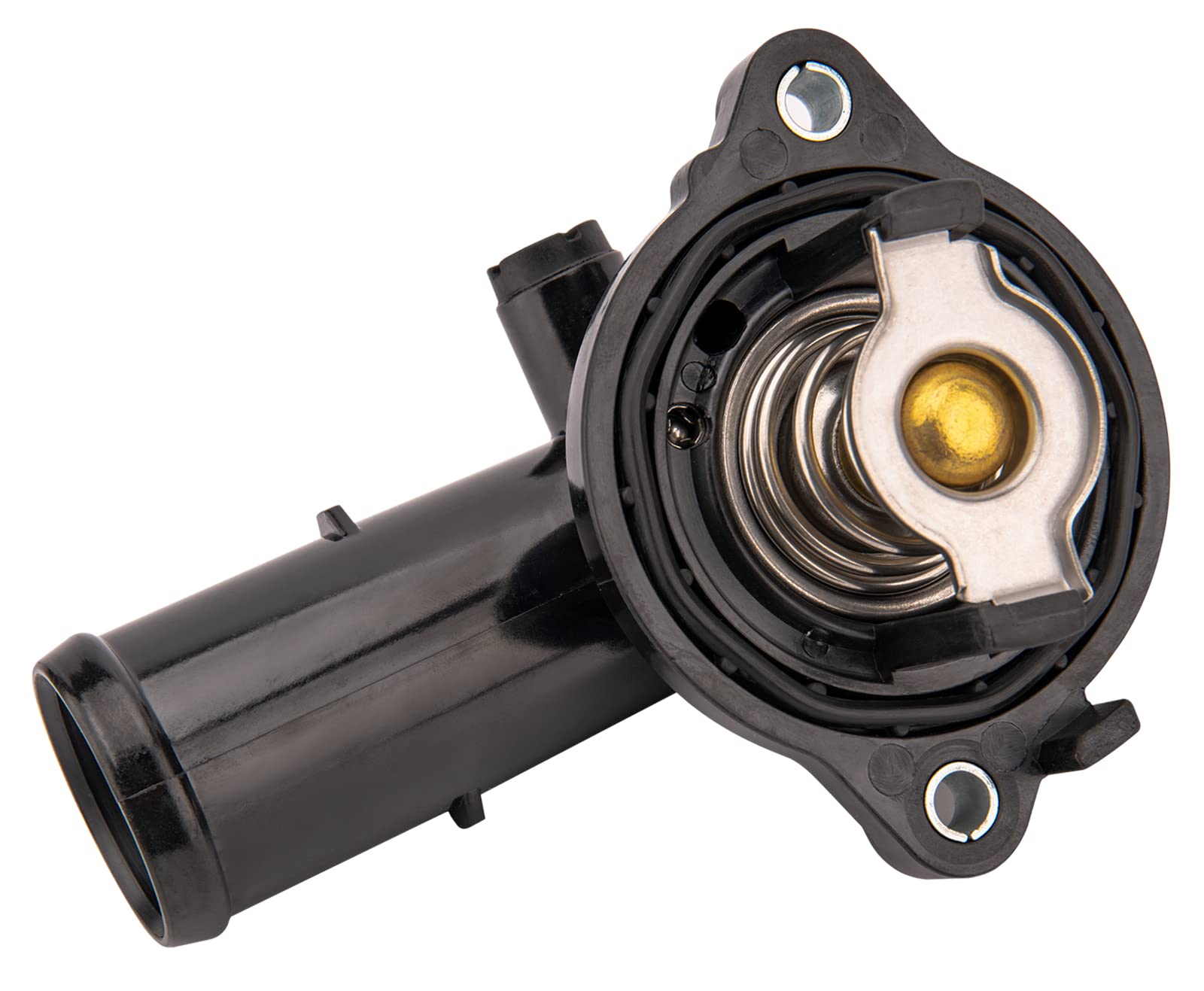
- Remove the Old Thermostat: The old thermostat will now be visible. Note its orientation (usually, the spring side faces down into the engine). Carefully pull it out. Inspect the housing for any corrosion or damage.
- Clean the Mounting Surfaces: Thoroughly clean the mating surfaces on both the engine block and the thermostat housing. Remove any old gasket material, dirt, or debris. A clean surface is crucial for a good seal and to prevent leaks.
- Install the New Thermostat: Place the new thermostat into the housing or engine block, ensuring it’s in the correct orientation. The spring side should typically face towards the engine. If your new thermostat came with a new gasket, place it around the housing or thermostat.
- Reinstall the Thermostat Housing: Carefully position the thermostat housing back onto the engine block, ensuring the gasket is properly seated. Reinstall the bolts and tighten them evenly and snugly. Do not overtighten, as this can crack the housing. Consult a service manual for specific torque specifications if available.
- Reconnect the Radiator Hose: Reattach the upper radiator hose to the thermostat housing and secure the clamp. Ensure the clamp is positioned correctly to create a tight seal.
- Refill the Cooling System: Using a funnel, slowly refill the radiator with the correct type and amount of coolant. It’s good practice to use a 50/50 mix of coolant and distilled water.
- Bleed the Cooling System: This is a critical step often overlooked. Air trapped in the system can cause overheating. Start the engine with the radiator cap off (or the bleed screw open, if equipped). Let the engine run until it reaches operating temperature and the thermostat opens. You’ll see the coolant circulating. As the engine warms up, the coolant level in the radiator might drop as air is pushed out. Top off the coolant as needed. Once you see steady circulation and the temperature gauge is stable, you can replace the radiator cap. Some systems have dedicated bleed screws; consult your owner’s manual for the correct procedure for your JK.
- Check for Leaks: After running the engine, carefully inspect the thermostat housing, radiator hose connection, and drain plug for any signs of leaks.
- Final Check: Monitor the temperature gauge closely for the next few drives to ensure it’s operating normally and that the heater is blowing hot air.
Pro Tip: Consider replacing your radiator cap at the same time, especially if it’s old. A faulty cap can affect pressure within the system and contribute to overheating.
Diagnosing Thermostat Issues Without Replacement
Before you decide to replace your thermostat, it’s wise to perform some diagnostics to confirm that it is indeed the culprit. Other cooling system components can mimic thermostat problems.
Checking the Temperature Gauge:
The most obvious indicator is your temperature gauge. If it consistently reads too low or too high, the thermostat is a prime suspect. However, a malfunctioning coolant temperature sensor can also provide incorrect readings, making the gauge inaccurate.
Checking for Heat:
As mentioned, poor heater performance is a strong sign of a thermostat stuck open. If your engine temperature gauge reads normal but you have no heat, the thermostat is a likely cause.
Physical Inspection (When Safe):
If you suspect the engine is overheating and the thermostat might be stuck closed, you can carefully (and only when the engine has cooled!) feel the upper radiator hose. If the engine is hot but the hose is cool, it suggests coolant isn’t circulating, pointing towards a stuck-closed thermostat or a water pump issue. Conversely, if the engine is at operating temperature and the hose is very hot, coolant is flowing, and the thermostat is likely functioning.
Using an OBD-II Scanner:
For modern vehicles like the JK, an OBD-II scanner is invaluable. As noted earlier, a thermostat stuck open often triggers a P0128 code. This code indicates that the engine coolant temperature did not rise to a specific level within a set amount of time after starting the engine. If you have this code, the thermostat is almost certainly the problem. The scanner can also read live data, allowing you to see the coolant temperature readings from the sensor in real-time, which can help diagnose other temperature-related issues.
Checking the Water Pump:
A failing water pump can also cause overheating. If the impeller is damaged or corroded, it won’t circulate coolant effectively, even if the thermostat is working perfectly. Symptoms can be similar to a stuck-closed thermostat. You might also hear a grinding



















