The Jeep Wrangler is an icon. For decades, it has been the go-to vehicle for off-road adventurers, off-road enthusiasts, and anyone who wants a vehicle that can handle tough terrain.
A big part of the Wrangler's legendary capability comes from its robust 4×4 system. But how does it work?
And what do all those different modes mean for you when you're out on the trail or just driving in bad weather?
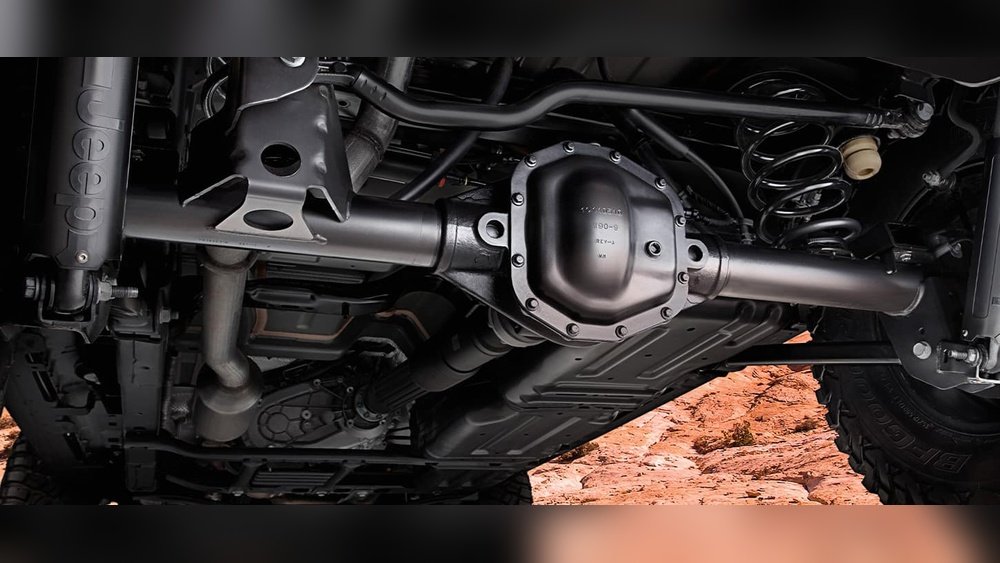
Understanding your Wrangler's 4×4 system is crucial. It's not just about engaging a lever; it's about knowing when to use each setting to maximize performance, safety, and efficiency.
This guide will break down the Jeep Wrangler's 4-wheel drive operation, explaining each mode, its purpose, and when you should (and shouldn't) use it.
We’ll cover the different types of 4×4 systems found in Wranglers, how to engage them, and some important tips for getting the most out of your vehicle’s incredible off-road prowess.
Understanding Jeep Wrangler 4×4 Systems
Jeep has used several variations of 4×4 systems over the years, but modern Wranglers typically feature a Command-Trac or Selec-Trac system. While the exact names and features might change slightly with model years, the core principles remain the same. These systems allow the driver to select different drive modes depending on the road or trail conditions.
The primary goal of any 4×4 system is to send power to all four wheels simultaneously. This provides better traction compared to a 2WD vehicle, especially when surfaces are slippery or uneven. In a 2WD vehicle, power only goes to two wheels. If those two wheels lose traction, you can get stuck. In a 4×4, if one or even two wheels lose traction, the other wheels can still provide power to keep you moving.
The Transfer Case: The Heart Of The 4×4 System
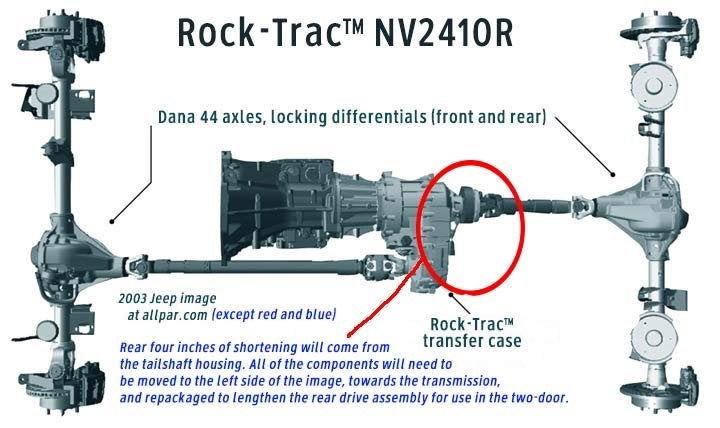
At the center of any Jeep 4×4 system is the transfer case. This is a separate gearbox connected to the transmission. Its main job is to split the engine’s power between the front and rear axles and to allow the driver to select different drive modes.
The transfer case contains a set of gears that can be shifted to change how power is distributed. It also often includes a low-range gear setting. This is a crucial feature for serious off-roading. Low-range gears multiply engine torque, giving you more power at very low speeds. This is essential for crawling over rocks, climbing steep hills, or navigating very difficult terrain where precise control and maximum pulling power are needed.
Types Of 4×4 Systems In Wranglers
While Jeep offers different 4×4 systems, the most common ones you’ll find in modern Wranglers are:
- Command-Trac NV241: This is a popular part-time 4WD system. It’s designed for situations where you need extra traction but doesn’t automatically adjust power.
- Selec-Trac NV242: This system offers more versatility, often including a full-time 4WD mode in addition to the part-time modes. This makes it more adaptable for varied driving conditions, including on-road use in slippery weather.
Let’s dive deeper into what these systems offer and how they operate.
Command-trac Nv241: The Classic Part-time System
The Command-Trac system is a traditional part-time 4WD system. This means you can drive in 2WD mode under normal conditions and only engage 4WD when you need extra traction. It’s a robust and straightforward system favored by many off-roaders for its simplicity and effectiveness.
The Command-Trac system typically has four modes, controlled by a lever (or sometimes a rotary knob) in the center console:
- 2WD (2H): This is the standard mode for everyday driving on dry, paved roads. Power is sent only to the rear wheels. This mode is the most fuel-efficient and puts the least stress on your drivetrain.
- 4WD High (4H): This mode engages 4-wheel drive. Power is sent to both the front and rear axles. The front and rear driveshafts rotate at the same speed. This mode is ideal for slippery surfaces like snow, ice, mud, or gravel roads. Crucially, you should only use 4H on low-traction surfaces. Using 4H on dry pavement can cause drivetrain binding and damage.
- 4WD Low (4L): This is the serious off-road mode. It also sends power to all four wheels, but the transfer case engages a lower gear ratio. This multiplies torque by about 2.72 times (this ratio can vary slightly by model year). This gives you significantly more pulling power and control at very slow speeds, perfect for crawling over obstacles, steep inclines, or very rough terrain. Like 4H, 4L should only be used on low-traction surfaces.
- Neutral (N): This mode disconnects both front and rear driveshafts from the transfer case. It’s used for flat-towing your Wrangler behind another vehicle. Never drive in Neutral; it will result in a loss of all power to the wheels.
Engaging Command-trac Modes
Shifting between 2H and 4H is usually straightforward and can often be done while the vehicle is moving, typically up to about 50 mph (80 km/h). You usually need to be moving at a slow speed (e.
g. , 5-10 mph or 8-16 km/h) and in neutral or with the clutch pedal depressed (for manual transmissions) or in Park/Neutral (for automatic transmissions).
Engaging 4L requires the vehicle to be stopped. You'll typically need to be in neutral (for manual) or Park (for automatic), with the engine running, and then shift the transfer case lever into 4L.
It might take a little effort to shift into 4L, and you may hear some clunking sounds as the gears engage.
When To Use Command-trac Modes
- 2H: Daily driving on dry pavement.
- 4H: Snow, ice, mud, sand, gravel, wet roads, or any situation where you experience wheel slip in 2WD.
- 4L: Rock crawling, steep inclines/declines, very rough trails, pulling heavy loads at low speeds on slippery surfaces.
- N: Flat-towing.
Pro Tip: Always shift back to 2H as soon as you’re back on dry pavement. This saves fuel, reduces wear and tear on your drivetrain, and prevents potential damage from drivetrain binding.
Selec-trac Nv242: The Versatile Full-time System
The Selec-Trac system offers greater flexibility, often including a full-time 4WD mode. This means you can leave the vehicle in 4WD even on dry pavement without worrying about drivetrain binding. This makes it a popular choice for drivers who encounter a mix of conditions, from daily commuting in varied weather to occasional off-roading.
The Selec-Trac system usually has five modes:
- 2WD (2H): Same as Command-Trac. Power goes to the rear wheels only. Best for dry roads and maximum fuel efficiency.
- 4WD High (4H): This is a full-time 4WD mode. The system uses a center differential that allows the front and rear driveshafts to rotate at different speeds. This means you can use 4H on any surface, including dry pavement, without causing drivetrain binding. It automatically distributes power between the front and rear axles as needed, providing improved traction in slippery conditions.
- 4WD High Lock (4H Lock): In this mode, the center differential is locked. This forces the front and rear driveshafts to rotate at the same speed, similar to the 4H mode in a Command-Trac system. This mode is for low-traction surfaces only (snow, ice, mud, sand) where you need maximum traction and are willing to accept the potential for drivetrain binding on dry pavement.
- 4WD Low (4L): This is the low-range gear setting, just like in Command-Trac. It multiplies torque for extreme off-roading. The center differential is also locked in this mode, providing maximum traction on difficult terrain. Use only on low-traction surfaces.
- Neutral (N): Same as Command-Trac. Disconnects the driveshafts for flat-towing.
Engaging Selec-trac Modes
Engaging 2H, 4H, and 4H Lock is typically done with a rotary knob or a lever. You can usually shift between 2H and 4H while the vehicle is moving.
Shifting into 4H Lock usually requires a slower speed or being stopped, similar to shifting into 4H on Command-Trac.
Engaging 4L also requires the vehicle to be stopped and in neutral (manual) or Park (automatic).
When To Use Selec-trac Modes
- 2H: Daily driving on dry pavement.
- 4H: Wet roads, light snow, gravel, or any situation where you want extra traction without worrying about drivetrain binding. This is your go-to mode for mixed conditions.
- 4H Lock: Deep snow, mud, sand, ice, or off-roading where maximum traction is needed and you are on a low-traction surface.
- 4L: Rock crawling, steep inclines/declines, very rough trails.
- N: Flat-towing.
The key advantage of Selec-Trac is the 4H mode, which provides the benefits of 4WD without the risk of damage on dry pavement. This makes it more convenient for drivers who frequently encounter unpredictable weather.
Understanding The Difference: Part-time Vs. Full-time 4wd
The fundamental difference between Command-Trac (part-time) and Selec-Trac (full-time 4WD mode) lies in how they handle power distribution and drivetrain binding.
- Part-Time 4WD (Command-Trac): In 4H mode, the front and rear driveshafts are mechanically locked together. This means they must spin at the exact same speed. On dry, high-traction surfaces like pavement, if the front wheels travel a different distance than the rear wheels (which they do during turns), the system cannot compensate. This causes stress and binding in the drivetrain, potentially leading to broken parts. Therefore, part-time 4WD should only be used on surfaces where wheel slippage is expected.
- Full-Time 4WD (Selec-Trac’s 4H mode): This system uses a center differential. Think of a differential like a clutch that allows the front and rear driveshafts to rotate at different speeds. This flexibility means the system can adapt to different wheel speeds during turns on dry pavement, preventing drivetrain binding. It automatically sends more power to the axle with more traction. When you lock the center differential (4H Lock), it behaves like a part-time system, forcing both axles to spin at the same speed for maximum traction on slippery surfaces.
Here’s a simple table to illustrate the core differences:
| Feature | Command-Trac (Part-Time) | Selec-Trac (Full-Time 4H Mode) |
|---|---|---|
| 2WD Mode | Yes (2H) | Yes (2H) |
| 4WD High Mode | 4H (Front/Rear locked at same speed) | 4H (Center differential allows different speeds) |
| 4WD Low Mode | 4L (Front/Rear locked, low gear ratio) | 4L (Center differential locked, low gear ratio) |
| Full-Time 4WD Option | No | Yes (in 4H mode) |
| Dry Pavement Use (4H) | No (causes binding/damage) | Yes (safe due to center differential) |
| Low Traction Use (4H) | Yes | Yes (but 4H Lock is often preferred) |
| Low Traction Use (4H Lock) | N/A | Yes (for maximum traction) |
| Low-Range Gearing | Yes (4L) | Yes (4L) |
What About Other Jeep Models?
It’s worth noting that other Jeep models, like the Grand Cherokee, often feature more advanced systems like Quadra-Trac or Quadra-Drive. These systems can include electronic limited-slip differentials and automatic torque-sensing capabilities, offering even more sophisticated traction management. However, for the core Wrangler experience, Command-Trac and Selec-Trac are the most relevant.
Advanced Features And Considerations
Beyond the basic modes, modern Wranglers may offer additional features and require specific considerations for optimal 4×4 operation.
Electronic Stability Control (esc) And Traction Control
Modern Wranglers come equipped with Electronic Stability Control (ESC) and Traction Control systems. These are sophisticated electronic aids that work in conjunction with your 4×4 system.
- Traction Control: This system senses when a wheel is spinning faster than the others (indicating a loss of traction) and will automatically apply the brakes to that wheel. It also reduces engine power if necessary. This helps keep power directed to the wheels that *do* have traction.
- ESC: This system goes a step further than traction control. It monitors steering input and vehicle yaw (rotation around the vertical axis). If it detects that the vehicle is starting to slide or lose control, it can apply brakes to individual wheels and reduce engine power to help bring the vehicle back on its intended path.
Important Note: While these systems are incredibly helpful, they work best when the 4×4 system is properly engaged for the conditions. In some extreme off-road situations, experienced drivers might choose to disable certain aspects of ESC or traction control to allow for more wheel slip, which can be necessary for momentum on certain obstacles. However, for most users, keeping these systems active is recommended.
Locking Differentials
While not standard on all Wranglers, some models (especially Rubicon trims) come with locking differentials. These are a significant upgrade over standard differentials.
- Standard Differential: Allows wheels on the same axle to spin at different speeds (



















