Jeep Wrangler 33s On Stock Wheels: A Practical Guide
Putting larger tires on your Jeep Wrangler is a common upgrade. Many off-road enthusiasts dream of fitting 33-inch tires onto their rig.
But what if you want to achieve this without changing your stock wheels? This is a popular question, and the answer is: yes, it's often possible.
This guide will explore what you need to know about running 33s on stock Wrangler wheels, covering the benefits, potential challenges, and what to consider before making the switch.
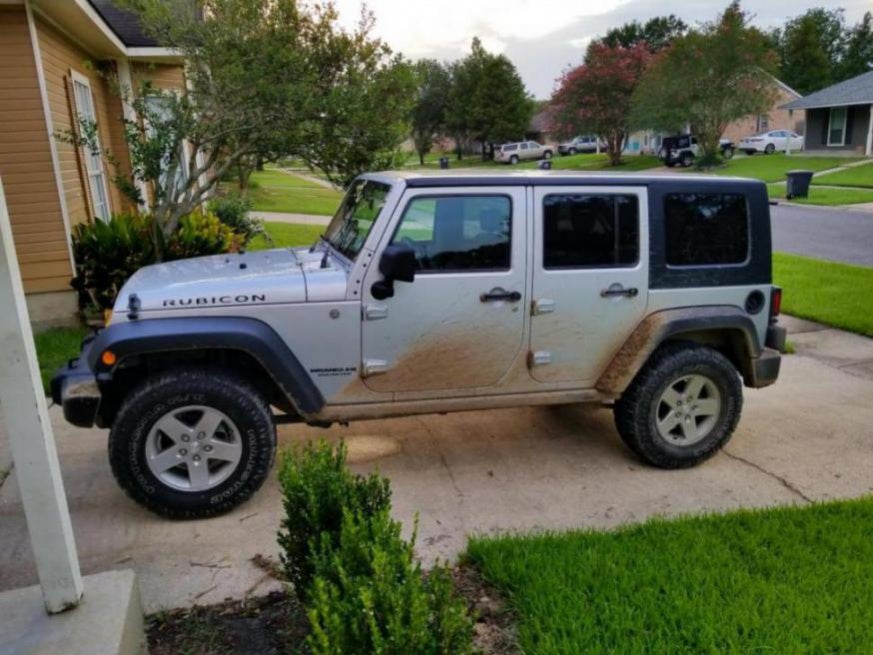
Stock wheels on most Jeep Wranglers are designed for the tires that came with the vehicle. These are typically around 30-32 inches in diameter.
Moving up to 33-inch tires offers a noticeable improvement in off-road capability and aesthetics. However, fitting them onto stock wheels and suspension can involve a few considerations.
We’ll break down the technical aspects, performance impacts, and practical advice to help you decide if this upgrade is right for your Jeep.
Understanding Tire Sizes: What Do “33s” Mean?
When people talk about “33s,” they are referring to the tire diameter. The common tire sizing system, like 315/70R17, tells you a lot. Let’s break down a popular size for 33-inch tires, such as 285/70R17:
- 285: This is the tire width in millimeters. So, 285mm wide.
- 70: This is the aspect ratio. It’s the tire’s sidewall height as a percentage of its width. So, the sidewall is 70% of 285mm.
- R: This indicates the tire is Radial.
- 17: This is the wheel diameter in inches.
To find the approximate overall diameter of a tire, you can use this formula:
Overall Diameter (inches) = (Tire Width (mm) * Aspect Ratio / 100) * 2 / 25.4 + Wheel Diameter (inches)
For a 285/70R17 tire:
- Sidewall height = 285mm 0.70 = 199.5mm
- Convert to inches: 199.5mm / 25.4 mm/inch ≈ 7.85 inches
- Total diameter = (7.85 inches 2) + 17 inches = 15.7 inches + 17 inches = 32.7 inches*
This calculation shows that a 285/70R17 tire is very close to a true 33-inch diameter. Other common sizes that fall into the "33-inch" category include 305/70R17 (around 33.
5 inches) and sometimes even 295/70R17 (around 33. 2 inches).
The exact measurement can vary slightly between tire brands and models.
Benefits Of 33-inch Tires
Upgrading to 33-inch tires, even on stock wheels, offers several advantages for your Jeep Wrangler:
Improved Off-road Capability
Larger tires provide a bigger contact patch with the ground. This means better traction on various terrains like rocks, mud, and sand. The increased diameter also helps the tires roll over obstacles more easily. Instead of getting high-centered on a rock, a 33-inch tire can often climb over it with less effort from your suspension and drivetrain. This is a significant advantage for anyone who takes their Jeep off the beaten path.
Increased Ground Clearance
A taller tire directly translates to more ground clearance under your axles. This is crucial for off-roading as it reduces the risk of damaging sensitive undercarriage components like differential housings, oil pans, and exhaust systems. Even a modest increase can make a big difference when navigating rough trails.
Enhanced Aesthetics
Let's be honest, larger tires just make a Jeep look tougher. The more aggressive stance and filled-out wheel wells give the Wrangler a more commanding presence, both on and off the road.
It’s a visual upgrade that many Jeep owners desire.
Minimal Impact On Fuel Economy (compared To Larger Lifts)
While any tire size increase will affect fuel economy, fitting 33s on stock wheels often has a less dramatic impact than going with much larger tires that require significant suspension lifts and potential re-gearing. The overall weight and rolling resistance are the main culprits here.
Potential Challenges And Considerations
While fitting 33-inch tires on stock wheels is often achievable, it’s not always a simple bolt-on affair. There are several potential issues you need to be aware of:
Tire Rubbing
This is the most common problem. When you turn your steering wheel, especially at full lock, or when your suspension compresses (like going over a bump), the larger tires can rub against:
- Fender Flares: The plastic or metal trim around your wheel wells.
- Control Arms: The suspension components that connect the axle to the frame.
- Frame/Body Mount: The metal structure of the Jeep.
- Front Bumper: Especially the corners.
The amount of rubbing depends on several factors: the exact tire size, the wheel’s backspacing (stock wheels usually have good backspacing for this), and the Jeep’s suspension geometry.
Loss Of Power And Performance
Larger, heavier tires increase the rotational mass your engine has to turn. This can lead to:
- Reduced Acceleration: Your Jeep will feel slower off the line.
- Increased Strain on Drivetrain: The engine, transmission, and axles have to work harder. This is especially noticeable on hills or when towing.
- Impact on Fuel Economy: Expect a decrease in miles per gallon (MPG). The exact amount varies, but a 5-10% drop is common.
Impact On Braking
Heavier tires require more force to stop. While stock brakes on a Wrangler are generally robust, significantly larger and heavier tires can slightly increase your stopping distances.
This is usually not a major concern for casual driving but is something to be mindful of, especially if you frequently drive in situations where quick stops are necessary.
Speedometer And Odometer Inaccuracy
Your Jeep's speedometer and odometer are calibrated for the factory tire size. When you install larger tires, your Jeep will actually be traveling faster than the speedometer indicates, and you'll be covering more distance than the odometer registers.
For example, if your speedometer reads 60 mph, you might actually be going 63 mph.
This can affect your actual speed, mileage tracking, and even how your transmission shifts.
Electronic Stability Control (esc) And Abs Issues
Tire size changes can sometimes affect the calibration of systems like ABS (Anti-lock Braking System) and ESC (Electronic Stability Control). The sensors rely on the wheels rotating at expected speeds.
Significantly different tire sizes can sometimes lead to these systems behaving erratically or even triggering warning lights.
Fitting 33s On Stock Wheels: What You Need To Know
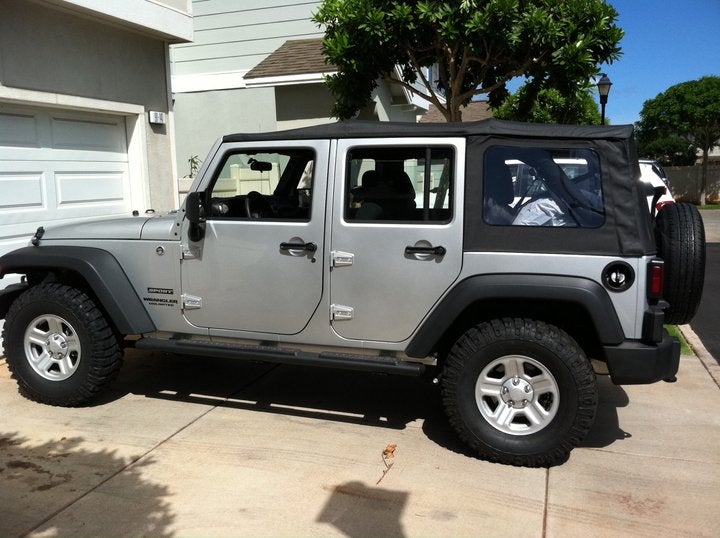
The good news is that many Jeep Wrangler models can accommodate 33-inch tires with minimal or no modifications. However, there are key factors and potential modifications to consider.
Wheel Backspacing
Stock Wrangler wheels typically have a backspacing of around 5. 5 to 6 inches.
This is generally suitable for fitting 33-inch tires without causing excessive rubbing on the suspension components. If you were using aftermarket wheels with very low backspacing (often found on wider wheels), you might encounter more rubbing on the fenders and body.
The stock wheels provide a good balance.
Tire Width And Offset
While the diameter is key, the width of the tire also matters. A common 33-inch tire size is 285/70R17. This width (285mm) is often manageable on stock wheels. Wider tires, like a 315mm, might require more careful consideration for rubbing.
Suspension Considerations
- Stock Suspension: Many Jeep Wrangler JK (2007-2018) and JL (2018-present) models can fit 33-inch tires on stock suspension with little to no rubbing, especially if the tire is not excessively wide. However, some slight rubbing might occur at full steering lock or on larger bumps.
- Minor Lifts: If you experience rubbing, a small lift kit of 1-2 inches can often resolve the issue and provide even more clearance. This is a very common and relatively inexpensive modification.
- Rubicon Models: Rubicon trims often come with slightly different fender flares and suspension setups that may offer a bit more room than Sport or Sahara models.
Steering Stop Adjustments
Sometimes, the rubbing occurs only at full lock (when the wheels are turned as far as they can go). In such cases, small steering stop adjustments can be made. These are metal tabs on the steering knuckle that prevent the wheels from turning too far. Adding small washers or spacers to these stops can limit the steering angle slightly, preventing the tire from hitting the control arm or frame. This is a common fix for minor rubbing issues.
Fender Trim And Bumper Trimming
For very slight rubbing on fender flares or the plastic bumper corners, some owners choose to trim these parts slightly. This is a cosmetic modification that can provide just enough clearance.
However, it's irreversible and should be done carefully.
Re-gearing (optional But Recommended For Some)
As mentioned earlier, larger tires can make your Jeep feel sluggish. If you have a manual transmission, you might find yourself needing to use lower gears more often.
For automatic transmissions, the shift points might change.
A common recommendation for 33-inch tires is to consider re-gearing your differentials. This means changing the internal gears within your front and rear axles.
- Why Re-gear? Re-gearing restores the “effective” gear ratio, making your Jeep feel like it has its original power and acceleration back. It also reduces strain on the drivetrain.
- When is it Necessary? For 33-inch tires, re-gearing is often considered optional but highly beneficial, especially if you have a manual transmission, live in a hilly area, or plan to do more aggressive off-roading. For 35-inch tires and larger, it becomes almost mandatory.
- Common Gear Ratios: Wranglers often come with ratios like 3.73 or 4.10. For 33-inch tires, upgrading to 4.56 or 4.88 ratios is popular, depending on your transmission and intended use.
Specific Jeep Wrangler Generations
The ease of fitting 33s can vary slightly depending on the Jeep Wrangler generation:
Jeep Wrangler Jk (2007-2018)
The JK generation is very popular for tire upgrades. Most 2-door and 4-door JKs can fit 33-inch tires (like 285/70R17) on stock wheels with minimal to no rubbing. Some minor trimming of the plastic air dam or fender flares might be needed for full-lock steering or aggressive articulation. A 2-inch budget boost lift is a common and effective solution if any rubbing occurs.
Jeep Wrangler Jl (2018-present)
The JL generation also generally accommodates 33-inch tires well on stock wheels. Similar to the JK, you might experience minor rubbing under specific conditions.
The JL platform is quite capable, and many owners successfully run 33s without any modifications beyond the tires themselves.
Again, a small lift can eliminate any potential rubbing.
Jeep Wrangler Tj (1997-2006)
TJs are also known for their off-road prowess. Fitting 33-inch tires on stock TJ wheels is often possible, but rubbing is more likely than on the JK or JL, especially on the 4-door Unlimited models.
A small lift (around 2-3 inches) is frequently recommended for TJs to comfortably fit 33s and avoid significant rubbing.
Jeep Wrangler Yj (1987-1995)
The YJ generation might require a bit more effort. While some 33-inch tires might fit with minor trimming, a 2.
5-inch to 4-inch lift is often considered necessary for a comfortable fit and good off-road performance without excessive rubbing.
Tire Recommendations For 33-inch Size
When choosing 33-inch tires to fit on stock wheels, consider these popular options known for their balance of on-road manners and off-road performance:
All-terrain (at) Tires
These are the most popular choice for daily drivers who also enjoy off-roading. They offer a good compromise between tread life, noise levels on the highway, and traction on dirt, gravel, and light mud.
- BFGoodrich All-Terrain T/A KO2: A legendary tire known for its durability and excellent all-around performance. Available in common 33-inch sizes like 285/70R17.
- Falken Wildpeak A/T3W: Highly regarded for its aggressive tread pattern, good wet traction, and reasonable on-road noise. It performs well in snow, mud, and rocks.
- General Grabber A/TX: Offers a robust sidewall and a tread pattern that balances on-road comfort with off-road capability.
Mud-terrain (mt) Tires
If your primary focus is off-roading, especially in mud, rocks, or very loose terrain, mud-terrain tires might be your choice. They offer superior off-road traction but come with compromises:
- Increased Noise: They are significantly louder on the highway.
- Shorter Tread Life: They tend to wear out faster.
- Rougher Ride: The ride can be harsher.
Popular MT options in the 33-inch range include:
- Nitto Ridge Grappler: A hybrid tire that offers a blend of AT and MT characteristics, often praised for its quieter operation compared to traditional M/Ts.
- Toyo Open Country M/T: A very capable mud-terrain tire known for its aggressive look and excellent off-road performance.
Installation Process And Professional Help
While many enthusiasts install tires themselves, fitting larger tires can be more involved.
Diy Installation
If you have the right tools (a good quality floor jack, jack stands, torque wrench, and lug wrench), you can install tires yourself. The process generally involves:
- Loosen Lug Nuts: Slightly loosen the lug nuts on the wheels you’re replacing while the vehicle is still on the ground.
- Jack Up the Vehicle: Safely lift one corner of the Jeep using a jack and place it on a sturdy jack stand.
- Remove Wheel



















