The 2017 Jeep Wrangler is more than just a vehicle; it's an icon of adventure and capability. At its heart lies the legendary Jeep 4×4 system, designed to conquer trails, navigate challenging terrain, and provide confidence in any driving condition.
For new owners or those looking to truly understand their Wrangler's capabilities, mastering the 4-wheel drive system is essential. This guide will walk you through how to use your 2017 Jeep Wrangler's 4×4 system effectively, from basic operation to advanced techniques for off-road exploration.
Understanding these systems ensures not only superior performance but also longevity for your vehicle.
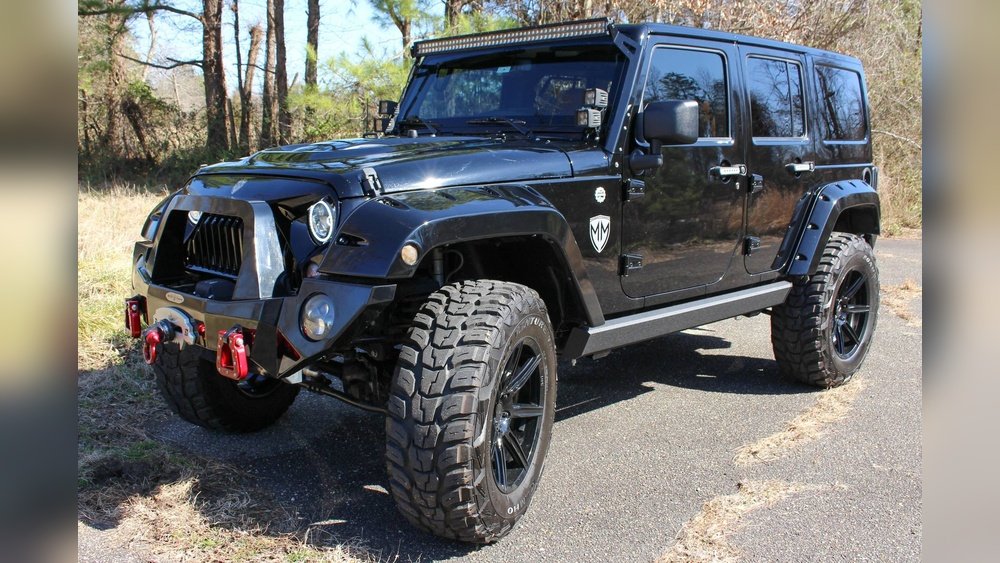
Understanding Your 4×4 Options: Command-trac Vs. Selec-trac
The 2017 Jeep Wrangler typically came with one of two main 4-wheel drive systems: Command-Trac NV241 and Selec-Trac NV242. While both offer robust 4×4 capability, they differ in their operational modes and how you engage them. Knowing which system your Wrangler is equipped with is the first step to using it correctly.
Command-trac Nv241: The Standard Workhorse
The Command-Trac system is the more common of the two for the 2017 Wrangler JK. It’s a part-time 4WD system known for its simplicity and effectiveness in off-road situations. It features a traditional transfer case with a lever on the floor, allowing the driver to select different drive modes. This system is designed for situations where maximum traction is needed, but it’s crucial to understand when and how to use each setting to avoid damaging the drivetrain.
Command-trac Modes Explained
The Command-Trac system typically offers four distinct modes, selectable via the transfer case lever:
- 2H (Two-Wheel Drive High): This is your normal driving mode for paved roads and dry conditions. Power is sent only to the rear wheels, maximizing fuel efficiency and minimizing wear on the 4×4 components. You’ll use this mode 95% of the time.
- 4H (Four-Wheel Drive High): This mode engages all four wheels, providing increased traction for slippery surfaces like rain-soaked roads, snow, ice, mud, or gravel. The front and rear driveshafts are locked together, meaning they must rotate at the same speed. This is ideal for moderate off-road conditions or when traction is uncertain. Crucially, you should only use 4H on surfaces where the wheels can slip somewhat. Driving in 4H on dry, high-traction pavement can cause binding in the drivetrain and lead to damage.
- N (Neutral): This setting disengages the transfer case from both the front and rear axles. This is useful for flat-towing your Wrangler behind an RV, as it allows the driveshafts to spin freely and prevents damage to the transmission. Never engage Neutral while driving.
- 4L (Four-Wheel Drive Low): This is your serious off-road gear. Engaging 4L provides a significant gear reduction (typically around 2.72:1), multiplying torque to the wheels. This gives you incredible pulling power and allows for very slow, controlled crawling over obstacles like rocks, steep hills, or deep mud. Like 4H, 4L must only be used on low-traction surfaces to prevent drivetrain damage. Shifting into 4L requires the vehicle to be stopped and the transmission to be in Neutral (for manual transmissions) or Park (for automatic transmissions).
How To Shift Command-trac Modes
Shifting between 2H and 4H is usually possible while driving at speeds up to 45-50 mph (72-80 km/h), provided the vehicle is not under heavy acceleration or braking. Simply move the transfer case lever firmly from one position to the next. You might hear some clunks as the system engages, which is normal.
To shift into 4L, you must come to a complete stop. Put the transmission in Neutral (manual) or Park (automatic). Then, firmly pull the transfer case lever into the 4L position. Once engaged, you can shift your transmission back into gear. To shift out of 4L, repeat the process: stop, Neutral/Park, shift the lever to 4H, then back into gear.
Selec-trac Nv242: The Versatile Option
The Selec-Trac system offers more flexibility by including an “Full-Time 4WD” setting. This means you can leave the vehicle in this mode on virtually any surface, including dry pavement, without risking drivetrain damage. It also provides the same core modes as Command-Trac, but with an added option.
Selec-trac Modes Explained
The Selec-Trac system typically has five modes:
- 2H (Two-Wheel Drive High): Same as Command-Trac. For normal driving on dry, paved surfaces.
- 4H AUTO (Full-Time 4WD): This is the key difference. In 4H AUTO, the system intelligently distributes power between the front and rear axles as needed. It can send 100% of the power to the rear wheels when traction is good, or split it up to 50/50 when slip is detected. This mode is safe for use on all surfaces, including dry pavement, wet roads, snow, ice, and off-road. It offers the convenience of always having 4×4 engagement without the worry of binding.
- 4H PART-TIME (Four-Wheel Drive High): Similar to Command-Trac’s 4H. In this mode, the front and rear driveshafts are locked together. This mode is only for slippery surfaces (snow, ice, mud, gravel, off-road) where wheel slippage is possible. Avoid using it on dry pavement.
- N (Neutral): Same as Command-Trac. Disengages the transfer case for towing.
- 4L (Four-Wheel Drive Low): Same as Command-Trac’s 4L. For maximum torque and crawling capability in extreme off-road conditions. Requires a full stop to engage.
How To Shift Selec-trac Modes
Shifting between 2H, 4H AUTO, and 4H PART-TIME is generally possible while driving at speeds up to around 50 mph (80 km/h). The process is similar to Command-Trac: move the lever firmly. For 4H AUTO, you can switch from 2H anytime you anticipate needing extra traction, such as before a rainstorm or entering a snowy area, and leave it engaged.
To shift into 4L, you must come to a complete stop. Put the transmission in Neutral (manual) or Park (automatic). Then, firmly pull the transfer case lever into the 4L position. To shift out of 4L, repeat the process: stop, Neutral/Park, shift to 4H PART-TIME or 4H AUTO, then back into gear.
Essential 4×4 Driving Techniques
Knowing the modes is only half the battle. Proper technique ensures you maximize your Wrangler’s capabilities while keeping it safe.
When To Use Which Mode: Practical Scenarios
- Highway Driving: Always use 2H. It’s the most fuel-efficient and puts the least stress on your drivetrain.
- Rainy or Snowy Roads: For Command-Trac, switch to 4H. For Selec-Trac, you can use 4H AUTO for convenience or 4H PART-TIME if you prefer a locked system. If the snow is deep or the ice is thick, consider 4L for very slow speeds.
- Gravel Roads: 4H (Command-Trac) or 4H AUTO/4H PART-TIME (Selec-Trac) are suitable. If the gravel is loose and deep, 4H provides better control.
- Muddy Trails: 4H or 4H PART-TIME is generally best for moderate mud. For deep mud requiring significant power and control, 4L is essential.
- Rocky Trails and Steep Inclines: 4L is your go-to mode. The low gearing provides the torque needed to crawl over obstacles slowly and deliberately, giving you precise control.
- Towing: Use N (Neutral) in the transfer case when flat-towing your Wrangler behind another vehicle. Consult your owner’s manual for specific towing procedures.
The Importance Of Tires
Your tires are critical to your 4×4 system’s effectiveness. All-terrain (AT) or mud-terrain (MT) tires offer significantly better grip off-road than standard highway tires. Ensure your tires are properly inflated; lower tire pressures can increase the contact patch and improve traction in soft conditions like sand or mud, but always stay within safe limits and be aware of your vehicle’s load capacity.
Understanding Drivetrain Binding
This is perhaps the most important concept for part-time 4WD systems like Command-Trac’s 4H and 4L, and Selec-Trac’s 4H PART-TIME. When the front and rear driveshafts are locked together (as they are in these modes), they must rotate at the same speed. On surfaces where all four wheels have high traction (like dry pavement), if the front wheels turn slightly faster or slower than the rear wheels (which they naturally do when turning), the drivetrain is forced to twist and bind. This puts immense stress on the transfer case, U-joints, axles, and differential. Over time, this can lead to expensive repairs. This is why these modes are strictly for surfaces where wheels can slip.
Pro Tip: If you accidentally drive on pavement in 4H or 4L and feel the steering become stiff or hear clunking noises, immediately disengage 4WD and drive straight for a short distance to allow the system to “unbind.”
Gradual Engagement And Disengagement
When shifting between 4WD modes, especially when moving, do so smoothly. Avoid abrupt movements of the transfer case lever.
Similarly, when shifting out of 4WD, ensure the vehicle is moving straight. This allows the internal components of the transfer case and driveline to align properly.

Advanced 4×4 Usage And Considerations
Beyond basic engagement, there are nuances to maximizing your Wrangler’s off-road prowess.
Using 4l For Crawling
When you engage 4L, you gain a significant torque multiplication factor. This means your engine’s power is amplified, allowing you to move very slowly with immense control. This is crucial for navigating rock crawling or steep, technical descents.
- Throttle Control: In 4L, be extremely gentle with the accelerator. A slight touch is often enough to move the vehicle. Over-revving can cause tires to spin uncontrollably, leading to loss of traction or damage to obstacles.
- Brake Usage: Use the brakes sparingly. Rely on the engine’s engine braking (the resistance of the engine slowing the vehicle down) as much as possible, especially on descents. In 4L, the engine braking effect is amplified.
- Steering: Steer smoothly. Sharp turns in 4L on uneven terrain can put sideways stress on your axles.
Locking Differentials: A Deeper Dive (if Equipped)
While not standard on all 2017 Wranglers, some models came with or could be optioned with locking differentials. These are a game-changer for serious off-roading.
- How They Work: A standard “open” differential allows wheels on the same axle to spin at different speeds (necessary for turning). However, if one wheel loses traction, nearly all the power goes to that slipping wheel, leaving the vehicle stuck. A locking differential forces both wheels on an axle to rotate at the exact same speed, regardless of traction.
- When to Use: Lockers should only be used when maximum traction is needed and at low speeds, typically in conjunction with 4L. Using a locker on a high-traction surface can cause severe drivetrain damage, similar to the binding issue with part-time 4WD on pavement.
- Engagement: Lockers are usually engaged via a button or switch inside the cabin. Always ensure you are in 4L and moving slowly when engaging them. Disengage them as soon as you regain traction.
Traction Control And Electronic Aids
Your 2017 Wrangler likely has Electronic Stability Control (ESC) and Traction Control (TC). These systems can be helpful but also sometimes hinder serious off-roading.
- Traction Control: Aims to prevent wheel spin. In some off-road situations (like climbing a slippery hill), a little wheel spin can help you gain momentum. If your TC is overly aggressive, it might cut power precisely when you need it. Many Wranglers allow you to temporarily disable TC (often by holding the ESC button down for several seconds) in 4L. Consult your owner’s manual for the specific procedure for your vehicle.
- ESC: Helps prevent skids. While generally beneficial, some extreme off-road maneuvers might be slightly hampered by its intervention. Again, disabling it in 4L might be an option for experienced off-roaders.
Monitoring Your Drivetrain
Listen to your vehicle. Any unusual noises (grinding, clunking, popping) when engaging or using 4WD are red flags. Pay attention to how the steering feels, stiff steering is often a sign of drivetrain binding. Regular maintenance, including checking transfer case and differential fluid levels, is crucial for the longevity of your 4×4 system.
Specific 2017 Jeep Wrangler 4×4 System Components And Maintenance
Understanding the individual parts of your 4×4 system and how to maintain them is key to reliable performance.
The Transfer Case
The transfer case is the heart of the 4WD system. It receives power from the transmission and distributes it to the front and rear axles. It also houses the gearing for 4L and the mechanism for selecting different modes.
- Maintenance: The transfer case fluid should be checked and replaced according to the manufacturer’s recommended schedule. Low or contaminated fluid can lead to overheating and premature wear. For the 2017 Wrangler, the recommended fluid is typically a specific type of Automatic Transmission Fluid (ATF), but always verify this in your owner’s manual.
- Common Issues: Leaks from seals, worn chain or gears, and electronic actuator failures (if equipped with electronic shifting) are potential problems.
Drive Shafts And U-joints
The drive shafts connect the transfer case to the differentials on the front and rear axles. At each end of the drive shafts are **Universal Joints (U-



















