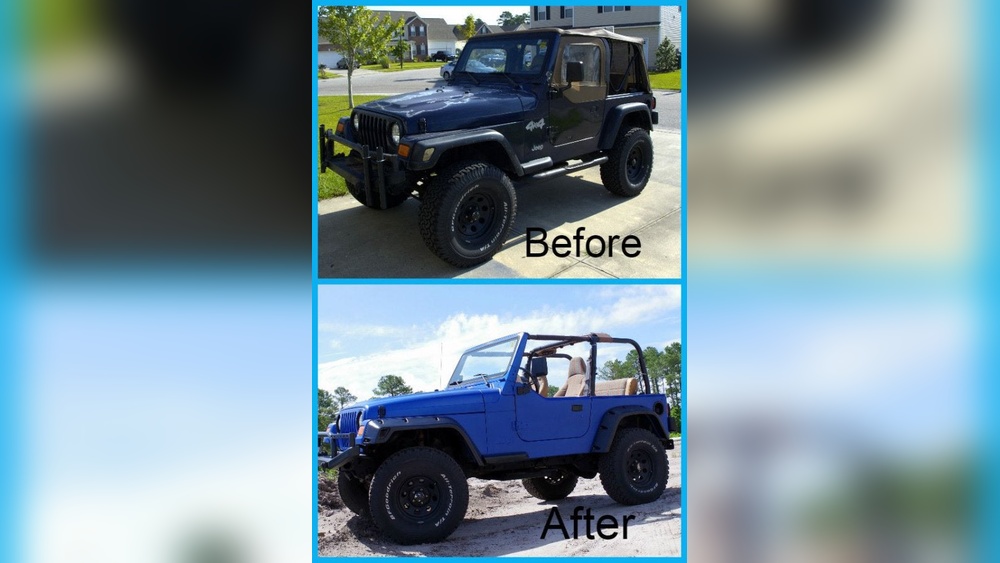
Your Jeep WK is more than just a vehicle; it's a gateway to adventure. Whether you're navigating city streets or tackling rugged trails, you rely on your Jeep to perform at its best.
A crucial, yet often overlooked, aspect of your WK's safety and performance is the proper tightening of its wheel lug nuts. Get this wrong, and you risk everything from a wobbly ride to a wheel coming loose, a dangerous situation for everyone on the road.
This guide will walk you through everything you need to know about Jeep WK wheel lug torque. We’ll cover why it’s so important, the correct torque specifications for your specific WK model, the tools you’ll need, and the step-by-step process for tightening your lug nuts correctly.
Understanding and applying the right torque is a simple but vital maintenance task that ensures your Jeep remains safe, stable, and ready for any journey.
Why Proper Wheel Lug Torque Matters
The lug nuts on your Jeep WK are the unsung heroes holding your wheels securely to the vehicle. They are designed to be tightened to a specific torque value, which is a measure of the rotational force applied.
This isn’t just about making them “tight enough”; it’s about achieving a precise level of tension.
If lug nuts are under-torqued, they might not hold the wheel firmly against the hub. This can lead to the wheel wobbling, uneven tire wear, and in the worst-case scenario, the lug nuts can back off completely, causing the wheel to detach from the vehicle.
This is an extremely hazardous situation that can result in a severe accident.
On the other hand, over-torquing lug nuts is also problematic. Excessive force can stretch or even break the wheel studs (the bolts that the lug nuts screw onto). It can also damage the lug nuts themselves, warp brake rotors, or even crack the wheels.
Damaged studs are a serious safety concern, and warped rotors can lead to poor braking performance and vibrations.
Achieving the correct torque ensures that the clamping force is evenly distributed across all the lug nuts and the wheel. This keeps the wheel seated properly, prevents vibration, and ensures the longevity of your wheel studs and related components.
It’s a critical step in maintaining the integrity and safety of your Jeep WK.
Understanding Jeep WK Wheel Lug Torque Specifications
The exact torque specification for your Jeep WK can vary slightly depending on the model year and specific trim. However, for most Jeep WK models (2005-2010) and the later WK2 models (2011-2026), the recommended lug nut torque is generally consistent.
For most Jeep WK and WK2 models, the standard lug nut torque specification is 100 foot-pounds (ft-lbs) or 135 Newton-meters (Nm).
It’s crucial to always verify this specification for your particular year and model. You can find this information in several reliable places:
- Your Jeep Owner’s Manual: This is the most authoritative source. Look in the maintenance or specifications section.
- Online Jeep Forums and Communities: Many Jeep owners share detailed maintenance information.
- Reputable Automotive Repair Websites: These sites often list specifications for various makes and models.
Pro Tip: When checking your owner’s manual, pay attention to any notes regarding specific wheel types (e.g., alloy vs. steel) or if the recommendation changes after a tire rotation or brake job. While the 100 ft-lbs is standard, always double-check.
Tools You’ll Need For The Job
To properly torque your Jeep WK’s wheel lug nuts, you’ll need a few essential tools. Having the right equipment makes the job easier, safer, and ensures accuracy.
- Torque Wrench: This is the most important tool. A click-type torque wrench is highly recommended for this task. These wrenches audibly click and/or release tension when the set torque value is reached, preventing over-tightening. You can find reliable click-type torque wrenches at most auto parts stores. Ensure it has a range that includes 100 ft-lbs.
- Socket Wrench (Ratchet): You’ll need a socket wrench to fit your Jeep’s lug nuts. Most Jeep WK models use a 22mm or 7/8-inch socket. It’s a good idea to have a deep socket that can easily fit over the lug nut and reach the stud.
- Breaker Bar (Optional but Recommended): For loosening tight lug nuts, a breaker bar provides more leverage than a standard ratchet.
- Wheel Chocks: These are wedges placed behind the wheels to prevent the vehicle from rolling while it’s jacked up. Safety first!
- Jack and Jack Stands: You’ll need a reliable jack to lift the vehicle, and jack stands to support it safely while you work. Never rely solely on the jack.
- Wire Brush: To clean the wheel studs and lug nut seats.
- Gloves and Safety Glasses: Always protect yourself.
The Step-by-Step Process For Torquing Lug Nuts
Performing this task correctly involves more than just spinning a wrench. Follow these steps carefully for a safe and secure wheel installation.
1. Prepare Your Vehicle
- Park your Jeep WK on a flat, level surface. Engage the parking brake firmly.
- Place wheel chocks behind the wheels that will remain on the ground. If you’re working on a front wheel, chock the rear wheels. If working on a rear wheel, chock the front wheels.
- If you’re removing a wheel, slightly loosen the lug nuts before you jack up the vehicle. Turn them counter-clockwise about a half-turn. They should break loose with moderate force. If they are extremely tight, use a breaker bar.
2. Jack Up The Vehicle And Remove The Wheel (if Necessary)
- Consult your owner’s manual for the correct jacking points on your Jeep WK.
- Position the jack and carefully lift the vehicle until the tire is off the ground.
- Place a jack stand securely under a strong point of the frame or suspension near the wheel you’re working on. Slowly lower the vehicle onto the jack stand. Never work under a vehicle supported only by a jack.
- If you haven’t already, fully remove the lug nuts and take off the wheel.
3. Inspect And Clean
- Examine the wheel studs for any signs of damage, such as stripped threads or cracks. If you find any damage, the stud needs to be replaced.
- Clean the wheel stud threads and the lug nut seats (the tapered or conical part of the lug nut that contacts the wheel) with a wire brush. Removing dirt, rust, or debris ensures a proper fit and accurate torque reading.
- Inspect the wheel’s mounting surface for any corrosion or debris.
4. Mount The Wheel
- Place the wheel back onto the hub, aligning the bolt holes.
- Hand-tighten all the lug nuts onto the studs. This helps ensure they are threaded correctly and prevents cross-threading.
5. The Star Pattern Tightening Method
This is the most critical part of ensuring the wheel is mounted evenly.
- Initial Tightening: Using your socket wrench (without the torque wrench for now), snug up the lug nuts in a star or crisscross pattern. For a 5-lug wheel, this means tightening one lug, then the one directly opposite it, then moving to the next lug and its opposite, and so on. This process ensures the wheel is pulled evenly against the hub.
- Torquing: Now, set your torque wrench to the specified value (100 ft-lbs or 135 Nm for most WK/WK2 models).
- Begin torquing the lug nuts, again following the star pattern.
- Tighten each lug nut until the torque wrench clicks.
- Make a second pass around the star pattern, re-torquing each lug nut. This ensures that as you tightened one nut, it didn’t slightly loosen others.
- For absolute certainty, a third pass in the star pattern is recommended. Ensure the torque wrench clicks on every single lug nut during this final pass.
Example of a Star Pattern (5-lug wheel):
If the lug nuts are numbered 1 through 5 clockwise:
- Tighten #1
- Tighten #3 (opposite #1)
- Tighten #5
- Tighten #2 (opposite #3)
- Tighten #4 (opposite #5)
Repeat this sequence until all nuts are torqued to spec.
6. Lower The Vehicle And Final Check
- Carefully raise the vehicle slightly off the jack stand.
- Remove the jack stand.
- Slowly lower the vehicle completely to the ground.
- Re-check the torque on all lug nuts one last time with the vehicle’s full weight on the wheels. Sometimes, the weight of the vehicle can cause slight settling.
7. Repeat For All Wheels
- Repeat the entire process for each wheel on your Jeep WK.
Important Considerations And Best Practices
Beyond the basic steps, there are a few nuances and best practices that can significantly impact the reliability of your wheel installation.
Do Not Use An Impact Wrench For Final Tightening
While an impact wrench can be useful for quickly removing lug nuts or for initial snugging, it should never be used for the final tightening or torquing process.
Impact wrenches deliver powerful, uncontrolled bursts of torque. It’s incredibly easy to significantly over-torque or under-torque the lug nuts with an impact gun, leading to the problems we discussed earlier: damaged studs, warped rotors, or loose wheels.
If you use an impact wrench for initial tightening, always follow up with a calibrated torque wrench.
Avoid Lubricants On Lug Nut Threads Or Seats
A common misconception is that applying lubricant (like anti-seize or oil) to the lug nut threads or the conical seat will help achieve a better torque reading or prevent seizing.
This is incorrect and dangerous. Lubricants reduce the friction between the nut and the stud/wheel. This means that when you reach your target torque value (e.g., 100 ft-lbs) on a lubricated thread, the actual clamping force on the wheel is significantly higher than it would be on a dry thread.
This can easily lead to over-tightening and damaged components, even when using a torque wrench. Always install lug nuts on clean, dry threads.
Re-torque After Driving
After installing or rotating wheels, it’s a critical safety measure to re-check the torque on the lug nuts after driving a short distance.
Pro Tip: Re-torque the lug nuts after approximately 50-100 miles (80-160 km) of driving. This allows the wheel to settle onto the hub and the lug nuts to seat properly.
If any lug nuts have loosened, they need to be tightened back to the specified torque. This is especially important for alloy wheels, which can sometimes settle more than steel wheels.
Dealing With Damaged Components
If you encounter damaged wheel studs or lug nuts, do not attempt to force them or use them.
- Damaged Studs: If a stud is stripped, cross-threaded, or visibly damaged, it must be replaced. This often involves removing the brake rotor and potentially the hub assembly, depending on the vehicle. If you’re not comfortable with this level of repair, it’s best to take your Jeep to a professional mechanic.
- Damaged Lug Nuts: If a lug nut is rounded off, cross-threaded, or its seat is damaged, it should be replaced immediately. Cheap replacement lug nuts are readily available at auto parts stores. Ensure you get the correct type and size for your Jeep WK.
Understanding Torque Values: Ft-lbs Vs. Nm
You’ll often see torque specifications listed in both foot-pounds (ft-lbs) and Newton-meters (Nm). It’s important to understand what these mean and how they relate.
- Foot-pound (ft-lbs): This is a common unit of torque in the United States. It represents the force of one pound acting at a distance of one foot from the pivot point.
- Newton-meter (Nm): This is the standard international (SI) unit for torque. It represents the force of one Newton acting at a distance of one meter from the pivot point.
The conversion factor is approximately:
1 ft-lb = 1.356 Nm
Or
1 Nm = 0.737 ft-lbs
So, for the Jeep WK’s specification:
100 ft-lbs * 1. 356 = 135. 6 Nm (often rounded to 135 Nm)
135 Nm * 0. 737 = 99. 5 ft-lbs (often rounded to 100 ft-lbs)
When using your torque wrench, ensure it is set to the unit specified in your owner’s manual, or be prepared to convert if necessary. Most modern torque wrenches can switch between ft-lbs and Nm.
Comparison Of Torque Wrench Types
When it comes to torque wrenches, different types exist, each with its own advantages and ideal use cases. For tightening lug nuts on your Jeep WK, one type stands out as the most suitable.
| Torque Wrench Type | Description | Best Use Case for Lug Nuts | Potential Drawbacks for Lug Nuts |
|---|---|---|---|
| Click-Type | Audible and/or tactile “click” when preset torque is reached. Most common and user-friendly. | Ideal. Provides clear indication of reaching target torque, preventing over-tightening. Relatively affordable. | Requires proper storage (release tension after use) and occasional calibration to maintain accuracy. |
| Beam-Type | Features a pointer that moves along a scale as torque is applied. Simple and durable. | Usable, but requires careful visual monitoring. Less intuitive than click-type for beginners. | Accuracy can be compromised if not held perfectly level. Difficult to see the reading precisely at the moment of peak torque, especially in awkward positions. |