Can Jeep Liberty Wheels Fit A Ford Ranger? A Comprehensive Guide
The world of automotive customization and repair often leads to questions about part compatibility. One common query among truck and SUV owners is whether wheels from one make and model can be fitted onto another.
Specifically, many wonder: Can Jeep Liberty wheels fit a Ford Ranger? This question arises for various reasons, from wanting a different look to finding more affordable replacement options.
While the idea of interchanging parts between different manufacturers might seem appealing, it's crucial to understand the technical details involved. This guide will explore the intricacies of wheel fitment, focusing on the Jeep Liberty and Ford Ranger, to provide a clear answer and guide you through the process.
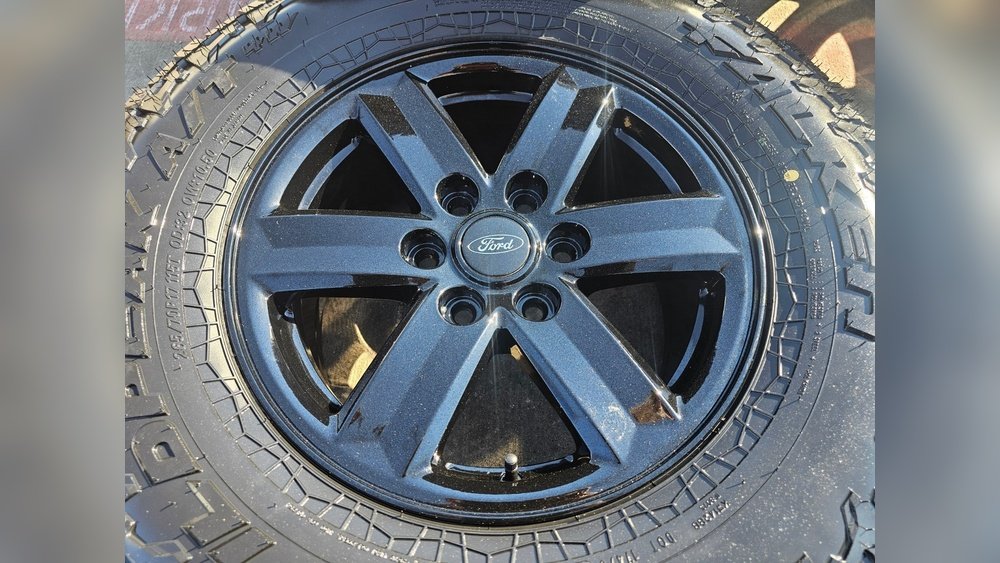
Understanding wheel fitment isn't just about making a wheel *look* like it fits. It involves several critical measurements and specifications that ensure safety, performance, and proper function.
If wheels are not correctly fitted, it can lead to serious problems, including uneven tire wear, poor handling, brake interference, and even wheel failure, which can cause accidents.
Therefore, a deep dive into bolt patterns, center bore size, offset, and backspacing is essential before attempting any modifications. We’ll break down each of these factors for both the Jeep Liberty and Ford Ranger, comparing their specifications to determine compatibility.
The Critical Factors Of Wheel Fitment
Before we get into the specifics of the Jeep Liberty and Ford Ranger, let’s define the key terms that determine if a wheel will fit your vehicle. These specifications are universal across most vehicles and are the first things you should check when considering aftermarket or salvaged wheels.
Bolt Pattern
The bolt pattern refers to the number of lug nuts (or bolts) on the wheel and the diameter of the circle on which they are mounted. It’s usually expressed as two numbers, such as 5×114.3mm. The first number is the number of bolt holes, and the second is the diameter of the bolt circle in millimeters. For example, a 5×114.3mm pattern means there are 5 lug holes arranged in a circle that is 114.3 millimeters in diameter. A mismatch in bolt pattern is the most common reason why wheels won’t fit. If the bolt pattern is different, the wheel simply will not bolt onto the hub.
Center Bore
The center bore is the hole in the middle of the wheel that fits over the vehicle’s hub. This hole is precisely sized to match the hub’s diameter. A properly fitting center bore ensures the wheel is centered on the hub, which is crucial for balance and smooth rotation. If the wheel’s center bore is too small, it won’t fit over the hub. If it’s too large, the wheel will rely solely on the lug nuts to center it, which can lead to vibrations and stress on the lug studs. While hub-centric rings can be used to adapt a larger center bore to a smaller hub, it’s generally best to have a matching or slightly larger center bore (with proper centering rings) for optimal performance.
Offset
Offset is the distance from the centerline of the wheel to the mounting surface (where the wheel meets the hub). It’s measured in millimeters and can be positive, negative, or zero.
- Positive offset: The mounting surface is closer to the outside of the wheel. This tucks the wheel inward.
- Negative offset: The mounting surface is further away from the outside of the wheel. This pushes the wheel outward.
- Zero offset: The mounting surface is exactly in the middle of the wheel.
Offset affects how the wheel sits in the wheel well. Incorrect offset can cause the tire to rub against the fenders, suspension components, or brake calipers.
It also impacts the vehicle's handling and steering.
Backspacing
Backspacing is similar to offset but is measured from the inside of the wheel rim to the mounting surface. It’s also measured in inches or millimeters. Backspacing is a more direct measurement of how much clearance there is between the wheel and the vehicle’s suspension components. A deeper backspacing means the wheel is tucked further into the fender. Like offset, incorrect backspacing can lead to interference issues.
Wheel Diameter And Width
While not directly related to whether a wheel *bolts on*, the wheel diameter and width are critical for overall fitment. The diameter must be compatible with the tire size and allow sufficient clearance for brakes. The width determines how much tire sidewall can be accommodated and how the tire sits on the rim. A wheel that is too wide or too narrow for a tire can be unsafe.
Jeep Liberty Wheel Specifications
The Jeep Liberty has been produced across two generations, with different wheel options available for each. It’s important to know which generation you are dealing with, as specifications can vary.
First Generation Jeep Liberty (kj: 2002-2007)
- Bolt Pattern: 5×114.3mm (also known as 5×4.5 inches)
- Center Bore: Approximately 71.5mm
- Typical OEM Offset: Ranges from +30mm to +43mm, depending on the specific trim and wheel size (e.g., 16-inch, 17-inch).
Second Generation Jeep Liberty (kk: 2008-2012)
- Bolt Pattern: 5×114.3mm (also known as 5×4.5 inches)
- Center Bore: Approximately 71.5mm
- Typical OEM Offset: Ranges from +38mm to +43mm, depending on wheel size.
As you can see, both generations of the Jeep Liberty share the same bolt pattern and a very similar center bore size. This makes them relatively consistent in terms of basic wheel mounting.
Ford Ranger Wheel Specifications
The Ford Ranger has a long production history, with significant changes in its wheel specifications over the years. This is a crucial point because not all Ford Rangers will have compatible wheel specifications with the Jeep Liberty.
Older Ford Ranger Models (pre-2012)
Many older Ford Ranger models, particularly those manufactured before the mid-2000s and up to around 2011, often featured a different bolt pattern.
- Bolt Pattern: 5×114.3mm (5×4.5 inches) is common on some RWD models and smaller engines.
- Bolt Pattern: However, a significant number of Rangers, especially 4×4 models and those with larger engines, used a 5x140mm bolt pattern. This is a critical difference.
- Center Bore: Varies, but often around 82mm for the 5x140mm pattern. For the 5×114.3mm pattern, it can be closer to 70.5mm.
- Typical OEM Offset: Varies greatly, but often in the range of 0mm to +30mm for 5×114.3mm and can be different for 5x140mm.
Newer Ford Ranger Models (2019+ – Global T6 Platform)
The current generation of the Ford Ranger, particularly those built on the T6 platform (used globally and in the US from 2019 onwards), has different specifications.
- Bolt Pattern: 6×139.7mm (also known as 6×5.5 inches). This is a very common bolt pattern for many trucks and SUVs, but it’s fundamentally different from the Jeep Liberty’s 5-lug pattern.
- Center Bore: Approximately 93mm.
- Typical OEM Offset: Typically around +30mm to +55mm, depending on wheel size and trim.
Comparing Jeep Liberty And Ford Ranger Specifications
Now, let’s directly compare the specifications to answer the main question: Can Jeep Liberty wheels fit a Ford Ranger?
The answer is it depends heavily on the specific Ford Ranger model year and configuration.
Scenario 1: Jeep Liberty Wheels On A Ford Ranger With A 5×114.3mm Bolt Pattern
If you have a Ford Ranger that uses the 5×114.3mm bolt pattern (which is common on some rear-wheel-drive and smaller engine variants, especially older models), then the bolt pattern of the Jeep Liberty wheels will match.
However, you still need to consider the center bore.
- Jeep Liberty center bore: ~71.5mm
- Ford Ranger (5×114.3mm) center bore: ~70.5mm
In this specific case, the Jeep Liberty wheels have a slightly larger center bore (71.5mm) than the Ranger’s hub (70.5mm). This is a situation where hub-centric rings would be necessary. These rings fit into the wheel’s center bore and have an inner diameter that matches the vehicle’s hub, ensuring proper centering. Without them, the wheel relies solely on the lug nuts for centering, which is not ideal and can lead to vibrations and premature wear on studs and lug nuts.
Furthermore, you must check the offset and backspacing. Jeep Liberty wheels often have a more positive offset (e.g., +30mm to +43mm) compared to some Rangers, which might have lower positive offsets or even zero/negative offsets on certain trims. A higher positive offset on the Liberty wheels will cause them to sit further inward. Whether this causes interference depends on the Ranger’s suspension geometry, brake caliper size, and fender clearance. You would need to carefully measure or consult fitment guides for the specific Ranger model.
Scenario 2: Jeep Liberty Wheels On A Ford Ranger With A 5x140mm Bolt Pattern
If your Ford Ranger uses the 5x140mm bolt pattern, then Jeep Liberty wheels will NOT fit. The bolt patterns are different, and the wheels cannot be bolted onto the hub. There are no simple adapters or rings that can safely convert a 5-lug pattern to another 5-lug pattern with a different bolt circle diameter. Attempting to force such a fit is extremely dangerous.
Scenario 3: Jeep Liberty Wheels On A Newer Ford Ranger (2019+ T6)
If you have a newer Ford Ranger (2019 onwards), it uses a 6×139.7mm bolt pattern. This is a completely different bolt pattern (6 lugs instead of 5) and diameter. Therefore, Jeep Liberty wheels will NOT fit a newer Ford Ranger.
The Risks Of Mismatched Wheels
Even if you manage to get wheels to bolt onto your vehicle, using parts that are not designed for your specific make and model carries significant risks.
Safety Concerns
The most critical aspect is safety. Wheels are structural components that bear the load of the vehicle and are subjected to immense forces during driving, braking, and cornering.
- Bolt Pattern Mismatch: As mentioned, if the bolt pattern doesn’t match, the wheel simply won’t mount correctly. Forcing it or using incorrect adapters can lead to catastrophic failure.
- Center Bore Issues: An improperly centered wheel (due to a mismatched or absent hub-centric ring) can cause vibrations, especially at higher speeds. This vibration puts stress on the lug nuts and studs, potentially leading to them loosening or breaking.
- Offset and Backspacing Problems: Wheels that are too far in or out can interfere with suspension components (like control arms or tie rods) or brake calipers. This interference can cause damage to parts, affect steering, and compromise braking performance. Tires can also rub against fenders or the suspension, leading to tire damage and potential blowouts.
Performance And Durability Issues
- Uneven Tire Wear: Incorrect offset and backspacing can alter the scrub radius and suspension geometry, leading to premature and uneven wear on your tires.
- Handling and Steering: The way wheels and tires position themselves relative to the suspension affects how the vehicle handles. Mismatched wheels can make steering feel heavy, vague, or cause the vehicle to pull to one side.
- Strain on Bearings: Wheels that are significantly wider or have an offset that pushes them further out can put extra strain on the wheel bearings, leading to premature failure.
- Brake Interference: Larger brake components are common on many vehicles. A wheel with an incorrect offset or design might not clear the brake calipers, even if the bolt pattern matches. This is a common issue when trying to fit smaller wheels onto vehicles with larger factory brake systems.
How To Properly Check Wheel Compatibility
Given the complexities, it’s essential to follow a systematic approach to check wheel compatibility.
1. Identify Your Vehicle’s Specifications
First, you need the exact wheel specifications for *your* vehicle. This information can usually be found:
- In your owner’s manual.
- On a sticker inside the driver’s side doorjamb.
- By searching online databases specific to your vehicle’s make, model, and year.
Pro Tip: Always double-check your vehicle’s specifications from multiple reliable sources, as there can be variations even within the same model year.
2. Identify The Donor Wheel’s Specifications
You need the precise specifications of the Jeep Liberty wheels you are considering. Again, this involves knowing the specific year and trim of the Jeep Liberty.
3. Compare Key Specifications
- Bolt Pattern: This is the absolute first check. If the bolt patterns do not match exactly (e.g., 5×114.3mm vs. 5×114.3mm), the wheels are not compatible.
- Center Bore: If the bolt patterns match, check the center bore. A wheel with a larger center bore than the hub requires hub-centric rings. A wheel with a smaller center bore will not fit.
- Offset and Backspacing: These are crucial for determining if the wheel will clear suspension components, brakes, and fenders. Use online calculators or consult with a professional if you are unsure. A difference of more than 5-10mm in offset can sometimes cause issues.
4. Consider Tire Size
Even if the wheels physically fit, you need to ensure they are compatible with appropriate tire sizes. The overall diameter of the tire and wheel combination must not be excessively larger or smaller than the original setup, as this affects speedometer accuracy, gearing, and suspension geometry.
The wheel width also dictates the range of tire widths that can be safely mounted.
5. Consult Professionals Or Reputable Online Resources
When in doubt, consult a professional wheel and tire shop. They have access to extensive databases and experience to advise on fitment.
Reputable online wheel retailers also often have fitment guides where you can input your vehicle and the desired wheels to see compatibility.
Can You Use Adapters Or Spacers?
Sometimes, people consider using wheel adapters or spacers to make wheels fit.
- Spacers: These are simple plates that go between the wheel and the hub to push the wheel further out



















