The Jeep Latitude 4×4 system is a popular choice for drivers seeking a balance of capability and everyday usability. Understanding how it works, its benefits, and when to engage it is key to maximizing your driving experience, whether you’re on a weekend adventure or navigating daily commutes.
This system, often found in Jeep models like the Cherokee and Compass, offers a significant step up in traction and control compared to two-wheel-drive systems, especially in challenging conditions.
Many drivers wonder about the specifics of their 4×4 system, particularly when it comes to automatic engagement or manual selection. The “4 Wheel Turn Off” phrasing in your search might stem from a desire to understand when the Jeep is *not* in 4WD, or how to manage its engagement.
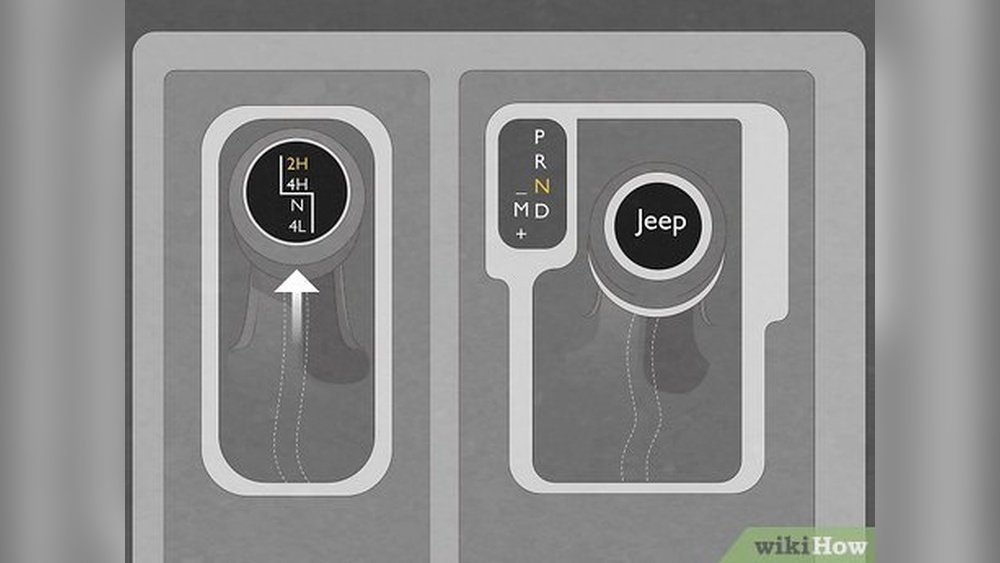
This article will break down the Jeep Latitude 4×4 system, explaining its core components, how it operates, its advantages, and important considerations for using it effectively and safely. We’ll explore the different modes and settings, helping you make informed decisions about when and how to use this versatile drivetrain.
Understanding The Jeep Latitude 4×4 System
The Jeep Latitude 4×4 system is designed to automatically provide power to all four wheels when needed, enhancing traction and stability. Unlike full-time 4WD systems found in some other Jeep models, the Latitude’s system is typically an on-demand or automatic 4WD system. This means it primarily operates in two-wheel drive (2WD) for normal driving conditions, saving fuel, and then seamlessly switches to 4WD when slippage is detected.
Key Components Of The System
At its heart, the Latitude 4×4 system relies on a few critical components working in harmony:
- Transfer Case: This is the central component that distributes power from the engine to both the front and rear axles. In an automatic 4WD system, the transfer case contains a clutch pack or a similar mechanism that can engage the front driveshaft.
- Sensors: Various sensors monitor wheel speed, throttle position, and other driving parameters. When these sensors detect that the wheels on one axle are spinning faster than the wheels on the other (indicating slippage), they signal the transfer case to engage.
- Clutch Pack/Actuator: Within the transfer case, an electronically controlled clutch pack or actuator engages, sending power to the front wheels. This engagement is what shifts the vehicle from 2WD to 4WD.
- Driveshafts and Axles: Once engaged, power flows through the front driveshaft to the front differential and then to the front wheels, providing the necessary traction.
The beauty of this system is its automatic nature. You don’t need to manually shift gears or engage a lever in the cabin for it to work. It’s designed to be transparent to the driver, providing enhanced grip precisely when it’s needed most.
How Automatic 4wd Works
The operation of an automatic 4WD system is a continuous cycle of monitoring and engagement. Here’s a simplified breakdown:
- Normal Driving (2WD): Under most dry, paved road conditions, the system operates in 2WD mode, sending power only to the rear wheels. This is more fuel-efficient and reduces wear on the drivetrain components.
- Slippage Detection: Sensors constantly monitor the speed of the wheels. If, for instance, the rear wheels begin to lose traction and spin (like on ice or in mud), their speed will increase relative to the front wheels.
- Automatic Engagement: The system’s computer interprets this difference in wheel speed as a loss of traction. It then commands the transfer case to engage the front axle. This usually involves an electronically controlled clutch pack tightening, coupling the front and rear driveshafts.
- 4WD Operation: With both front and rear wheels receiving power, the vehicle gains significantly improved traction. The system can vary the amount of power sent to the front wheels based on the detected slippage.
- Disengagement: As soon as the sensors detect that traction has been regained and the wheel speeds equalize, the system will disengage the front axle, returning the vehicle to 2WD mode to conserve fuel.
This seamless transition is a key advantage, allowing drivers to focus on steering and braking without worrying about manually selecting drive modes. However, it’s important to understand that while it’s automatic, there are often driver-selectable modes that can override this automatic behavior for specific situations.
Understanding Jeep’s Selec-terrain® System
Many Jeep Latitude models are equipped with the Selec-Terrain® Traction Management System. This system allows the driver to select different driving modes to optimize performance for various conditions. While the core 4×4 system is automatic, Selec-Terrain® fine-tunes its behavior and other vehicle systems.
The Different Modes Explained
Selec-Terrain® typically includes several modes, each tailored for specific environments:
- Auto: This is the default mode. The 4×4 system operates automatically, engaging 4WD only when necessary. The vehicle’s computer manages traction control and stability control settings for general driving.
- Snow: Designed for slippery, low-traction surfaces like snow and ice. In this mode, the system is more sensitive to wheel slip and engages 4WD earlier and more aggressively. Throttle response may be softened to prevent sudden acceleration, and the transmission might hold gears longer.
- Sand/Mud: For loose surfaces like sand or deep mud. This mode also prioritizes 4WD engagement but may adjust throttle response and transmission settings differently than Snow mode to maintain momentum. It often allows for more wheel slip before intervening, which can be beneficial in mud to help the tires clear themselves.
- Rock (if equipped with 4×4 Low): Some Latitude models, particularly those with a more robust 4×4 system and a low-range gear, will have a Rock mode. This mode is optimized for crawling over obstacles at low speeds, providing maximum traction and control. It typically engages 4WD Low (if available) and adjusts throttle and transmission for precise control.
- Sport: This mode enhances on-road performance. While it keeps the vehicle in 2WD for efficiency, it sharpens throttle response, adjusts steering feel, and may alter transmission shift points for a more engaging driving experience on dry pavement.
The Selec-Terrain® dial allows you to choose the mode that best suits your current driving conditions. While the system is designed to be intuitive, understanding each mode’s purpose can help you get the most out of your Jeep.
When To Use Each Mode
- Auto: Your go-to for everyday driving on paved roads, light rain, or occasional light snow.
- Snow: Crucial for driving in significant snow accumulation, icy patches, or during heavy snowfall. It provides the most conservative and stable traction.
- Sand/Mud: Essential for off-road excursions, beach driving, or navigating unpaved, soft terrain.
- Sport: Use this when you want a more responsive feel on dry roads, perhaps during spirited driving or simply to feel more connected to the vehicle.
It’s important to note that even in Auto mode, the system is quite capable. However, manually selecting a mode like Snow or Sand/Mud tells the vehicle’s computers to prepare for those conditions proactively, often leading to better performance and safety.
Benefits Of The Latitude 4×4 System
The Jeep Latitude 4×4 system offers several significant advantages, making it a popular choice for a wide range of drivers.
Enhanced Traction And Stability
The most obvious benefit is improved traction. By distributing power to all four wheels, the system significantly reduces the chance of getting stuck or losing control when driving on slippery surfaces. This includes:
- Wet Roads: Rain can make pavement slick, and 4WD helps maintain grip.
- Snow and Ice: Essential for winter driving, providing the necessary grip to accelerate, brake, and steer safely.
- Gravel and Dirt Roads: Unpaved surfaces can be loose, and 4WD helps prevent wheel spin and maintain forward momentum.
- Muddy Conditions: Essential for off-road driving or navigating areas with mud.
This enhanced traction directly translates to increased stability, giving the driver more confidence and control, especially in unpredictable weather or road conditions.
Improved Off-road Capability
While the Latitude’s 4×4 system might not be as extreme as the systems found in Jeep’s Rubicon models, it still provides a considerable boost in off-road capability. For light off-roading, exploring forest service roads, or accessing remote trailheads, the automatic 4WD system is more than adequate.
When combined with appropriate tires and the Selec-Terrain® system, it can handle a surprising variety of challenging terrain.
Fuel Efficiency Compared To Full-time 4wd
A key advantage of the on-demand nature of the Latitude’s 4×4 system is its fuel efficiency. Because it primarily operates in 2WD mode, it doesn’t incur the same fuel economy penalty as traditional full-time 4WD systems, which are always sending power to both axles. This makes it a practical choice for daily commuting, where fuel economy is a significant consideration. When 4WD is needed, it engages automatically, but when it’s not, the vehicle behaves like a standard 2WD car, maximizing MPG.
Driver Confidence And Safety
Knowing that your vehicle is equipped to handle a wide range of conditions can significantly boost driver confidence. This is particularly true for families or individuals who frequently encounter adverse weather or drive in areas with variable road surfaces.
The system's ability to react automatically means the driver doesn't have to remember to engage 4WD; it's always working in the background to keep them safe.
When To Engage 4wd (and When Not To)
Understanding the nuances of when to use 4WD is crucial for maximizing its benefits and avoiding potential issues.
Situations Where 4wd Is Beneficial
- Starting from a stop on slippery surfaces: This is when wheels are most likely to spin. Engaging 4WD before accelerating helps.
- Driving uphill on snow or ice: Gravity works against you here, and 4WD provides the extra push needed.
- Driving through standing water or puddles: While not designed for deep water, 4WD can help maintain traction if you encounter unexpected wet patches.
- Soft or loose surfaces: Sand, gravel, or unpaved roads benefit greatly from the added grip.
- When towing: If you’re towing a trailer, especially on uneven or slippery ground, 4WD can provide more stability and pulling power.
Situations To Avoid Using 4wd
- Dry Pavement: Driving in 4WD on dry, high-traction surfaces is generally not recommended for most on-demand 4×4 systems.
- Increased Wear: It can cause unnecessary wear on the drivetrain components, particularly the tires and the transfer case.
- Reduced Fuel Economy: The system is constantly engaged, meaning more friction and thus lower MPG.
- Handling Issues: Some systems can bind or feel “clunky” when turning sharply on dry pavement in 4WD, as the front and rear wheels are being forced to rotate at different speeds.
- High-Speed Driving on Dry Roads: Stick to 2WD for normal highway cruising. The automatic system will engage 4WD if it detects slip, but manually keeping it in 4WD on dry highways is unnecessary and can be detrimental.
The Role Of “turn Off” – Understanding 2wd Mode
The phrase “Jeep Latitude 4 Wheel Turn Off” essentially refers to the vehicle operating in its 2WD mode. In an automatic 4WD system like the one typically found in the Latitude, you don’t usually “turn off” 4WD manually in the same way you might on a traditional part-time 4WD system. Instead, the system automatically disengages the front wheels when it determines that 4WD is no longer needed.
However, if your Jeep has a specific drive mode selector (like Selec-Terrain®), you can influence this. For example:
- Selecting Sport mode typically keeps the vehicle in 2WD for optimal on-road performance and efficiency.
- If your vehicle has a mode that explicitly forces 2WD (less common on modern Jeeps with automatic 4WD, but possible), that would be how you “turn off” 4WD.
The most common scenario where you’d think of “turning off” 4WD is when you’ve been driving in a mode that prioritizes 4WD engagement (like Snow) and you return to dry pavement. In this case, selecting Auto or Sport mode will allow the system to revert to 2WD.

Common Misconceptions And Tips
Many drivers have questions or hold common misconceptions about how their 4×4 systems work. Addressing these can lead to better usage and longevity of the vehicle.
Misconception 1: “my Jeep Is Always In 4wd”
This is not true for the Latitude's automatic 4×4 system. As explained, it primarily runs in 2WD to save fuel.
It only engages 4WD when sensors detect a need for extra traction. This is a key difference from Jeep's more robust, part-time or full-time 4WD systems found in models like the Wrangler or Grand Cherokee Trailhawk.
Misconception 2: “4wd Means I Can Drive Faster In Bad Weather”
Warning: 4WD significantly improves acceleration and traction, but it does not improve braking or cornering capabilities beyond what standard tires and brakes can provide. You should always adjust your speed according to the road conditions, regardless of whether you are in 2WD or 4WD.
Tip: Tire Condition Is Crucial
Your tires are the only point of contact between your Jeep and the road. Even with 4WD, worn or inappropriate tires will severely limit your traction.
Ensure your tires are in good condition, properly inflated, and suitable for the conditions you expect to encounter.
For those who frequently drive in snow, winter tires are highly recommended.
Tip: Understand Your Specific Model
Jeep offers various 4×4 systems across its model range. While the Latitude typically features an automatic on-demand system, it's always best to consult your owner's manual for the precise details of your specific Jeep model and year.
This will clarify the exact capabilities and operational modes of your 4×4 system.
For instance, some models might offer a 4WD Low range for serious off-roading, while others focus purely on automatic on-demand engagement.
Tip: Listen To Your Vehicle
Pay attention to how your Jeep feels and sounds. If you’re in 4WD on dry pavement and notice any clunking, binding, or unusual noises, especially when turning, it’s a strong indicator that you should disengage 4WD or switch to a mode that allows the system to revert to 2WD.



















