Understanding Jeep Grand Cherokee Xenon Headlights
The Jeep Grand Cherokee is a vehicle known for its capability, comfort, and stylish design. Part of its sophisticated appeal, especially on higher trim levels or as an upgrade, comes from its lighting system.
Among the most advanced options are Xenon headlights, also commonly referred to as HID (High-Intensity Discharge) headlights. These are a significant step up from traditional halogen bulbs, offering brighter illumination, a whiter light, and improved energy efficiency.
For Grand Cherokee owners, understanding these lights is crucial for maintenance, upgrades, and ensuring optimal visibility on the road, whether navigating city streets or venturing off-road.
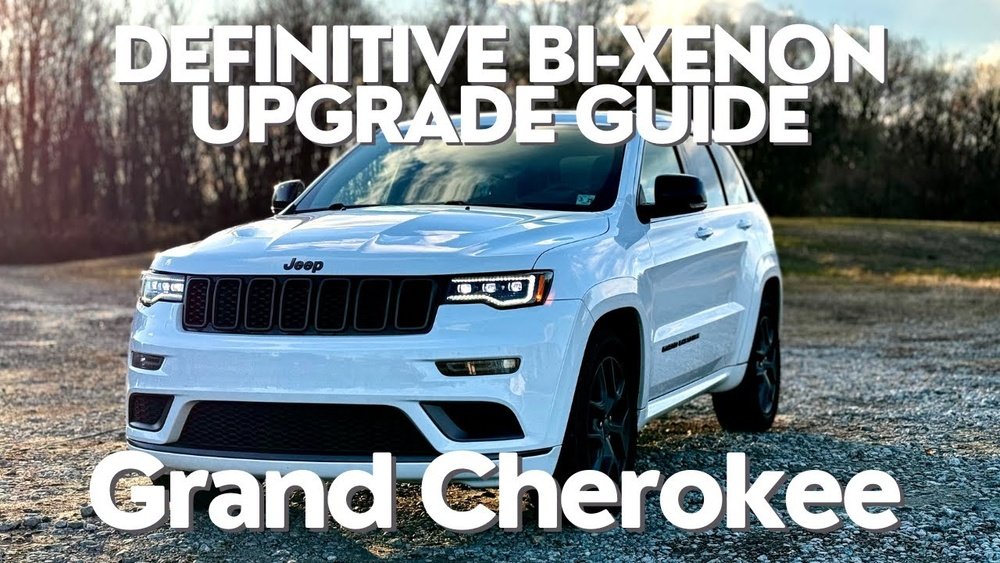
Xenon headlights use an electric arc to ignite gas within a sealed glass bulb, producing light. This process differs fundamentally from the incandescent filament found in halogen bulbs.
The result is a light output that is not only brighter but also closer to the color temperature of natural daylight.
This can significantly enhance nighttime driving comfort and safety by improving the driver’s ability to see obstacles, road signs, and lane markings more clearly. For a vehicle like the Grand Cherokee, which is often used for diverse driving conditions, effective lighting is paramount.
This article will explore the intricacies of Jeep Grand Cherokee Xenon headlights, covering their technology, benefits, common issues, maintenance, and upgrade options, providing a comprehensive guide for owners.
The Technology Behind Xenon Headlights
Xenon headlights represent a leap forward in automotive lighting technology. Unlike conventional halogen bulbs that rely on heating a filament until it glows, Xenon or HID systems work on a different principle. At their core is a gas-discharge bulb filled with xenon gas, metal halide salts, and a small amount of mercury. When power is applied, a high-voltage starter ignites the gas, creating an electrical arc that passes through the xenon gas. This arc excites the gas and the metal salts, causing them to emit intense light.
The system requires several components to function:
- Xenon Bulb: This is the heart of the system. It’s a sealed glass capsule containing the xenon gas and other elements. The bulbs are designed to be durable and long-lasting.
- Ballast: This is a crucial electronic component that acts as a voltage regulator. It provides the initial high-voltage burst (around 20,000 to 25,000 volts) needed to strike the arc. Once the arc is established, the ballast then reduces the voltage to a stable operating level (typically around 85 volts) to maintain the light output. Without the ballast, the bulb would either not ignite or would be destroyed by excessive voltage.
- Igniter: Often integrated into the ballast or as a separate unit, the igniter is responsible for generating the initial high-voltage pulse.
- Wiring Harness: Connects all components and carries power from the vehicle’s battery to the ballast and then to the bulb.
The light produced by Xenon bulbs is often described as “whiter” or “bluer” than halogen light. This is due to their higher color temperature, typically ranging from 4,000K to 6,000K, compared to halogen bulbs which are usually around 2,700K to 3,200K. This whiter light is more similar to natural daylight, which can reduce eye strain and improve visibility, especially in adverse weather conditions like fog or heavy rain.
Benefits Of Xenon Headlights For Your Grand Cherokee
Upgrading to or having Xenon headlights on your Jeep Grand Cherokee offers several distinct advantages over traditional halogen lighting. These benefits primarily revolve around enhanced safety, improved aesthetics, and greater efficiency.
One of the most significant benefits is superior illumination. Xenon headlights produce up to three times more light output than comparable halogen bulbs. This means a wider and longer beam pattern, allowing you to see further down the road and to the sides. For a vehicle like the Grand Cherokee, which is often used for both highway cruising and exploring less-trafficked areas, this enhanced visibility is critical. It allows drivers to react faster to potential hazards, such as animals crossing the road, pedestrians, or debris.
Beyond sheer brightness, the quality of light is also a major advantage. The whiter light produced by Xenon bulbs mimics natural daylight more closely. This spectral quality can improve color perception for drivers, making it easier to distinguish between different colors on road signs and to identify objects more accurately. This also leads to reduced driver fatigue on long journeys, as the eyes are less strained by the yellowish hue of halogen lights.
Energy efficiency is another key benefit. Despite their higher light output, Xenon bulbs actually consume less power than halogen bulbs once they are ignited. A typical Xenon bulb uses around 35 watts, while a halogen bulb uses about 55 watts. This lower power draw can contribute to slightly better fuel economy and reduces the electrical load on your vehicle’s alternator and battery.
Finally, Xenon headlights often contribute to a more modern and premium look for the vehicle. The distinct white or blue-white glow of Xenon lights is often associated with higher-end vehicles and can give the Grand Cherokee a more sophisticated appearance, especially when paired with projector-style headlight housings.
Common Issues And Troubleshooting For Xenon Headlights
While Xenon headlights are generally reliable, they are complex systems and can experience issues. Understanding these common problems can help Grand Cherokee owners troubleshoot and address them efficiently.
One of the most frequent issues is flickering or intermittent operation. This can manifest as one or both headlights flickering on and off, or failing to turn on consistently. This is often a sign of a failing ballast. The ballast is responsible for regulating the voltage, and if it’s malfunctioning, it can’t maintain a stable arc in the bulb. In some cases, a loose connection in the wiring harness can also cause flickering.
Another common problem is dimming headlights. If one or both of your Xenon headlights appear dimmer than they used to, it could indicate a few things. The bulb itself might be nearing the end of its lifespan. Xenon bulbs degrade over time, and their light output diminishes with use. Alternatively, the ballast could be failing, not providing enough power to the bulb. A dirty or oxidized headlight lens can also significantly reduce light output, making the Xenons appear dimmer.
Headlights not turning on at all is a more serious issue. This usually points to a complete failure of one of the key components. It could be a blown fuse, a faulty igniter, a dead ballast, or a burned-out bulb. It’s important to systematically check each component. Start with the fuses, then inspect the wiring for any visible damage. If those are fine, the issue likely lies with the ballast or the bulb.
Color shift in the light output can also occur. As Xenon bulbs age, their color temperature can change, often shifting towards a more purplish or even pinkish hue. While this doesn’t necessarily mean the light output is significantly reduced, it indicates that the bulb is old and should be replaced soon to maintain optimal and consistent lighting.
Troubleshooting Xenon headlights often involves a process of elimination. If one headlight works and the other doesn’t, you can often swap components (like the ballast) between the two sides to identify the faulty part. However, due to the high voltages involved, it’s crucial to exercise caution and ensure the system is completely powered down before attempting any inspection or component swapping. If you’re not comfortable working with automotive electrical systems, it’s best to consult a professional.

Replacing Xenon Bulbs And Ballasts
Replacing components in a Xenon headlight system requires a bit more care and technical understanding than swapping a standard halogen bulb. The two main components that typically need replacement are the Xenon bulb itself and the ballast.
Replacing A Xenon Bulb
Xenon bulbs, also known as HID bulbs, have a different design than halogen bulbs. They typically have a base that connects to the vehicle’s wiring harness and a glass capsule containing the gas.
- Safety First: Ensure the vehicle is turned off and the headlights have had time to cool down. Xenon systems operate at very high voltages, and even when off, residual charge can be present. Never touch the glass part of the Xenon bulb with your bare hands. Skin oils can cause hot spots on the bulb, leading to premature failure.
- Access the Bulb: This usually involves removing the headlight assembly or accessing the bulb through a dedicated access panel in the engine bay. Consult your Grand Cherokee’s owner’s manual for specific instructions for your model year.
- Disconnect Wiring: Carefully disconnect the electrical connector from the back of the bulb.
- Remove the Bulb: The bulb is typically held in place by a retaining clip or a spring mechanism. Release this mechanism to carefully pull the bulb straight out.
- Install the New Bulb: Handle the new Xenon bulb by its base only. Insert it into the housing, ensuring it’s seated correctly, and re-engage the retaining clip or spring mechanism.
- Reconnect Wiring: Plug the electrical connector back into the new bulb.
- Test: Turn on the headlights to test the new bulb before reassembling everything.
Replacing A Xenon Ballast
The ballast is the electronic control unit that powers the Xenon bulb. If a ballast fails, the headlight will not turn on.
- Safety First: As with bulb replacement, ensure the vehicle is off and components have cooled.
- Locate the Ballast: The ballast is usually mounted on the underside or side of the headlight assembly. It’s a rectangular or square electronic box.
- Disconnect: Disconnect the wiring harness from the ballast. This usually involves one connector from the vehicle’s power source and another that goes to the Xenon bulb. Some ballasts also connect to the igniter.
- Remove the Ballast: The ballast is typically secured by screws or mounting brackets. Remove these fasteners to detach the ballast.
- Install the New Ballast: Mount the new ballast in the same location using the original fasteners.
- Reconnect Wiring: Connect the vehicle’s wiring harness to the new ballast and then connect the ballast’s output to the Xenon bulb.
- Test: Test the headlights to ensure the new ballast is functioning correctly.
Pro Tip: When replacing bulbs, it’s often recommended to replace them in pairs. Xenon bulbs have a limited lifespan, and if one is failing, the other is likely not far behind. Replacing both at the same time ensures consistent light color and performance, and saves you from potentially doing the same job again soon.
Upgrading To Xenon Or Led Headlights
Many Jeep Grand Cherokee models come equipped with halogen headlights as standard. For owners looking to enhance their vehicle’s lighting, upgrading to Xenon (HID) or LED (Light Emitting Diode) headlights is a popular option. Both offer significant improvements over halogen technology.
Xenon (hid) Upgrades
Upgrading from halogen to Xenon headlights involves installing a complete HID conversion kit. These kits typically include:
- Xenon bulbs (often in H7, H9, or other specific bulb types depending on the Grand Cherokee model)
- Ballasts
- Igniters
- Wiring harnesses and connectors
- Sometimes, new headlight housings or projector lenses are recommended for optimal beam pattern and to avoid dazzling other drivers.
The process involves removing the old halogen bulbs and installing the new Xenon bulbs, ballasts, and wiring. It’s crucial to ensure the new HID bulbs are installed in housings designed for them, or that appropriate projector housings are used. Without projectors, the intense light from HID bulbs can scatter uncontrollably, creating glare for oncoming traffic and potentially leading to legal issues.
Led Upgrades
LED headlights are another advanced lighting option. They use solid-state semiconductor devices to produce light. LEDs offer several advantages:
- Instant On: Unlike Xenon lights which require a brief warm-up period, LEDs provide full brightness immediately.
- Longevity: LEDs have an exceptionally long lifespan, often lasting tens of thousands of hours.
- Energy Efficiency: They are even more energy-efficient than Xenon bulbs.
- Durability: Being solid-state, they are more resistant to vibration and shock.
Upgrading to LED headlights can involve either replacing the entire headlight assembly with an LED unit or installing an LED bulb conversion kit into the existing housing. Similar to HID upgrades, using LED bulbs in housings not designed for them can result in poor beam patterns and excessive glare. Projector-style housings are highly recommended for LED bulbs as well.
Considerations For Upgrades
- Legality: In many regions, aftermarket Xenon and LED headlight conversions may not be street legal if they don’t meet specific regulations regarding beam pattern, brightness, and color. Always check your local laws.
- Beam Pattern: The most critical aspect of any headlight upgrade is maintaining a proper beam pattern. This ensures you illuminate the road effectively without blinding other drivers. This often means using projector headlights or ensuring the bulbs are designed for your specific headlight housing.
- Complexity: Installing conversion kits can be complex and may require modifications to the vehicle’s wiring.
- Cost: Xenon and LED upgrade kits can be more expensive than simply replacing halogen bulbs.
When considering an upgrade, research specific kits designed for your Jeep Grand Cherokee model year. Look for reputable brands that provide clear installation instructions and ensure the kit is designed to maintain a safe and legal beam pattern.

Maintaining Your Jeep Grand Cherokee’s Headlights
Proper maintenance of your Jeep Grand Cherokee’s headlights, whether Xenon, LED, or halogen, is essential for safety and longevity. For Xenon systems, this involves a few key areas.
Regular Cleaning: The exterior of your headlight lenses can become dirty, foggy, or scratched over time. This reduces light output significantly. Regularly washing your Grand Cherokee should include a gentle cleaning of the headlight lenses with a soft cloth and a mild automotive soap. For more stubborn haze or oxidation, a headlight restoration kit can be used. These kits typically involve abrasive pads and polishing compounds to restore clarity to the plastic lenses.
Checking for Damage: Inspect your headlight assemblies periodically for any signs of damage, such as cracks in the lens or housing, or loose seals. Water or moisture entering the headlight assembly can damage the bulbs, ballasts, and internal wiring, leading to costly repairs. If you notice condensation inside the housing, try to identify and fix the source of the leak.
Monitoring Performance: Pay attention to how your headlights are performing. If you notice any flickering, dimming, or unusual colors, it’s a sign that a component may be failing. Addressing these issues promptly can prevent a complete failure and potentially more extensive damage. As mentioned earlier, Xenon bulbs have a finite lifespan and will eventually dim or fail. Replacing them proactively, perhaps when one starts to show signs of age, is good practice.
Professional Inspection: It’s a good idea to have your headlights inspected by a qualified mechanic during routine maintenance. They can check the aim of the headlights, ensuring they are pointed



















