The Jeep Gladiator stands out among midsize trucks for its unique mix of off-road spirit and everyday usefulness. But one question often comes up for truck shoppers: how much can the Gladiator actually tow—especially with the factory tow package?
If you want a truck that hauls boats, trailers, or campers but also fits your adventurous lifestyle, knowing the real-world towing ability is essential. This guide breaks down the towing capacity, what impacts it, and how the Gladiator compares to other trucks in its class.
What Is The Jeep Gladiator Tow Package?
The tow package is a special group of factory-installed parts and upgrades that boost the Gladiator’s towing ability. This package is not just for show—it adds real capability. Here’s what’s included in the typical Jeep Gladiator tow package:
- Class IV receiver hitch
- Heavy-duty engine cooling
- 240-amp alternator (or 220-amp depending on trim/engine)
- Trailer hitch zoom (camera feature for easier hookups)
- Wiring harness with 4- and 7-pin connectors
Why does this matter? Towing isn’t only about engine power.
It’s about having the right cooling, electrical supply, and strong connections for the trailer. The tow package ensures your Gladiator is ready for serious hauling, not just light loads.
Jeep Gladiator Towing Capacity With Tow Package
Let’s get to the numbers. The Gladiator’s towing capacity depends on the engine, drivetrain, and trim—but the tow package makes the biggest difference.
Most current Jeep Gladiators (2020-present) offer two engines:
- 3.6L Pentastar V6 (gasoline)
- 3.0L EcoDiesel V6 (diesel, optional on some trims)
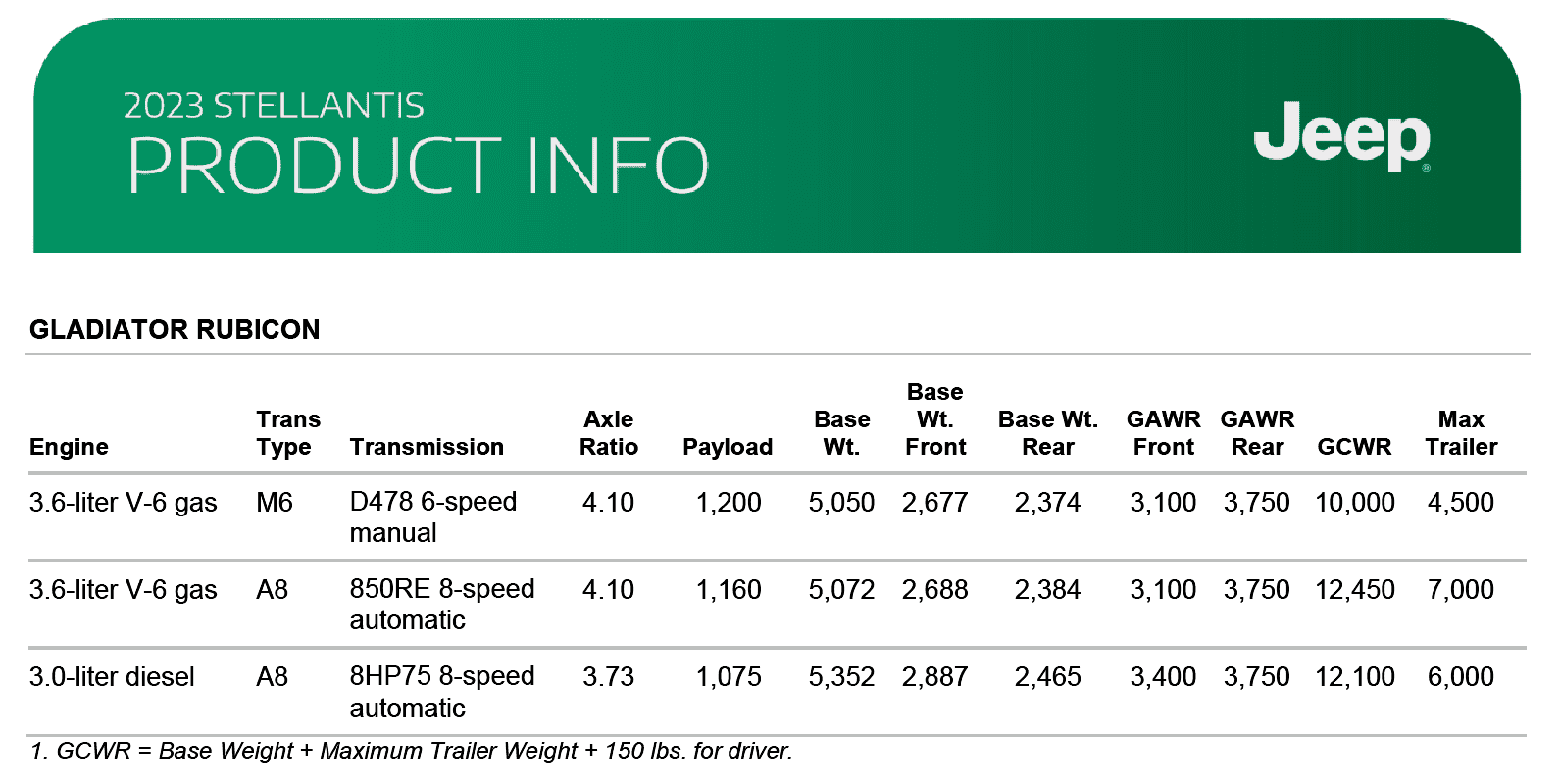
Here’s a comparison of maximum towing capacities with and without the tow package for the most common configurations:
| Engine | Transmission | Max Towing (Without Tow Package) | Max Towing (With Tow Package) |
|---|---|---|---|
| 3.6L V6 Gas | 8-Speed Auto | 4,000 lbs | 7,650 lbs |
| 3.6L V6 Gas | 6-Speed Manual | 4,000 lbs | 4,500 lbs |
| 3.0L Diesel V6 | 8-Speed Auto | 4,000 lbs | 6,500 lbs |
The highest rating—7,650 lbs—is only available with the 3.6L V6 gas engine, 8-speed automatic transmission, and the tow package. Manual transmission and diesel models tow less, even with the package.
What Factors Limit Towing Capacity?
Even with the tow package, some things can lower the max number:
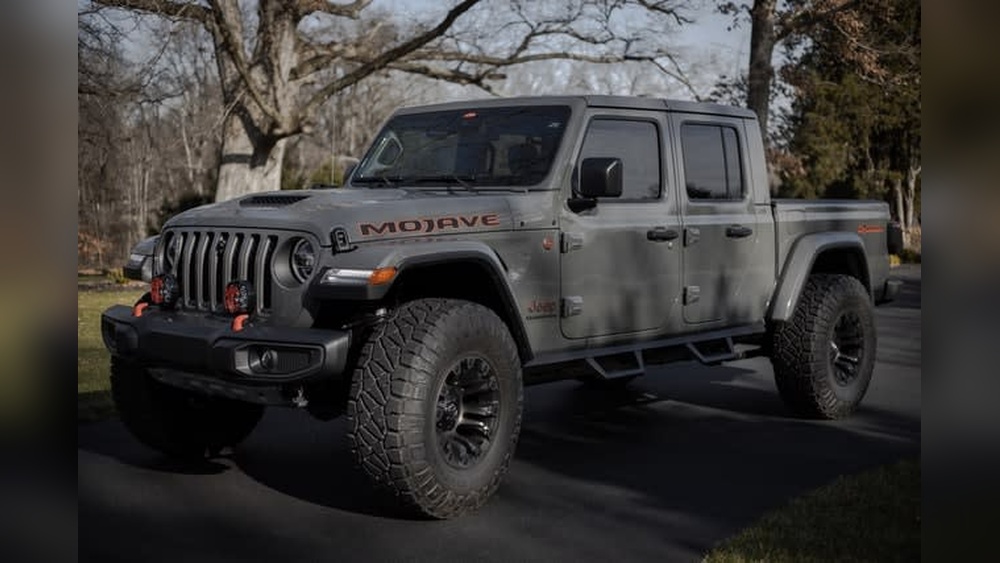
- Truck trim: Mojave and Rubicon models have unique suspensions and tires for off-roading. This can reduce towing capacity to 4,000–4,500 lbs even with the tow package.
- Weight of passengers and gear: More weight inside the truck means less weight left for the trailer.
- Aftermarket parts: Larger tires or lifts can lower your safe towing rating.
- Axle ratio: Some trims have different axle ratios, which affect torque and towing ability.
How Does Gladiator Towing Compare To Other Midsize Trucks?
You might wonder if the Gladiator is actually competitive. Here’s how it stacks up against three popular rivals:
| Truck Model | Max Towing Capacity | Engine |
|---|---|---|
| Jeep Gladiator (with Tow Pkg) | 7,650 lbs | 3.6L V6 Gas |
| Toyota Tacoma | 6,800 lbs | 3.5L V6 |
| Chevrolet Colorado | 7,700 lbs | 2.7L Turbo |
| Ford Ranger | 7,500 lbs | 2.3L Turbo I4 |
The Gladiator is near the top of its class—just a bit behind the Colorado but ahead of the Tacoma and Ranger in some trims. Still, the Gladiator’s unique design (removable roof/doors, strong off-road focus) means you get more than just raw towing numbers.
What Can You Tow With The Gladiator Tow Package?
Knowing the numbers is one thing, but what do they mean in real life? Here are examples of what you can tow with 7,650 lbs capacity:
- 20-25 foot travel trailers: Most midsize campers fit well below the max.
- Bass boats or ski boats: Many weigh 2,000–5,000 lbs with trailer.
- Two-horse trailers: About 4,000–5,000 lbs loaded.
- Car hauler with a small car: Usually 4,000–6,000 lbs.
- Utility trailers with ATVs or motorcycles.
But always check the actual trailer weight, including cargo and fluids, to stay safe. The Gladiator’s shorter wheelbase than some full-size trucks means it’s best for moderate loads rather than the heaviest trailers.

Key Towing Features That Make A Difference
The Gladiator’s tow package is more than just a hitch. Here are some smart features that help with towing:
- Trailer sway control: This safety system senses trailer movement and helps keep things stable.
- Integrated trailer brake controller (available): Lets you control trailer brakes from inside the cab for safer stops.
- Heavy-duty cooling: Keeps the engine and transmission from overheating on hills or hot days.
- Rearview camera with hitch zoom: Helps you line up with your trailer quickly and safely.
Many new drivers miss how much these features matter. For example, trailer sway control can prevent dangerous situations at highway speeds. And a strong cooling system isn’t just for the engine—it also helps the transmission last longer under load.
Common Mistakes When Towing With A Gladiator
Even a strong truck needs smart towing habits. Watch out for these common errors:
- Ignoring the loaded trailer weight: It’s not just the empty trailer that counts—add water, gear, and supplies to the total.
- Not using a weight-distribution hitch: For heavier trailers (over 5,000 lbs), a weight-distribution hitch improves control and stability.
- Improper tongue weight: Aim for 10–15% of trailer weight on the hitch. Too little can cause sway; too much can overload the rear axle.
- Skipping regular maintenance: Towing puts stress on brakes, tires, and fluids. Check them before every trip.
- Not adjusting tire pressure: Both the truck and trailer should have tires at the correct pressure for towing.
Skipping these steps can lead to poor handling or even accidents. Always check your owner’s manual for the exact towing setup and limits for your Gladiator.

Tips For Safe And Confident Towing
Towing with a Gladiator can be smooth if you follow some basic steps:
- Use the right hitch and ball size for your trailer coupler.
- Practice backing up in an empty parking lot. The Gladiator’s wheelbase is shorter than some trucks, making backing trailers a bit more sensitive.
- Plan for longer stopping distances—loaded trailers take more time to stop.
- Check all lights and brakes before heading out.
- Distribute weight evenly in your trailer and secure all cargo.
A non-obvious tip: Wind resistance matters just as much as weight on long trips, especially with taller trailers. High winds or passing semi-trucks can cause sway, so be ready to slow down or pull over if needed.
Understanding Payload Vs. Towing Capacity
Many people confuse payload with towing capacity. Here’s the difference:
- Towing capacity: How much weight the Gladiator can pull behind it (the trailer).
- Payload: How much weight you can put inside the truck—people, gear, bed cargo, and the trailer’s tongue weight.
Even if your trailer is under the max towing limit, you can still overload the truck if the payload (including tongue weight) is too high.
Here’s a simple comparison for a Gladiator Sport S:
| Spec | Maximum Value |
|---|---|
| Towing Capacity (with Tow Package) | 7,650 lbs |
| Payload Capacity | 1,700 lbs |
That means if your trailer puts 765 lbs (10% of 7,650) on the hitch, you have about 935 lbs left for people and cargo in the truck.
Is The Gladiator Tow Package Worth It?
If you want to tow anything over 4,000 lbs—or tow regularly—the tow package is essential. The upgrades are not easy (or cheap) to add later, and skipping them can limit your truck’s resale value.
Two insights beginners might miss:
- Insurance and warranty: Using your Gladiator for heavy towing without the tow package could void parts of your warranty or cause insurance issues if you exceed limits.
- Resale value: Trucks with the factory tow package often sell for more because buyers want the full capability.
Always check if your specific Gladiator has the package—look for the Class IV hitch, 7-pin wiring, and cooling upgrades.
Frequently Asked Questions