Jeep Dashboard Warning Symbols: What They Mean and What to Do
If you drive a Jeep, you know it’s built for adventure. But even the toughest vehicles need care. One of the most important things to watch is the dashboard. Jeep dashboard warning symbols are not just lights—they’re your vehicle’s way of telling you what’s happening under the hood.
Ignoring them can lead to bigger problems, expensive repairs, or even safety risks.
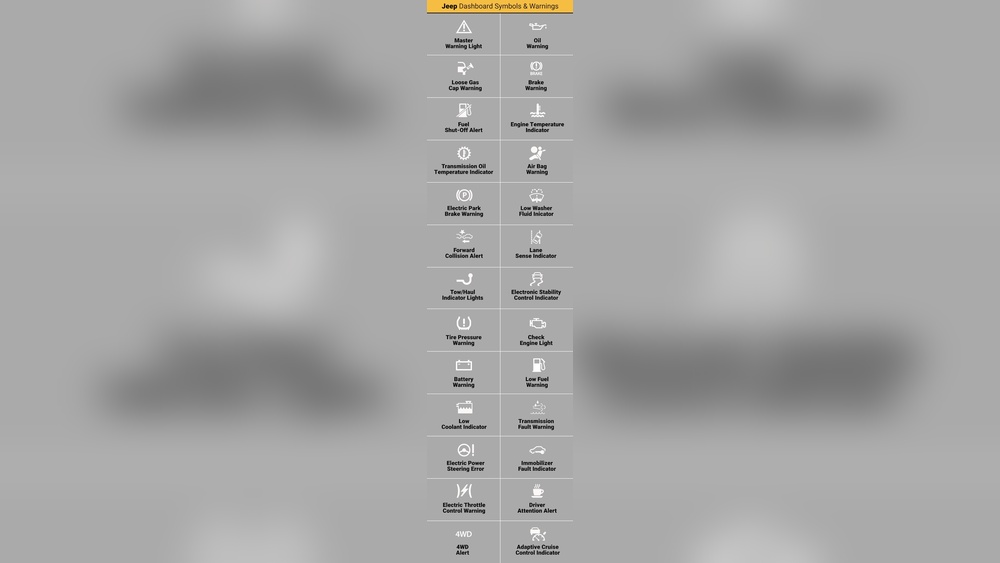
Many drivers feel confused when they see a warning symbol, especially if it’s their first time. Some lights are just reminders, while others mean immediate action is needed. This guide explains the most common Jeep dashboard warning symbols, what they mean, and what you should do next.
By the end, you’ll feel more confident and prepared for any journey.
Why Dashboard Warning Symbols Matter
Dashboard symbols are more than just colored lights. They’re part of your Jeep’s diagnostic system, using sensors to detect issues. When something goes wrong, the system sends a signal to your dashboard.
Ignoring warning symbols can lead to:
- Poor performance
- Increased fuel consumption
- Costly repairs
- Safety hazards
Most symbols fall into three categories:
- Red symbols: Serious issues, immediate attention required.
- Yellow/amber symbols: Caution, check soon.
- Green/blue symbols: System active or information.
Many beginners think only red symbols matter. But yellow or amber lights often signal developing problems that can get worse if ignored.
Common Jeep Dashboard Warning Symbols
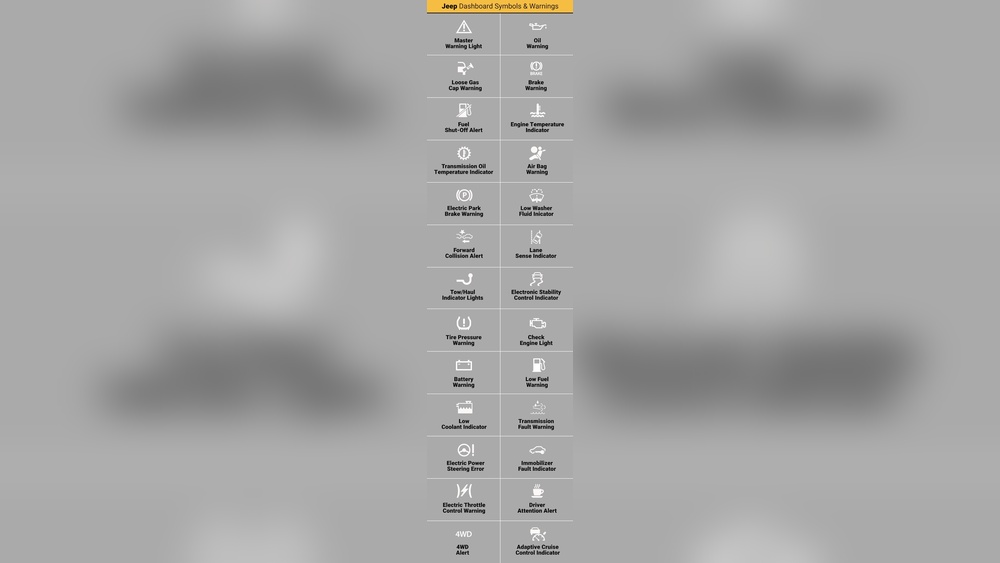
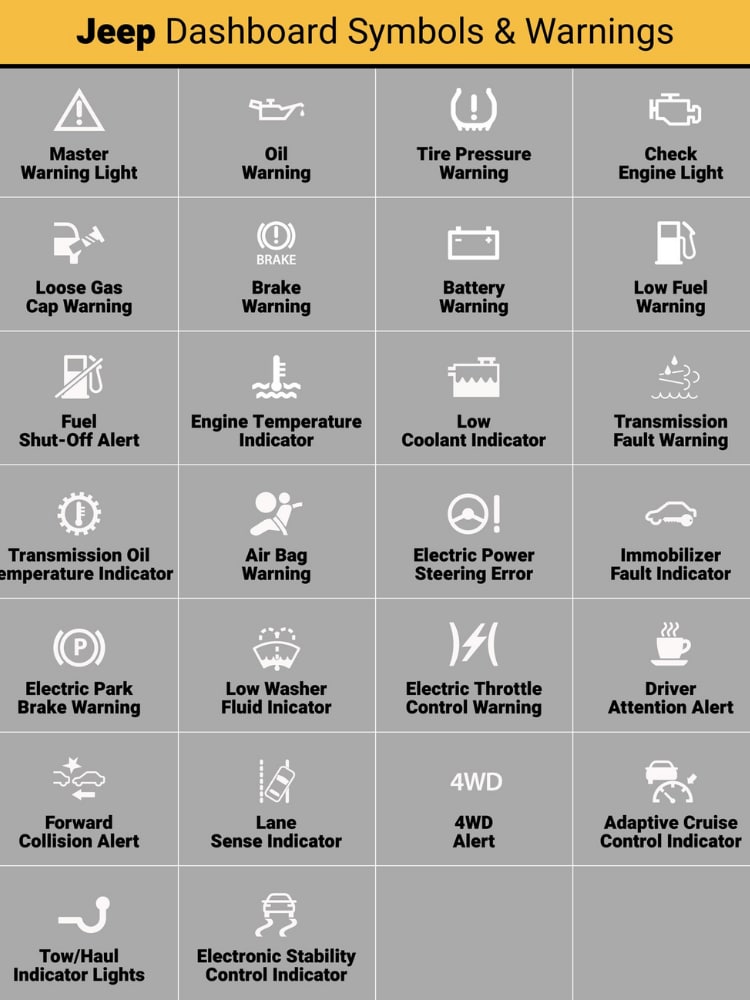
Let’s break down the most frequent symbols you’ll see on your Jeep’s dashboard. Each symbol has a unique meaning and recommended action.
1. Check Engine Light
The check engine light is one of the most recognized symbols. It looks like an engine outline.
- Meaning: Something is wrong with your engine or emission system.
- Action: If it’s steady, schedule a check soon. If it flashes, stop driving and seek help.
Common causes include faulty sensors, loose gas cap, or engine misfire. According to the National Highway Traffic Safety Administration, engine-related issues are a leading cause of breakdowns.
2. Oil Pressure Warning
This symbol looks like an oil can dripping.
- Meaning: Low oil pressure.
- Action: Stop your Jeep immediately. Check oil level and add oil if needed. If light stays on, call for assistance.
Low oil pressure can ruin your engine in minutes. Many drivers ignore this symbol, thinking it’s just low oil, but it can mean a leak or faulty pump.
3. Battery Warning
A battery-shaped symbol signals trouble.
- Meaning: Charging system issue.
- Action: Check battery connections. If light stays on, have your Jeep checked. You may lose power soon.
4. Tire Pressure Monitoring System (tpms)
An exclamation point inside a tire shape.
- Meaning: One or more tires have low pressure.
- Action: Check tire pressures and inflate if needed.
Low tire pressure affects fuel economy and handling. TPMS became mandatory in US vehicles since 2007.
5. Brake Warning Light
A circle with an exclamation or “BRAKE” text.
- Meaning: Brake system issue or low brake fluid.
- Action: Stop and check fluid. If light remains, do not drive until fixed.
6. Airbag Warning
A seated figure with a circle in front.
- Meaning: Airbag system fault.
- Action: Get your Jeep checked soon. Airbags may not deploy in a crash.
7. Engine Temperature Warning
A thermometer symbol in water.
- Meaning: Engine is overheating.
- Action: Pull over, turn off the engine, and let it cool. Check coolant.
Overheating can cause permanent engine damage. Many Jeep owners miss this symbol if they drive in hot climates.
8. Abs Warning
The letters “ABS” inside a circle.
- Meaning: Anti-lock brake system issue.
- Action: Braking may still work, but anti-lock feature is off. Get checked soon.
9. Traction Control Warning
A car with squiggly lines behind.
- Meaning: Traction control system is active or faulty.
- Action: If flashing, system is working. If steady, system is off or faulty.
10. Service 4wd Light
Usually says “SERVICE 4WD”.
- Meaning: Four-wheel-drive system fault.
- Action: Get checked if driving off-road or in bad weather.
11. Low Fuel Warning
A gas pump symbol.
- Meaning: Low fuel.
- Action: Refuel soon.
12. Door Ajar Warning
A car with open doors.
- Meaning: One or more doors are not fully closed.
- Action: Check all doors.
13. Seat Belt Reminder
A seated figure with a belt.
- Meaning: Seat belt not fastened.
- Action: Buckle up.
14. High Beam Indicator
A blue headlight symbol.
- Meaning: High beams are on.
- Action: For information only.
15. Cruise Control Indicator
A speedometer with an arrow.
- Meaning: Cruise control is engaged.
- Action: For information only.
16. Stability Control Warning
A car with wavy lines.
- Meaning: Stability control is active or faulty.
- Action: If steady, system is off or faulty. If flashing, system is active.
17. Washer Fluid Warning
A windshield with water spray.
- Meaning: Low washer fluid.
- Action: Fill washer reservoir.
18. Fog Light Indicator
A headlight with lines and wavy lines.
- Meaning: Fog lights are on.
- Action: For information only.
19. Turn Signal Indicator
Arrows pointing left or right.
- Meaning: Turn signals active.
- Action: For information only.
20. Parking Brake Warning
A “P” inside a circle.
- Meaning: Parking brake is on.
- Action: Release before driving.
Jeep Dashboard Symbol Color Guide
Colors help you know how urgent a warning is. Here’s a quick overview:
| Color | Meaning | Action Needed |
|---|---|---|
| Red | Critical issue | Stop immediately |
| Yellow/Amber | Caution, check soon | Schedule inspection |
| Green/Blue | System active/info | No action, just info |
Knowing the color can help you decide how quickly to react. For example, a red oil pressure light should never be ignored, while a green cruise control light just tells you the feature is on.
Jeep Models And Dashboard Symbol Differences
Jeep has many models—Wrangler, Grand Cherokee, Compass, and more. While most symbols are the same, some models have unique symbols or extra features. For example, newer Wranglers may have additional off-road or suspension alerts.
Here’s a comparison of symbol features across three popular Jeep models:
| Symbol | Wrangler | Grand Cherokee | Compass |
|---|---|---|---|
| Check Engine | Yes | Yes | Yes |
| Service 4WD | Yes | Yes | No |
| Suspension Warning | No | Yes | No |
| TPMS | Yes | Yes | Yes |
Always check your owner’s manual for your Jeep model. Some symbols may be specific to certain trims or years.
What To Do When A Warning Symbol Appears
Seeing a warning symbol can be stressful. Here’s a simple step-by-step approach:
- Identify the symbol: Compare it with your dashboard or manual.
- Check color: Red means immediate action, yellow means caution.
- Listen and feel: Is your Jeep driving differently? Any strange noises?
- Take action: Stop, check, or schedule service as needed.
- Don’t ignore: Even minor issues can become serious.
Some drivers panic and stop on highways for yellow warnings, but this is not always necessary. Only stop immediately for red symbols or if you feel unsafe.
How To Reset Jeep Dashboard Warning Lights
After fixing an issue, you may still see the warning symbol. Most Jeep models use an OBD-II scanner to reset lights. You can also:
- Disconnect the battery for 10 minutes (not always recommended)
- Use dashboard controls to reset minor alerts (like oil change reminders)
But resetting without fixing the real problem is risky. Only reset after the issue is fully solved.
https://www.youtube.com/watch?v=Ym7MFXb9U_g
Two things most Jeep owners don’t realize:
- Dashboard lights can signal multiple issues: For example, a check engine light can mean anything from a loose gas cap to a major engine problem. Don’t assume it’s always minor.
- Some warnings are triggered by driving conditions: Off-roading, extreme temperatures, or even city driving can activate certain alerts. Learn which symbols are normal for your driving style.
Expert Tips For Handling Dashboard Warnings
- Keep a photo of your dashboard symbols on your phone for quick reference.
- Use high-quality fuel and oil; cheap products can trigger warning lights.
- Schedule regular checks, even if no symbols appear—some issues go undetected.
- Always ask your mechanic to explain any warning symbol you see.

Jeep Dashboard Symbol Troubleshooting Table
Here’s a quick troubleshooting guide for the most common Jeep dashboard symbols:
| Symbol | Possible Cause | Immediate Action | Can You Drive? |
|---|---|---|---|
| Check Engine | Sensor fault, emission issue | Check gas cap, schedule service | Yes, if steady |
| Oil Pressure | Low oil, leak | Stop, check oil | No |
| Battery | Alternator, battery problem | Check connections | Yes, but risk stall |
| ABS | ABS sensor fault | Schedule repair | Yes, but no ABS |
| TPMS | Low tire pressure | Inflate tires | Yes, but unsafe |
Useful Resources
For more information and official Jeep dashboard symbol guides, check the owner’s manual or visit the Jeep Official Owners Site.
Frequently Asked Questions
<!– wp:rank-math/faq-block {"questions":[{"id":"faq-question-4c29a7ee9552","title":"What Should I Do If The Check Engine Light Flashes?","content":"A flashing check engine light means a serious engine issue, like misfire. Stop driving and get your Jeep checked right away. Driving with a flashing light can damage your engine.
“,”visible”:true},{“id”:”faq-question-8761cb544440″,”title”:”Can I Drive With The Abs Warning Light On?”,”content”:”You can drive with the ABS warning light on, but your Jeep’s anti-lock brakes won’t work. Your regular brakes will still function, but stopping in slippery conditions may be harder.
“,”visible”:true},{“id”:”faq-question-224909e0a815″,”title”:”Why Does My Jeep’s Tpms Light Come On In Cold Weather?”,”content”:”The TPMS light often turns on when tire pressure drops in cold weather. Cold air reduces pressure inside the tires. Check and inflate tires to the recommended level.
“,”visible”:true},{“id”:”faq-question-77ab1ccf4fee”,”title”:”Is It Safe To Ignore Yellow Dashboard Warning Lights?”,”content”:”Yellow or amber lights signal caution. It’s not safe to ignore them. While they don’t always require immediate action, they warn of issues that could get worse. Schedule a check as soon as possible.
“,”visible”:true},{“id”:”faq-question-b0924fc6e4fb”,”title”:”How Can I Identify Symbols Not In My Manual?”,”content”:”If you see a symbol not listed in your manual, use a Jeep online resource, search for dashboard symbol images, or ask your dealer. Many newer models add new symbols, so official resources can help.
Understanding your Jeep dashboard warning symbols is vital for safety and peace of mind. With this guide, you can spot problems early, prevent costly repairs, and keep your Jeep ready for every adventure. Always listen to your dashboard—it’s your Jeep’s way of keeping you informed and safe.
“,”visible”:true}]} –>What Should I Do If The Check Engine Light Flashes?
A flashing check engine light means a serious engine issue, like misfire. Stop driving and get your Jeep checked right away. Driving with a flashing light can damage your engine.
Can I Drive With The Abs Warning Light On?
You can drive with the ABS warning light on, but your Jeep’s anti-lock brakes won’t work. Your regular brakes will still function, but stopping in slippery conditions may be harder.
Why Does My Jeep’s Tpms Light Come On In Cold Weather?
The TPMS light often turns on when tire pressure drops in cold weather. Cold air reduces pressure inside the tires. Check and inflate tires to the recommended level.
Is It Safe To Ignore Yellow Dashboard Warning Lights?
Yellow or amber lights signal caution. It’s not safe to ignore them. While they don’t always require immediate action, they warn of issues that could get worse. Schedule a check as soon as possible.
How Can I Identify Symbols Not In My Manual?
If you see a symbol not listed in your manual, use a Jeep online resource, search for dashboard symbol images, or ask your dealer. Many newer models add new symbols, so official resources can help.
Understanding your Jeep dashboard warning symbols is vital for safety and peace of mind. With this guide, you can spot problems early, prevent costly repairs, and keep your Jeep ready for every adventure. Always listen to your dashboard—it’s your Jeep’s way of keeping you informed and safe.