Modern Jeep vehicles come packed with technology and safety features, making them reliable companions on and off the road. But with all this innovation, drivers face a dashboard filled with symbols and warning lights.
If you’ve seen a glowing icon and wondered, “What does that mean?” , you’re not alone.
Understanding Jeep dashboard symbols is more than just curiosity—it’s essential for safety and avoiding costly repairs. This guide breaks down the most common dashboard symbols, explains what they mean, and helps you respond the right way.
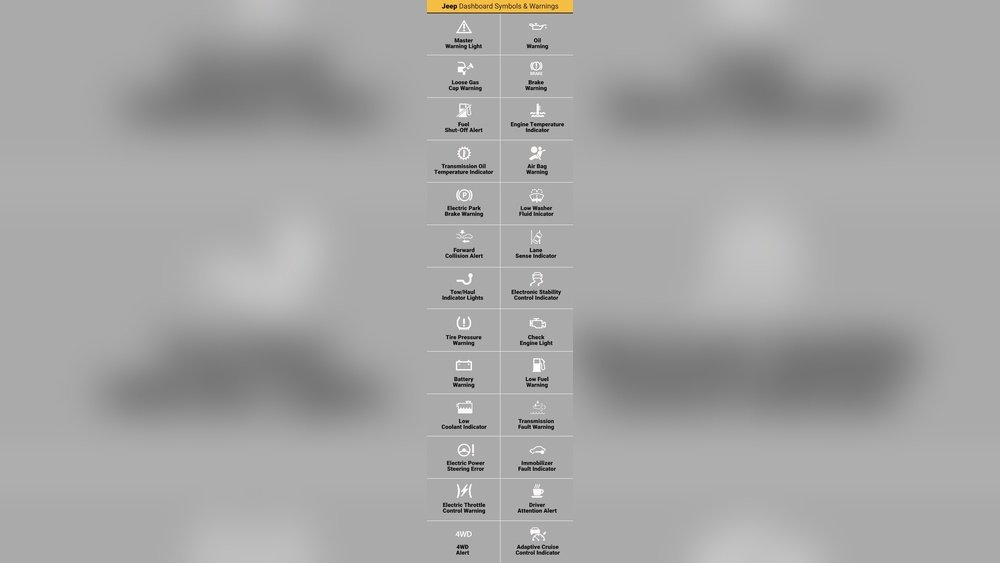
Whether you’re a new Jeep owner or an experienced driver, you’ll find practical advice, real examples, and tips that most beginners overlook.
Why Dashboard Symbols Matter
Every light or symbol on your Jeep’s dashboard is a message. Some are friendly reminders, while others signal urgent problems. Ignoring warning lights can lead to breakdowns or even dangerous situations. For example, a flashing engine light could mean a serious issue, while a simple seatbelt reminder just asks you to buckle up. By learning what each symbol means, you protect your car and keep yourself safe.
It’s important to remember that dashboard symbols are standardized, but some Jeep-specific icons exist. Always check your owner’s manual if you’re unsure, but this guide covers the ones you’ll see most often.
Common Jeep Dashboard Symbols And Their Meanings
Let’s look at the most frequent dashboard symbols you’ll encounter in a Jeep. Each icon plays a role—some warn you, others inform you. Knowing the difference saves time and money.
Engine Warning Light
This is usually a yellow or orange symbol shaped like an engine. If it lights up, there could be a problem with your engine, emissions, or sensors. A solid light means check soon; a flashing light means stop immediately. Many drivers ignore this, but it’s a mistake—what starts as a minor issue can become expensive fast.
Oil Pressure Warning
A red oil can symbol signals low oil pressure. This is urgent. Stop your Jeep and check your oil level. Running the engine with low oil pressure can cause permanent damage.
Battery Charge Warning
This symbol looks like a car battery. It means your alternator isn’t charging the battery properly. You might have a failing alternator, battery, or wiring issue. If this light appears, your Jeep may stall soon.
Brake System Warning
A red exclamation mark inside a circle or the word “BRAKE” signals a brake problem. Sometimes, it’s just the parking brake. If the light stays on after releasing the brake, there could be low brake fluid or a system failure.
Never ignore brake warnings.
Tire Pressure Monitoring System (tpms)
This looks like a horseshoe with an exclamation mark. It means one or more tires are under-inflated. Low tire pressure affects handling and fuel economy. Check your tires as soon as possible.
Abs Warning
The letters “ABS” in a yellow or red circle mean your anti-lock braking system isn’t working. Your regular brakes still work, but you may lose emergency stopping power. Get it checked soon.
Airbag Warning
A person with a circle in front of them signals a problem with your airbag system. This is serious—if ignored, airbags may not deploy in a crash.
Coolant Temperature Warning
A thermometer symbol in waves signals the engine is overheating. Stop immediately. Driving with an overheated engine can cause severe damage.
Seatbelt Reminder
A person with a seatbelt icon reminds you to buckle up. Most Jeeps beep until you fasten your seatbelt.
Door Ajar Indicator
A car with open doors lights up if a door isn’t fully closed. Close all doors before driving.
Fuel Level Warning
A gas pump icon warns that your fuel is low. You usually have around 30–50 miles before empty, but don’t risk running out.
Transmission Temperature Warning
A thermometer inside a gear means your transmission is too hot. Stop and let it cool before continuing.
Security Indicator
A car with a key or padlock symbol means the vehicle’s security system is active or there’s an issue with your key fob.
4wd Indicator
A “4WD” or similar symbol shows the status of your Jeep’s four-wheel drive system. It may light up when 4WD is engaged or if there’s a system fault.
Stability Control Warning
A car with squiggly lines means your electronic stability control is working or has a problem. If it stays on, your Jeep may be less stable in slippery conditions.
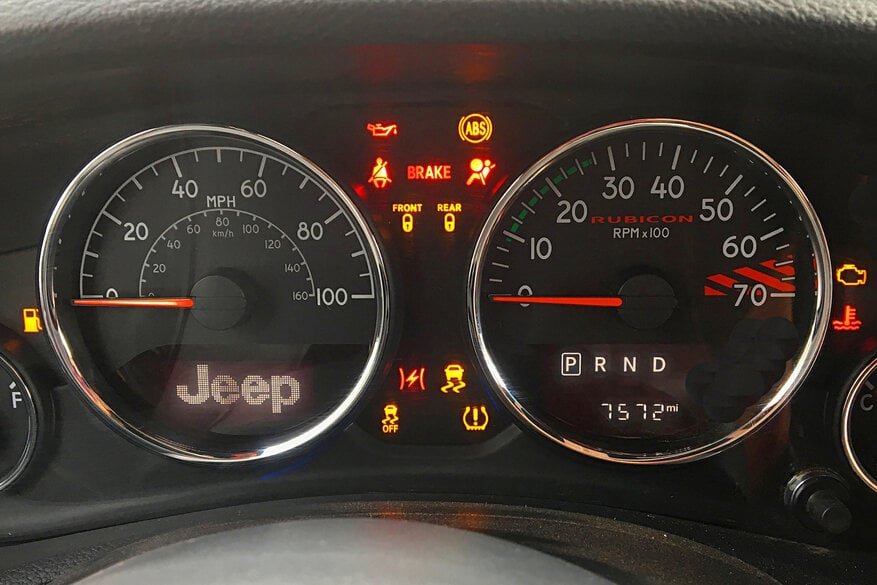
Jeep Dashboard Symbol Comparison
To help you quickly identify the most urgent dashboard symbols, here’s a comparison of their urgency and recommended action.
| Symbol | Urgency | Recommended Action |
|---|---|---|
| Engine Warning | Medium/High | Check soon; stop if flashing |
| Oil Pressure | High | Stop immediately |
| Battery Charge | Medium | Check battery/alternator |
| Brake System | High | Check brakes/fluid |
| TPMS | Low/Medium | Add air to tires |
| Coolant Temp | High | Stop, check coolant |
Less Common Symbols You Might See
Jeep dashboards also display less common symbols, especially in newer models. Here are a few you might see:
- Adaptive Cruise Control Indicator: Shows when cruise control is active or if there’s a fault.
- Blind Spot Monitoring Warning: Lights up when a vehicle is detected in your blind spot.
- Lane Departure Warning: Alerts you if you drift from your lane.
- Hill Descent Control: Indicates the system is active for controlled downhill driving.
- Automatic Headlights: Signals when your headlights are on auto mode.
These features improve safety and comfort, but their symbols can be confusing at first.
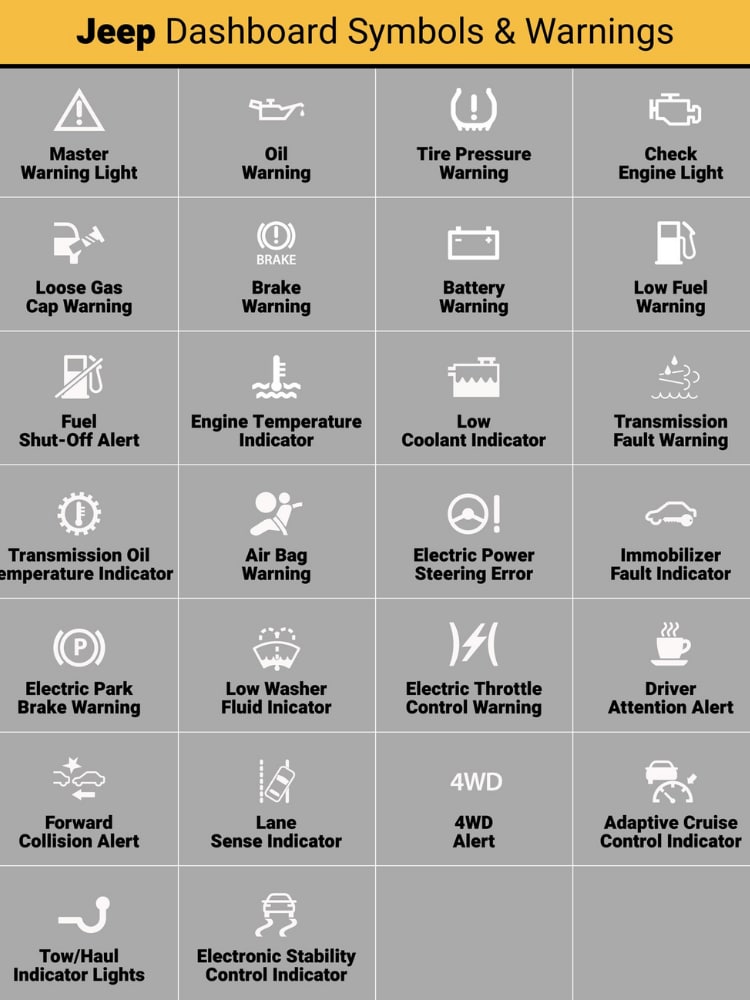
Color Coding: What The Colors Mean
Jeep dashboard symbols use color to show urgency:
- Red: Immediate attention needed. Stop if safe.
- Yellow/Orange: Warning. Check soon.
- Green/Blue: Information only. No action required.
For example, a red oil pressure light means stop now. A yellow tire pressure light means check your tires soon. Many new drivers miss the importance of color coding—don’t overlook it.
Real-life Example: What Happens If You Ignore Dashboard Lights?
Imagine you see the engine warning light and ignore it. At first, your Jeep drives fine. But over time, a minor sensor issue becomes a major engine problem. Repair costs rise from $150 to $1,500. Another example: ignoring the TPMS light leads to a flat tire, causing you to miss work or damage your wheel.
The lesson? Dashboard symbols aren’t just suggestions—they’re vital warnings.
What Beginners Often Miss About Jeep Dashboard Symbols
Most new Jeep owners think every dashboard light means an emergency. But some symbols are just reminders (like seatbelt or door ajar). Others are truly urgent. The real skill is knowing which lights to respond to immediately and which can wait.
Another common mistake is assuming all lights mean the same thing in every Jeep model. In fact, some symbols change meaning depending on the year or trim. Always check your manual and don’t rely on memory alone.
https://www.youtube.com/watch?v=Ym7MFXb9U_gHow To Respond To Jeep Dashboard Symbols
If you see a new dashboard symbol, follow these steps:
- Check the color: Red means stop; yellow/orange means caution; green/blue means information.
- Read your manual: Identify the symbol and its meaning.
- Take appropriate action: For urgent lights, stop and check your Jeep. For reminders, respond when convenient.
- Don’t ignore warning lights: Even if the Jeep feels fine, hidden problems can grow.
- Visit a mechanic if unsure: Modern Jeeps use computers to track problems. A professional can read error codes and fix issues.
Some beginners try to reset dashboard lights by disconnecting the battery. This only hides the problem—it doesn’t solve it. Always fix the issue before clearing the warning.

Jeep Dashboard Symbols Vs Other Brands
How does Jeep compare to other automakers? Here’s a quick look:
| Brand | Number of Symbols | Unique Features |
|---|---|---|
| Jeep | 30+ | 4WD, Hill Descent, Off-road icons |
| Toyota | 25+ | Hybrid battery, Lane Assist |
| Ford | 28+ | Trailer brake, Auto Start-Stop |
| Honda | 22+ | Eco Mode, VSA (Vehicle Stability Assist) |
Jeep stands out for its off-road and four-wheel drive indicators. If you switch vehicles, always learn the new dashboard symbols.
Tips For Keeping Your Jeep’s Dashboard Clear
Follow these tips to avoid seeing warning lights and keep your Jeep running smoothly:
- Check fluid levels regularly: Oil, coolant, brake fluid, and transmission fluid are essential.
- Inspect tires monthly: Proper inflation prevents TPMS warnings.
- Schedule regular maintenance: Follow Jeep’s recommended service schedule.
- Keep your battery healthy: Clean terminals and test voltage.
- Use the right fuel: Using poor-quality or incorrect fuel can trigger engine lights.
Many drivers only react when a symbol appears. Proactive care prevents problems before they start.
Jeep Dashboard Symbol Guide: Quick Reference
Here’s a handy reference for the most common Jeep dashboard symbols:
| Symbol | Description | Action |
|---|---|---|
| Engine | Engine/emissions issue | Check soon |
| Oil Can | Low oil pressure | Stop immediately |
| Battery | Charging problem | Check battery/alternator |
| TPMS | Low tire pressure | Add air to tires |
| ABS | Anti-lock brake issue | Check brakes |
| Coolant Temp | Overheating | Stop, check coolant |
Where To Find More Information
If you ever need more details, Jeep’s official website and your owner’s manual are excellent resources. For broader automotive symbol guides, Wikipedia offers a helpful overview.
Frequently Asked Questions
What Should I Do If A Dashboard Symbol Appears While Driving?
First, check the color of the symbol. If it’s red, pull over safely and investigate. Yellow or orange means caution—schedule a check soon. Green or blue is informational and usually doesn’t need action.
Why Do Some Dashboard Symbols Flash Instead Of Staying Solid?
A flashing symbol is usually more urgent than a solid one. For example, a flashing engine light means stop immediately, while a solid light means check soon.
Can I Drive With The Engine Warning Light On?
If the light is solid and the Jeep drives normally, you can drive short distances. If it’s flashing or you notice performance issues, stop and seek help right away.
How Do I Reset Dashboard Warning Lights?
Warning lights reset after fixing the problem. Some can be cleared with a diagnostic tool, but it’s best to fix the issue first. Don’t just hide the warning.
Are Dashboard Symbols The Same In All Jeep Models?
Most are similar, but some vary by model year or trim. Always check your owner’s manual for specific meanings in your Jeep.
Dashboard symbols are your Jeep’s way of speaking to you. By learning to understand these messages, you make smarter decisions and avoid stress on the road. Remember, every symbol is there for a reason. Take them seriously, respond wisely, and enjoy your Jeep with confidence.