If you drive a Jeep, you know it’s built for adventures. But when a dashboard light starts glowing, it can end your fun fast.
Understanding Jeep dashboard lights is essential—not just for safety, but to avoid costly repairs and keep your trips smooth.
Many drivers ignore these lights or panic when they appear, but most are simple to decode if you know what to look for. This guide explains the most common Jeep dashboard lights, what they mean, and what you should do when you see them.
By the end, you’ll feel more confident and ready to handle any warning your Jeep throws at you.
Why Jeep Dashboard Lights Matter
Dashboard lights in your Jeep are more than just colored icons. They are the car’s way of communicating with you.
Some lights are reminders, like when you need fuel. Others are urgent warnings, signaling a possible breakdown or safety risk.
Ignoring these signals can lead to bigger problems, like engine damage or brake failure. In fact, a study by AAA found that 35% of drivers have ignored a dashboard warning light for more than three days, often leading to higher repair bills later.
Understanding The Color Codes
Jeep dashboard lights use three main colors:
- Green or Blue: These lights show a system is active (like headlights or cruise control). No action is needed.
- Yellow or Orange: These mean caution. A system needs attention soon, but it’s not an emergency.
- Red: Stop as soon as it’s safe. Red lights mean something is wrong and may be dangerous.
It’s important to react based on the color. For example, a red oil pressure light means stop the engine right away, but a yellow tire pressure light means check your tires soon.
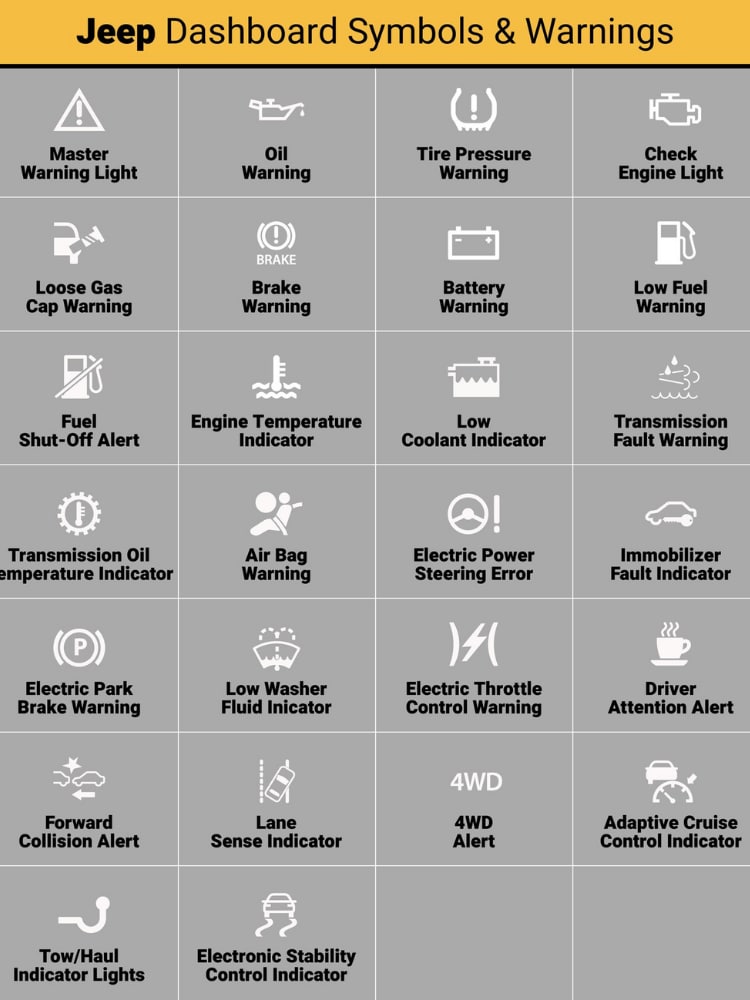
Common Jeep Dashboard Lights And Their Meanings
Below are the most frequent dashboard lights you’ll see in a Jeep, what they mean, and what you should do.
1. Check Engine Light
This is one of the most common and misunderstood lights. It looks like an engine outline, sometimes labeled “Check Engine.
” It usually means the engine or its emissions system has a problem. Causes can range from a loose gas cap to serious engine trouble.
What to do: If the light is steady, check your gas cap and tighten it. If it’s flashing, reduce speed and get service soon. A flashing light may mean engine misfire, which can damage the catalytic converter.
2. Oil Pressure Warning Light
This red light looks like an old-fashioned oil can. It warns that oil pressure is low, which can destroy your engine in minutes.
What to do: Stop the engine immediately. Check your oil level, and add oil if low. If the light stays on after adding oil, call for help; it could be a serious issue.
3. Battery/charging Warning Light
This light is shaped like a car battery. It appears if the charging system isn’t working properly.
What to do: Turn off extra electrical devices (radio, AC). Drive to a repair shop soon. If the car starts losing power, stop and call for assistance.
4. Brake System Warning Light
A red exclamation point in a circle, or the word “BRAKE,” signals a problem with your brakes. It might mean the parking brake is on, brake fluid is low, or there is a system fault.
What to do: Check the parking brake first. If it’s off, check brake fluid level. If the light remains, do not drive—brake failure is possible.
5. Tire Pressure Monitoring System (tpms) Light
This yellow light looks like a tire with an exclamation mark. It warns that one or more tires have low pressure.
What to do: Check all tire pressures and inflate to the recommended level. Low tire pressure can cause poor handling and tire damage.
6. Abs Warning Light
The letters “ABS” light up in yellow or orange when there’s a problem with the anti-lock braking system.
What to do: Your Jeep will still brake, but the anti-lock function may not work. Drive carefully and get it checked soon.
7. Airbag Warning Light
This light shows a person with a circle (airbag) in front. It means there is a fault in the airbag system.
What to do: Airbags may not work in a crash. Get your vehicle checked as soon as possible.
8. Engine Temperature Warning Light
A red thermometer icon means your engine is overheating.
What to do: Pull over and turn off the engine. Wait for it to cool. Check coolant level. Driving while hot can cause severe engine damage.
9. Electronic Stability Control (esc) Light
This looks like a car with squiggly lines behind it. It blinks when the system is active (helping you stay stable), but if it stays on, there may be a fault.
What to do: Drive carefully and have it checked. ESC helps prevent skids and rollovers.
10. Service 4wd Light
This light says “SERV 4WD” or shows an axle. It warns of a problem with the four-wheel drive system.
What to do: You can usually drive in two-wheel mode, but get it checked before using 4WD again.
11. Security Indicator Light
A red or yellow light shaped like a car with a key means there is an issue with your Jeep’s anti-theft system or immobilizer.
What to do: Try using a different key or battery. If the light stays on, you may not be able to start the vehicle.
12. Seat Belt Reminder Light
A red icon of a person with a seatbelt means someone isn’t buckled in.
What to do: Fasten all seat belts. In some models, the light may stay on if the buckle sensor fails.
Jeep Dashboard Light Comparison: Severity And Action
Understanding which lights require immediate action helps you prioritize your response. Here’s a quick comparison:
| Dashboard Light | Color | Urgency | Action Needed |
|---|---|---|---|
| Oil Pressure | Red | Critical | Stop engine immediately |
| Check Engine | Yellow/Red | High (flashing), Medium (steady) | Check soon or stop if flashing |
| TPMS | Yellow | Moderate | Inflate tires soon |
| Brake | Red | Critical | Check brakes before driving |
| ABS | Yellow | Low | Check system soon |
Less Common Jeep Dashboard Lights
While most drivers know the basics, some Jeep dashboard lights are less familiar but still important.
Adaptive Cruise Control Warning
A car with a speedometer symbol means the adaptive cruise control system needs attention. This system helps keep a safe distance from cars ahead.
Lane Departure Warning
A car with lines on both sides signals the lane-keeping system is active or has a fault. If the light stays on, the system may not work.
Automatic High Beam Indicator
A blue light with an “A” and headlight beams means your Jeep’s automatic high beams are on.
Door Ajar Warning
A car with open doors icon shows a door is not closed fully.
Fuel Cap Warning
A gas cap symbol or message appears if the fuel cap is loose or missing. This can trigger the check engine light.
How To Respond To Dashboard Lights
Knowing what each light means is only part of the solution. Taking the right steps can prevent bigger issues.
- Don’t ignore red lights. Stop safely and fix the issue if you see red.
- Yellow lights mean caution. Schedule service soon, but you can usually keep driving.
- Green or blue are just reminders. No action needed unless you want to turn off a system.
Pro Tip: If multiple lights come on at once, or if you notice odd noises or smells, pull over and call for help. Sometimes one problem can trigger several warnings.
Jeep Model Differences: Do All Jeeps Have The Same Lights?
Not all Jeep models have identical dashboard lights. Features can change based on year, trim level, and technology packages.
| Model | Unique Lights | Standard Lights |
|---|---|---|
| Wrangler | Off-Road+ Mode, Sway Bar Disconnect | TPMS, Check Engine, Oil Pressure |
| Grand Cherokee | Adaptive Cruise, Lane Assist | ESC, ABS, Brake |
| Compass/Renegade | Start/Stop System | Battery, Airbag, Seat Belt |
Always check your owner’s manual for a full list of your Jeep’s dashboard lights and what each symbol means for your specific model.
Two Insights Most Jeep Owners Miss
- Aftermarket parts can trigger warning lights. Many Jeep owners upgrade wheels, tires, or electronics. Sometimes, these changes confuse sensors, leading to false alarms. If you just made a change and see a new light, check if it’s related.
- Regular maintenance can prevent most warning lights. Simple tasks like checking oil, coolant, and tire pressure each month will stop many warnings before they start. Most lights are a sign of missed maintenance.
When Should You Seek Professional Help?
Some drivers try to ignore dashboard lights or use “code readers” to erase them. While these tools are helpful, they don’t fix the real problem.
If you see the same light again after erasing it, the issue is still there.
You should get professional help if:
- A red light stays on after basic checks (oil, coolant, brakes)
- The check engine light is flashing
- You hear strange noises, smell burning, or feel a change in how your Jeep drives
- The problem affects safety systems (brakes, airbags)
Modern Jeeps have complex computers. A certified mechanic can read fault codes and fix the root cause, not just cover it up.
Simple Maintenance To Prevent Dashboard Warnings
Many dashboard lights are avoidable with simple habits:
- Check tire pressure monthly
- Change oil on schedule
- Keep coolant and brake fluid at the right levels
- Use the correct fuel and parts for your Jeep
- Close all doors and fuel caps tightly
These small steps take minutes but can save hundreds of dollars in repairs.

The Future: Dashboard Lights And Technology
Jeep is adding more technology every year. Newer models use digital displays, color screens, and even voice alerts. These systems can show more detailed messages, like “Low Battery: 13.0V” instead of just a symbol. Some Jeeps even link with mobile apps, so you get alerts on your phone. Staying updated with your owner’s manual and using official resources, like the Jeep Owners Site, helps you understand any new symbols you see.
Frequently Asked Questions
What Should I Do If My Jeep Check Engine Light Comes On?
First, check if the gas cap is tight. If the light is steady, you can drive home but schedule service soon.
If it’s flashing, reduce speed and get help immediately—this can mean a severe engine problem.
Can I Drive With The Abs Light On In My Jeep?
Yes, but your Jeep’s anti-lock brakes may not work. Drive carefully and avoid hard braking. Get the system checked soon.
Why Does The Tire Pressure Light Come On In Cold Weather?
Cold air reduces tire pressure, so the TPMS light often comes on after a drop in temperature. Check and inflate your tires to the recommended pressure.
Is It Safe To Ignore A Red Dashboard Light In My Jeep?
No. Red lights mean a serious problem.
Stop driving as soon as it’s safe and check the issue. Ignoring it can lead to breakdowns or unsafe driving.
How Can I Reset Dashboard Warning Lights In My Jeep?
Some lights reset after fixing the problem (like inflating tires). Others may need a mechanic to clear the code.
Never reset a warning light without solving the root issue.
Understanding your Jeep dashboard lights can save time, money, and stress. With this guide, you have the knowledge to drive safer and smarter.
Next time a light comes on, you’ll know exactly what to do—and keep your Jeep ready for adventure.