The Jeep Compass steering wheel is more than just a way to direct your vehicle. It's a central hub for comfort, control, and communication.
From the moment you grip it, you interact with a complex system designed to make your driving experience safer and more enjoyable. Understanding the components and functions of your Compass steering wheel can help you appreciate its engineering and troubleshoot potential issues.
This article will explore the Jeep Compass steering wheel schematic, breaking down its various parts, their functions, and what they mean for you as a driver.
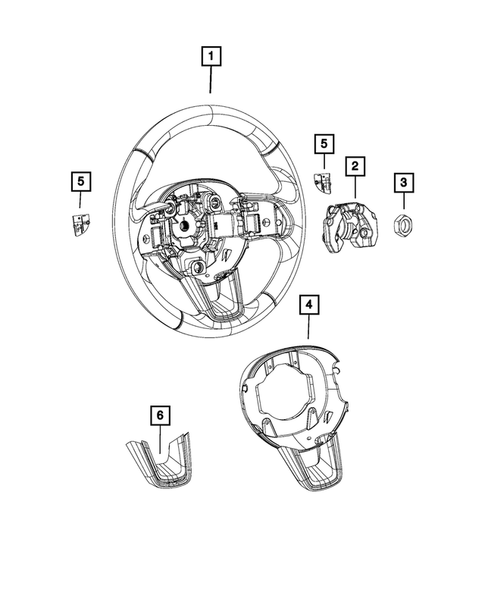
The Core Structure: Steering Column And Wheel Assembly
At the heart of the steering system is the steering column. This is the assembly that connects the steering wheel to the rest of the steering mechanism. In a Jeep Compass, like most modern vehicles, the steering column is designed with safety and adjustability in mind.
Steering Column Components
The steering column itself contains several key parts:
- Steering Shaft: This is the primary rod that transmits rotational force from the steering wheel down to the steering gear. It often includes a universal joint (U-joint) to allow for slight angles between the steering wheel and the steering rack, accommodating column adjustments.
- Collapsible Sections: For driver safety in a collision, the steering column is designed to collapse upon impact. This prevents the column from impaling the driver. These sections are engineered to absorb energy during a crash.
- Tilt and Telescoping Mechanisms: Most Jeep Compass models offer tilt and telescoping steering wheel adjustments. This allows drivers to position the wheel for optimal comfort and visibility. The tilt mechanism changes the angle of the wheel, while the telescoping mechanism adjusts its length. These are usually controlled by a lever or button located on the column.
- Ignition Lock Cylinder: Integrated into the steering column is the ignition system, including the lock cylinder where you insert your key or key fob. This mechanism not only starts the engine but also locks the steering wheel when the key is removed, preventing theft.
- Steering Wheel Controls Wiring Harness: Running through the column is the wiring that connects the buttons and features on the steering wheel to the vehicle’s various electronic systems. This is crucial for everything from airbags to infotainment.
The Steering Wheel Itself
The steering wheel is the most visible part of the assembly. It’s designed for ergonomic grip and houses numerous functions.
- Rim and Spokes: The main structure provides the grip. Modern steering wheels often feature leather wrapping for comfort and aesthetics.
- Hub: This is the central part that connects the wheel to the steering shaft. It also houses the airbag module.
- Horn Pad: Typically located in the center of the wheel, pressing this activates the vehicle’s horn.
- Airbag Module: A critical safety component, the airbag deploys rapidly in a crash to protect the driver. It’s integrated into the horn pad or a dedicated section of the wheel.
The Electronic Brain: Steering Wheel Control Modules And Wiring
Modern vehicles like the Jeep Compass rely heavily on electronics. The steering wheel is a prime example, acting as an interface for many systems.
Steering Wheel Control Module (swcm)
The Steering Wheel Control Module (SWCM), sometimes called the Clock Spring Module or Steering Wheel Module, is the central electronic component behind the steering wheel. Its primary functions are:
- Relaying Button Inputs: It receives signals from the buttons on the steering wheel (cruise control, audio, phone, etc.) And translates them into commands for the vehicle’s computer (ECU).
- Powering Steering Wheel Features: It provides the necessary power to the buttons and any integrated lighting.
- Maintaining Airbag Connectivity: Crucially, it houses the clock spring, a coiled ribbon cable that allows electrical signals (including for the airbag) to pass from the steering column to the rotating steering wheel without breaking. The clock spring is a common point of failure and often needs replacement if steering wheel controls or the airbag light comes on.
Wiring Harness And Connectors
A complex wiring harness runs from the SWCM through the steering column. This harness connects to:
- The Vehicle’s Main Computer (ECU): Sending commands for engine speed, audio volume, phone calls, etc.
- The Instrument Cluster: Displaying information like cruise control status or audio track.
- The Body Control Module (BCM): Managing various vehicle functions.
- The Airbag System: Ensuring the airbag can deploy when needed.
Pro Tip: If your steering wheel controls suddenly stop working, or if you see an airbag warning light, the clock spring within the SWCM is a very common culprit. While seemingly simple, replacing it requires careful handling of the airbag system.
Key Steering Wheel Functions And Their Schematics
The buttons and features on your Jeep Compass steering wheel are designed for convenience and safety, allowing you to manage critical functions without taking your hands off the wheel.
Cruise Control System
The cruise control buttons allow you to set and maintain a specific speed. Schematically, these buttons are wired to the SWCM, which then sends signals to the Powertrain Control Module (PCM) or Engine Control Module (ECM). The PCM/ECM then manages the throttle electronically to maintain the set speed.
- ON/OFF: Activates or deactivates the cruise control system.
- SET/-: Sets the current speed or decreases the set speed.
- RES/+: Resumes the previously set speed or increases the set speed.
- CANCEL: Temporarily disengages cruise control without turning the system off.
Audio And Infotainment Controls
These buttons provide access to your vehicle’s audio system and infotainment features. They are also connected via the SWCM to the infotainment head unit.
- Volume Up/Down: Adjusts the speaker volume.
- Seek/Scan: Advances to the next radio station or track.
- Mode: Cycles through different audio sources (AM/FM, Bluetooth, USB, etc. ).
- Mute: Silences the audio temporarily.
- Voice Command: Activates the voice recognition system for navigation, phone calls, or media playback.
Phone And Connectivity Controls
If your Jeep Compass is equipped with Bluetooth and a hands-free phone system, you’ll find controls for managing calls.
- Answer/End Call: Picks up an incoming call or ends the current one.
- Voice Command: Can also be used to initiate calls by voice.
These functions are routed through the SWCM to the Bluetooth module and the infotainment system.
The Safety Net: Airbags And The Steering Wheel
The airbag system is one of the most critical safety features in any vehicle, and the steering wheel plays a central role.
Airbag Deployment Mechanism
The driver’s airbag is housed within the steering wheel. In the event of a moderate to severe frontal collision, sensors strategically placed around the vehicle detect rapid deceleration. These sensors send a signal to the Airbag Control Module (ACM).
If the ACM determines that deployment is necessary based on the impact severity, it sends an electrical current to igniters located within the airbag module in the steering wheel. This current triggers a rapid chemical reaction that inflates the airbag with nitrogen gas in milliseconds, cushioning the driver from impact with the steering wheel and dashboard.
The schematic for the airbag system is highly redundant and designed for extreme reliability. It involves:
- Impact Sensors: Detect deceleration.
- Airbag Control Module (ACM): Processes sensor data and decides whether to deploy.
- Clock Spring: Provides a reliable electrical connection to the airbag igniter in the steering wheel.
- Airbag Module: Contains the airbag cushion and the igniter.
- Warning Light: Informs the driver if the system has a fault.
Warning: The airbag system contains pyrotechnic devices. Never attempt to service or remove the airbag module without proper training and safety precautions. Disconnect the battery and wait at least 10-15 minutes before working on any part of the airbag system.

Common Issues And Troubleshooting
While the Jeep Compass steering wheel is generally reliable, certain issues can arise. Understanding the schematic helps in diagnosing problems.
Loss Of Steering Wheel Controls
If your cruise control, audio buttons, or phone buttons stop working, the most common causes are:
- Faulty Clock Spring: As mentioned, this is the most frequent culprit. The ribbon cable inside can break due to wear and tear or improper installation.
- Blown Fuse: Less common, but a fuse related to the steering wheel controls or the SWCM could be blown.
- Damaged Wiring: The wiring harness within the column could be damaged, pinched, or have a loose connection.
- SWCM Failure: Though rarer, the module itself can fail.
Airbag Warning Light
An illuminated airbag warning light indicates a fault in the airbag system. This could be due to:
- Clock Spring Issue: A malfunctioning clock spring can disrupt the connection to the airbag igniter.
- Loose Connections: Connectors under the steering wheel or at the ACM may have become loose.
- Faulty Sensor: One of the impact sensors could be malfunctioning.
- ACM Failure: The Airbag Control Module itself might be faulty.
Pro Tip: Do not ignore an illuminated airbag light. It means the airbag system may not deploy in an accident, significantly increasing the risk of injury. Have it diagnosed by a qualified technician immediately.
Stiff Or Noisy Steering
Issues with the power steering system can sometimes manifest as problems with the steering wheel’s feel. While not directly part of the steering wheel schematic, they are closely related.
- Low Power Steering Fluid: If your Compass has hydraulic power steering, low fluid levels can cause stiffness.
- Failing Power Steering Pump: A worn pump will struggle to provide assistance.
- Issues with Electric Power Steering (EPS): Many modern vehicles, including newer Jeep Compass models, use EPS. Problems with the EPS motor, sensors, or control module can lead to stiffness, looseness, or unusual noises. Sometimes, a steering angle sensor integrated into the column can cause issues that affect EPS performance.
Maintenance And Longevity
Proper care can help extend the life of your Jeep Compass steering wheel components.
Regular Inspection
Periodically check the steering wheel for any signs of wear, such as cracking leather or loose padding. Ensure the steering wheel controls are functioning correctly.
Steering Column Adjustment
When adjusting the tilt or telescoping steering wheel, do so gently. Forcing the mechanism can damage the internal components or the locking levers.
Professional Servicing
For any issues related to the steering wheel controls, airbag system, or steering column, it is best to seek professional diagnosis and repair. Attempting complex repairs without the right knowledge and tools can be dangerous, especially concerning the airbag system.
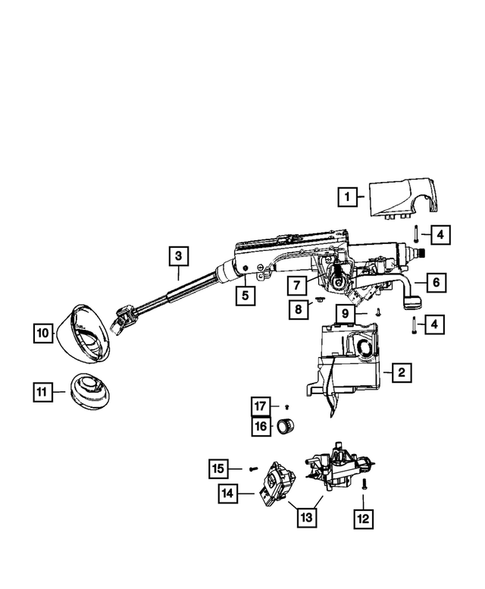
Understanding The Wiring Diagrams
To truly grasp the Jeep Compass steering wheel schematic, one would typically refer to the vehicle’s official service manuals. These manuals contain detailed wiring diagrams that illustrate the flow of electricity between all components.
A simplified view of the connections might look like this:
- Battery (+12V) -> Fuse -> SWCM -> Buttons (Switches)
- Buttons (Switches) -> SWCM -> Vehicle Systems (ECU, Infotainment, etc.)
- Battery (+12V) -> Fuse -> ACM -> Airbag Igniter (via Clock Spring)
- Impact Sensors -> ACM
These diagrams use standardized symbols to represent components like switches, resistors, capacitors, and wires, along with color codes for the wires themselves. For example, a wire labeled “DG/BK” might indicate a Dark Green wire with a Black stripe.
| Button Label | Function | System Controlled |
|---|---|---|
| **Volume +** | Increase audio volume | Infotainment |
| **Volume -** | Decrease audio volume | Infotainment |
| **Seek Up** | Scan to next radio station or track | Infotainment |
| **Seek Down** | Scan to previous radio station or track | Infotainment |
| **Mode** | Cycle through audio sources | Infotainment |
| **Mute** | Temporarily silence audio | Infotainment |
| **Cruise ON** | Activate cruise control system | PCM/ECM |
| **Cruise SET** | Set current speed or decrease set speed | PCM/ECM |
| **Cruise RES** | Resume previous set speed or increase speed | PCM/ECM |
| **Cruise CANCEL** | Temporarily disengage cruise control | PCM/ECM |
| **Phone Answer** | Answer incoming call | Infotainment/BT |
| **Phone End** | End current call | Infotainment/BT |
| **Voice Command** | Activate voice recognition system | Infotainment |
This table provides a quick overview of the typical functions associated with steering wheel buttons in a Jeep Compass. The exact layout and functions can vary slightly depending on the trim level and model year.
Electric Power Steering (eps) Integration
Modern Jeep Compass models predominantly use Electric Power Steering (EPS). Unlike older hydraulic systems, EPS uses an electric motor to assist steering. This system is highly integrated with the vehicle’s electronics.
How Eps Works With The Steering Wheel
The steering wheel’s rotation is detected by a torque sensor and a steering angle sensor located within the steering column, often near or integrated with the SWCM and clock spring.
- Torque Sensor: Measures the amount of force the driver is applying to the steering wheel.
- Steering Angle Sensor: Determines the direction and speed of steering input.
These sensors send data to the EPS Control Module. The EPS module then commands the electric motor to provide the appropriate level of assistance to the steering rack. The power steering assist can be dynamically adjusted based on vehicle speed, steering input, and other factors.
Eps And Steering Wheel Schematic Interactions
The EPS system’s schematic involves several key electronic control units (ECUs) and sensors:
- EPS Control Module: The “brain” of the electric power steering system.
- Torque Sensor: Measures driver’s steering effort.
- Steering Angle Sensor: Measures steering wheel position and rate of turn.
- Vehicle Speed Sensor: Provides vehicle speed data to the EPS module.
- Electric Motor: Provides physical assistance to the steering rack.
- Steering Wheel Control Module (SWCM): May communicate with the EPS module for certain functions or diagnostics.
A failure in the torque sensor or steering angle sensor can lead to incorrect power steering assist, dashboard warning lights related to the steering system, or even a complete loss of