The Jeep Cherokee XJ is a beloved vehicle, known for its ruggedness and capability. Many owners, whether they are off-roading enthusiasts or daily commuters, want to ensure their XJ is running at its best.
One crucial component that often needs attention is the battery. Choosing the correct Jeep Cherokee XJ battery size is vital for reliable starting, powering accessories, and overall vehicle performance.
This guide will help you understand the different battery groups, key specifications, and factors to consider when selecting the perfect battery for your XJ.
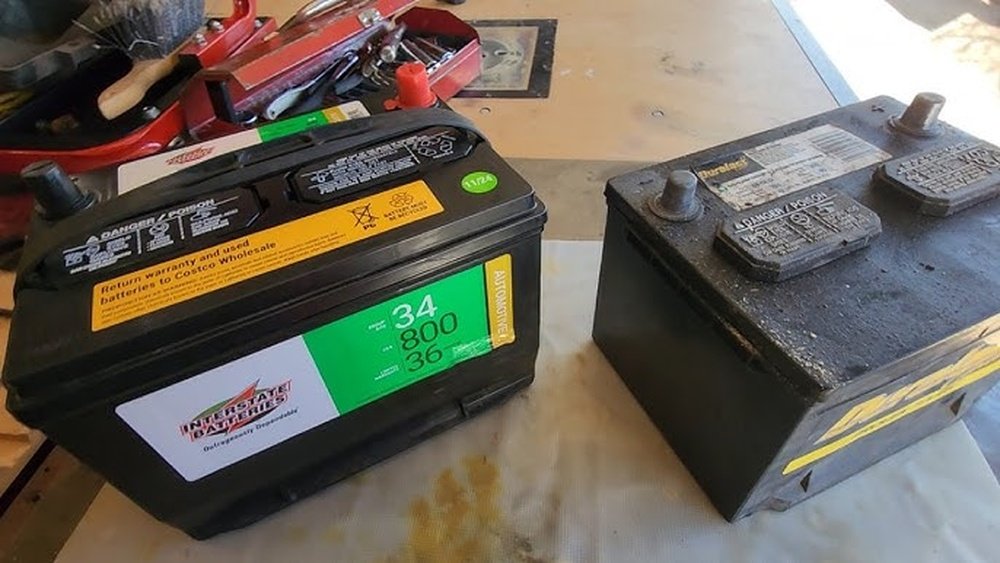
Understanding Battery Group Sizes
Car batteries come in various group sizes, which are standardized by the Battery Council International (BCI). These sizes dictate the physical dimensions of the battery, including its length, width, and height, as well as the terminal post placement and type. Using the wrong size battery can lead to installation problems, poor connections, and even damage to your vehicle.
The Jeep Cherokee XJ, manufactured from 1984 to 2001, primarily uses a few common battery group sizes. The most prevalent for the XJ is the Group 35 battery. However, depending on specific model years and any aftermarket modifications, you might also encounter or be able to fit batteries from related groups like Group 24F or Group 65. It’s always best to verify what fits your specific vehicle.
Group 35 Batteries
The Group 35 battery is the most common and often the OEM (Original Equipment Manufacturer) recommended size for many Jeep Cherokee XJs. These batteries are characterized by their relatively compact size, making them a good fit for the XJ’s battery tray. They typically have top-mounted, standard SAE posts.
Key characteristics of a Group 35 battery include:
- Dimensions: Generally around 9.1 inches long, 6.9 inches wide, and 8.9 inches tall. These dimensions can vary slightly between manufacturers.
- Terminal Configuration: Positive terminal usually on the right when viewed from the front.
- Common Applications: Widely used in Japanese and some American vehicles.
When choosing a Group 35 battery, pay attention to its Cold Cranking Amps (CCA) and Reserve Capacity (RC). For a stock XJ, a CCA rating between 500-650 is usually sufficient. If you have added extra lights, winches, or other electrical accessories, you might want to consider a battery with a higher CCA.
Group 24f Batteries
The Group 24F battery is another option that can sometimes fit the Jeep Cherokee XJ, particularly if there have been modifications to the battery tray or hold-down system. The ‘F’ in 24F signifies that the positive terminal is on the right when the battery is viewed from the front, which is the standard configuration for many vehicles.
Key characteristics of a Group 24F battery:
- Dimensions: Typically around 10.2 inches long, 6.8 inches wide, and 9.0 inches tall. They are slightly longer than Group 35 batteries.
- Terminal Configuration: Positive terminal on the right.
- Common Applications: Often found in some domestic vehicles and trucks.
While a Group 24F can offer more power or a longer lifespan due to its slightly larger size, it’s crucial to measure your battery tray and check clearance before purchasing. The extra length might require adjustments to the hold-down bracket or relocation of other components.
Group 65 Batteries
In some cases, particularly with older XJ models or if there’s been significant modification to the engine bay, a Group 65 battery might be used. These are larger batteries, offering substantial power and capacity, often found in larger trucks and SUVs.
Key characteristics of a Group 65 battery:
- Dimensions: Generally around 11.0 inches long, 7.1 inches wide, and 9.4 inches tall. They are noticeably larger than Group 35 batteries.
- Terminal Configuration: Positive terminal on the right.
- Common Applications: Typically used in larger vehicles like Ford trucks and some SUVs.
Fitting a Group 65 battery into a standard XJ battery tray is often challenging due to its size. It usually requires custom fabrication for the battery tray and hold-down system. If you’re considering this route, ensure you have the necessary space and are prepared for the modifications. The benefit is significantly higher CCA and RC, which can be useful for heavily modified XJs with extensive electrical demands.
Key Battery Specifications To Consider
Beyond just the group size, several other crucial specifications determine a battery’s performance and suitability for your Jeep Cherokee XJ. Understanding these will help you make an informed decision.
Cold Cranking Amps (cca)
Cold Cranking Amps (CCA) is perhaps the most important metric for starting your vehicle, especially in colder climates. It measures the number of amps a battery can deliver at 0°F (-18°C) for 30 seconds while maintaining a voltage above 7.2 volts.
- For Stock XJs: A battery with a CCA rating of 500-650 amps is generally sufficient for a standard Jeep Cherokee XJ. This ensures reliable starting in most conditions.
- For Modified XJs: If you have added accessories like powerful off-road lights, a winch, a high-performance stereo system, or an aftermarket engine management system, you should aim for a battery with a higher CCA rating, perhaps 650 amps or more. This provides extra power reserve to start the engine and run these accessories simultaneously.
- Climate Considerations: If you live in a region with very cold winters, a higher CCA rating is highly recommended. Batteries lose some of their power output in cold temperatures, so a higher starting CCA ensures reliable performance when you need it most.
Reserve Capacity (rc)
Reserve Capacity (RC) measures how long a fully charged battery can deliver 25 amps at 80°F (27°C) before its voltage drops below 10.5 volts. This rating is essentially a measure of how long your battery can power your vehicle’s essential systems if the alternator fails.
- Importance: A higher RC is beneficial if you frequently use accessories like lights, stereos, or other electronics with the engine off, or if you drive in stop-and-go traffic where the alternator may not be fully charging the battery.
- Typical Values: For a Group 35 battery, RC values typically range from 90 to 120 minutes. For larger batteries like Group 65, this can be significantly higher.
- Matching Your Needs: For a daily driver, an RC of around 90-100 minutes is usually adequate. For an off-road vehicle that might sit with accessories running or for extended periods without the engine on, a higher RC (120+ minutes) offers greater peace of mind.
Battery Type: Flooded, Agm, And Gel
Batteries come in different types, each with its advantages and disadvantages:
- Flooded Lead-Acid Batteries: These are the most common and typically the most affordable type. They contain liquid electrolyte that covers the lead plates. They require occasional maintenance (checking electrolyte levels) and are sensitive to vibration and extreme temperatures. Most standard XJ batteries will be of this type.
- Absorbent Glass Mat (AGM) Batteries: In AGM batteries, the electrolyte is absorbed into fiberglass mats between the plates. This makes them spill-proof, vibration-resistant, and maintenance-free. They generally offer better performance, longer lifespan, and can handle deep discharge cycles better than flooded batteries. AGM batteries are a great upgrade for XJs, especially those used for off-roading or with heavy electrical loads, as they are more resilient.
- Gel Batteries: These use a gelled electrolyte. They are also spill-proof and maintenance-free but are typically more expensive and can be sensitive to overcharging. They are less common for automotive applications compared to flooded or AGM.
For a Jeep Cherokee XJ, upgrading to an AGM battery is a worthwhile investment if your budget allows. Their durability and performance benefits are significant, especially for vehicles that experience rough terrain or have higher electrical demands.
Voltage And Terminal Type
- Voltage: Virtually all automotive batteries for the Jeep Cherokee XJ are 12-volt systems. This is a standard across the industry.
- Terminal Type: The XJ primarily uses SAE top posts, which are the standard cylindrical posts found on most car batteries. Ensure the battery you choose has the correct terminal configuration to match your vehicle’s battery cables. Some aftermarket batteries might offer different terminal types, but for an XJ, sticking with SAE top posts is the safest bet unless you plan on modifying your cable ends.

Factors To Consider When Buying Your Xj Battery
Choosing the right battery involves more than just picking a group size. Several practical factors can influence your decision and ensure you get the best value and performance for your Jeep Cherokee XJ.
Your Jeep Cherokee Xj’s Specific Needs
Consider how you use your XJ. Is it a daily driver, a weekend off-roader, a project vehicle, or a combination?
- Daily Driver: If your XJ is primarily used for commuting, a reliable Group 35 flooded battery with adequate CCA (around 550-600) and RC (around 90-100 minutes) will likely suffice. Durability is still important, but extreme resilience might not be the top priority.
- Off-Road Vehicle: For an XJ that sees regular off-road action, vibration resistance and deep cycle capability become much more important. An AGM battery is highly recommended here. Consider a higher CCA rating if you run auxiliary lights, a winch, or a fridge while the engine is off. A higher RC is also beneficial.
- Modified XJ: If you’ve upgraded your engine, added a supercharger, or installed a complex electrical system (multiple amplifiers, large lighting arrays, electric fans), you’ll need a battery that can handle the increased load. Look for the highest CCA and RC ratings within a compatible group size, or consider if a larger group size (with modifications) is feasible.
Climate Conditions
As mentioned earlier, climate plays a significant role.
- Cold Climates: Prioritize CCA. A battery with a higher CCA rating will ensure your engine starts more reliably in freezing temperatures.
- Hot Climates: Heat is a battery’s enemy, accelerating degradation. While CCA is still important, look for batteries known for their durability and heat resistance. Some manufacturers offer specific “hot climate” versions. Proper ventilation around the battery in the engine bay is also crucial.
Brand Reputation And Warranty
Not all batteries are created equal. Some brands have a long-standing reputation for quality, reliability, and customer service.
- Research Brands: Look for well-known battery manufacturers like Optima, Odyssey, Duralast, DieHard, Interstate, and ACDelco. Read reviews from other Jeep Cherokee XJ owners or automotive forums to gauge real-world performance and longevity.
- Warranty: Battery warranties typically range from 1 to 5 years. A longer warranty often indicates the manufacturer’s confidence in their product. Understand the terms of the warranty, especially regarding prorated vs. full replacement and any specific maintenance requirements. A 3-year free replacement warranty is a good benchmark for a quality battery.
Price Vs. Value
Batteries can range from under $100 to over $300. While it’s tempting to go for the cheapest option, consider the long-term value.
- Budget Options: Cheaper batteries might get you started, but they may not last as long or perform as reliably, especially under demanding conditions.
- Premium Options: While more expensive upfront, premium batteries (like high-end AGMs) often offer superior performance, longer lifespan, and greater resilience, potentially saving you money and hassle in the long run.
- Calculating Cost Per Year: A $200 battery that lasts 5 years ($40/year) might be better value than a $100 battery that lasts only 2 years ($50/year).
Installation And Disposal
- DIY Installation: Replacing a car battery is a relatively straightforward DIY task for most people. However, it’s essential to follow safety precautions, such as wearing safety glasses and gloves, and ensuring you disconnect the negative terminal first and reconnect it last.
- Professional Installation: Most auto parts stores offer battery installation services, often for a small fee or sometimes free with purchase. This can be a convenient option if you’re unsure or lack the tools.
- Battery Disposal: Old batteries contain hazardous materials like lead and sulfuric acid. Never dispose of them in regular trash. Most auto parts stores and recycling centers accept old batteries for proper recycling. Many retailers will even offer a core charge refund when you return your old battery.
How To Identify The Correct Battery For Your Jeep Cherokee Xj
With so many options, how do you pinpoint the exact battery for your specific Jeep Cherokee XJ? Here’s a systematic approach.
Check Your Owner’s Manual
The most reliable source of information is your Jeep Cherokee XJ owner’s manual. It will specify the recommended battery group size, CCA rating, and any other critical details. If you don’t have the physical manual, you can often find digital versions online through Mopar (Chrysler’s parts division) or various automotive enthusiast websites.
Inspect Your Current Battery
Take a look at the battery currently installed in your XJ. Most batteries have their group size and specifications printed directly on the label. Note down the group size (e.g., 35, 24F, 65) and any CCA or RC ratings. This is a good starting point, but remember that the previous owner might have installed a non-standard size.
Use Online Battery Finders
Most major battery manufacturers and retailers have online tools where you can enter your vehicle’s year, make, and model to find compatible batteries. Websites like AutoZone, Advance Auto Parts, O’Reilly Auto Parts, and battery brands like Optima and Odyssey have these features.
These tools are generally accurate but always double-check the results against your owner’s manual or by measuring your battery tray. Sometimes, these tools might suggest a battery that fits but isn’t the optimal choice in terms of performance or longevity.
Measure Your Battery Tray And Engine Bay Clearance
If you’re considering a different group size or want to maximize power, physical measurements are key.
- Remove the old battery (after ensuring the engine is off and keys are out of the ignition).
- Measure the dimensions of the battery tray: Length, width, and height.
- Check for clearance around the tray. Note the position of the airbox, fuse box



















