The Jeep Cherokee Trailhawk stands out as a popular choice for adventure lovers who need both off-road capability and practical towing power. Whether you plan to pull a small camper, a boat, or a trailer full of bikes, understanding the Trailhawk’s towing capacity is important.
This article breaks down everything you need to know, including real numbers, what affects towing performance, and how the Trailhawk compares to rivals. If you want confident towing with a midsize SUV, keep reading.
Jeep Cherokee Trailhawk Towing Capacity Explained
The Trailhawk is the most rugged version of the Jeep Cherokee. When it comes to towing, it’s built to handle more than the average compact SUV. However, the exact towing capacity depends on the engine and options.
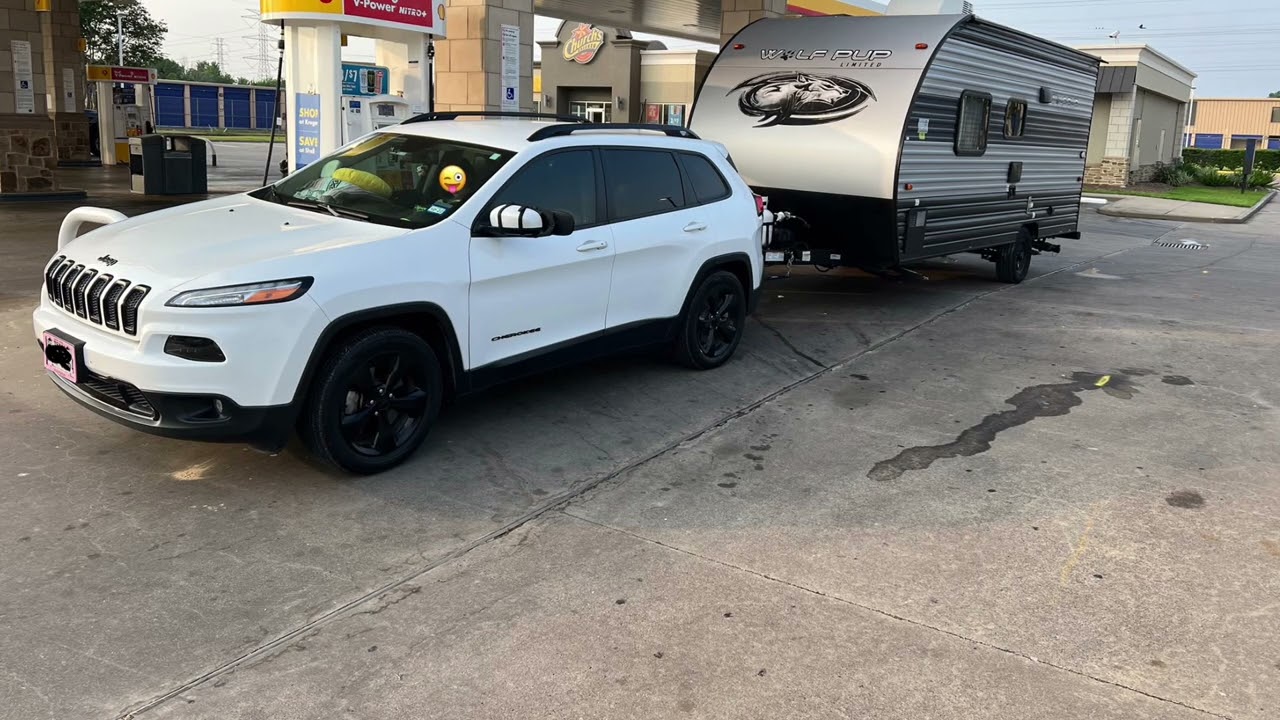
For most recent models (2019–2026), the Trailhawk comes with a 3.2-liter V6 engine or a 2.0-liter turbocharged 4-cylinder. Here are the official towing capacities:
| Model Year | Engine | Max Towing Capacity |
|---|---|---|
| 2019–2026 | 3.2L V6 | 4,500 lbs |
| 2019–2026 | 2.0L Turbo | 4,000 lbs |
| 2014–2018 | 3.2L V6 | 4,500 lbs |
| 2014–2018 | 2.4L I4 | 2,000 lbs |
The highest rating, 4,500 lbs, is only available when the Trailhawk is equipped with the optional Trailer Tow Group package. Without this package, the max drops to 2,000 lbs.
What Can You Tow With A Trailhawk?
To get a sense of what these numbers mean in daily life, here are examples of what the Trailhawk can tow safely:
- Small camper or teardrop trailers (usually 1,500–3,500 lbs)
- Single-axle utility trailers (1,000–2,000 lbs)
- Jet skis or small boats (1,500–3,000 lbs)
- Motorcycles or ATVs on a lightweight trailer (1,200–2,500 lbs)
Always remember to include the weight of gear, fuel, and passengers in your total towing calculation.

Key Features That Help Towing
The Trailhawk is more than just a powerful engine. Several features make towing easier and safer:
- Active Drive Lock 4×4: Keeps you in control on slippery or rough terrain.
- Trailer Sway Control: Helps prevent dangerous trailer swinging.
- Heavy-duty cooling system (with Tow Group): Keeps the engine from overheating during long hauls.
- Integrated wiring harness: Makes connecting trailer lights simple.
- Class III hitch receiver: Supports higher trailer weights.
These features help explain why the Trailhawk can tow more than many other compact SUVs.
Towing Capacity Vs. Payload
Many new owners confuse towing capacity with payload. Towing capacity is the maximum weight you can pull behind the vehicle. Payload is the weight you can carry inside the SUV, including passengers and cargo.
For the Trailhawk, payload usually ranges from 1,000 to 1,300 lbs. If you load up the back with gear, you must reduce the weight of your trailer to stay within safe limits.
Comparing Trailhawk To Other Suvs
How does the Trailhawk’s towing power compare to similar SUVs? Here’s a quick look:
| Model | Max Towing Capacity |
|---|---|
| Jeep Cherokee Trailhawk | 4,500 lbs |
| Subaru Outback | 3,500 lbs |
| Ford Escape | 3,500 lbs |
| Toyota RAV4 | 3,500 lbs |
| Honda CR-V | 1,500 lbs |
As you can see, the Trailhawk outperforms most rivals in its class when properly equipped.
Real-world Towing: What Owners Say
Many owners find the Trailhawk tows confidently for its size. Drivers report that pulling a 2,000–3,500 lb trailer feels stable, especially with the Trailer Tow Group. However, some mention that the engine works hard on steep hills, especially with the turbocharged 2.0L engine.
A non-obvious tip: Always check your tongue weight (the downward force on the hitch). For the Trailhawk, keep it under 450 lbs. Too much tongue weight can make steering difficult and unsafe.
Another important insight: Tire pressure matters a lot for towing. Underinflated tires can cause sway or poor handling, so check them before every trip.

Common Towing Mistakes With The Trailhawk
- Ignoring the Trailer Tow Package: Without this, you don’t get the full towing capacity.
- Overloading: Adding too much gear in the SUV plus a heavy trailer can exceed safe limits.
- Skipping maintenance: Towing puts stress on brakes, transmission, and cooling systems.
- Not using trailer brakes: For trailers over 2,000 lbs, trailer brakes are a must for safety.
- Incorrect hitch setup: The wrong hitch height or size can cause sway or poor control.
Always read your owner’s manual and double-check your numbers before heading out.
Towing Tips For New Trailhawk Owners
- Practice backing up with a trailer before your first big trip.
- Use tow/haul mode if available, especially on hills.
- Remember that your stopping distance increases when towing.
- Plan fuel stops, as towing lowers fuel economy.
- Use side mirrors or add-ons for a better view around your trailer.
If you’re new to towing, consider watching Jeep’s official towing videos or reading detailed guides on their website.