Understanding Your 2014 Jeep Cherokee Latitude Tire Size
When it comes to maintaining your 2014 Jeep Cherokee Latitude, one of the most crucial aspects is ensuring you have the correct tire size. Tires are your vehicle’s direct connection to the road, impacting everything from safety and handling to fuel efficiency and ride comfort.
For the 2014 Cherokee Latitude, understanding the specific tire size recommended by the manufacturer is not just about fitting the wheel; it’s about optimizing performance and ensuring your Jeep behaves as it was designed to. This guide will break down what the tire size designation means, what the standard size is for your Latitude trim, and what factors you should consider when it’s time for new tires.
The standard tire size for the 2014 Jeep Cherokee Latitude is typically 225/65R17. This might seem like a string of numbers and letters, but each part tells a vital story about the tire’s dimensions and construction. Let’s decode this common size. The first set of numbers, 225, represents the tire’s width in millimeters. This means the tire is 225 millimeters wide from sidewall to sidewall. Following that, 65 is the aspect ratio, expressed as a percentage. It indicates that the tire’s sidewall height is 65% of its width. So, for a 225mm wide tire, the sidewall height is approximately 146.25mm (225 * 0.65). The letter R signifies that the tire has a radial construction, which is the standard for almost all modern vehicles. This construction method uses cords that run radially across the tire, offering better flexibility and durability. Finally, 17 indicates the diameter of the wheel (rim) that the tire is designed to fit, measured in inches. Therefore, a 225/65R17 tire is meant for a 17-inch wheel.
Choosing the right tires is more than just matching numbers. It’s about understanding how those numbers translate into real-world performance.
The width of the tire affects grip and stability, while the aspect ratio influences ride comfort and handling responsiveness. A lower aspect ratio generally leads to sharper handling but a firmer ride, as there's less sidewall to absorb bumps.
Conversely, a higher aspect ratio provides a softer ride but can make the steering feel a bit less precise. For the 2014 Cherokee Latitude, the 225/65R17 size strikes a balance, offering a comfortable ride suitable for daily driving while still providing adequate grip and stability for various conditions.
This size is specifically chosen by Jeep engineers to complement the vehicle’s suspension system and weight, ensuring optimal performance and safety.
Decoding Tire Size Markings: A Deeper Dive
Understanding the tire size code is fundamental for any vehicle owner. For your 2014 Jeep Cherokee Latitude, the standard 225/65R17 is a clear indicator. However, knowing what each component means allows you to make informed decisions, especially if you’re considering alternatives or need to find replacements.
Width (p225)
The 225 in 225/65R17 refers to the tire’s section width. This is the measurement of the tire from one sidewall to the other at its widest point, expressed in millimeters. A wider tire generally offers a larger contact patch with the road, which can translate to improved traction, especially in dry conditions, and better braking performance. However, it can also increase rolling resistance, potentially leading to slightly lower fuel economy. For the Cherokee Latitude, 225mm is a moderate width that balances grip with efficiency.
Aspect Ratio (65)
The 65 is the aspect ratio, representing the tire’s sidewall height as a percentage of its width. In this case, the sidewall height is 65% of 225mm. This calculation gives us approximately 146.25mm. A higher aspect ratio (like 65) means a taller sidewall, which typically results in a more comfortable ride because the taller sidewall can absorb more road imperfections. It also provides more cushioning for the wheel itself. A lower aspect ratio, such as 50 or 45, would mean a shorter, stiffer sidewall, leading to more responsive steering and better cornering but a harsher ride. The 65 aspect ratio on the Latitude is chosen to provide a good blend of comfort and capability.
Construction (r)
The R in the tire size stands for Radial Construction. This is the most common type of tire construction used today. In radial tires, the cord plies are arranged in a circular pattern, running perpendicular to the direction of travel. This design allows the sidewalls to be more flexible and the tread to remain more stable. This leads to better fuel economy, a smoother ride, and improved handling compared to older bias-ply tires. You’ll almost always see an ‘R’ for modern passenger vehicles like your 2014 Cherokee.
Wheel Diameter (17)
The 17 indicates the diameter of the wheel, or rim, that the tire is designed to fit. This measurement is in inches. It’s crucial that this number matches the diameter of your Jeep’s wheels. Putting a tire with the wrong diameter on a wheel can be dangerous and will not fit correctly. The 17-inch wheels are a popular size for SUVs, offering a good balance between tire sidewall height (for comfort) and wheel size (for aesthetics and brake clearance).
Load Index And Speed Rating
While not always explicitly part of the primary tire size designation printed on the sidewall, the Load Index and Speed Rating are critical components that determine a tire’s capabilities. These are usually represented by numbers and letters following the tire size. For the 2014 Jeep Cherokee Latitude, you would typically find a load index around 101 or 102 and a speed rating of H or V.
- Load Index: This number corresponds to the maximum weight a single tire can carry. For example, a load index of 101 means the tire can support up to 825 kg (1819 lbs). A load index of 102 means it can support up to 850 kg (1874 lbs). Your Jeep’s manufacturer specifies a minimum load index to ensure the tires can safely handle the vehicle’s weight and any potential cargo.
- Speed Rating: This letter indicates the maximum speed at which the tire can be safely operated. ‘H’ typically signifies a speed capability of up to 210 km/h (130 mph), while ‘V’ signifies up to 240 km/h (149 mph). For a vehicle like the Cherokee Latitude, an ‘H’ or ‘V’ rating is more than sufficient for typical driving conditions.
Always ensure that any replacement tires meet or exceed the original equipment manufacturer’s (OEM) load index and speed rating specifications.
Standard Tire Size For The 2014 Jeep Cherokee Latitude
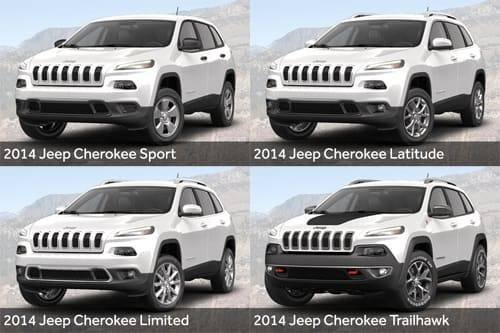
The 2014 Jeep Cherokee Latitude typically comes equipped with 225/65R17 all-season tires as standard. This size is carefully selected by Jeep engineers to provide a balanced performance profile for everyday driving, light off-roading, and varying weather conditions.
Why This Size Is Chosen
Jeep chose the 225/65R17 size for the Latitude trim for several key reasons:
- Ride Comfort: The 65 aspect ratio offers a reasonably tall sidewall, which helps to absorb road imperfections, providing a more comfortable and compliant ride for passengers. This is important for a vehicle often used for commuting and family trips.
- All-Weather Capability: This size is commonly fitted with all-season tires. These tires are designed with tread patterns and rubber compounds that can perform adequately in a wide range of conditions, including dry, wet, and light snow.
- Handling Balance: While prioritizing comfort, the 225mm width and 17-inch diameter still offer a good level of grip and responsiveness. It strikes a balance, avoiding the overly mushy feel that can come with very tall sidewalls, while not being so low-profile that it becomes harsh.
- Fuel Efficiency: Compared to wider or lower-profile tires, the 225/65R17 size generally offers lower rolling resistance, contributing positively to the vehicle’s overall fuel economy.
- Off-Road Clearance: The overall diameter of a 225/65R17 tire provides a decent amount of ground clearance, which is beneficial for a Jeep, even in its more road-oriented trims like the Latitude. This allows it to handle minor obstacles and uneven terrain without scraping the undercarriage.
Tire Pressure Recommendations
Maintaining the correct tire pressure is just as important as having the right size. For the 2014 Jeep Cherokee Latitude with 225/65R17 tires, the recommended cold tire pressure is typically found on a sticker located on the driver’s side doorjamb. It is usually around 32 PSI (pounds per square inch) for all four tires. Always check this sticker for the most accurate information specific to your vehicle. Properly inflated tires ensure optimal performance, safety, and tire longevity. Underinflated tires can lead to poor handling, increased fuel consumption, and premature wear, while overinflated tires can result in a harsh ride and reduced traction.
Exploring Tire Size Alternatives (and Why To Be Cautious)
While the 225/65R17 is the standard and recommended size for the 2014 Jeep Cherokee Latitude, some owners might consider alternative tire sizes. This could be for aesthetic reasons (larger wheels), performance enhancements, or simply due to availability. However, changing tire size is not a simple swap and requires careful consideration.
Factors To Consider When Changing Size
If you decide to deviate from the OEM size, here are critical factors to evaluate:
- Overall Diameter: The most crucial factor is maintaining a similar overall tire diameter. If the new tire size significantly increases or decreases the overall diameter, it will affect your speedometer and odometer readings. A larger diameter will make your speedometer read lower than your actual speed, and a smaller diameter will make it read higher. For example, if your speedometer reads 60 mph, you might actually be driving 65 mph or 55 mph. This can lead to speeding tickets or inaccurate mileage tracking.
- Wheel Well Clearance: Ensure the new tires will fit within the wheel wells without rubbing against the fenders, suspension components, or brakes, especially when turning the steering wheel or when the suspension is compressed (e.g., going over bumps). Larger tires can cause rubbing, which can damage the tires and the vehicle’s bodywork.
- Gearing and Performance: A significant change in tire diameter can affect your vehicle’s effective gear ratio. Larger tires effectively make your gears “taller,” meaning your engine has to work harder to get the vehicle moving, potentially impacting acceleration and fuel economy. Smaller tires do the opposite, making gears “shorter,” which can improve acceleration but may lead to higher engine RPMs at highway speeds, reducing fuel efficiency.
- Traction Control and ABS Systems: Modern vehicles like the 2014 Cherokee Latitude have sophisticated electronic systems such as ABS (Anti-lock Braking System) and traction control that rely on wheel speed sensors. These systems are calibrated for the OEM tire diameter. Significant deviations can confuse these systems, potentially leading to reduced effectiveness or warning lights.
- Load Capacity: Ensure any alternative tire size also meets or exceeds the original load index requirements for the vehicle.
Common Tire Size Deviations And Their Implications
While not recommended without careful calculation and potential recalibration, some owners might consider slightly larger wheel sizes, such as 18-inch or 19-inch wheels. This typically involves using tires with a lower aspect ratio to keep the overall diameter close to the original.
For example, moving to an 18-inch wheel might involve a tire size like 225/55R18. Let’s compare the overall diameter:
- 225/65R17:
- Width: 225 mm
- Aspect Ratio: 65% -> Sidewall height = 225 0.65 = 146.25 mm
- Rim Diameter: 17 inches 25.4 mm/inch = 431.8 mm
- Overall Diameter = (2 Sidewall Height) + Rim Diameter
- Overall Diameter = (2 146.25 mm) + 431.8 mm = 292.5 mm + 431.8 mm = 724.3 mm*
- 225/55R18:
- Width: 225 mm
- Aspect Ratio: 55% -> Sidewall height = 225 0.55 = 123.75 mm
- Rim Diameter: 18 inches 25.4 mm/inch = 457.2 mm
- Overall Diameter = (2 Sidewall Height) + Rim Diameter
- Overall Diameter = (2 123.75 mm) + 457.2 mm = 247.5 mm + 457.2 mm = 704.7 mm*
In this hypothetical example, the 225/55R18 tire is approximately 20mm smaller in overall diameter than the 225/65R17. This difference, while seemingly small, can be enough to cause noticeable inaccuracies in the speedometer and odometer, and potentially affect the ABS and traction control systems.
Pro Tip: Always use a reliable tire size calculator online to compare the overall diameter of your OEM tires with any potential alternative size. Aim for a difference of no more than 1-2% to minimize negative impacts.

Tire Tread Patterns And Types For Your 2014 Cherokee Latitude
Beyond size, the type of tire and its tread pattern significantly influence your 2014 Jeep Cherokee Latitude’s performance. The Latitude trim is typically equipped with all-season tires, designed for versatility. However, understanding different tread patterns and tire types can help you choose the best option when replacement is due.
All-season Tires
These are the most common choice for the Cherokee Latitude. They are engineered to provide a balance of performance in various conditions:
- Tread Design: All-season tires feature tread patterns that incorporate elements suitable for dry, wet, and light snowy conditions. They often have a combination of straight grooves for water evacuation and sipes (small slits) for improved grip on slippery surfaces.
- Rubber Compound: The rubber compound used is designed to remain flexible



















