If you have a Jeep Cherokee, you probably know how important the fuse panel is for your vehicle’s electrical system. A blown fuse can cause anything from a malfunctioning headlight to a dead radio.
But finding the right fuse, understanding what it controls, and replacing it safely can be confusing—especially if you don’t have a clear diagram. This guide explains what you need to know about the Jeep Cherokee fuse panel diagram, how to read it, and tips for troubleshooting electrical problems.
What Is A Fuse Panel Diagram?
A fuse panel diagram is a chart that shows the location and function of each fuse in your vehicle. In the Jeep Cherokee, there are usually two main fuse panels—one inside the cabin and one under the hood. Each panel controls different systems, like lights, wipers, radio, and engine electronics. The diagram helps you quickly identify which fuse connects to which part of your car.
Why does this matter? If something electrical stops working, the diagram lets you check and replace just the right fuse instead of guessing. This can save you time and prevent further damage.
Locations Of Jeep Cherokee Fuse Panels
Knowing where to find the fuse panels is the first step. In most models, you’ll find:
- Interior fuse panel: Usually under the dashboard, to the left of the steering wheel.
- Engine compartment fuse panel: Located near the battery, inside a black box.
Different Cherokee models (XJ, KL, etc. ) May have slight variations, but these locations are standard.
Example: 2014-2026 Jeep Cherokee
- Interior panel: Left side of the instrument panel, behind a small door.
- Engine bay panel: Next to the battery, covered with a snap-on lid.
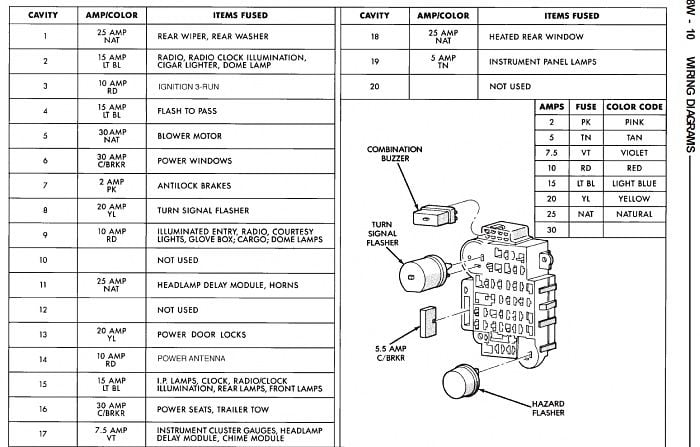
Understanding The Fuse Panel Diagram
A typical fuse panel diagram uses symbols, numbers, and labels. Here’s what to look for:
- Fuse number: Matches a spot on the panel.
- Amp rating: Shows the maximum current (e.g., 10A, 20A).
- System name: Tells what the fuse controls (e.g., “Headlamp” or “Radio”).
Let’s look at a sample layout for a Jeep Cherokee’s engine compartment fuse box:
| Fuse Number | Amperage | System |
|---|---|---|
| F01 | 10A | Left Headlamp |
| F02 | 10A | Right Headlamp |
| F06 | 20A | Power Outlet |
| F11 | 15A | Audio System |
The diagram in your owner’s manual will look similar, with more details for every fuse.
How To Read And Use The Diagram
Finding the right fuse is simple with the diagram:
- Identify the problem (e.g., radio not working).
- Check the diagram for the system label (“Audio System”).
- Find the fuse number and location.
- Check the fuse: Pull it out and look for a broken wire inside.
- Replace if needed: Use the same amperage. Never use a higher-rated fuse.
Common mistake: Replacing a blown fuse with a higher amp can cause wiring damage or fire.
Main Fuses And Their Functions
To make things clearer, here’s a typical list of what main fuses control in a Jeep Cherokee:
| Fuse | System | Panel Location |
|---|---|---|
| F01 | Left Headlamp | Engine Bay |
| F11 | Audio System | Engine Bay |
| F21 | Power Windows | Interior |
| F24 | Wipers | Interior |
| F31 | Heater/AC | Interior |
Tips For Troubleshooting Fuse Issues
Sometimes, a fuse keeps blowing. Here are some less obvious reasons:
- Short circuit: Wires may touch where they shouldn’t, causing repeated fuse failure.
- Wrong fuse rating: Using the wrong amp size can create problems.
- Corroded contacts: Moisture can cause rust, leading to bad connections.
- Aftermarket accessories: Added devices (dash cams, extra lights) can overload circuits.
If you replace a fuse and it blows again, don’t just keep swapping fuses. Find the cause, or consult a mechanic.
Replacing A Fuse: Step-by-step
- Turn off the vehicle and remove the key.
- Find the correct fuse using the diagram.
- Use fuse pullers or tweezers to remove the fuse.
- Inspect the fuse: Look for a broken or melted wire inside.
- Insert a new fuse with the same rating.
- Test the system to see if it works.
Pro tip: Always carry spare fuses in your glove box. This small step can save you from being stranded.
Where To Find Jeep Cherokee Fuse Panel Diagrams
- Owner’s manual: Every Jeep Cherokee comes with a manual that includes the diagram.
- Fuse box cover: Some models have a mini-diagram printed on the inside of the lid.
- Official resources: The Jeep official site provides downloadable manuals for recent models.
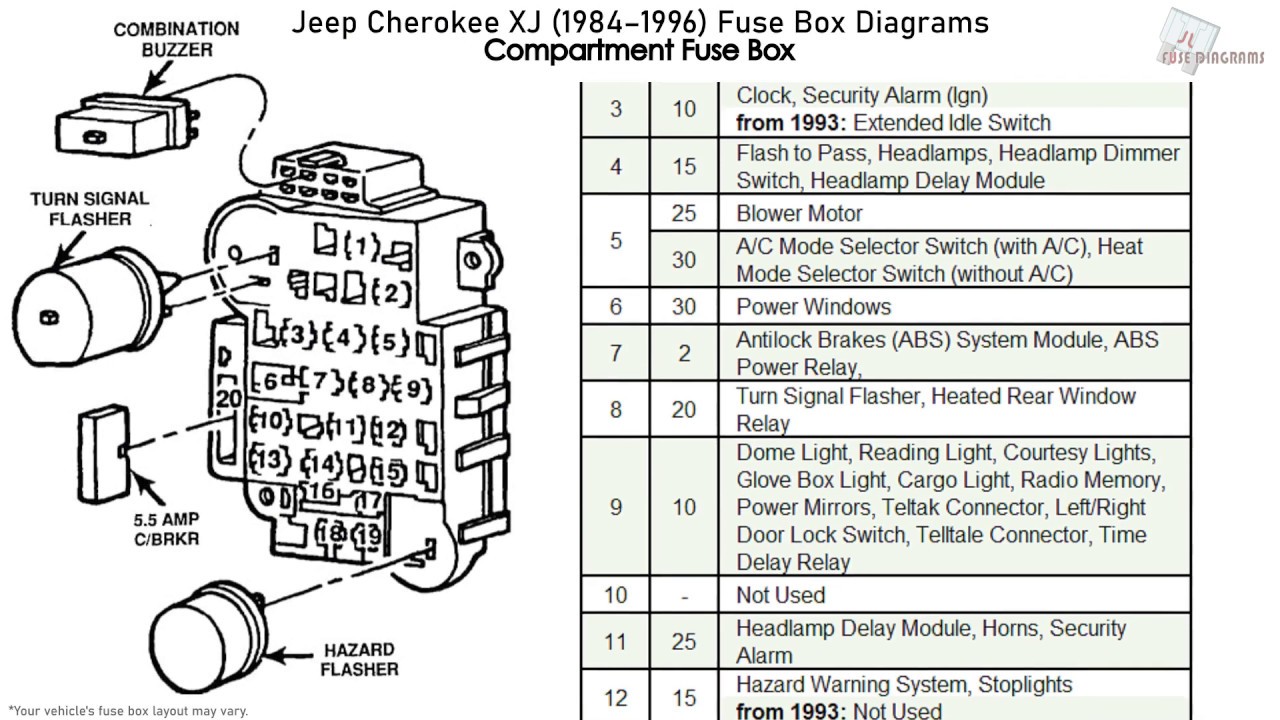
Real-world Example
Imagine your power windows stop working. According to the diagram, check “F21” in the interior panel. If the fuse is blown, replace it with a 30A fuse. If the new fuse blows quickly, there’s likely a wiring or motor issue that needs expert help.
Practical Insights For Jeep Cherokee Owners
Many owners overlook these points:
- Fuse panel access can be tight. If you have large hands or limited space, use long-nose pliers.
- Label upgrades: Use a label maker to mark each fuse spot if you add aftermarket devices. This makes future changes easier.
- Document changes: If you rewire or add accessories, update your own version of the diagram.
These small steps reduce confusion and speed up any future repairs.

Frequently Asked Questions
<!– wp:rank-math/faq-block {"questions":[{"id":"faq-question-e3d2f065f8b5","title":"How Do I Know If A Fuse Is Blown In My Jeep Cherokee?","content":"If a system (like the radio or headlights) stops working, check the corresponding fuse. Remove it and look for a broken metal strip inside. A blown fuse usually looks burned or has a visible gap.
“,”visible”:true},{“id”:”faq-question-fbf044e6df0c”,”title”:”Can I Use A Higher Amp Fuse If I Don’t Have The Exact Replacement?”,”content”:”No. Using a higher amp fuse can cause overheating and even fire. Always use the correct rating as shown in the diagram.
“,”visible”:true},{“id”:”faq-question-c91992363eba”,”title”:”Where Can I Find The Diagram For My Specific Model Year?”,”content”:”The best sources are your owner’s manual, the fuse box cover, or the official Jeep website. Some automotive forums also share diagrams for rare models.
“,”visible”:true},{“id”:”faq-question-9566f99f0ee7″,”title”:”Why Do Fuses Keep Blowing Even After Replacing Them?”,”content”:”This often means there’s a short circuit, faulty wiring, or a bad component. Replacing fuses repeatedly won’t fix the root cause. Have a technician check for electrical problems.
“,”visible”:true},{“id”:”faq-question-34db251768ce”,”title”:”Is It Safe To Check Or Replace Fuses Myself?”,”content”:”Yes, as long as the car is off and you use proper tools. Avoid using metal tools that could touch other fuses or wires.
Getting familiar with your Jeep Cherokee fuse panel diagram is one of the best ways to keep your SUV’s electronics running smoothly. With a bit of care and the right information, you can solve many common problems yourself and avoid costly trips to the shop.
“,”visible”:true}]} –>How Do I Know If A Fuse Is Blown In My Jeep Cherokee?
If a system (like the radio or headlights) stops working, check the corresponding fuse. Remove it and look for a broken metal strip inside. A blown fuse usually looks burned or has a visible gap.
Can I Use A Higher Amp Fuse If I Don’t Have The Exact Replacement?
No. Using a higher amp fuse can cause overheating and even fire. Always use the correct rating as shown in the diagram.
Where Can I Find The Diagram For My Specific Model Year?
The best sources are your owner’s manual, the fuse box cover, or the official Jeep website. Some automotive forums also share diagrams for rare models.
Why Do Fuses Keep Blowing Even After Replacing Them?
This often means there’s a short circuit, faulty wiring, or a bad component. Replacing fuses repeatedly won’t fix the root cause. Have a technician check for electrical problems.
Is It Safe To Check Or Replace Fuses Myself?
Yes, as long as the car is off and you use proper tools. Avoid using metal tools that could touch other fuses or wires.
Getting familiar with your Jeep Cherokee fuse panel diagram is one of the best ways to keep your SUV’s electronics running smoothly. With a bit of care and the right information, you can solve many common problems yourself and avoid costly trips to the shop.