The Jeep Cherokee is a well-known SUV, famous for its off-road ability and strong engine. But many owners overlook one important part: the exhaust system.
Understanding the exhaust is key for repairs, upgrades, and keeping your Cherokee running smoothly. In this article, you'll find a clear explanation of the Jeep Cherokee exhaust diagram, its components, and what each part does.
You'll also see comparison tables, get practical advice, and find answers to common questions.
What Is The Jeep Cherokee Exhaust System?
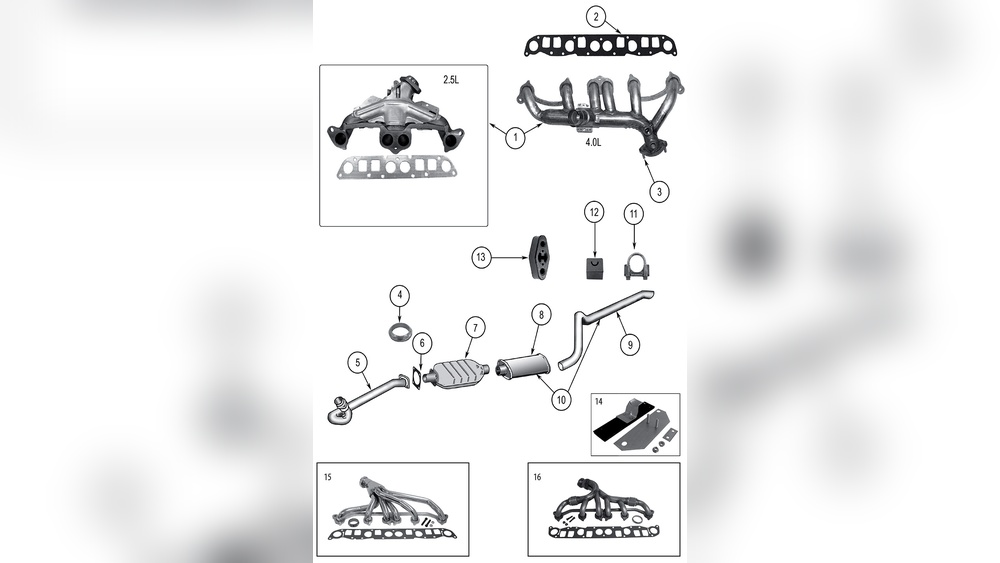
The exhaust system removes gases from the engine, reduces pollution, and lowers noise. Every Cherokee model has a slightly different layout, but the main parts are similar. A typical exhaust starts at the engine and ends at the tailpipe, passing through several key parts.
Key Components
- Exhaust manifold: Bolted to the engine, collects gases from the cylinders.
- Oxygen sensors: Monitor the level of oxygen in the exhaust.
- Catalytic converter: Reduces harmful emissions.
- Resonator (not in all models): Reduces noise further.
- Muffler: Lowers exhaust noise.
- Exhaust pipes: Connect all the parts, guiding gases to the rear.
This order rarely changes, but the exact position and shape can depend on the engine size and year.
Understanding The Jeep Cherokee Exhaust Diagram
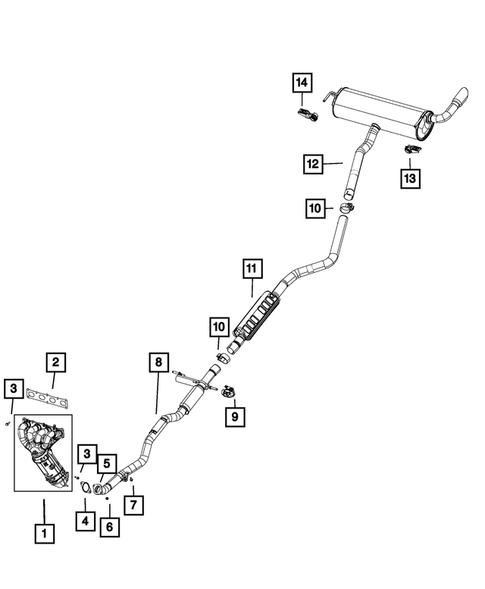
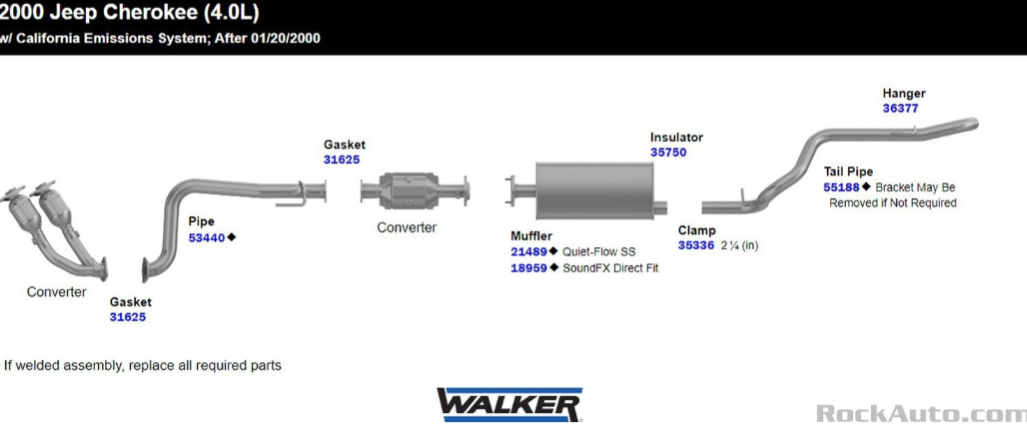
A diagram shows how all parts connect under the vehicle. Here’s a simple overview of how the exhaust is laid out:
| Order | Component | Main Function |
|---|---|---|
| 1 | Exhaust Manifold | Collects engine gases |
| 2 | Oxygen Sensor (upstream) | Monitors gases before catalyst |
| 3 | Catalytic Converter | Reduces pollution |
| 4 | Oxygen Sensor (downstream) | Monitors gases after catalyst |
| 5 | Resonator | Reduces sound (if installed) |
| 6 | Muffler | Further reduces noise |
| 7 | Tailpipe | Releases gases outside |
Non-obvious Insights
Many people miss that oxygen sensors are placed before and after the catalytic converter. This helps the car’s computer adjust the fuel mix for better performance and lower emissions. Another detail: the resonator is often confused with the muffler, but it’s not always present and its main job is to tune the exhaust sound.
Common Exhaust Layouts In Different Cherokee Models
The Cherokee has been made for decades. The layout of the exhaust can change based on the year and engine type. Compare the differences here:
| Year Range | Engine | Notable Features |
|---|---|---|
| 1997–2001 | 4.0L Inline-6 | Single exhaust, simple layout |
| 2014–2026 | 2.4L I4, 3.2L V6 | More sensors, compact design |
| 2026–Present | 2.0L Turbo | Advanced catalytic converter, smaller muffler |
Older Cherokees have fewer sensors and simpler pipes. Newer models add more parts to meet strict emission laws.
Why The Exhaust Diagram Matters
If you want to repair, upgrade, or check for leaks, knowing the exhaust diagram is a huge help. For example, if you hear rattling near the rear, you can use the diagram to locate the muffler or resonator. If your Cherokee fails an emissions test, you’ll know where the catalytic converter and sensors are.
Practical Example
Suppose your 2018 Cherokee shows a “Check Engine” light with a code for the downstream oxygen sensor. By understanding the diagram, you know this sensor is located after the catalytic converter. You can find and replace it without guessing or removing the wrong parts.
Common Problems And How To Spot Them
The exhaust system can face a few main issues:
- Rust: Pipes, mufflers, and the resonator often rust over time, especially in wet or snowy areas.
- Leaks: Listen for hissing or loud sounds; this means gases are escaping.
- Failed sensors: Can lead to poor fuel economy or failed emission tests.
- Damaged catalytic converter: May cause a rotten egg smell or reduced power.
Key Tip
Check the heat shields around the exhaust. They protect the floor from heat, but can come loose and rattle. This often sounds worse than it is, and a quick fix with a clamp can solve the noise.
Upgrades And Replacements
Many Jeep Cherokee owners upgrade their exhaust for better sound or performance. When choosing parts, match them to your model and engine type. Universal parts may not fit or could cause problems with sensors.
Here’s a comparison of factory vs aftermarket exhaust systems:
| Type | Sound Level | Durability | Emission Compliance |
|---|---|---|---|
| Factory/OEM | Quiet | High | Always legal |
| Aftermarket | Louder | Varies by brand | Check local laws |
Important: Always check local emission laws before installing aftermarket parts. Some upgrades can cause your Jeep to fail inspection.
Maintenance Advice
Regular checks can prevent big problems. Look under your Jeep for rust or damage every oil change. Listen for new noises, as changes in sound usually mean something is loose or leaking.
If you replace exhaust parts, use new gaskets and clamps to prevent leaks. Tighten all bolts evenly. Skipping these steps is a common beginner mistake.
If you want a deeper dive on emission controls, the EPA’s Automotive Emissions page is a trusted resource.
A well-maintained exhaust system keeps your Jeep running smoothly, saves fuel, and helps protect the environment.
Frequently Asked Questions
<!– wp:rank-math/faq-block {"questions":[{"id":"faq-question-a323ea9e8620","title":"What Does The Catalytic Converter Do In My Jeep Cherokee?","content":"The catalytic converter turns harmful gases into safer ones before they leave the tailpipe. It uses special metals to trigger chemical changes, reducing pollution.
“,”visible”:true},{“id”:”faq-question-01ca193530e8″,”title”:”How Many Oxygen Sensors Does A Cherokee Usually Have?”,”content”:”Most Cherokees have at least two oxygen sensors: one before and one after the catalytic converter. Some newer models may have more, depending on the engine.
“,”visible”:true},{“id”:”faq-question-5c6f4e890bf1″,”title”:”Can I Drive With A Leaking Exhaust?”,”content”:”It’s not safe to drive with a leaking exhaust. Leaks can let dangerous gases enter the cabin and may damage other parts. Fix leaks as soon as possible.
“,”visible”:true},{“id”:”faq-question-09dec1ec729b”,”title”:”What’s The Difference Between A Muffler And A Resonator?”,”content”:”A muffler mainly reduces noise, while a resonator changes the sound’s tone. Not all Cherokees have a resonator; the muffler is always present.
“,”visible”:true},{“id”:”faq-question-8450b0cd5673″,”title”:”How Can I Tell If My Cherokee’s Exhaust Needs Replacing?”,”content”:”Look for loud noises, rust holes, lower fuel economy, or a “Check Engine” light. Regular inspections can catch problems early.
Understanding your Jeep Cherokee exhaust diagram helps you spot problems, plan upgrades, and keep your SUV running well for years. With the right knowledge, even complex repairs become much easier.
“,”visible”:true}]} –>What Does The Catalytic Converter Do In My Jeep Cherokee?
The catalytic converter turns harmful gases into safer ones before they leave the tailpipe. It uses special metals to trigger chemical changes, reducing pollution.
How Many Oxygen Sensors Does A Cherokee Usually Have?
Most Cherokees have at least two oxygen sensors: one before and one after the catalytic converter. Some newer models may have more, depending on the engine.
Can I Drive With A Leaking Exhaust?
It’s not safe to drive with a leaking exhaust. Leaks can let dangerous gases enter the cabin and may damage other parts. Fix leaks as soon as possible.
What’s The Difference Between A Muffler And A Resonator?
A muffler mainly reduces noise, while a resonator changes the sound’s tone. Not all Cherokees have a resonator; the muffler is always present.
How Can I Tell If My Cherokee’s Exhaust Needs Replacing?
Look for loud noises, rust holes, lower fuel economy, or a “Check Engine” light. Regular inspections can catch problems early.
Understanding your Jeep Cherokee exhaust diagram helps you spot problems, plan upgrades, and keep your SUV running well for years. With the right knowledge, even complex repairs become much easier.