The Jeep Cherokee is a well-known SUV, famous for its rugged design and off-road abilities. But even tough vehicles like the Cherokee can have weak points.
One of the main complaints from owners is electrical problems. These issues can cause headaches, from warning lights that will not turn off, to power windows that stop working, or even engines that refuse to start.
For many, electrical problems are confusing and hard to solve. Understanding the common issues, their warning signs, and possible fixes can save you both time and money.

If you own a Jeep Cherokee or are thinking about buying one, it helps to know what electrical issues to watch for. Some problems are minor annoyances.
Others can make the car unsafe or unreliable. In this article, you will learn about the most common electrical problems in Jeep Cherokees, how to spot them, and practical steps to fix or avoid them.
Common Electrical Problems In Jeep Cherokee
Owners of different Cherokee models, from older XJ versions to recent KL models, report a range of electrical issues. Here are the most frequent:
- Faulty TIPM (Totally Integrated Power Module)
- Instrument Cluster Failure
- Power Window Problems
- Battery Drain
- Malfunctioning Sensors
- Alternator Failures
- Lighting Issues
- Key Fob and Ignition Problems
- Blower Motor Failure
- Wiring Harness Shorts
Some of these problems are easy to fix. Others may need a mechanic or even replacing expensive parts.
Below, you’ll find details about each issue and what you can do.
Faulty Tipm (totally Integrated Power Module)
The TIPM is the central computer that controls many electrical functions, like the fuel pump, windows, and lights. In some Jeep Cherokees, especially models made between 2011 and 2015, TIPM failure is a well-known problem.
A faulty TIPM can cause:
- Random stalling
- Power locks/windows not working
- Wipers turning on by themselves
- Headlights flickering
Replacement TIPMs are expensive, usually between $800 and $1,200 including labor. Sometimes, a reset or reprogramming can help.
But often, a full replacement is the only solution.
Non-obvious insight: TIPM issues can mimic other electrical faults, making them hard to diagnose. If you have multiple weird electrical problems at once, suspect the TIPM.
Instrument Cluster Failure
The instrument cluster is the dashboard display that shows speed, fuel level, and warning lights. Owners report situations where the cluster:
- Goes completely dark
- Shows the wrong information
- Flashes error lights
Instrument cluster problems can be due to bad solder joints, loose wiring, or even a failing TIPM. If the display flickers or resets often, check the cluster’s electrical connections first.
Expert tip: Sometimes, temperature changes cause the display to fail. If the cluster works when the car is cold but not when hot, it’s likely a soldering issue inside.
Power Window Problems
A very common complaint is power windows that stop working. This is seen in both older and newer Cherokees.
Main causes include:
- Faulty window switch
- Broken window motor or regulator
- Wiring breaks in the door harness
A quick test: Try the window switch on both the driver’s side and the affected door. If one switch works but the other does not, the problem is likely in the switch. If neither works, suspect the motor or wiring.
Non-obvious insight: Repeated opening and closing of the door can weaken the wiring inside the door’s rubber boot, causing hidden breaks.
Battery Drain
Some Jeep Cherokees suffer from parasitic battery drain. This means the battery loses power even when the car is off.
Possible causes are:
- Faulty radio or infotainment system not turning off
- Bad alternator diodes
- Glove box or trunk light staying on
Battery drain is tricky because you may not notice until your car will not start. A good mechanic can test for current draw with a multimeter.
Fixing the root cause is important—just replacing the battery will not solve it.
Malfunctioning Sensors
Modern Cherokees use many electronic sensors for safety, emissions, and engine performance. Common sensor failures include:
- Crankshaft position sensor
- Camshaft position sensor
- Oxygen sensors
Symptoms are:
- Check engine light
- Poor acceleration
- Hard starting
Replacing a failed sensor is usually not expensive, but accurate diagnosis is key. Always scan for error codes before replacing parts.
Alternator Failures
The alternator keeps your battery charged while driving. When it fails, you may see:
- Battery light on the dashboard
- Dim headlights
- Car dies while driving
A weak alternator can cause a range of odd electrical behavior. Testing voltage at the battery with the engine running can confirm a problem.
A healthy system should read 13. 8–14. 4 volts.
Lighting Issues
Many Jeep Cherokee owners report problems with headlights, taillights, and interior lights. Common symptoms:
- Flickering or dim headlights
- One or more lights not working
- Fast-blinking turn signals
Sometimes, the problem is just a burned-out bulb. But wiring faults, bad grounds, or TIPM issues can also cause lighting trouble.
Practical tip: If new bulbs do not fix the issue, check the wiring and fuses next.
Key Fob And Ignition Problems
Recent Cherokees use keyless entry and push-button start. Problems can include:
- Car not recognizing the key fob
- Engine not starting
- Random security alerts
Causes may be a weak key fob battery, a faulty receiver, or TIPM problems. Always try a new key fob battery first—this fixes the issue in many cases.
Blower Motor Failure
The blower motor controls air flow for heating and cooling. When it fails:
- No air comes from vents
- Only one speed works
- Intermittent operation
Failures are often due to a bad blower motor resistor or worn-out brushes inside the motor. Replacement is usually straightforward, but access can be tight.
Wiring Harness Shorts
Electrical shorts in the wiring harness can cause all sorts of strange symptoms:
- Fuses blowing repeatedly
- Burning smell
- Random electrical failures
Shorts often happen where wires bend often (like doors or tailgates) or where moisture gets in. Finding a short can take time and patience.
Jeep Cherokee Model Comparison: Electrical Problems
Some Cherokee generations are more prone to electrical faults than others. The table below compares common issues by model year.
| Model Year | Common Electrical Issues | Relative Cost to Repair |
|---|---|---|
| 1997-2001 (XJ) | Power windows, wiring shorts | Low to Moderate |
| 2002-2007 (KJ) | Blower motor, alternator | Moderate |
| 2008-2012 (KK) | TIPM, sensors | Moderate to High |
| 2014-2026 (KL) | TIPM, infotainment, lighting | High |
Insight: Newer models have more advanced features, but also more complex electrical systems—making repairs more costly and challenging.
Signs Your Jeep Cherokee Has Electrical Problems
Early detection can prevent bigger breakdowns. Watch for these warning signs:
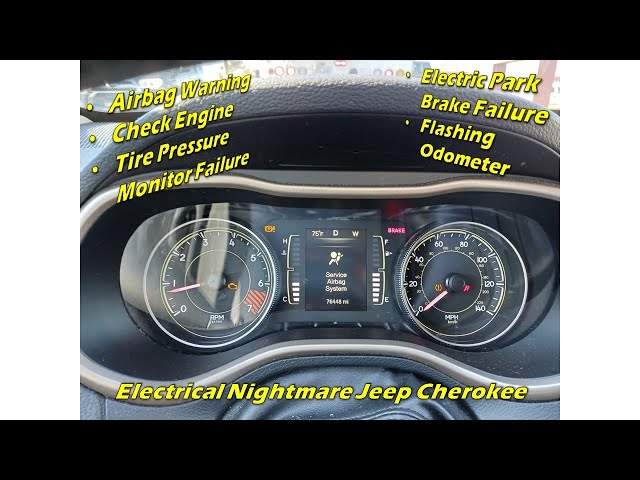
- Dashboard warning lights (ABS, check engine, airbag, etc.)
- Accessories not working (windows, locks, radio)
- Intermittent power loss
- Unusual noises (clicking relays, buzzing sounds)
- Burning smell (can signal overheating wires)
If you notice any of these, address them quickly to avoid further damage.
Diagnosing Electrical Problems
Finding the source of electrical faults is often the hardest part. Here is a basic approach:
- Check the battery: Make sure it is fully charged and terminals are clean.
- Inspect fuses: Look for blown fuses in the interior and engine bay boxes.
- Scan for error codes: Use an OBD-II scanner to read stored fault codes.
- Test affected systems: For example, try all window switches if only one does not work.
- Check grounds: Loose or corroded ground wires can cause many issues.
- Visual inspection: Look for frayed wires, loose plugs, or water leaks.
For complex problems, a professional with Jeep experience and wiring diagrams is often needed.
Preventing Jeep Cherokee Electrical Problems
Some electrical issues are hard to avoid, but you can reduce your risk:
- Keep the battery healthy: Replace it every 3-5 years and keep terminals clean.
- Fix water leaks: Moisture in the cabin or engine bay can cause shorts.
- Avoid overloaded circuits: Do not add high-power accessories without proper wiring.
- Check for recalls: Jeep has issued recalls for TIPM and other electrical faults. Contact your dealer or check the National Highway Traffic Safety Administration for updates.
Non-obvious tip: Avoid jump-starting your Cherokee with the wrong procedure. Incorrect jump-starts can damage sensitive electronics.
Cost Of Repairs: What To Expect
Repair costs vary depending on the problem and your Jeep’s age. Here’s a comparison of common electrical repairs:
| Repair Needed | Estimated Cost (Parts + Labor) |
|---|---|
| TIPM Replacement | $800–$1,200 |
| Instrument Cluster Repair | $350–$700 |
| Power Window Motor/Regulator | $200–$400 |
| Alternator Replacement | $450–$800 |
| Sensor Replacement | $150–$350 |
| Blower Motor Replacement | $250–$500 |
Tip: Get multiple quotes and ask if reconditioned parts are available to save money.

When To See A Mechanic
DIY fixes can help with simple issues like blown fuses or dead batteries. But call a professional if:
- Problems affect safety systems (airbags, brakes)
- Multiple electrical issues appear at once
- There’s a burning smell or smoke
- You have no experience with car electronics
Modern Cherokees have complex computers that need special tools to diagnose and repair.
Are Jeep Cherokee Electrical Problems A Dealbreaker?
While electrical issues are common, they are not unique to Jeep. Most SUVs with advanced features face similar risks.
The key is knowing what to expect and budgeting for possible repairs. If you love the Cherokee’s style and off-road skill, do not let fear of electrical problems stop you.
But always check the car’s history, test all features, and consider a pre-purchase inspection.
Frequently Asked Questions
Why Do Jeep Cherokees Have So Many Electrical Problems?
Jeep Cherokees use advanced electronics to control features, comfort, and safety systems. More electronics mean more chances for something to fail.
Some years and models have design flaws, especially with the TIPM and wiring.
How Do I Reset The Tipm On My Jeep Cherokee?
Disconnect the battery for about 15 minutes, then reconnect. This can clear temporary faults.
For a full reset or update, a dealer or specialist with the right tools is needed.
Can I Drive With A Faulty Alternator?
It is not recommended. A weak or dead alternator will cause the battery to die quickly, possibly leaving you stranded.
Also, some systems (like power steering or brakes) may stop working properly.
Are Electrical Problems Covered By Jeep Warranty?
If your Cherokee is still under the factory warranty, most electrical issues are covered. Always check your owner’s manual and ask your dealer for details.
Extended warranties may also help with repair costs.
What Is The Most Expensive Electrical Repair On A Jeep Cherokee?
Replacing the TIPM is usually the most costly, often over $1,000. Instrument cluster and alternator repairs can also be expensive.
Complex wiring faults can add up in labor costs.
Owning a Jeep Cherokee can be a great adventure, but being prepared for possible electrical problems will make the journey smoother. Watch for signs, do regular checks, and do not ignore warning lights.
With the right approach, you can keep your Cherokee running strong for years to come.