The Jeep Cherokee is a nameplate with a rich history, and for many enthusiasts, the 4. 0L inline-six engine is synonymous with the model's rugged capability and legendary reliability.
This engine, often referred to simply as the "4. 0," powered various Jeep models for over a decade, becoming a cornerstone of the brand's identity.
Its enduring popularity is a testament to its robust design and the straightforward engineering that made it a favorite among off-roaders and everyday drivers alike.
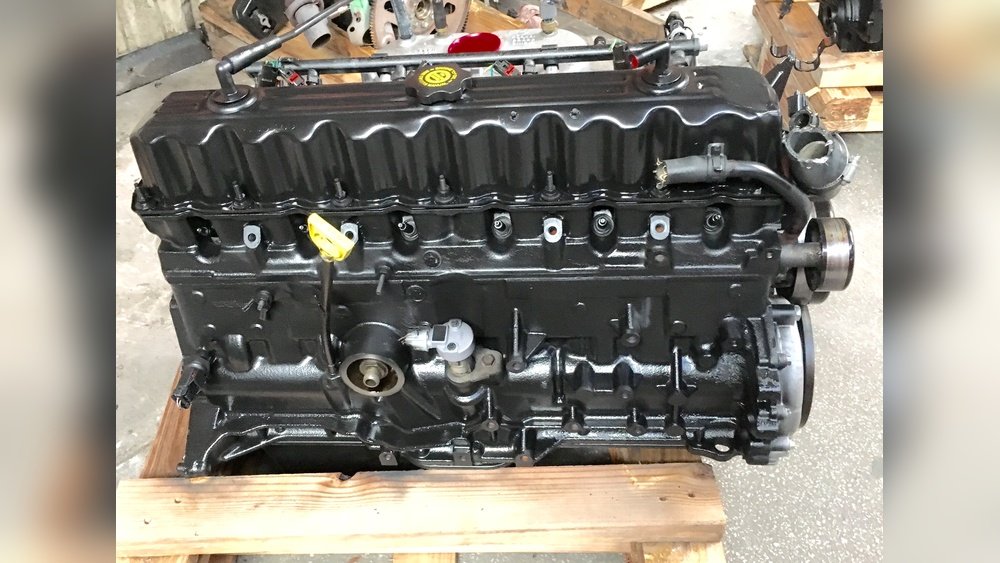
This engine isn’t just a piece of machinery; it’s a story of American automotive engineering that prioritized durability and torque over cutting-edge fuel efficiency or exotic materials. For those looking to understand the heart of many classic Cherokees and Grand Cherokees, delving into the specifics of the 4.
0L engine is essential. We’ll explore its origins, its key features, its strengths, its weaknesses, and what makes it such a sought-after powerplant even today.
The Genesis Of The Jeep 4.0l Inline-six
The story of the Jeep 4. 0L engine begins with its predecessor, the AMC 4.
0L. American Motors Corporation (AMC) developed this engine in the late 1980s, and it first appeared in the 1987 Jeep Cherokee (XJ) and Jeep Comanche.
This engine was an evolution of the older AMC 258 cubic inch (4. 2L) inline-six, which had been in production since the 1970s.
AMC engineers didn't just enlarge the bore and stroke; they significantly re-engineered the engine for improved performance and refinement.
The key innovation was the switch to a new cylinder head design and the adoption of electronic fuel injection (EFI). This was a significant upgrade from the carbureted systems of the past. EFI allowed for more precise fuel delivery, leading to better throttle response, improved fuel economy, and easier cold starts. The engine’s block was also strengthened, and internal components were refined to handle the increased demands of modern vehicles. When Chrysler acquired AMC in 1987, they recognized the value of this robust inline-six and continued its production, often referring to it as the Power-Tech Six.
Core Design And Engineering Principles
At its heart, the Jeep 4.0L engine is an inline-six design. This means all six cylinders are arranged in a single straight line. This configuration has several inherent advantages, particularly for an engine intended for heavy-duty use.
The Advantages Of The Inline-six Layout
The inline-six configuration is known for its inherent balance. Because the cylinders fire in a specific sequence and the crankshaft is designed symmetrically, the primary and secondary vibrations are largely self-canceling. This results in a smoother running engine compared to V6 engines, which often require complex balance shafts to achieve similar smoothness. For Jeep, this meant a more comfortable ride, especially on rough terrain where vibrations can be fatiguing. The longer, straight crankshaft is also generally considered more robust than the shorter, more complex crankshafts found in V-engines.
Block And Head Design
The engine block was typically cast iron, a material chosen for its strength, durability, and ability to dissipate heat. While heavier than aluminum, cast iron is incredibly resilient and less prone to warping under extreme temperatures, a critical factor for an engine often subjected to demanding off-road conditions or heavy towing. The cylinder head was also usually cast iron, though later versions saw some refinements. The pushrod overhead valve (OHV) design was employed, which is a simpler and more robust valvetrain system compared to overhead camshaft (OHC) designs. This simplicity meant fewer parts to fail and easier maintenance for the average owner.
Displacement And Bore/stroke
The engine’s displacement is 3,956 cubic centimeters, which translates to approximately 242 cubic inches. The bore (diameter of the cylinder) and stroke (distance the piston travels) were optimized for a good balance of torque and horsepower. While specific figures varied slightly over its production run, the bore was around 3.875 inches and the stroke was approximately 3.57 inches. This bore-and-stroke combination contributed to the engine’s strong low-end torque, which is essential for off-roading and getting heavy vehicles moving.

Key Features And Innovations Over Time
While the core design of the 4. 0L remained consistent, Jeep introduced several updates and refinements throughout its production life to improve performance, emissions, and reliability.
Early Efi (1987-1990)
The initial adoption of multi-point fuel injection (MPFI) was a significant leap. This system used injectors positioned in the intake manifold, spraying fuel directly into each cylinder’s intake port. This replaced carburetors and single-point injection systems, offering much better control over the air-fuel mixture. This generation also featured a distributor-based ignition system.
Revised Cylinder Head (1991)
A major revision occurred in 1991 with the introduction of an updated cylinder head. This new design featured improved intake and exhaust ports for better airflow. The combustion chambers were also redesigned to improve efficiency and reduce emissions. This is often considered a major turning point, with many enthusiasts believing the 1991-onward versions to be the most refined. The ignition system also transitioned to a distributorless ignition system (DIS) with coil-on-plug or coil-pack configurations, which improved spark consistency and reduced maintenance.
Crankshaft Position Sensor (cps)
The Crankshaft Position Sensor (CPS), introduced around 1991, became a critical component. It tells the engine control module (ECM) the precise position and speed of the crankshaft, which is vital for timing fuel injection and spark. A failing CPS is a well-known issue with these engines, often leading to sudden stalling, though it’s a relatively straightforward replacement.
Roller Rockers And Improved Internals
Later versions of the 4.0L saw further internal upgrades. The adoption of roller rocker arms reduced friction in the valvetrain, contributing to slightly improved efficiency and durability. The pistons and connecting rods were also refined over the years to handle the engine’s robust nature.
Exhaust Gas Recirculation (egr)
To meet stricter emissions standards, Jeep eventually incorporated an Exhaust Gas Recirculation (EGR) system. This system recirculates a small amount of exhaust gas back into the intake manifold to lower combustion temperatures, which in turn reduces the formation of nitrogen oxides (NOx). While effective for emissions, EGR systems can sometimes lead to carbon buildup issues if not maintained.
Catalytic Converter And Oxygen Sensors
Like all modern engines, the 4.0L was equipped with a catalytic converter to reduce harmful emissions and oxygen sensors to monitor the exhaust gases. These sensors provide feedback to the ECM, allowing it to fine-tune the air-fuel mixture for optimal performance and emissions control.
Performance Characteristics: Torque Is King
The Jeep 4.0L engine is not a high-revving powerhouse. Its strength lies in its impressive torque output, especially at lower engine speeds. This is precisely what makes it so suitable for Jeep vehicles, which are often used for crawling over rocks, pulling trailers, or navigating challenging off-road trails.
Horsepower Vs. Torque
While horsepower figures were modest (typically in the range of 170-190 hp depending on the year and application), the torque figures were significantly more impressive, often reaching 220-240 lb-ft. This broad, flat torque curve means that there’s always plenty of pulling power available without needing to constantly shift gears or push the engine to its redline. This characteristic also makes it feel responsive in daily driving, providing confident acceleration from a standstill.
Fuel Economy Considerations
It’s important to be realistic about the fuel economy of the 4.0L. Its robust cast-iron construction, relatively simple OHV design, and focus on torque meant that it was never a class leader in fuel efficiency. Depending on the vehicle, driving style, and specific year, owners could expect mileage in the range of 15-20 miles per gallon (MPG) combined. While this might seem low by today’s standards, it was considered acceptable for a vehicle of its capability and size during its production run.
Reliability And Durability: The Legend Of The 4.0l
The legendary reliability of the Jeep 4.0L engine is perhaps its most celebrated attribute. These engines were built to last, and many examples have achieved 200,000 to 300,000 miles or more with proper maintenance. This reputation for durability is a primary reason why older Jeeps equipped with this engine remain highly desirable.
Robust Construction
The heavy-duty cast-iron block and crankshaft are fundamental to its longevity. These components are incredibly strong and resistant to wear and tear. The inline-six configuration also contributes, as it tends to run cooler and with less stress on individual components compared to some other engine designs.
Common Issues And How To Address Them
Despite its robust nature, the 4. 0L is not immune to problems.
However, most issues are well-documented and relatively easy to address.
- Crankshaft Position Sensor (CPS): As mentioned earlier, the CPS is a common failure point. Symptoms include the engine suddenly dying while driving, or refusing to start. Replacement is usually straightforward.
- Head Gasket Issues: While not as common as some other engines, head gasket failures can occur, especially in higher-mileage examples or those that have been overheated. Signs include coolant loss, white smoke from the exhaust, or milky oil.
- Oil Leaks: Like many older engines, the 4.0L can develop oil leaks from valve cover gaskets, oil pan gaskets, or rear main seals over time. These are typically minor and related to aging seals.
- Intake Manifold Gasket Leaks: The intake manifold gasket can sometimes develop leaks, leading to vacuum issues and rough idling.
- Radiator and Cooling System: Overheating is the enemy of any engine, and the 4.0L is no exception. Maintaining the cooling system, including the radiator, water pump, thermostat, and hoses, is crucial for preventing more serious problems like head gasket failure.
Maintenance Is Key
The longevity of any 4.0L engine heavily relies on consistent and proper maintenance. Regular oil changes using quality oil, coolant flushes, and attention to minor leaks or noises can prevent small issues from becoming major repairs. The simplicity of the OHV design also makes many maintenance tasks, like spark plug changes or oil filter replacements, more accessible.
Variations And Specific Applications
The 4. 0L engine was used across a range of Jeep models and model years, with some minor variations in output and features.
Jeep Cherokee (xj)
The Cherokee XJ is perhaps the most iconic vehicle associated with the 4.0L. From 1987 through 2001, this engine was the premium powerplant option for the XJ, offering a perfect blend of performance and durability that cemented the Cherokee’s reputation as a capable and reliable SUV.
Jeep Grand Cherokee (zj, Wj)
The Grand Cherokee ZJ (1993-1998) and WJ (1999-2004) also featured the 4.0L engine. In these larger, more luxurious SUVs, the 4.0L provided the necessary torque for comfortable cruising and towing, though it was often paired with the more powerful 5.2L or 5.9L V8 engines as higher-tier options.
Jeep Wrangler (yj, Tj)
The Wrangler YJ (1987-1995) and TJ (1997-2006) also benefited from the 4.0L’s grunt. In the Wrangler, the engine’s low-end torque was invaluable for off-road articulation and climbing. It was the standard or optional engine for most of the TJ generation’s run.
Jeep Comanche (mj)
The Comanche pickup truck, produced from 1986 to 1992, also utilized the 4.0L engine, offering Jeep’s signature capability in a pickup format.
Tuning And Modifications For The 4.0l
While the 4. 0L is known for its stock reliability, there’s a significant aftermarket community dedicated to modifying and enhancing its performance.
Common Modifications
Enthusiasts often pursue modifications to increase horsepower and torque, improve off-road capability, or enhance fuel efficiency. Some common modifications include:
- Cold Air Intakes: These systems aim to draw cooler, denser air into the engine, potentially improving combustion efficiency.
- Performance Exhaust Systems: A less restrictive exhaust can help the engine breathe better, releasing spent gases more efficiently.
- Upgraded Camshafts: A more aggressive camshaft profile can alter valve timing to improve power delivery, often shifting the torque curve higher in the RPM range.
- Engine Swaps: While less common for the 4.0L itself, people sometimes swap *out* older, less powerful engines *for* the 4.0L.
- ECU Tuning: Reprogramming the engine control unit (ECU) can optimize fuel and ignition timing for modified engines or specific driving conditions.
Considerations For Modifications
It’s important to note that modifications can impact reliability and fuel economy. Adding larger tires, for example, will put more strain on the engine and drivetrain, potentially negating the benefits of certain performance upgrades. When modifying, it’s often best to focus on balanced upgrades that work harmoniously rather than isolated components. For instance, pairing an exhaust upgrade with an intake and a tune can yield better results than just adding an exhaust alone.
The Legacy Of The Jeep 4.0l Engine
The Jeep 4.0L inline-six engine holds a special place in automotive history. It represents an era of engineering where simplicity, durability, and robust performance were prioritized. Its distinctive sound, smooth operation, and legendary longevity have earned it a devoted following among Jeep enthusiasts.
Even as modern engines have become more complex, fuel-efficient, and powerful, the 4. 0L continues to be appreciated for its straightforward nature and its ability to keep going, mile after mile.
For many, owning a Jeep equipped with this engine is not just about owning a vehicle; it's about owning a piece of automotive heritage that embodies the spirit of adventure and reliability.

Frequently Asked Questions
What Are The Main Differences Between Early And Late 4.0l Engines?
Early 4.0L engines (pre-1991) used a carbureted or early single-point injection system and a distributor ignition. Later engines (1991 onwards) featured multi-point fuel injection (MPFI) and a distributorless ignition system (DIS)