The Jeep Wrangler is famous for its off-road abilities. One key part of this ability is its torque.
But what is torque, and how does it apply to a Jeep? Torque is the twisting force that makes wheels turn.
For off-roading, more torque means better climbing, crawling over obstacles, and pulling power. This article will explore Jeep car torque tests, what they mean, and how different Jeep models perform.
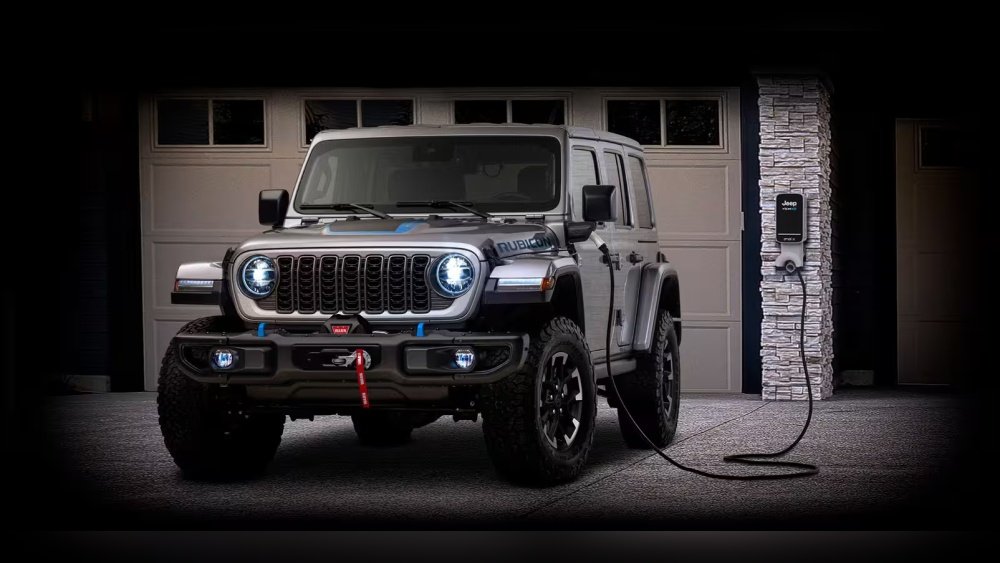
We'll look at the torque figures for popular Jeep models and understand why this number is so important for adventure seekers.
Understanding Torque In Jeeps
Torque is a fundamental concept in understanding vehicle performance, especially for off-road vehicles like Jeeps. It’s not just about horsepower; it’s about the raw twisting strength that gets you moving from a standstill or powers you through challenging terrain.
What Is Torque?
In simple terms, torque is a rotational or twisting force. Think of it like using a wrench to tighten a bolt. The force you apply to the wrench handle, multiplied by the length of the handle, creates torque. In a car engine, torque is the force produced by the crankshaft that ultimately turns the wheels. It’s usually measured in pound-feet (lb-ft) or Newton-meters (Nm).
Higher torque means the engine can produce more twisting force. This is crucial for tasks like:
- Getting started: More torque helps a vehicle accelerate from a stop more easily.
- Climbing hills: It provides the necessary force to push the vehicle uphill, especially at low speeds.
- Overcoming resistance: When crawling over rocks or through mud, torque is what allows the wheels to maintain rotation against significant resistance.
- Towing: Higher torque is essential for pulling heavy loads.
Torque Vs. Horsepower
It’s common to confuse torque and horsepower, but they are different and equally important.
- Torque is the force. It’s the grunt, the pulling power, the ability to twist. It’s most noticeable at lower engine speeds (RPMs).
- Horsepower is the rate at which work is done. It’s about how quickly that torque can be applied. It’s more about top speed and how fast the vehicle can accelerate once it’s already moving.
For a Jeep, especially when used for its intended purpose of off-roading, torque is often more critical than horsepower. You need the twisting force to get *over* the obstacle, not just to get there quickly. A Jeep with high torque can crawl slowly and deliberately over difficult terrain, while a Jeep with high horsepower might just spin its tires uselessly.
Why Torque Matters For Jeeps
Jeeps are designed for adventure. Whether you’re navigating rocky trails, climbing steep inclines, or pulling a trailer, torque is the engine’s ability to do the heavy lifting.
- Off-Roading: Low-end torque is king. It allows the driver to maintain control at slow speeds, precisely maneuvering over obstacles without stalling. This is often referred to as “crawling” ability.
- Towing and Hauling: If you plan to tow a trailer, boat, or camper, a Jeep with higher torque will make the job much easier and safer.
- Everyday Driving: Even for daily commutes, good torque figures mean a more responsive feel when accelerating from a stop or merging into traffic.
Jeep Wrangler Torque Specifications
The Jeep Wrangler is offered with several engine options, each providing different torque outputs. Understanding these figures helps buyers choose the right Wrangler for their needs.
We'll look at the most common engines found in recent Wrangler models.
Wrangler Engine Options And Torque
Jeep has a history of offering diverse powertrains for the Wrangler, catering to different performance preferences and efficiency goals.
3.6l Pentastar V6
This has been a staple engine for the Wrangler for many years. It offers a good balance of power and torque suitable for most everyday driving and moderate off-roading.
- Torque Output: Typically around 260 lb-ft at 4,800 RPM.
- Strengths: Smooth, reliable, widely available, and offers decent power for general use.
- Considerations: While capable, it might not provide the extreme low-end grunt needed for the most challenging rock crawling compared to diesel or higher-torque options.
2.0l Turbocharged Inline-4
This engine provides a more modern, turbocharged approach, aiming for efficiency while delivering strong torque, often at lower RPMs than the V6.
- Torque Output: Usually around 295 lb-ft at 3,000 RPM.
- Strengths: Delivers more torque than the V6, often at a lower engine speed, which can feel more responsive in daily driving and provide good pulling power. It also offers better fuel economy.
- Considerations: Some off-road purists prefer the natural feel of a larger displacement or naturally aspirated engine, though the turbo’s torque delivery is very effective.
3.0l Ecodiesel V6
For those who need serious pulling power and excellent low-end torque, the EcoDiesel engine was a popular choice. Diesel engines are known for their high torque output, especially at low RPMs.
- Torque Output: Typically rated at 442 lb-ft at 1,400 RPM.
- Strengths: Exceptional torque for towing, hauling, and serious off-roading. Also offers impressive fuel efficiency for its power.
- Considerations: This engine is no longer offered on new Wranglers in all markets, and diesel engines can have higher maintenance costs and specific fuel requirements.
6.4l Hemi V8 (rubicon 392)
The Rubicon 392 is the ultimate performance Wrangler, featuring a powerful V8 engine. While known for horsepower, its torque is also substantial.
- Torque Output: Around 470 lb-ft at 4,300 RPM.
- Strengths: Immense power and torque for exhilarating performance on-road and off. It offers effortless acceleration and superior capability.
- Considerations: This is the most expensive and least fuel-efficient option, aimed at enthusiasts who prioritize raw power.
Torque Figures Comparison
Let’s summarize the typical torque figures for these popular Wrangler engines.
| Engine | Torque (lb-ft) | Torque RPM | Horsepower | Horsepower RPM |
|---|---|---|---|---|
| 3.6L Pentastar V6 | 260 | 4,800 | 285 | 6,400 |
| 2.0L Turbocharged I4 | 295 | 3,000 | 270 | 5,250 |
| 3.0L EcoDiesel V6 (Discontinued) | 442 | 1,400 | 260 | 3,600 |
| 6.4L HEMI V8 (Rubicon 392) | 470 | 4,300 | 470 | 6,000 |
*Note: These figures are approximate and can vary slightly depending on the model year and specific configuration.*
Pro Tip: When looking at torque figures for off-roading, pay close attention to the RPM range where peak torque is achieved. An engine that produces its peak torque at a lower RPM will generally feel more powerful and capable at low speeds, which is ideal for crawling over obstacles.
Jeep Car Torque Test: What To Expect
A "Jeep car torque test" isn't a single, standardized test like a drag race. Instead, it refers to various methods and scenarios where a Jeep's torque-generating capability is measured or demonstrated.
These tests can range from dyno runs to real-world off-road challenges.
Dynamometer (dyno) Testing
A dynamometer, or dyno, is a machine that measures an engine’s power and torque output. Cars are driven onto rollers, and the dyno simulates resistance, allowing the measurement of what the wheels are actually putting down.
- What it measures: Dyno tests typically show wheel horsepower (WHP) and wheel torque. This is important because it accounts for losses in the drivetrain (transmission, driveshaft, axles, etc. ).
- Interpreting results: A dyno chart will show torque and horsepower curves across the engine’s RPM range. For a Jeep, you’d want to see a broad, flat torque curve, indicating strong pulling power across a wide range of speeds, especially at lower RPMs.
- Limitations: Dyno tests are performed in a controlled environment. They don’t fully replicate the dynamic conditions of off-roading, such as tire slip, suspension articulation, or uneven terrain.
Real-world Off-road Tests
This is where a Jeep’s torque truly shines. Off-road tests focus on how the torque translates into actual capability on challenging terrain.
- Rock Crawling: Competitions and tests often involve navigating courses with large rocks, steep inclines, and uneven surfaces. A Jeep with good low-end torque can slowly and controllably climb over these obstacles without needing high engine revs. This allows for precise control and minimizes the risk of damage.
- Hill Climbs: Steep, loose surfaces like dirt or gravel hills are a great test of torque. The engine needs to generate enough twisting force to keep the wheels rotating and propel the vehicle upwards, even when traction is limited.
- Traction Tests: Driving through mud, sand, or water requires consistent torque to maintain momentum. A Jeep that can deliver torque smoothly without sudden surges is often more effective and less likely to get stuck.
- Articulation Tests: When a Jeep’s suspension articulates (wheels move independently to maintain contact with the ground on uneven surfaces), the engine must still provide power to the wheels that have traction. Strong torque helps keep the vehicle moving even when some wheels are lifted or have limited grip.
Towing Tests
While not strictly an “off-road” test, towing capability is directly related to torque. Tests might involve:
- Pulling a load from a standstill: How easily can the Jeep accelerate with a heavy trailer attached?
- Towing up a grade: Can the Jeep maintain speed and control while pulling a load uphill?
- Maneuvering a trailer: In tight spaces, the controlled power delivery from high torque is beneficial.
What Makes A Jeep “torquey” In Tests?
Several factors contribute to a Jeep’s performance in torque-related tests:
- Engine Design: As seen with the EcoDiesel and HEMI V8, larger displacement engines or those designed specifically for torque (like diesels) naturally produce more twisting force. Turbocharging can also boost torque figures significantly.
- Gearing: The gear ratios in the transmission and the axle gears (differentials) play a massive role. Lower (numerically higher) gear ratios multiply engine torque, providing even more twisting force at the wheels. This is why Jeeps often come with options for different axle ratios, and why aftermarket gearing is popular for serious off-roaders.
- Tire Size: Larger tires require more torque to turn. While larger tires offer more ground clearance and better obstacle traversal, they can reduce the effective torque at the contact patch if the gearing isn’t adjusted.
- Transfer Case: The Jeep’s 4×4 system, particularly the transfer case with its low-range gearing, is designed to multiply torque further. Engaging 4-Low dramatically increases the torque sent to the wheels, essential for slow, controlled off-roading.
Pro Tip: Don’t just look at peak torque numbers. Consider the torque curve and the gear ratios. A Jeep with slightly less peak torque but a broader, flatter torque curve at lower RPMs, combined with appropriate gearing, will often outperform a Jeep with higher peak torque but a narrower powerband.
Jeep Wrangler Rubicon Torque Performance
The Jeep Wrangler Rubicon is the pinnacle of the Wrangler lineup for off-road enthusiasts. Its design and features are specifically engineered to maximize capability, and torque is a central element of this.
Rubicon’s Off-road Philosophy
The Rubicon trim is built for the most demanding trails. This means it prioritizes features that enhance its ability to crawl over obstacles, climb steep inclines, and maintain traction in challenging conditions. Torque is fundamental to achieving this.
- Low-Range Gearing: The Rubicon features a specific transfer case with a very low 4:1 gear ratio in its 4-Low mode. This is significantly lower than other Wrangler trims (which might have a 2.72:1 ratio). When you engage 4-Low, this 4:1 ratio multiplies the engine’s torque by four times before it even reaches the axles. This provides incredible torque multiplication for slow, controlled crawling.
- Axle Ratios: Rubicons typically come with more aggressive (numerically higher) axle gear ratios, such as 4.10 or 4.56, depending on the engine and transmission. These ratios further multiply the torque, making it easier to turn larger tires and overcome resistance.
- Locking Differentials: Front and rear locking differentials ensure that both wheels on an axle receive equal torque and spin at the same speed, even if one wheel loses traction. This maximizes the effectiveness of the available torque.
- Disconnecting Sway Bar: The electronic disconnecting front sway bar allows the front wheels to move more independently, improving articulation. This ensures that the tires stay in contact with the ground over uneven terrain, allowing the torque to be effectively applied.
Torque In Action: Rubicon Scenarios
Let’s see how these features translate torque into real-world performance for a Rubicon:
- Rock Crawling: Imagine approaching a large boulder. In 4-Low with locked differentials, the Rubicon’s massive torque multiplication allows you to creep forward at an incredibly slow speed. The engine barely needs to rev, providing precise control. You can feel the torque “pushing” the Jeep over the obstacle, rather than “forcing” it.
- Steep Hill Climbs: On a loose, steep incline, traction is key. With locked diffs and the torque multiplication from the 4:1 transfer case, the Rubicon can maintain forward momentum even if the tires slip slightly. The engine doesn’t have to work excessively hard, preventing overheating and providing a smooth ascent.
- Obstacle Negotiation: When one wheel might lift off the ground during articulation, the locking differentials ensure that the opposite wheel still receives power. The engine’s torque is effectively transferred to maintain drive, preventing the Jeep from getting



















