If you own a Jeep Wrangler or are thinking about getting one, mastering its 4-wheel drive system is key to unlocking its full potential.
Whether you’re tackling slippery roads, rugged trails, or just want extra control on tough terrain, knowing exactly how to use your Jeep’s 4WD will make every drive safer and more enjoyable.
In this guide, you’ll learn simple, step-by-step instructions to engage and switch between the different 4-wheel drive modes, so you can confidently handle whatever the road or trail throws at you. Ready to get the most out of your Jeep Wrangler?
Keep reading to discover how easy it is to use your 4WD system like a pro.
Jeep Wrangler 4wd Basics
The Jeep Wrangler is built for tough terrain and off-road adventures. Its four-wheel-drive (4WD) system helps you maintain control on slippery or uneven surfaces. Understanding the basics of the 4WD system lets you use your Jeep safely and effectively.
4WD sends power to all four wheels, giving better traction than two-wheel drive. This makes it easier to drive on mud, snow, rocks, or sand. The Wrangler offers different 4WD modes for various conditions. Knowing when and how to use each one improves your driving experience.
Types Of 4wd Systems
The Jeep Wrangler uses part-time 4WD systems. These systems let you switch between two-wheel drive and four-wheel drive. Part-time 4WD is perfect for rugged trails and off-road use.
Some Wranglers come with Command-Trac or Rock-Trac systems. Command-Trac is good for light off-roading and everyday driving. Rock-Trac offers stronger performance for serious off-road challenges. Both systems have high and low gear ranges.
Transfer Case Functions
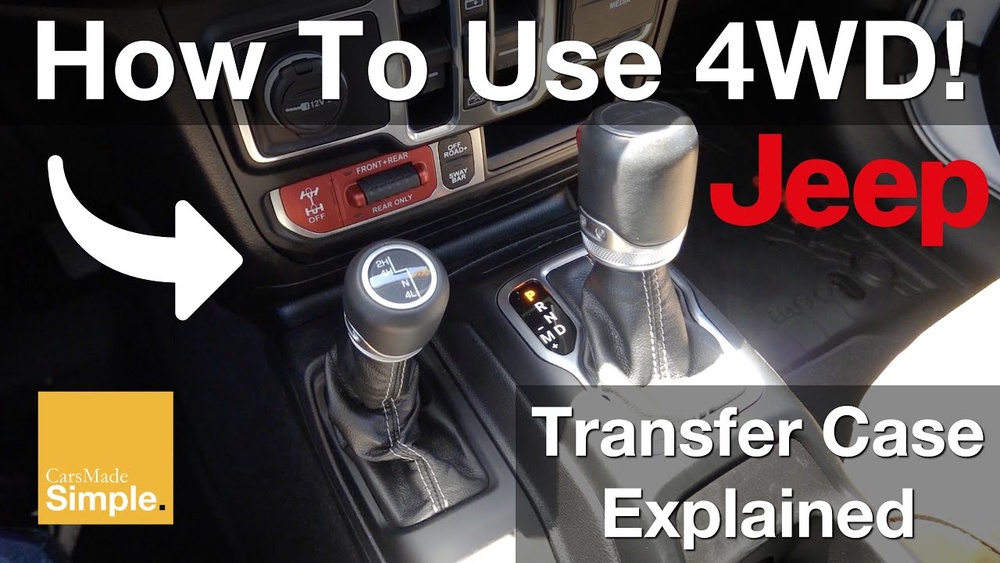
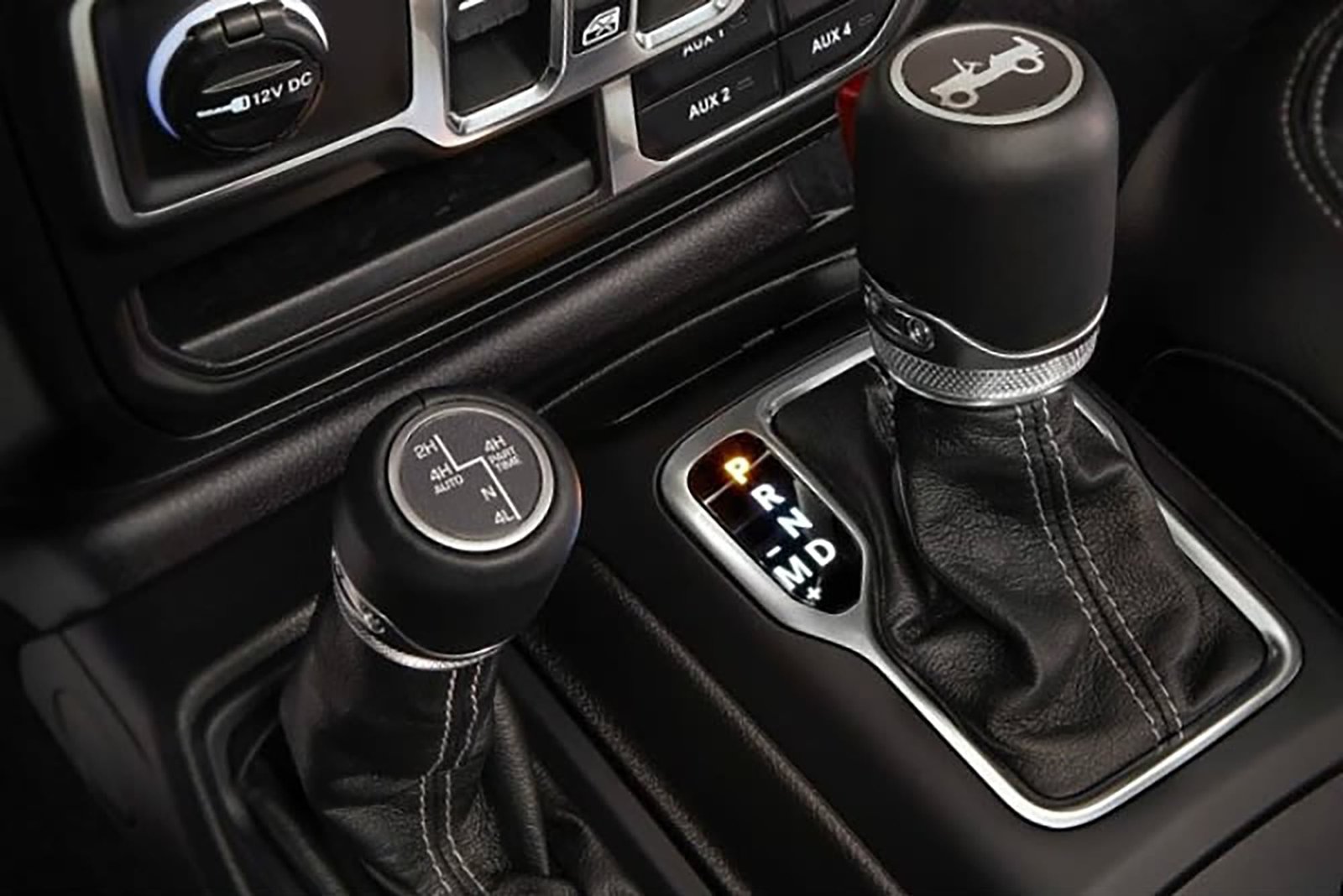
The transfer case controls power distribution between front and rear wheels. It allows you to switch 4WD modes using a lever or electronic switch. The transfer case also offers low-range gearing for tough climbs.
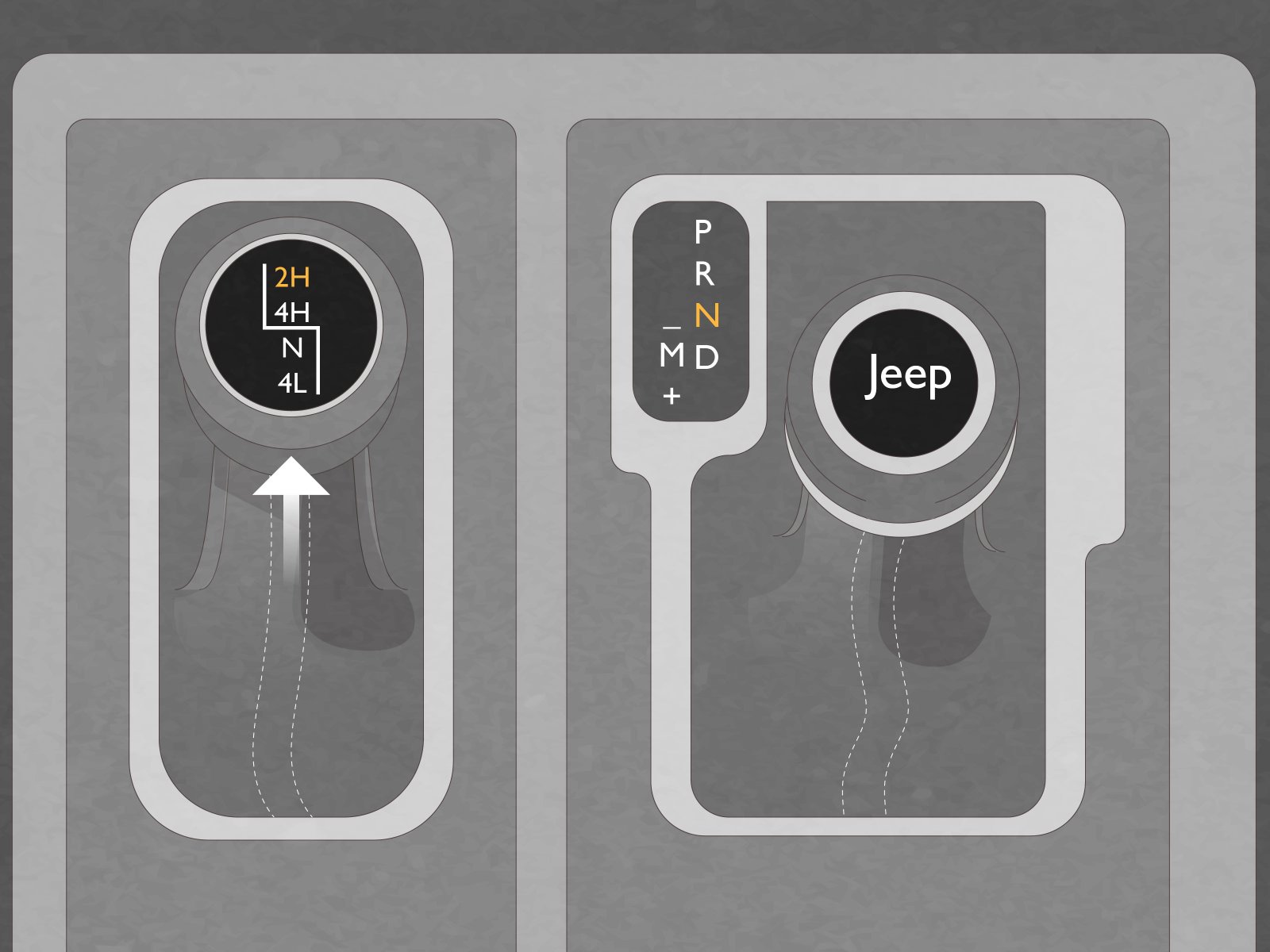
It usually includes four modes: 2H (two-wheel high), 4H (four-wheel high), 4L (four-wheel low), and Neutral. Neutral disconnects the drivetrain, useful for flat towing your Jeep behind another vehicle.
When To Use Each Mode
Use 2H for normal driving on dry, paved roads. This mode saves fuel and reduces wear on the drivetrain.
Switch to 4H on wet, icy, or loose surfaces for better traction. It works well at regular speeds and gentle off-road trails.
Use 4L for slow, difficult terrain like steep hills, deep mud, or rocks. It provides maximum torque and control at low speeds.
Neutral is only for towing your Jeep with all wheels off the ground. Never drive in Neutral mode.
Engaging Four Wheel Drive
The Jeep Wrangler offers a simple way to engage four-wheel drive. This system improves traction on rough or slippery surfaces. Using the right mode helps you drive safely in different conditions. Understanding how to shift the transfer case lever is key. It controls the power sent to each wheel.
Engaging four-wheel drive correctly prevents damage and keeps the Jeep running smoothly. The Wrangler has two main four-wheel drive modes: 4-High and 4-Low. Each mode serves a different purpose on and off the road.
Shifting Transfer Case Lever
The transfer case lever is near the gear shifter on the floor. To shift, stop the Jeep or slow down to a crawl. Shift the main transmission to neutral before moving the lever. Move the lever smoothly to the desired position. Then, shift the transmission back to drive or reverse. This process engages or disengages four-wheel drive safely.
Using 4-high Mode
4-High mode works well on wet, snowy, or loose gravel roads. It sends power to all four wheels at normal speeds. Use 4-High when extra traction is needed but you still want to drive fast. The Jeep remains stable and handles better on slippery surfaces. You can shift into 4-High while moving slowly without stopping.
Using 4-low Mode
4-Low mode is for slow driving on tough terrain like rocks, mud, or steep hills. It sends maximum power to all wheels at low speeds. This mode increases torque and helps the Jeep climb or crawl over obstacles. Stop the Jeep, shift to neutral, then move the lever to 4-Low. Shift back to drive and go slowly. Use 4-Low only on rough terrain to avoid damage.
Driving Techniques For 4wd
Driving a 4 wheel drive Jeep Wrangler requires specific techniques to handle different surfaces. Using 4WD improves traction and control in tough conditions. Knowing how to adjust your driving style boosts safety and performance. This section covers key tips for snow, off-road, mud, and sand driving.
Driving On Snow And Ice
Slow down and avoid sudden movements to keep control. Use 4WD high mode to distribute power evenly. Keep steady pressure on the gas pedal to prevent wheel spin. Brake gently and early to reduce skidding. Avoid sharp turns and steep hills on icy roads. Use low gear on steep or slippery slopes for better traction.
Off-road Terrain Tips
Choose the right 4WD mode based on terrain difficulty. Use 4WD low for rocky or steep trails. Keep your speed low and steady to navigate obstacles. Look ahead to plan your route and avoid large rocks or deep ruts. Use a spotter if visibility is limited. Avoid sudden braking or acceleration to maintain traction.
Handling Mud And Sand
Shift to 4WD low to gain maximum torque and control. Maintain momentum without spinning the wheels. Use a gentle and steady throttle to avoid getting stuck. Avoid sharp turns that can cause loss of traction. Lower tire pressure slightly for better grip on loose surfaces. Always carry recovery gear in case you get stuck.
Safety Features And Precautions
Driving a 4 wheel drive Jeep Wrangler offers great control on rough and slippery roads. Knowing the safety features and taking proper precautions helps keep you and your vehicle safe. These features work together to improve traction and handling. Understanding their interaction ensures smooth and secure driving.
Traction Control Interaction
The Jeep Wrangler’s traction control helps prevent wheel spin. It works well with 4WD modes by adjusting power to each wheel. This feature improves grip on slippery surfaces like mud or snow. When 4WD is active, traction control may reduce engine power to maintain stability. Do not turn off traction control unless necessary. It keeps the vehicle balanced in tough conditions.
Speed Limitations In 4wd
Driving speed affects the safety of 4WD operation. Most Jeep Wranglers limit speed in 4WD high and low modes. Avoid exceeding 55 mph in 4WD high to prevent drivetrain strain. In 4WD low, keep speed under 25 mph for safe control. Driving too fast in 4WD can cause loss of traction and damage. Always check the owner’s manual for specific speed limits.
Avoiding Drivetrain Damage
Using 4WD incorrectly can harm the drivetrain. Do not switch between 2WD and 4WD while moving fast. Always stop or slow down before changing modes. Avoid sharp turns on dry pavement when in 4WD to prevent binding. This reduces stress on the transfer case and axles. Regular maintenance helps keep the drivetrain in good condition. Follow guidelines to extend your Jeep Wrangler’s life.
Maintenance And Troubleshooting
Maintaining your Jeep Wrangler’s 4 wheel drive system keeps it reliable and strong. Troubleshooting small problems early stops bigger issues. Understanding transfer case care and common 4WD problems helps you save time and money.
Transfer Case Care
The transfer case sends power to all four wheels. Regular fluid changes keep it cool and working well. Check the fluid level every 30,000 miles or as your manual says. Use the recommended fluid type to avoid damage. Listen for strange noises like grinding or whining. These sounds can mean worn parts inside the transfer case. Keep the exterior clean and free of debris. Avoid harsh off-road use without proper preparation. This care extends the life of your transfer case.
Common 4wd Issues
Sometimes the 4WD system may not engage or disengage properly. This problem can happen if the shift lever feels stiff or stuck. Dirt or rust in the linkage or cables may cause this. You might notice vibrations or clunking sounds while driving. Tires with uneven wear also affect 4WD performance. A blinking 4WD light means the system has detected a fault. Check the owner’s manual for specific codes. Simple fixes include cleaning parts or adjusting cables. Ignoring these signs can lead to costly repairs later.
When To Seek Professional Help
Some issues require a trained mechanic’s attention. If your 4WD won’t engage after trying basic fixes, call a professional. Strange noises that don’t go away need expert diagnosis. Transmission or transfer case problems often need special tools. Warning lights on the dashboard related to 4WD should not be ignored. A mechanic can perform a full system scan and repairs. Regular checkups prevent unexpected breakdowns and keep your Jeep safe. Professional service ensures your 4WD runs smoothly for years.
Advanced 4wd Tips
Advanced 4WD tips help you get more from your Jeep Wrangler. These tips improve safety and performance. They guide you to use your 4WD system smartly in different situations. key tips to consider.
Towing With 4wd
Use 4WD carefully when towing heavy loads. Engage four-wheel drive on rough or slippery roads. It helps keep the Jeep stable and prevents wheel slippage. Avoid using 4WD on dry pavement while towing. It can strain the drivetrain and cause damage.
Shift the transfer case to Neutral before towing to disengage the axles. This stops wear on the transmission. Always check your owner’s manual for specific towing instructions.
Maximizing Traction
4WD maximizes traction on loose or uneven surfaces. Use 4-High for snow, mud, and gravel at normal speeds. Switch to 4-Low for steep climbs or deep sand. 4-Low gives more torque but limits speed.
Reduce tire pressure slightly to increase surface contact. This improves grip on soft terrain. Avoid sharp turns or sudden stops to keep traction steady. Use smooth, controlled movements for best results.
Customizing 4wd Settings
Some Jeep Wranglers offer selectable 4WD modes. These settings adjust power distribution for different conditions. Choose between Auto, Snow, Sand, Mud, or Rock modes. Each mode changes how the vehicle handles.
Auto mode works well for mixed surfaces. Snow mode increases stability on ice. Sand and Mud modes improve wheel spin control. Rock mode boosts crawl control on rough trails. Learn your Jeep’s settings to drive confidently off-road.
<!– wp:rank-math/faq-block {"questions":[{"id":"faq-question-edb84b0cea90","title":"How Do I Put My Jeep Wrangler Into 4 Wheel Drive?","content":"
To engage 4WD in a Jeep Wrangler, shift to Neutral, then pull the 4WD lever from 2H to 4H or 4L. Return to Drive and proceed.
“,”visible”:true},{“id”:”faq-question-db55fc78ac0d”,”title”:”Do I Put My Jeep In 4h Or 4l For Snow?”,”content”:”Use 4H for driving on snowy roads at normal speeds to maintain traction. Choose 4L for deep snow or slippery, low-speed situations requiring maximum power.
“,”visible”:true},{“id”:”faq-question-646f610f74b8″,”title”:”How Do You Engage A Jeep In 4 Wheel Drive?”,”content”:”To engage a Jeep in 4-wheel drive, shift to Neutral (N), then move the transfer case lever to 4H or 4L. Finally, shift back into Drive (D). Maintain a steady speed and avoid accelerating or braking during the shift.
“,”visible”:true},{“id”:”faq-question-55ffa6a87e70″,”title”:”How Does 4wd Work On A Jeep Wrangler?”,”content”:”The Jeep Wrangler’s 4WD uses a transfer case lever to engage front and rear axles, improving traction on various terrains. It allows wheels to turn at different speeds for stability.
nnnnModes include 2WD, 4WD High for normal off-road, and 4WD Low for maximum torque at low speeds.
“,”visible”:true}]} –>How Do I Put My Jeep Wrangler Into 4 Wheel Drive?
To engage 4WD in a Jeep Wrangler, shift to Neutral, then pull the 4WD lever from 2H to 4H or 4L. Return to Drive and proceed.
Do I Put My Jeep In 4h Or 4l For Snow?
Use 4H for driving on snowy roads at normal speeds to maintain traction. Choose 4L for deep snow or slippery, low-speed situations requiring maximum power.
How Do You Engage A Jeep In 4 Wheel Drive?
To engage a Jeep in 4-wheel drive, shift to Neutral (N), then move the transfer case lever to 4H or 4L. Finally, shift back into Drive (D). Maintain a steady speed and avoid accelerating or braking during the shift.
How Does 4wd Work On A Jeep Wrangler?
The Jeep Wrangler’s 4WD uses a transfer case lever to engage front and rear axles, improving traction on various terrains. It allows wheels to turn at different speeds for stability.
Modes include 2WD, 4WD High for normal off-road, and 4WD Low for maximum torque at low speeds.
Conclusion
Using the 4 wheel drive on your Jeep Wrangler improves traction and control. Shift smoothly between modes to match road conditions.
Engage four high for slippery or uneven surfaces. Use four low for slow, tough terrain or steep hills.
Remember to stop or slow down before shifting modes.
Practice these steps to drive safely and confidently. Enjoy the capability your Jeep offers on all types of roads.