Removing the radio from your Jeep Wrangler can seem difficult, but it’s a task almost anyone can do with the right guidance.
Whether you want to upgrade your sound system, repair a malfunctioning radio, or install new features like Bluetooth, knowing how to remove the radio yourself saves you money and gives you more control.
This guide will help you do the job safely and efficiently, even if you’re not very experienced with car repairs.
Tools And Preparation
Before you begin, gather the right tools. You’ll need:
- Phillips screwdriver
- Panel removal tool (plastic is best to avoid scratches)
- Socket wrench (usually 7mm or 8mm)
- Clean cloth for protecting surfaces
Disconnect the vehicle battery before starting. This prevents electrical shorts and keeps you safe. Locate the negative terminal and remove the cable, then wait five minutes to let any remaining charge fade.
Tip: Many beginners forget to protect the dashboard. Use a clean cloth to cover surfaces near the radio to avoid scratches.
Step-by-step Radio Removal
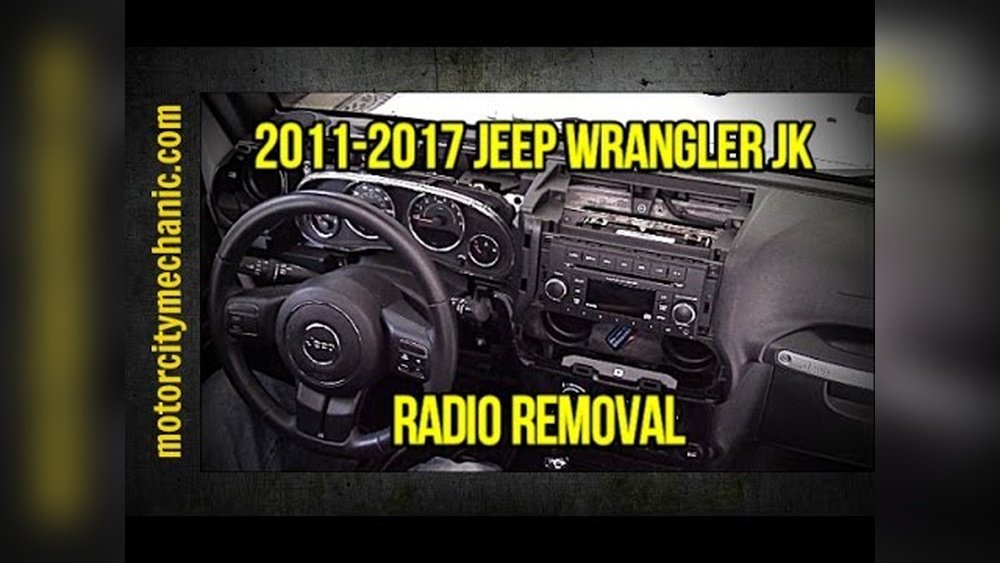
The process is similar for most Jeep Wrangler models, but there are slight differences between older and newer versions. Here’s how to remove the radio from a 2011 2018 Jeep Wrangler JK, one of the most common models.
1. Remove The Center Trim
Start with the trim around the radio and climate controls. Use the panel removal tool to gently pry the edges. Work slowly to avoid breaking clips.
- Insert the tool at the bottom edge of the trim.
- Pull gently until you hear clips releasing.
- Move around the trim, releasing all clips.
Insight: Many people try to use metal tools, but plastic tools are safer and won’t damage the dashboard.
2. Unscrew The Radio
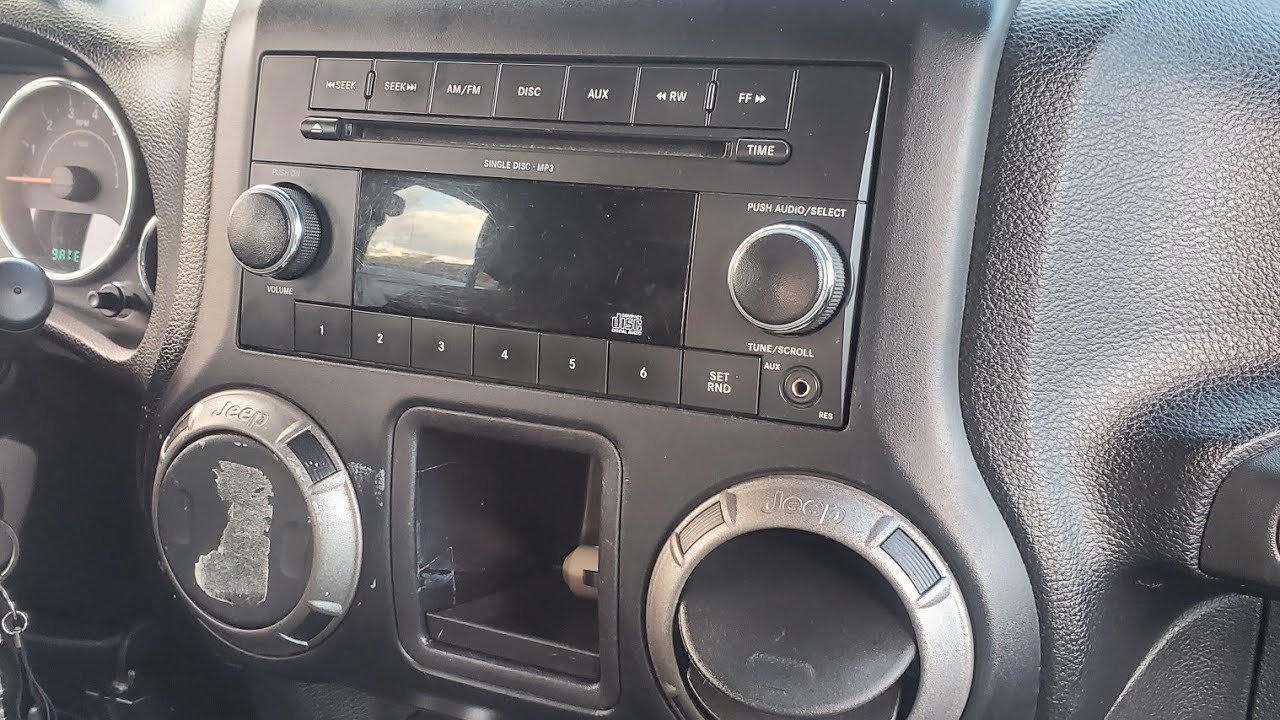
Once the trim is off, you’ll see four screws holding the radio in place.
- Use a Phillips screwdriver or socket wrench.
- Remove all screws and keep them in a safe place.
3. Disconnect Wiring
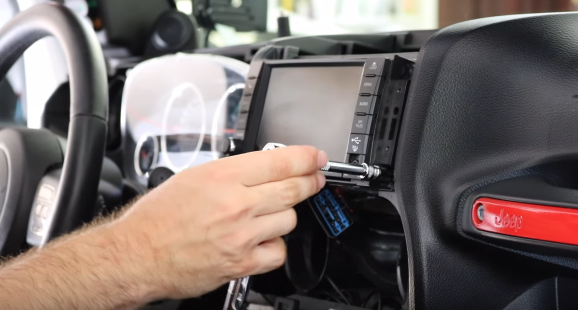
Pull the radio forward. You’ll see several wiring connectors at the back.
- Press the release tabs on each connector.
- Gently pull to disconnect.
Some models have antenna cables and extra plugs for navigation or satellite radio. If you see extra wires, make a note or take a photo for easier reinstallation.
4. Remove The Radio
After disconnecting all cables, slide the radio out. Place it on a soft surface to avoid scratches or damage.
Common Differences: Wrangler Models
Radio removal varies by year and trim level. Here’s a quick comparison:
| Model Year | Trim Removal | Screw Type | Extra Steps |
|---|---|---|---|
| 2007–2010 | Single piece | Phillips | Remove air vents first |
| 2011–2018 | Two pieces | Phillips or 7mm | Disconnect climate controls |
| 2019–2024 | Integrated touchscreen | Torx | Remove glove box |
Tip: Always check your owner’s manual for details on your specific Wrangler model.
Mistakes To Avoid
Removing the radio is simple, but common errors can cause problems.
- Skipping battery disconnect – Can lead to electrical shorts.
- Using metal tools – Scratches dashboard surfaces.
- Forgetting screw locations – Makes reinstallation harder.
- Pulling cables too hard – Damages connectors and wires.
- Not labeling connectors – Leads to confusion during reinstallation.
Some connectors look similar but serve different functions. Marking them helps you avoid mistakes.
Installing A New Radio
If you plan to install a new radio, compare your old unit and the new one for compatibility:
| Feature | Old Radio | New Radio |
|---|---|---|
| Size | Single DIN / Double DIN | Single DIN / Double DIN |
| Connector type | Standard Jeep | Standard Jeep / Aftermarket |
| Bluetooth | No | Yes |
| Navigation | Optional | Optional / Built-in |
Insight: Many aftermarket radios require a special wiring harness. Check if your new radio needs one before starting the installation.
Jeep Wrangler Radio Removal Costs
If you choose to have a shop remove the radio, costs can vary:
| Service Type | Average Cost |
|---|---|
| DIY (tools only) | $25–$50 |
| Professional removal | $80–$120 |
| Radio upgrade (parts + labor) | $200–$600 |
A DIY approach is cheaper, but professional installation can help if you want extra features like backup cameras or navigation.
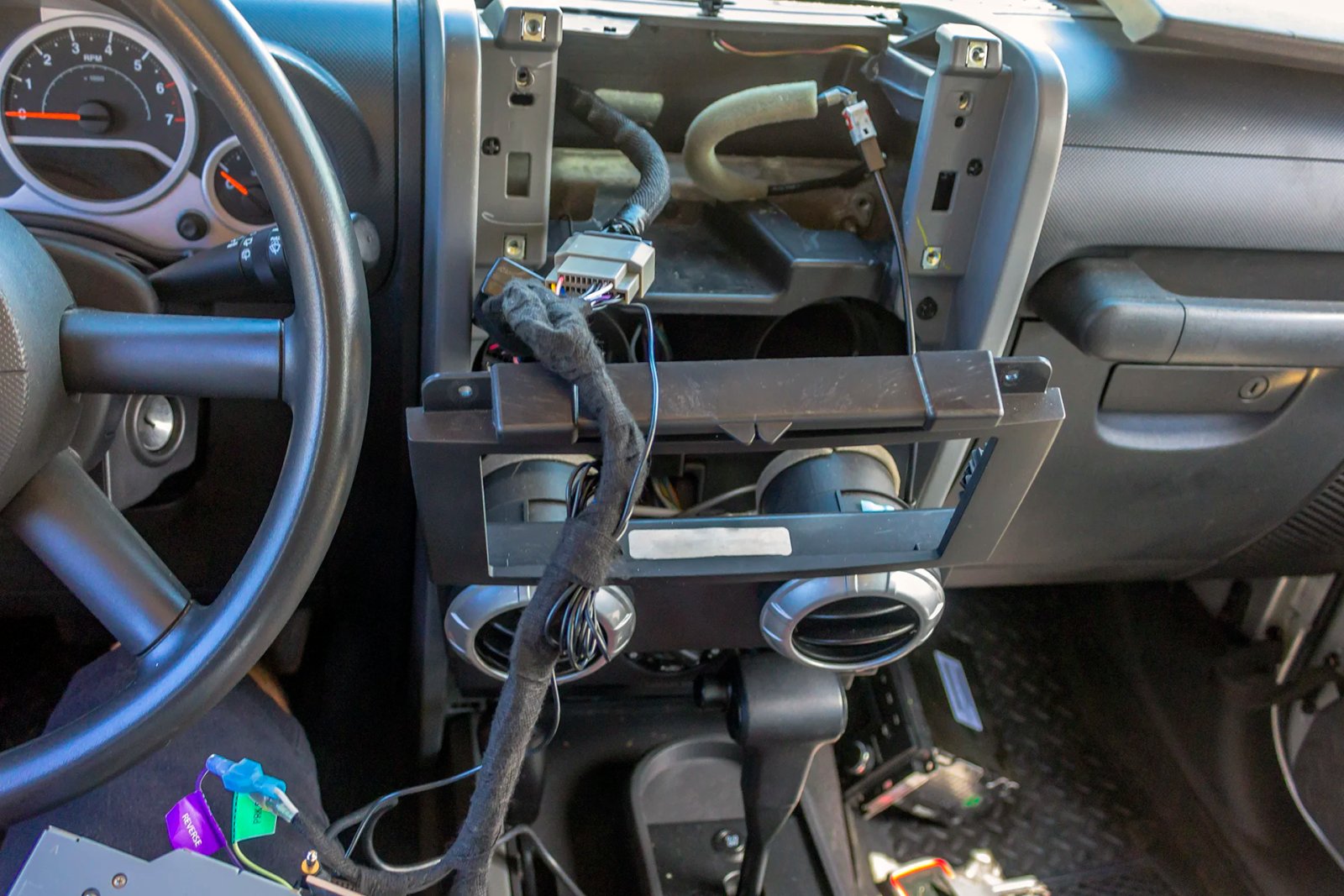
After Removal: What To Check
After you remove the radio, check these areas before reinstalling or upgrading:
- Wiring condition: Look for frayed wires or loose connectors.
- Mounting bracket: Ensure it’s not bent or damaged.
- Trim clips: Replace broken clips for a snug fit.
- Fuse box: If the radio didn’t work, check the fuse for damage.
If you find any issues, fix them before installing a new radio.
Advanced Tips
Some Jeep Wrangler radios are locked by an anti-theft code. If you remove and reinstall the radio, it may ask for a code.
Find this code in your owner’s manual or ask your dealer.
Tip: Take photos during removal. This helps you remember screw locations and wiring connections.
Frequently Asked Questions
How Long Does It Take To Remove The Radio?
For most Jeep Wranglers, the process takes 20–40 minutes. Beginners may need extra time to remove trim pieces carefully.
Can I Remove The Radio Without Special Tools?
You can use household screwdrivers, but a panel removal tool is recommended. It prevents scratches and makes the job easier.
Will Removing The Radio Affect Other Systems?
If you disconnect the battery first, removing the radio will not affect other systems. However, some newer Wranglers have integrated controls. Double-check before removing.
Do I Need A Wiring Harness For New Radios?
Most aftermarket radios need a special harness to fit Jeep connectors. Check your radio’s manual and buy the correct harness for easy installation.
Where Can I Find More Jeep Wrangler Radio Guides?
For official instructions and detailed guides, visit the Jeep owner’s site or consult Crutchfield for expert advice on stereo upgrades.
Removing the radio from your Jeep Wrangler is a manageable project for most car owners. With careful steps and the right tools, you can upgrade your system or fix issues without needing professional help.
Remember to protect your dash, label connectors, and follow safety steps.
This gives you confidence for future DIY projects and helps keep your Jeep running smoothly.