Many people buy a Jeep for its reputation as a rugged, all-terrain vehicle. But when it comes to actually using the four wheel drive system, confusion is common—especially for beginners. If you’re new to Jeeps or off-roading, understanding how and when to put your Jeep in four wheel drive is important for safety and performance. This guide will explain the process clearly, including the different systems, simple step-by-step instructions, and common mistakes to avoid.
Jeep Four Wheel Drive Systems Explained
Jeeps use different types of four wheel drive (4WD) systems, and knowing which one your Jeep has is key. Most modern Jeeps come with either a part-time or full-time system. Some have both.
Here’s a quick comparison of the main systems:
| System Type | When to Use | Key Models |
|---|---|---|
| Part-Time 4WD | Off-road, snow, mud, sand | Wrangler, Gladiator |
| Full-Time 4WD (AWD) | Any road, any time | Cherokee, Grand Cherokee |
| Select-Trac | Switch between part and full-time | Wrangler Sahara, Liberty |
Part-time systems are designed for rough, slippery surfaces. Using them on dry pavement can damage your Jeep. Full-time systems can be used on all surfaces, making them more flexible for daily driving.
Before You Shift: Preparation Steps
Before putting your Jeep in four wheel drive, take these steps:
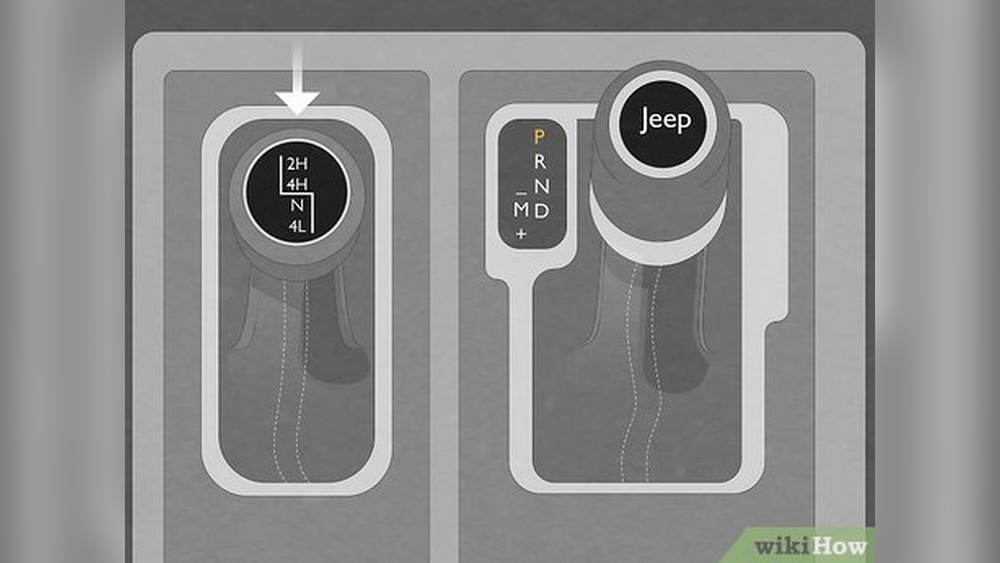
- Know your system: Check your owner’s manual or the lever near your gear shifter to identify your 4WD type.
- Check road conditions: Only use 4WD on loose, slippery, or uneven surfaces if your Jeep has a part-time system.
- Reduce speed: Shifting at high speeds can cause drivetrain damage. Slow down to under 55 mph (for 4HI) or stop (for 4LO).
A surprising fact: Many new Jeep owners don’t realize that using 4WD on dry pavement can cause something called “driveline binding.” This can lead to expensive repairs, so always match the mode to the road.

How To Put Your Jeep In Four Wheel Drive
The process depends on your Jeep’s system. Here’s how to shift for the most common scenarios:
For Jeeps With A Manual 4wd Lever
- 4H (Four High):
- While moving at low speed (usually under 55 mph), simply pull the 4WD lever from 2H to 4H.
- You may feel a slight clunk or resistance.
- This mode is best for snow, sand, or loose gravel.
- 4L (Four Low):
- Stop the Jeep completely.
- Shift the transmission into Neutral (N).
- Firmly pull the 4WD lever from 2H or 4H to 4L.
- Wait for the indicator light to confirm the shift.
- 4L is only for very rough terrain, steep hills, or deep mud.
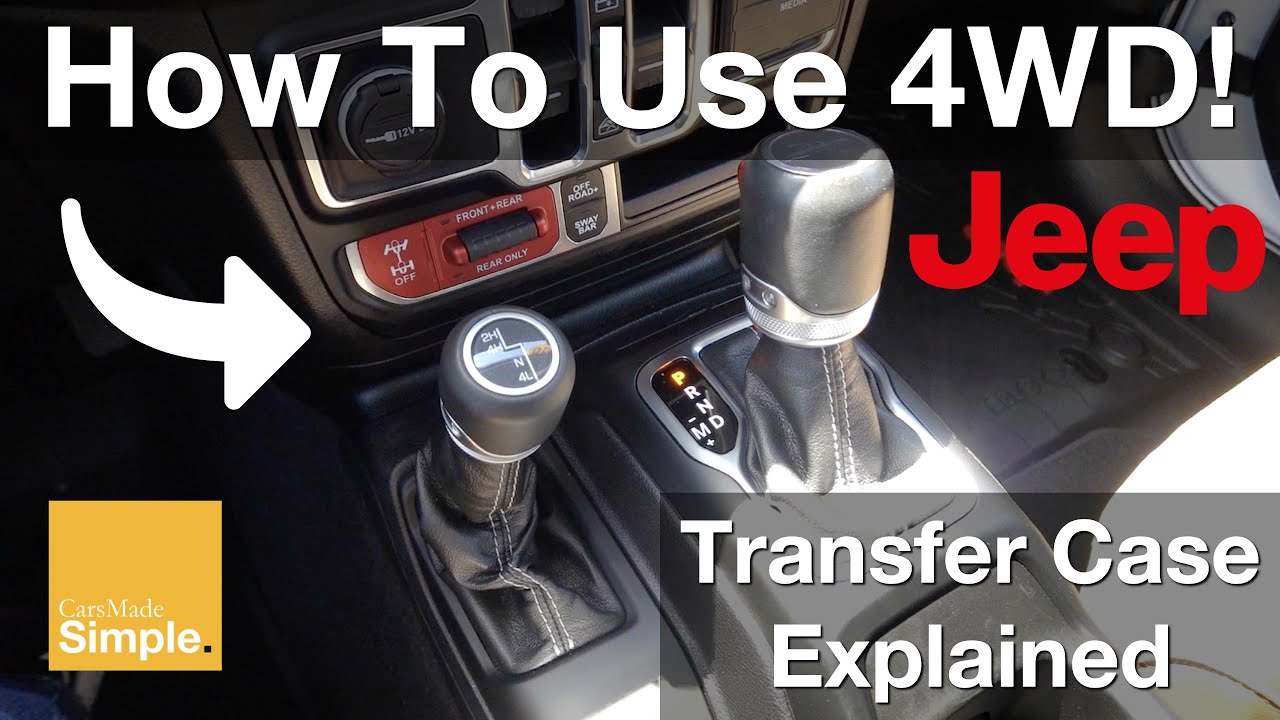
Many newer models use electronic switches:
- 4H: Slow down, then turn the dial or press the button to 4H. Wait for the dashboard light.
- 4L: Come to a complete stop, shift to Neutral, then select 4L.
Tip: Never force the lever or switch. If it doesn’t engage, roll the vehicle forward a few inches and try again.
Full-time 4wd And Select-trac
With these, you can often shift between 2WD and 4WD at any speed. Use “AUTO” mode for changing conditions, and “4LO” for the toughest terrain.
When Should You Use Four Wheel Drive?
Using 4WD at the right time maximizes traction and keeps you safe. Here’s when to use each mode:
| Mode | Best For | Speed Limit |
|---|---|---|
| 2H | Dry roads, normal driving | No limit |
| 4H | Rain, snow, loose dirt | Up to 55 mph |
| 4L | Deep mud, rocks, steep hills | Below 25 mph |
Advanced tip: Even in 4H, you should slow down in sharp turns, as steering can feel heavier.
Common Mistakes To Avoid
Many Jeep drivers make errors their first time:
- Using 4WD on dry pavement: This causes drivetrain stress.
- Shifting at high speeds: Can damage the 4WD system.
- Not stopping for 4L: Always stop and shift to Neutral first.
- Forgetting to switch back: Driving in 4WD on normal roads wastes gas and wears out parts faster.
One thing many overlook: After off-roading, check your tires and undercarriage for damage before returning to 2WD.
Real-world Example
Imagine you’re driving a Jeep Wrangler on a snowy road. The surface is slippery and your rear tires start to spin. Here’s what you do:
- Slow to below 55 mph.
- Pull the lever from 2H to 4H.
- The 4WD system distributes power to all wheels, giving you more control.
If you leave the snow and return to dry pavement, shift back to 2H to protect your drivetrain.

Troubleshooting: What If 4wd Won’t Engage?
Sometimes, the system doesn’t shift as expected. Here’s what to try:
- Roll forward or backward a few feet—sometimes gears need to align.
- Double-check the transmission position—most Jeeps require Neutral for 4L.
- Listen for noises—grinding or loud clunks may signal a problem.
- If the 4WD light flashes or stays off, consult your owner’s manual or a mechanic.
If you’re not sure, it’s best to visit a professional or check resources like the official Jeep Owner’s Site.
Frequently Asked Questions
How Do I Know If My Jeep Is In Four Wheel Drive?
Most Jeeps have an indicator light on the dashboard that lights up when 4WD is engaged. You may also feel different steering feedback or hear a click when the system engages.
Can I Shift Into Four Wheel Drive While Driving?
You can shift from 2H to 4H while moving at low speeds (usually under 55 mph). However, shifting into 4L always requires stopping and placing the transmission in Neutral.
What Happens If I Use Four Wheel Drive On Dry Pavement?
Using 4WD on dry, hard surfaces with a part-time system can cause driveline binding. This puts stress on your drivetrain and can lead to costly repairs.
Is Four Wheel Drive The Same As All Wheel Drive?
No. Four wheel drive is usually selectable and meant for off-roading or slippery roads. All wheel drive is always on and adjusts power automatically. Some Jeeps offer both options.
How Often Should I Use Four Wheel Drive?
It’s good practice to engage 4WD every few months, even if you don’t need it. This keeps the system lubricated and in good working order.
Switching your Jeep into four wheel drive is straightforward once you know your system and follow the correct steps. Remember, matching the right mode to the road keeps you safe and protects your Jeep.
With practice, shifting will become second nature so you can focus on enjoying your adventure, wherever the trail leads.


















