Putting a flag on your Jeep is more than showing pride or personality. It’s a statement, a tradition for off-roaders, and sometimes a safety requirement.
Whether you want to display your country’s flag, a club logo, or a bright safety pennant, the right installation makes your Jeep look great and keeps your flag secure on every adventure.
Choosing The Right Flag And Mount
The first step is selecting a flag and mount that suit your Jeep’s style and purpose. Not all flags are made for vehicles, and not all mounts fit every Jeep model.
- Flag Material: Look for weather-resistant fabrics like polyester or nylon. These hold up well against wind, rain, and sun.
- Size: A flag should be visible but not too large. Common sizes range from 12×18 inches to 3×5 feet. For off-roading, smaller flags are safer.
- Mount Type: There are several mounting options:
- Hitch mounts fit into the receiver hitch.
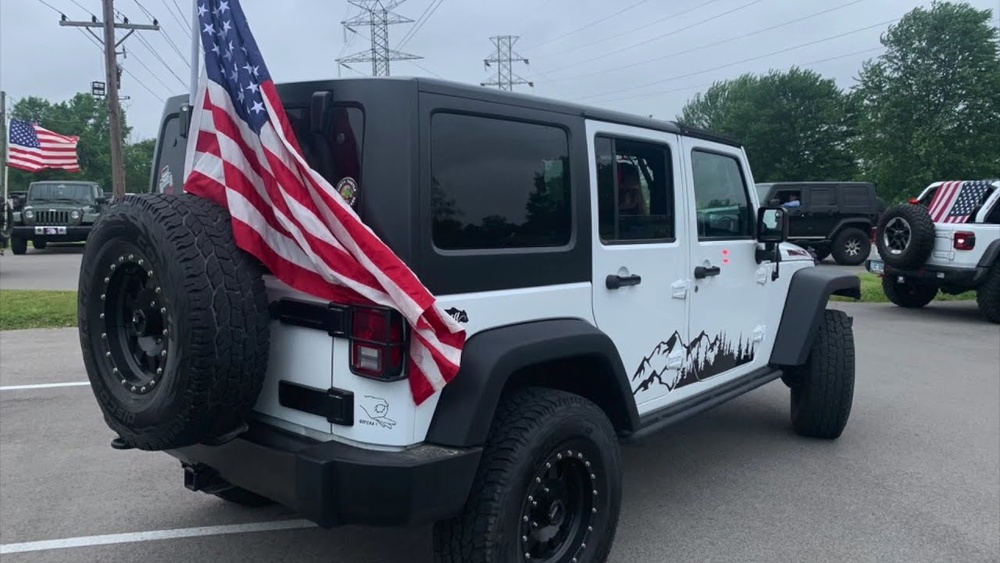
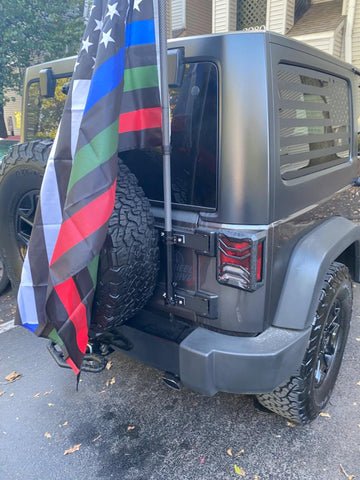
- Spare tire mounts attach behind your spare tire.
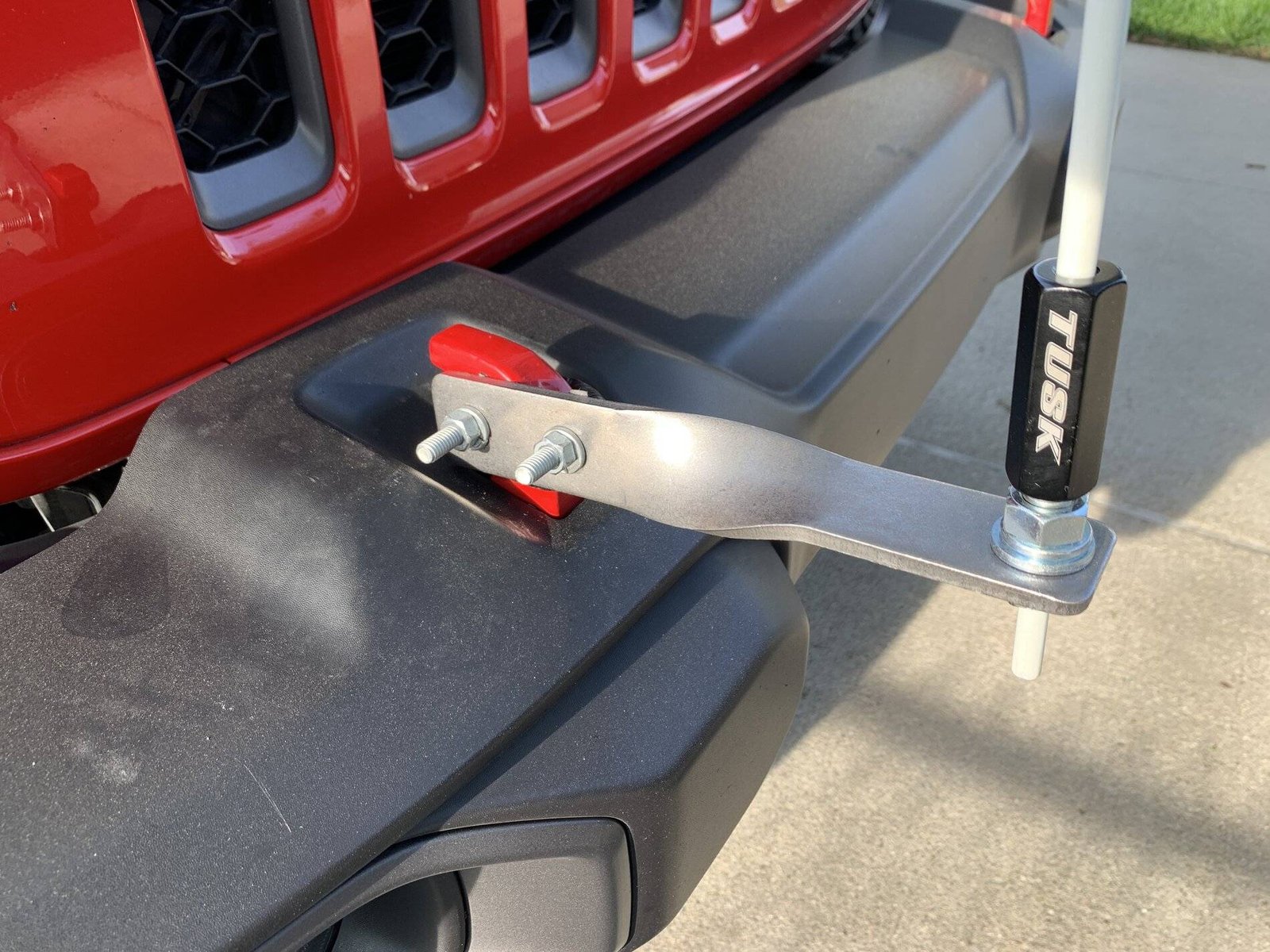
- Clamp mounts grip onto roll bars, roof racks, or bumpers.
- Drilled mounts require holes in the body or bumper.
Here’s a quick comparison of popular mount types:
| Mount Type | Installation Difficulty | Durability | Common Location |
|---|---|---|---|
| Hitch Mount | Easy | High | Rear |
| Spare Tire Mount | Moderate | Medium | Rear |
| Clamp Mount | Easy | Medium | Side/Top |
| Drilled Mount | Hard | Very High | Anywhere |
Most Jeep owners prefer hitch or spare tire mounts because they require less modification.
Preparing For Installation
Before you install, check your Jeep’s structure. Avoid placing the flag where it could block the driver’s view or hit trees and signs.
- Clean the mounting area to remove dirt and oil.
- Gather tools: Wrench, drill (if needed), screwdriver, and mounting kit.
- Review local laws. Some states limit flag size or placement for safety reasons.
If you’re off-roading, a brightly colored safety flag is often required. This helps other drivers spot you over dunes or rough terrain.
Step-by-step Installation Guide
Follow these steps for a secure flag setup:
1. Assemble The Flag And Mount
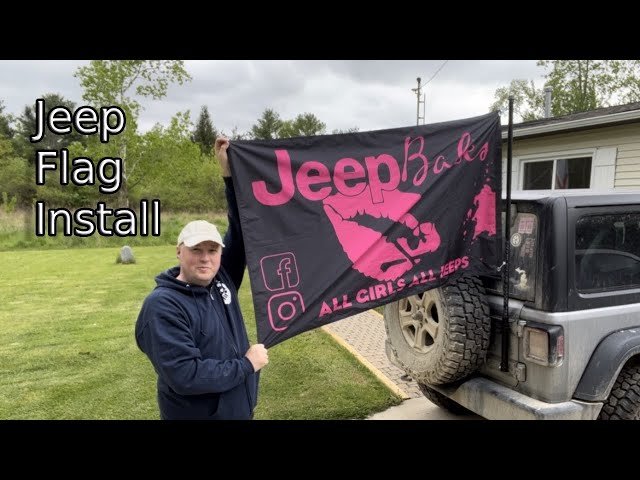
- Attach the flag to its pole. Use zip ties or clamps if the flag doesn’t have grommets.
- Check that the pole is straight and sturdy.
2. Attach The Mount
- For hitch mounts, slide the mount into the receiver, secure with a pin or bolt.
- For spare tire mounts, remove the tire, attach the bracket, then re-mount the tire.
- For clamp mounts, position the clamp on the roll bar or bumper, then tighten screws.
This table shows estimated installation times for each mount:
| Mount Type | Estimated Time |
|---|---|
| Hitch Mount | 10 minutes |
| Spare Tire Mount | 20 minutes |
| Clamp Mount | 15 minutes |
| Drilled Mount | 30-45 minutes |
3. Secure The Flag Pole
- Insert the pole into the mount. Tighten all bolts, nuts, or clamps.
- Shake the pole gently to check stability. If it wobbles, tighten more.
4. Test And Adjust
- Drive slowly to see how the flag reacts to wind.
- If the flag flaps too wildly, move it lower or use a thicker pole.
- Check for any rattling or loose parts.
Common Mistakes And How To Avoid Them
Many beginners overlook key details when mounting a flag:
- Using a thin pole: It can bend or break in strong wind.
- Placing the flag too high: It may hit branches or wires.
- Forgetting to check legal limits: Some states fine drivers for oversized flags.
- Not tightening bolts: This risks losing the flag on the road.
Always double-check your installation and make sure the flag is visible but safe.
Practical Tips For Long-lasting Results
- Remove the flag when driving at high speed or during storms. This prevents damage.
- Inspect regularly for rust, loose bolts, or torn fabric.
- Replace old flags. Sun and wind can fade colors and weaken material.
- If using a drilled mount, seal the holes to prevent rust.
- For multiple flags, use a dual mount or space them evenly.
A non-obvious tip: Some off-road parks require flags of specific colors or heights. Call ahead to check rules before visiting.
Another insight: A flag’s pole can act as a CB antenna if installed properly. Some mounts support both flag and radio functions. This saves space and avoids clutter.
Flag Etiquette And Safety
Respect flag etiquette, especially for national flags. The US flag should be higher than others and never touch the ground. If your Jeep is parked with the flag, remove it during rain or at night unless it’s illuminated.
Safety matters too. Avoid placing flags where they could distract other drivers or block brake lights.
For more flag etiquette details, see the official US Flag Guidelines.
Frequently Asked Questions
How Do I Stop My Flag From Tearing?
Use reinforced grommets and a strong pole. Avoid flags made of thin fabric. Remove the flag during high winds to reduce wear.
Can I Mount A Flag Without Drilling Holes?
Yes, hitch mounts and clamp mounts are easy to install and don’t require drilling. They’re popular for renters or leased Jeeps.
Are There Legal Limits For Flag Size On Vehicles?
Most states allow flags up to 3×5 feet. Check local laws to avoid fines. Never block lights or the driver’s view.
What’s The Best Material For A Jeep Flag?
Polyester is durable and resists fading. Nylon is lighter but less tough. For off-road use, choose thick polyester with double stitching.
Can I Mount More Than One Flag?
Yes, dual mounts or multiple clamps let you display several flags. Make sure they don’t interfere with each other or block visibility.
Putting a flag on your Jeep is simple, but doing it right keeps your vehicle safe and stylish. With the right flag, mount, and careful installation, you can show your colors proudly on the road or trail.
Remember to check your setup regularly, follow flag etiquette, and enjoy the added personality your Jeep brings to every journey.