The Jeep Wrangler has always been famous for its rugged design, off-road ability, and strong engine options. But when it comes to keeping the engine running well and meeting emission rules, one part stands out: the O2 sensors.
These sensors help your Jeep’s computer control air and fuel, so the engine runs smoothly and the exhaust stays clean. If you’re curious about how many O2 sensors your Jeep Wrangler has, you’re not alone.
Many owners wonder how this part works, how many are in their vehicle, and why they matter. Let’s explore the facts behind O2 sensors in Jeep Wranglers, so you can understand your vehicle better and know what to do when there’s a problem.
What Are O2 Sensors And Why Are They Important?
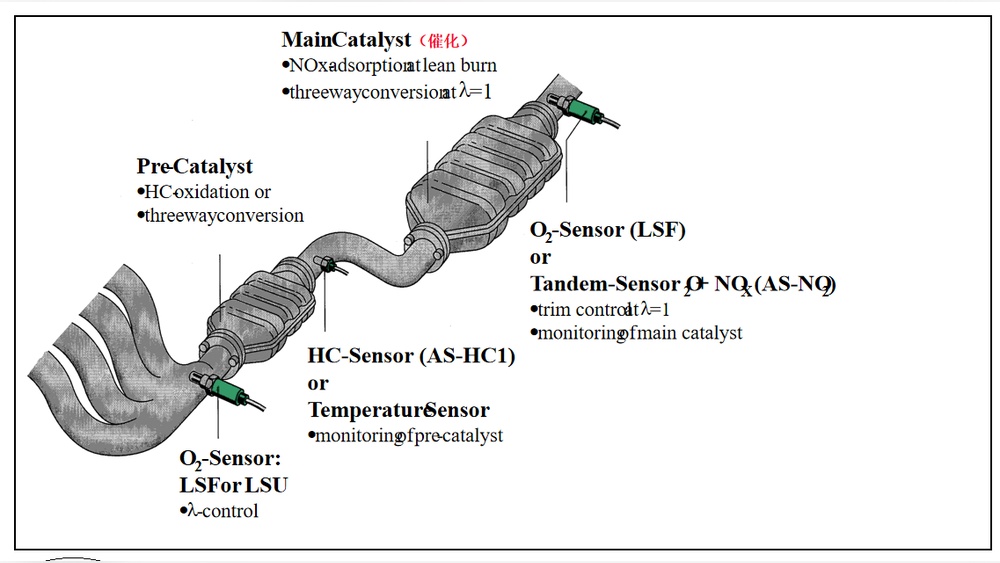
O2 sensors (or oxygen sensors) measure how much oxygen is in your exhaust gas. They send this data to the engine’s computer (ECU), which uses it to adjust the air-fuel mix. This helps the engine run efficiently and keeps emissions low. If O2 sensors fail, your Jeep may use more fuel, pollute more, or even run poorly.
Here’s what O2 sensors do:
- Monitor oxygen in exhaust gases
- Help control fuel injection
- Reduce harmful emissions
- Improve engine performance
A modern Jeep Wrangler can have several O2 sensors, depending on its model year and engine type.
How Many O2 Sensors Does A Jeep Wrangler Have?
The number of O2 sensors in a Jeep Wrangler depends mainly on the model year and engine type. Let’s break down the most common Wrangler generations.
Jeep Wrangler Yj (1987–1995)
The YJ was the first Wrangler. It had simple engines and basic emission controls.
- 2.5L and 4.0L engines: Usually one O2 sensor (upstream, before the catalytic converter).
Jeep Wrangler Tj (1997–2006)
TJ Wranglers came with more advanced systems.
- 1997–2000 models: Most have two O2 sensors (one upstream, one downstream).
- 2001–2006 models: These often have four O2 sensors (two upstream, two downstream).
Jeep Wrangler Jk (2007–2018)
JK Wranglers are more modern and use stricter emission controls.
- 3.8L V6 (2007–2011): Usually four O2 sensors.
- 3.6L V6 (2012–2018): Also four O2 sensors.
Jeep Wrangler Jl (2018–present)
The newest Wrangler uses advanced systems.
- 2.0L Turbo, 3.6L V6, 3.0L EcoDiesel: Most have four O2 sensors.
Summary: Most Jeep Wranglers from 2001 onward have four O2 sensors — two before the catalytic converters (upstream) and two after (downstream).
Upstream Vs Downstream O2 Sensors
Each O2 sensor has a specific job. Understanding the difference helps you know where they are and why they matter.
| Sensor Type | Location | Main Function |
|---|---|---|
| Upstream (Pre-cat) | Before catalytic converter | Controls air-fuel ratio |
| Downstream (Post-cat) | After catalytic converter | Checks converter efficiency |
- Upstream sensors: Measure oxygen before exhaust enters the catalytic converter. They help the computer adjust fuel.
- Downstream sensors: Measure oxygen after the converter. They check if the converter works properly.
If either sensor fails, your Jeep may show a Check Engine Light or fail an emissions test.
Typical Locations Of O2 Sensors In Jeep Wrangler
Finding O2 sensors is easier if you know where to look.
- Upstream sensors: Usually mounted on the exhaust manifold, right where exhaust leaves the engine.
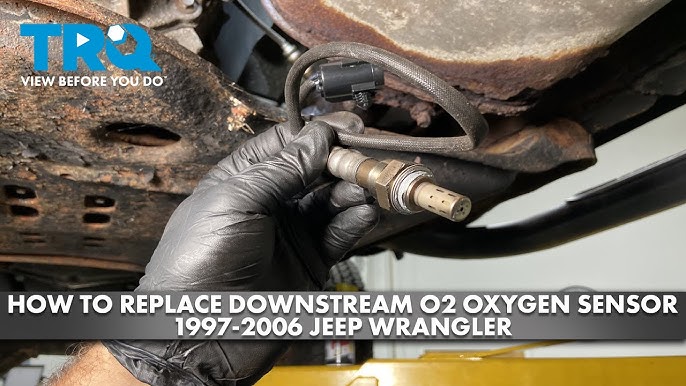
- Downstream sensors: Located after the catalytic converter, attached to the exhaust pipe.
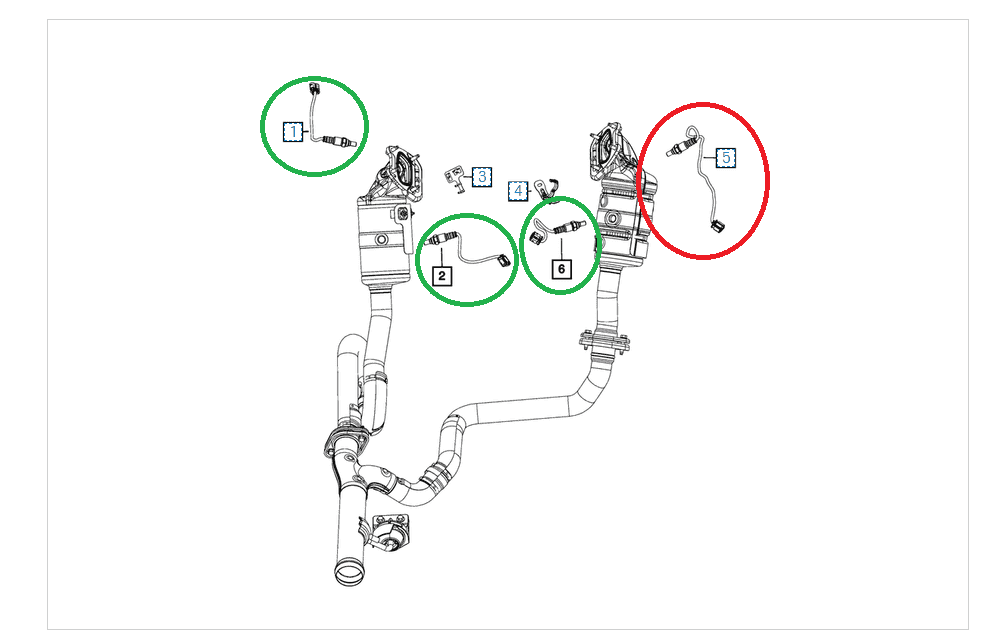
For Wranglers with four sensors, you’ll often find:
- One upstream sensor for each side of the engine (if it’s a V6 or V8)
- One downstream sensor for each catalytic converter
Here’s a simple comparison for the JK and JL models:
| Model | Upstream Sensors | Downstream Sensors | Total Sensors |
|---|---|---|---|
| JK (2007–2018) | 2 | 2 | 4 |
| JL (2018–present) | 2 | 2 | 4 |
Some models may use a split exhaust, so the number can vary in rare cases.
Why Do Some Wranglers Have More O2 Sensors?
O2 sensors help keep emissions low. As rules got stricter, automakers added more sensors to monitor exhaust. Here’s why:
- Emission standards: Newer Wranglers must meet stricter standards, so they need more sensors.
- Engine design: V6 and V8 engines with dual exhaust may require extra sensors.
- Catalytic converters: Some models have multiple converters, each needing its own sensors.
If you’re upgrading or fixing your exhaust, make sure you know how many sensors your Jeep has. Missing a sensor can cause problems.
Signs Of A Faulty O2 Sensor
A bad O2 sensor can cause many issues. Watch for these signs:
- Check Engine Light: Most common symptom
- Poor fuel economy: Jeep uses more gas
- Rough idle or stalling: Engine runs unevenly
- Failed emissions test: Too much pollution
- Slow acceleration: Engine feels weak
Modern Wranglers may show a code like P0133 (slow O2 sensor response) or P0420 (catalytic converter below efficiency).
How To Replace O2 Sensors On A Jeep Wrangler
Replacing O2 sensors is not too hard if you have basic tools. Here’s a step-by-step guide:
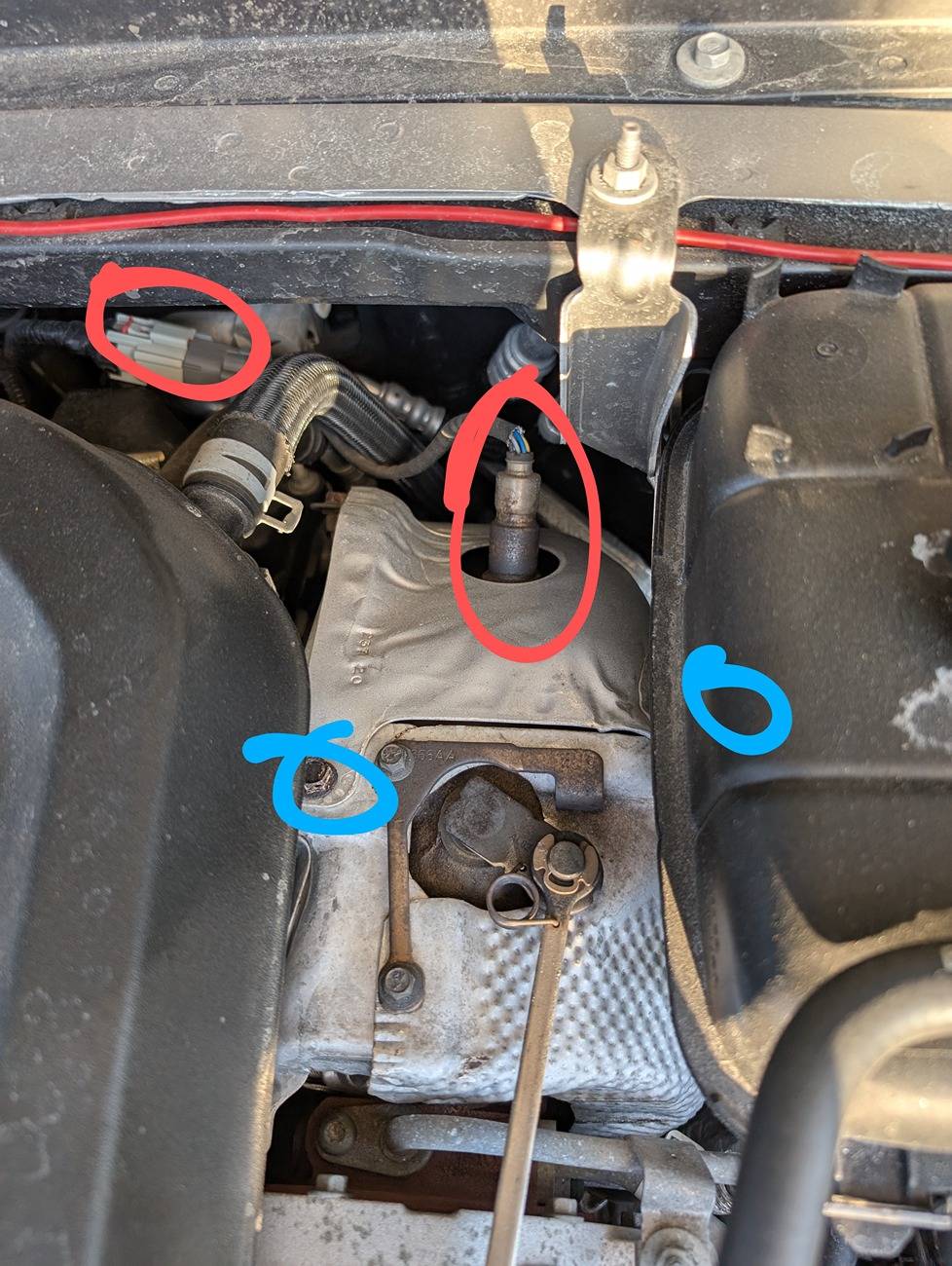
- Locate the sensors: Use your manual or online diagrams. Upstream sensors are near the engine; downstream are after the catalytic converter.
- Disconnect the battery: This prevents electrical problems.
- Unplug the sensor: Find the connector and unplug it.
- Remove the sensor: Use a special O2 sensor socket or a wrench.
- Install the new sensor: Screw it in, connect the wire, and tighten.
- Reconnect the battery: Reset your computer by starting the engine.
Tip: Always use high-quality sensors. Cheap sensors may not last or work well.
Cost Of Replacing O2 Sensors
The price depends on the brand, model, and labor. Here’s a typical cost breakdown:
| Sensor Type | Parts Cost (each) | Labor Cost (per sensor) | Total Cost (for 4 sensors) |
|---|---|---|---|
| Upstream | $40–$80 | $60–$120 | $400–$800 |
| Downstream | $40–$80 | $60–$120 | $400–$800 |
You can save money by changing sensors yourself, but always check fitment and quality.
Do O2 Sensors Need Regular Maintenance?
O2 sensors are built to last, but they don’t last forever. Most sensors work for 60,000–100,000 miles. After this, they may get dirty or slow, causing problems.
- Check sensors during major service
- Replace if faulty or after high mileage
- Keep exhaust system in good shape
If you drive off-road or in harsh conditions, sensors may wear faster.
Non-obvious Insights About Jeep Wrangler O2 Sensors
- Sensor compatibility matters: Many beginners buy generic sensors. Always check if the sensor matches your Jeep’s year, engine, and connector type. Wrong sensors may not work or cause false codes.
- Sensor placement affects diagnosis: If you get a code for the downstream sensor, it may point to a bad catalytic converter — not just the sensor itself. Always check both parts before replacing.
How O2 Sensors Affect Jeep Wrangler Performance
Some owners think O2 sensors only affect emissions, but they also influence how your Jeep feels on the road.
- Better throttle response: Good sensors help your Jeep accelerate smoothly.
- Stable idle: Engine idles without shaking.
- Less engine knock: Proper air-fuel mix prevents knocking.
- Longer catalytic converter life: Sensors help converters work longer.
Upgrading sensors won’t boost horsepower, but keeping them in good shape ensures your Jeep runs strong.
Are Aftermarket O2 Sensors A Good Option?
Many Wranglers use aftermarket sensors to save money. Sometimes, these work well, but there are risks.
- OEM sensors: Made for your Jeep, last longer, fit perfectly.
- Aftermarket sensors: Cheaper, may not fit, sometimes cause warning lights.
If you’re buying aftermarket, pick a trusted brand and check reviews. Avoid universal sensors unless you know how to wire them.
Impact Of O2 Sensors On Jeep Wrangler Modifications
If you modify your Wrangler’s exhaust, you may need to adjust sensor placement.
- Headers and custom exhausts: Sensors must be moved or extended.
- High-flow catalytic converters: May need special sensors to avoid error codes.
Some modifications can confuse your Jeep’s computer, causing lights or poor performance. Always plan sensor placement before making changes.
How To Diagnose O2 Sensor Issues
Modern Wranglers use computer codes to find sensor problems. Here’s how you can check:
- OBD-II scanner: Plug into your Jeep’s port and read codes. Common codes are P0130–P0167.
- Check voltage: O2 sensors create voltage (0.1–0.9V for narrowband sensors). If the signal is steady or missing, the sensor may be bad.
- Visual check: Look for burnt wires, broken connectors, or a dirty sensor tip.
If you’re unsure, a mechanic can test sensors with special tools.
Real-world Example: 2015 Jeep Wrangler
Let’s look at a 2015 Jeep Wrangler as an example:
- Engine: 3.6L Pentastar V6
- Number of O2 sensors: Four (two upstream, two downstream)
- Sensor placement: Upstream on exhaust manifolds, downstream after each catalytic converter
Many owners find that replacing old sensors improves fuel economy and removes warning lights.
Epa And Emissions Standards
The US EPA requires all vehicles to meet strict emissions rules. O2 sensors are key for this. Wranglers since 1996 use OBD-II systems, which monitor sensors and alert drivers if emissions rise.
If your sensors fail, your Jeep may not pass state inspection. For more details on emissions standards, see the EPA’s emissions guide.
Frequently Asked Questions
How Many O2 Sensors Does A 2012 Jeep Wrangler Have?
A 2012 Jeep Wrangler (3.6L V6) has four O2 sensors — two upstream, two downstream.
Can I Drive With A Bad O2 Sensor?
You can drive, but it’s not recommended. A bad O2 sensor can cause poor fuel economy, rough running, and higher emissions. Fix it soon to avoid bigger problems.
Are O2 Sensors The Same For All Jeep Wranglers?
No. O2 sensors vary by model year, engine type, and connector style. Always check compatibility before buying.
How Do I Know Which O2 Sensor Is Faulty?
Use an OBD-II scanner to read trouble codes. Codes like P0131 or P0155 tell you which sensor is bad. You can also check voltage or consult a mechanic.
Is It Hard To Replace O2 Sensors On A Jeep Wrangler?
It’s not too hard with basic tools. You need a sensor socket, some patience, and the right replacement part. If sensors are rusted, you may need penetrating oil.
—
Understanding how many O2 sensors your Jeep Wrangler has—and how they work—can save you money and trouble. Most modern Wranglers use four sensors to monitor and control emissions.
Keeping these sensors healthy means your Jeep runs strong, stays legal, and uses fuel efficiently.
If you notice warning lights or poor performance, check your O2 sensors first. With the right knowledge, you can maintain your Wrangler’s reliability and enjoy every drive.