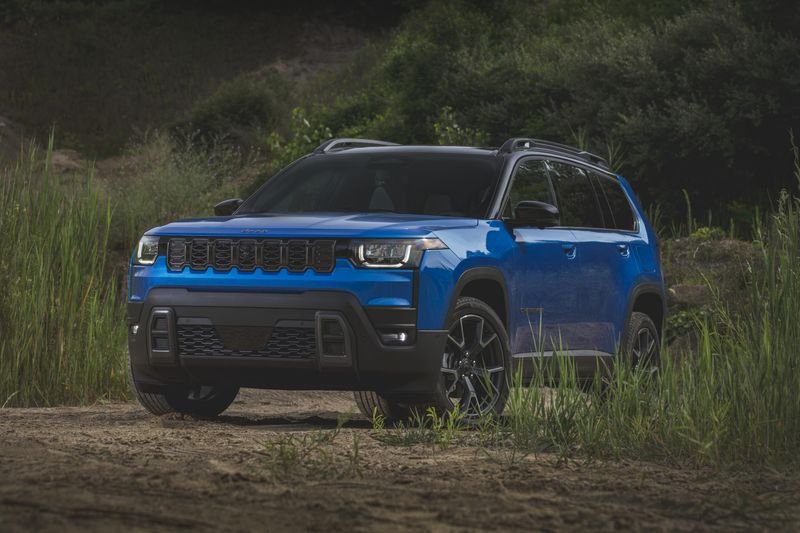
Owning a Jeep means having the freedom to explore rough trails, snowy roads, and muddy paths. One of the main features that make Jeeps so popular is 4 wheel drive (4WD).
If you’re new to Jeeps or off-roading, you might wonder how to put your Jeep in 4 wheel drive. The process depends on your specific Jeep model and the type of 4WD system it uses.
Whether you drive a classic Wrangler, a modern Grand Cherokee, or another Jeep, understanding how to use 4WD correctly can improve your safety and driving experience.
Understanding Jeep 4 Wheel Drive Systems
Jeeps come with different 4WD systems. The main types are Part-Time 4WD, Full-Time 4WD, Automatic 4WD, and Selectable 4WD. Each system has its own method for switching between 2WD and 4WD. Knowing which system your Jeep has is the first step before using 4WD.
Here’s a quick comparison of the most common Jeep 4WD systems:
| 4WD System Type | When to Use | Switching Method |
|---|---|---|
| Part-Time 4WD | Off-road, slippery surfaces | Manual lever or switch |
| Full-Time 4WD | Any road condition | Usually automatic or switch |
| Automatic 4WD | Changes automatically | No driver action needed |
| Selectable 4WD | Driver chooses mode | Switch, dial, or button |
How To Put Your Jeep In 4 Wheel Drive
Now, let’s look at the four main ways to engage 4WD in different Jeep models. Each method is important and can affect your driving performance.
1. Manual Lever Engagement
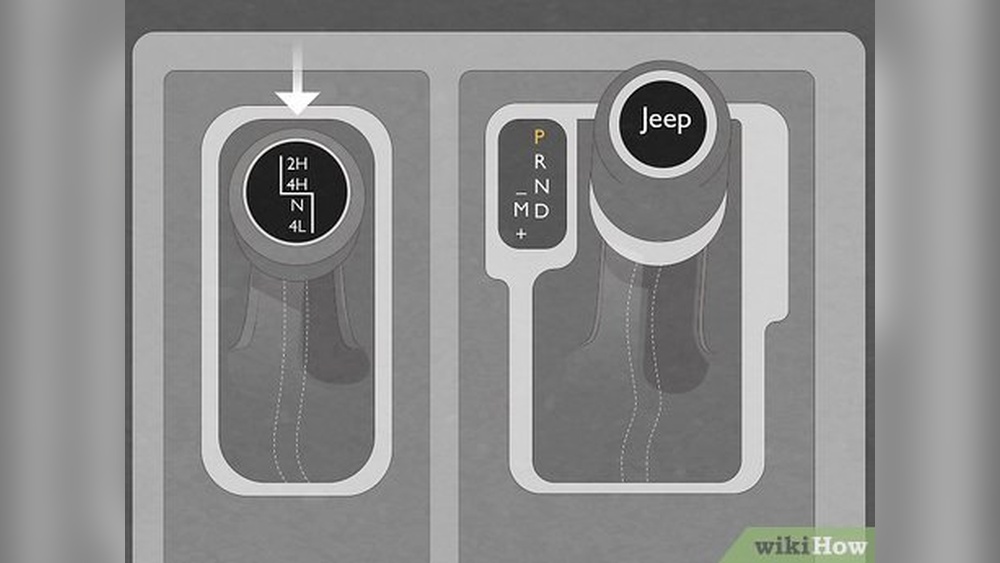
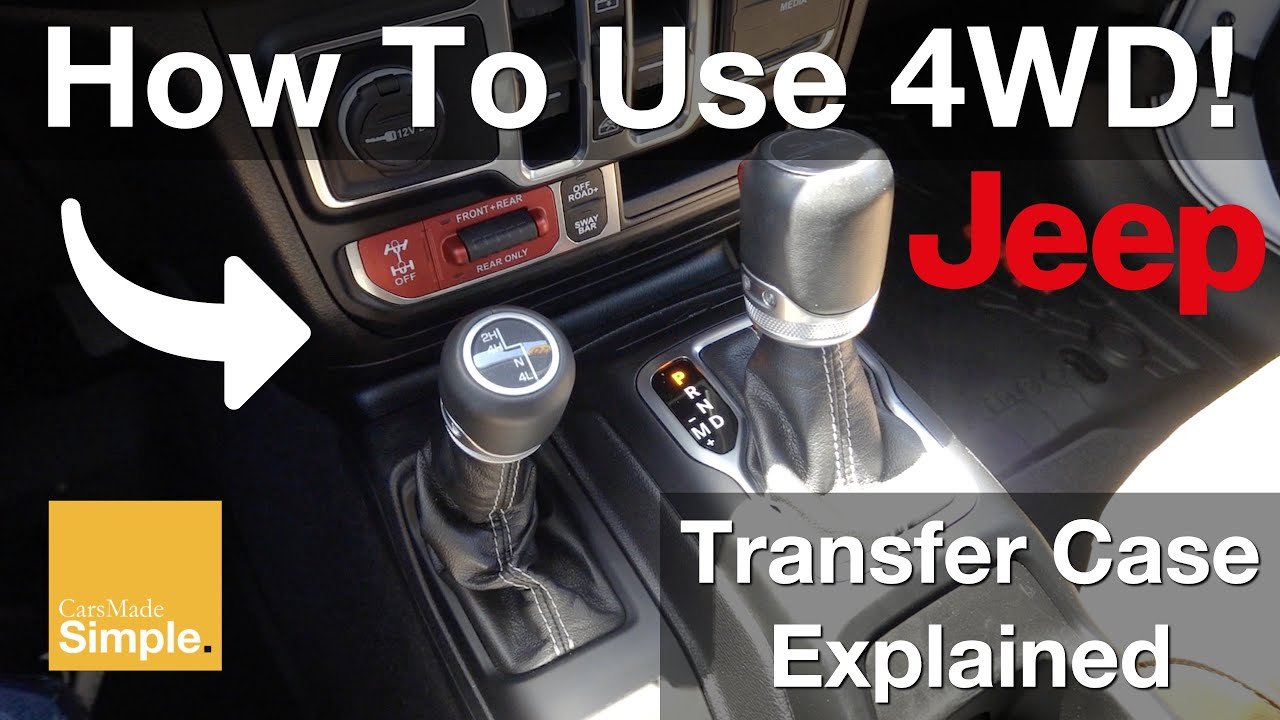
Many older Jeep models, especially Wrangler and Cherokee, use a manual transfer case lever. This lever is usually located next to the gear shifter.
Steps:
- Slow down to under 55 mph (ideally under 25 mph for 4L).
- Take your foot off the accelerator.
- Pull the transfer case lever from 2H (2 High) to 4H (4 High) for normal 4WD use. No need to stop.
- For tougher conditions (deep snow, mud, rocks), come to a complete stop, put the transmission in neutral, then shift to 4L (4 Low).
Tip: Never use 4L at high speeds. It’s made for low-speed, high-torque situations.
2. Electronic Switch Or Dial
Newer Jeeps, like the Grand Cherokee or Compass, often use an electronic switch or rotary dial instead of a manual lever.
Steps:
- Reduce your speed to under 55 mph.
- Simply turn the dial or flip the switch from 2WD to 4WD Auto, 4WD High, or 4WD Low as needed.
- For 4WD Low, stop the vehicle and shift the transmission to neutral before selecting 4L.
Note: The system’s indicator light will show which mode is active.
Insight: Electronic systems are easier but can fail if there’s an electrical issue. Always check for warning lights after switching modes.
3. Automatic 4wd Systems
Some Jeeps come with automatic 4WD (like Selec-Trac or Quadra-Trac). These systems sense when extra traction is needed and engage 4WD without driver input.
- The driver just leaves the system in “Auto.”
- The Jeep will switch between 2WD and 4WD as needed, based on road conditions.
Example: If you hit a patch of ice, the system will automatically send power to all four wheels for better grip.
Non-obvious insight: Even with automatic systems, you should still know how to manually select 4WD for severe off-road or mechanical override situations.
4. Selectable 4wd Drive Modes
Modern Jeeps often offer multiple drive modes (e.g., Snow, Mud, Sand, Rock). These can be selected with a button or dial.
Steps:
- Identify the terrain you’re about to drive on.
- Use the dial or buttons to select the matching mode (for example, “Snow” or “Mud”).
- Some modes will automatically shift the Jeep into the best 4WD setting for that surface.
Example: The Jeep Grand Cherokee’s Selec-Terrain system has up to five modes. Picking the right one changes throttle response, traction control, and 4WD engagement.
Extra tip: Using the wrong mode won’t break your Jeep, but it can reduce performance or even cause the wheels to slip.
When To Use 4 Wheel Drive
Turning on 4WD gives you better traction and control. But it’s not for every road.
You should use 4WD when:
- Driving in snow, ice, or mud
- Off-roading on trails or rocks
- Going through sand
- Climbing steep hills
Do not use 4WD on dry pavement unless your Jeep has Full-Time 4WD. Using 4WD on dry roads can cause drivetrain damage and tire wear.
Here’s a side-by-side look at when to use each 4WD mode:
| 4WD Mode | Best Used For | Speed Range |
|---|---|---|
| 4H (4 High) | Slippery roads, light off-road | Up to highway speeds |
| 4L (4 Low) | Deep snow, mud, steep hills | Low speeds (under 25 mph) |
| Auto | Changing road conditions | Any speed |
Common Mistakes When Engaging 4wd
Many beginners make simple errors that can damage their Jeep or reduce performance:
- Engaging 4L at high speed
- Using 4WD on dry pavement (if not Full-Time 4WD)
- Forgetting to shift to neutral before 4L
- Ignoring warning lights or error messages
Pro tip: If you hear grinding or feel resistance when shifting, stop and double-check the manual. Forcing the shifter can break the transfer case.

Frequently Asked Questions
How Do I Know If My Jeep Is In 4 Wheel Drive?
Most Jeeps have an indicator light on the dashboard. Check your owner’s manual for the specific symbol. If the light is on, your Jeep is in 4WD.
Can I Switch To 4wd While Driving?
Yes, you can usually switch from 2H to 4H while moving at low speeds (under 55 mph). For 4L, always stop and shift to neutral first.
Is It Bad To Leave My Jeep In 4 Wheel Drive?
It depends on the 4WD system. Full-Time or Automatic 4WD is safe for all conditions.
Part-Time 4WD should only be used on slippery or loose surfaces to avoid damage.
What Happens If I Use 4wd On Dry Pavement?
Using part-time 4WD on dry pavement can cause drivetrain binding and tire wear. Only use 4WD on dry roads if your Jeep has a Full-Time 4WD system.
Where Can I Find More Information About My Jeep’s 4wd System?
Check your owner’s manual or visit the official Jeep website for model-specific details.
Driving a Jeep in 4 wheel drive opens up a world of adventure, but using it correctly is key. With a bit of practice and the right knowledge, you’ll be ready for any road or trail ahead.