Choosing The Best Off-road Tires For Your Jeep Wrangler
Your Jeep Wrangler is built for adventure, and the tires are your connection to the wild. Choosing the right off-road tires can transform your Jeep from a capable vehicle into an unstoppable machine.
But with so many options, how do you pick the best ones? This guide will help you understand what makes a great off-road tire for your Wrangler, looking at different types, what to consider, and some top recommendations.
We’ll cover everything from mud-terrain tires to all-terrain tires, helping you make an informed decision so you can confidently tackle trails, rocks, and whatever else the road, or lack thereof, throws at you.
Understanding Tire Types For Your Jeep Wrangler
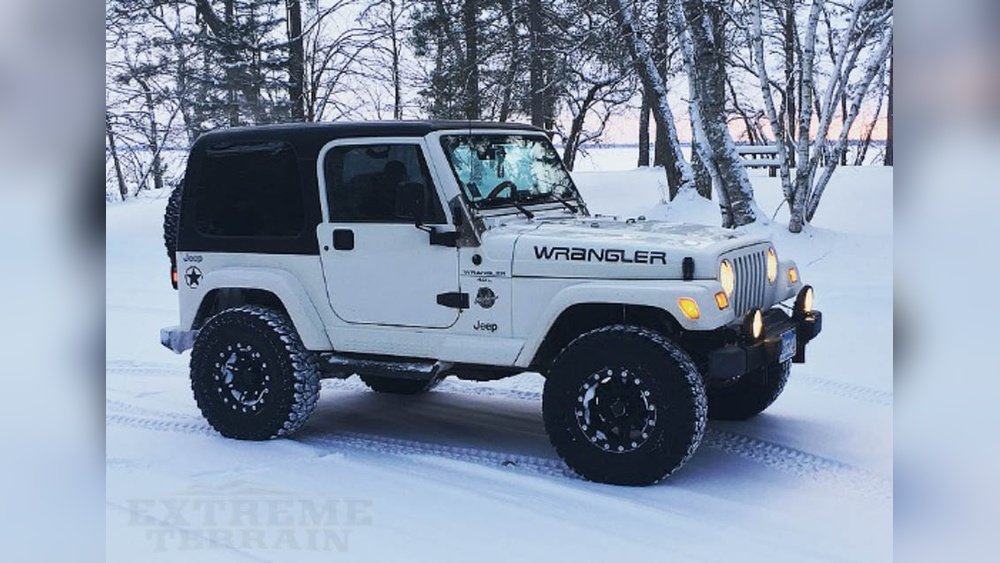
When you think about off-roading, different terrains come to mind: mud, rocks, sand, and general trails. Tires are designed with these specific challenges in mind. Knowing the main types will help you narrow down your choices.
Mud-terrain (m/t) Tires
Mud-terrain tires are the kings of off-road performance, especially in soft, loose conditions like mud and sand. They feature large, widely spaced aggressive tread blocks. This design helps them bite into soft surfaces and clear mud and debris quickly, preventing the tire from getting packed and losing traction. The large voids between the lugs also help with self-cleaning.
- Pros: Excellent traction in mud, dirt, and rocks. Aggressive look. Good for serious off-roaders.
- Cons: Can be noisy on the highway. Offer a rougher ride. Fuel economy can suffer. Wear faster on pavement.
- Best for: Jeeps that spend most of their time off-road, in muddy or sandy environments, or on challenging rock crawling trails.
When looking at M/T tires, pay attention to the sidewall aggressiveness. Some M/T tires have reinforced sidewalls with extra tread blocks, which can offer additional protection and traction when airing down for extreme off-roading. This is crucial for preventing punctures on rocky terrain.
All-terrain (a/t) Tires
All-terrain tires are the versatile middle ground. They offer a good balance between on-road manners and off-road capability. Their tread pattern is less aggressive than M/T tires, with smaller, more tightly packed lugs. This makes them quieter and smoother on pavement, while still providing enough grip for moderate off-road use like dirt roads, gravel, and light trails.
- Pros: Good balance of on-road and off-road performance. Quieter and more comfortable than M/T tires. Better fuel efficiency than M/T tires.
- Cons: Not as capable in deep mud or extreme rock crawling as M/T tires.
- Best for: Daily drivers that also enjoy weekend off-roading, or for those who encounter varied conditions including highways, gravel roads, and light to moderate trails.
A key feature of many A/T tires is their siping. These are small cuts in the tread blocks that increase the number of biting edges, improving grip on wet surfaces and light snow. This makes them a great choice if you experience varied weather conditions.
Hybrid Terrain Tires
A newer category, hybrid terrain tires, aim to bridge the gap between A/T and M/T. They often have a more aggressive tread pattern than A/T tires but are designed to be quieter and more comfortable on the road than traditional M/T tires. They might feature a more complex tread design with larger, reinforced blocks and deeper voids.
- Pros: Better off-road grip than A/T tires, but often quieter and more comfortable than M/T tires. Good compromise for mixed use.
- Cons: Can still be noisier than A/T tires. May not perform as well as dedicated M/T tires in extreme conditions.
- Best for: Jeep owners who want enhanced off-road capability without sacrificing too much on-road comfort and noise.
These tires often incorporate technologies like variable tread block pitch to reduce noise, and stiffened tread compounds to improve wear resistance on pavement.
Key Factors To Consider When Buying Off-road Tires
Beyond the basic type, several other factors are crucial for selecting the right tires for your Jeep Wrangler.
Tire Size And Lift
The size of your tires is one of the most important considerations. Larger tires can increase ground clearance, improve approach and departure angles, and allow you to overcome obstacles more easily. However, fitting larger tires often requires modifications, such as suspension lift kits.
- Stock Wranglers: Can typically accommodate up to 31-32 inch tires without major modifications.
- Minor Lifts (1-2 inches): Allow for 33-inch tires, sometimes with minor fender trimming or fender flare adjustments.
- Significant Lifts (3-4 inches or more): Can accommodate 35-inch tires and larger, often requiring adjustments to gearing and suspension components.
It’s vital to ensure your chosen tire size is compatible with your Jeep’s suspension and fenders to avoid rubbing, especially when the suspension is compressed or articulating off-road. Rubbing can damage your fenders and tires, and compromise your driving safety.
Load Rating And Speed Rating
These ratings indicate how much weight a tire can support and the maximum speed it can safely handle. For off-roading, a higher load rating is generally better, as it means the tire can handle more weight, which is important when carrying extra gear or dealing with the stresses of off-road driving. The speed rating is less critical for serious off-roading but is important for highway driving. Most off-road tires have lower speed ratings than standard street tires.
Tread Pattern And Void Ratio
As mentioned, the tread pattern is key. Look at the size and spacing of the tread blocks. Larger, more widely spaced blocks (high void ratio) are better for shedding mud and offering aggressive grip in soft terrain. Smaller, more numerous blocks with sipes offer better on-road performance and wet traction.
Sidewall Construction
The sidewall is the part of the tire between the tread and the wheel rim. For off-roading, reinforced sidewalls are highly desirable. They offer better puncture resistance, especially when driving on rocks or through rough terrain at lower pressures. Tires with more plys in the sidewall are generally tougher. Some tires offer 3-ply sidewalls, which are excellent for rock crawling.
Compound Hardness
Tire compounds vary in hardness. Softer compounds generally offer better grip, especially on rocks and wet surfaces, but they wear out faster, especially on pavement.
Harder compounds last longer on pavement but may not provide as much grip off-road. Many A/T and hybrid tires use a compound that balances these factors.
Noise And Ride Comfort
If your Jeep is also your daily driver, road noise and ride comfort are important. Aggressive M/T tires are typically much louder and provide a harsher ride than A/T or hybrid tires. If you plan to spend a lot of time on the highway, consider an A/T or hybrid tire for a more pleasant experience.
Fuel Efficiency
Larger, heavier off-road tires, especially aggressive M/T tires, can negatively impact your fuel economy. The increased rolling resistance and weight mean your engine has to work harder. If fuel efficiency is a concern, A/T tires are usually the best compromise.
Top Off-road Tire Recommendations For Jeep Wranglers
Choosing specific models can be overwhelming. Here are some highly-regarded tires that consistently perform well for Jeep Wrangler owners across different categories.
These are not ranked, as the "best" tire depends entirely on your specific needs.
For Extreme Mud And Rock Crawling: Bfgoodrich Mud-terrain T/a Km3
The BFGoodrich Mud-Terrain T/A KM3 is a benchmark in the M/T category. It offers exceptional grip in mud, dirt, and rocks thanks to its aggressive tread design and advanced rubber compound. The K-Challenge™ tread offers enhanced grip on rock surfaces, and the Terrain-Proof™ Sidewall uses a new sidewall compound that resists punctures and tears.
- Key Features: Aggressive tread blocks, mud-ejecting grooves, reinforced sidewalls, excellent rock crawling traction.
- Consider if: You prioritize maximum off-road performance, especially in mud and on rocks, and are willing to accept some compromises on road noise and ride comfort.
For Balanced All-around Performance: Falken Wildpeak A/t3w
The Falken Wildpeak A/T3W is one of the most popular A/T tires for a reason. It strikes an excellent balance between on-road manners and off-road capability. It features a special silica compound for grip in wet conditions and a durable construction. The tread design is aggressive enough for trails, gravel, and moderate mud, yet quiet and comfortable enough for daily driving. It also has good snow traction, indicated by the “W” in its name.
- Key Features: Excellent wet and dry traction, good off-road grip, relatively quiet on the highway, durable construction, 3-Peak Mountain Snowflake rated for severe snow service.
- Consider if: You need a tire that performs well in almost any condition, from daily commuting to weekend trail adventures, and you value a good balance of comfort and capability.
For Aggressive Looks And Capability: Nitto Ridge Grappler
The Nitto Ridge Grappler is a prime example of a hybrid terrain tire. It offers an aggressive look similar to an M/T tire but is engineered to be quieter and more refined on the road than many traditional mud-terrains. It uses a dual sidewall design, allowing you to choose which side faces out for a different look and slight performance variation. The tread pattern features variable pitch and deep sipes for improved traction and reduced noise.
- Key Features: Aggressive hybrid tread pattern, dual sidewall design, reduced road noise for its aggressive nature, good traction on various surfaces.
- Consider if: You want a tire that looks very aggressive and performs well off-road, but you still want a reasonably comfortable and quiet ride on the street.
For Tough Off-roading And Durability: Goodyear Wrangler Mt/r Kevlar
The Goodyear Wrangler MT/R Kevlar is built for demanding off-road conditions. It features DuPont™ Kevlar® in its construction for enhanced strength and durability, making it resistant to punctures and tears. The tread pattern is aggressive, designed for superior traction in mud, dirt, and rocky terrain. It’s a robust tire for serious off-road enthusiasts.
- Key Features: Kevlar reinforcement for extreme durability, aggressive tread for mud and rock, good articulation when aired down.
- Consider if: Durability and puncture resistance are top priorities for your off-road adventures, especially if you frequently tackle challenging rocky trails.
For A Budget-friendly, Capable Option: General Grabber Atx
The General Grabber ATX is a strong contender in the A/T market, offering a robust tread pattern that provides excellent off-road traction, particularly on dirt and gravel. It’s known for its durability and good performance in challenging weather, often carrying the 3-Peak Mountain Snowflake rating. It offers a good compromise between aggressive looks and comfortable highway driving.
- Key Features: Durable construction, aggressive A/T tread pattern, good traction on various surfaces including loose gravel and dirt, often performs well in snow.
- Consider if: You’re looking for a capable and durable all-terrain tire that offers great value and performance for mixed on- and off-road use without breaking the bank.
Tire Maintenance For Longevity And Performance
Once you’ve chosen your tires, proper maintenance is key to ensuring they last long and perform their best, both on and off the road.
Tire Pressure
Maintaining the correct tire pressure is crucial. For highway driving, use the recommended pressure found on your Jeep’s doorjamb sticker. However, for off-roading, especially on rocks or sand, airing down your tires can significantly improve traction and ride comfort.
- Airing Down: Reducing pressure increases the tire’s contact patch, allowing it to conform to the terrain. For light trails, 25-30 PSI might be suitable. For rock crawling or sand, pressures can drop to 15-20 PSI or even lower, depending on the tire’s sidewall construction and your specific needs.
- Warning: Always air your tires back up to normal pressure before returning to paved roads. Driving at high speeds with low tire pressure is dangerous and can damage your tires. You’ll need a portable air compressor to re-inflate.
Tire Rotation
Regular tire rotation is essential for even wear. Off-road tires, especially more aggressive ones, can wear unevenly due to the varied stresses they endure. Rotating your tires every 5,000-7,000 miles (or according to your tire manufacturer’s recommendations) helps ensure they wear down evenly, extending their lifespan and maintaining optimal performance.
Wheel Alignment And Balancing
Proper wheel alignment prevents uneven wear and ensures your Jeep tracks straight. Off-roading can sometimes knock your alignment out of spec. It’s a good idea to have your alignment checked periodically, especially after significant off-road excursions or if you notice your Jeep pulling to one side. Wheel balancing is also important to prevent vibrations at speed and ensure a smooth ride.
Inspecting For Damage
Regularly inspect your tires for any signs of damage, such as cuts, cracks, bulges, or embedded objects. Pay close attention to the sidewalls, as these are more vulnerable off-road.
Early detection of damage can prevent a blowout and costly repairs.
The Importance Of Tire Size And Gearing
When you increase your tire size, you’re not just changing the physical dimension of the tire; you’re also affecting your Jeep’s gearing. This is a crucial point that many off-roaders overlook.
Impact Of Larger Tires On Gearing
Your Jeep’s gear ratio determines how much torque the wheels receive from the engine. Larger tires require more torque to turn. If you install significantly larger tires (e.g., going from 33-inch to 37-inch tires) without re-gearing your axles, you will experience:
- Loss of acceleration: Your Jeep will feel sluggish.
- Reduced towing capacity: The ability to tow heavy loads will be diminished.
- Increased strain on the drivetrain: Components like the transmission and transfer case will be under more stress.
- Lower fuel economy: The engine will work harder, consuming more fuel.
Re-gearing Your Jeep
For optimal performance with larger tires, especially if you go up by more than 2-3 inches in diameter, re-gearing your axles is highly recommended. This involves changing the ring and pinion gears in your front and rear differentials to a numerically higher ratio. For example, if you have 3.73 gears