If you’re considering the Jeep 4xe, you might wonder if this hybrid SUV can charge itself. The Jeep 4xe stands out for blending traditional off-road strength with modern electric technology.
But its charging system can be confusing for buyers who are new to plug-in hybrids. Let’s clear up how the Jeep 4xe manages its battery, what “self-charging” really means, and what you can expect in daily use.
Understanding Jeep 4xe’s Hybrid System
The Jeep 4xe uses a plug-in hybrid electric vehicle (PHEV) setup. This means it has both a gasoline engine and an electric motor. The battery powering the electric motor is larger than in most standard hybrids. You can drive short distances—up to 21 miles—on pure electric power, according to Jeep’s official specs.

Unlike a regular hybrid, you need to plug in the Jeep 4xe to fully recharge its battery. Charging at home with a Level 2 charger takes about two hours, while a standard wall outlet (Level 1) takes around 12 hours. After the battery runs out, the vehicle switches to hybrid mode, using both gas and electric power.
Can The Jeep 4xe Charge Itself?
The short answer is: partially, yes—but not fully. The Jeep 4xe has several ways to restore battery power without plugging in:
- Regenerative braking: When you slow down or brake, the system captures energy and sends it back to the battery.
- Engine charging: In hybrid mode, the gas engine can charge the battery a bit during driving.
- E-Save mode: You can select this mode to preserve battery charge or even boost it using the engine.
But these methods only provide a small recharge. They are designed to extend electric driving range, not replace plugging in. You cannot get a full charge just by driving or braking.
How Much Can Jeep 4xe Self-charge?
Here’s a quick comparison between self-charging and plugging in:
| Charging Method | Battery Charge Gained | Time Required |
|---|---|---|
| Plug-in (Level 2) | 100% | ~2 hours |
| Regenerative Braking | 5–15% (per trip) | Depends on driving style |
| Engine/E-Save Mode | Up to 20% | Several hours |
Even with aggressive regenerative braking and E-Save mode, the battery rarely gets more than 20% full without plugging in. For full electric range, you must use an external charger.

The Role Of Regenerative Braking
Regenerative braking is a clever feature. When you brake, the electric motor turns into a generator, converting kinetic energy into electricity. This energy is stored in the battery and can help you drive farther in electric mode.
For city driving with lots of stop-and-go, you might recover 10–15% of the battery per trip. On highways, the effect is less—there’s simply fewer chances to brake.
Regenerative Braking Vs. Plug-in Charging
To help you visualize, here’s a simple breakdown:
| Scenario | Battery Recharge | Electric Miles Restored |
|---|---|---|
| Heavy city traffic | Up to 15% | ~3 miles |
| Long highway drive | 2–5% | ~1 mile |
| Plug-in at home | 100% | 21 miles |
As you can see, plug-in charging is essential for getting the maximum electric range.
E-save Mode: What Does It Do?
The Jeep 4xe’s E-Save mode lets you control how the battery is used. You can choose to:
- Save battery: The engine takes over, keeping the battery for later.
- Charge battery: The engine runs more, charging the battery as you drive.
This is useful if you want to use electric power later for example, when entering a city with emissions rules. But E-Save mode uses extra gasoline and is not as efficient as plugging in.
One insight: If you use E-Save mode often, fuel efficiency drops. Many beginners expect “engine charging” to be free, but it costs more in gas.
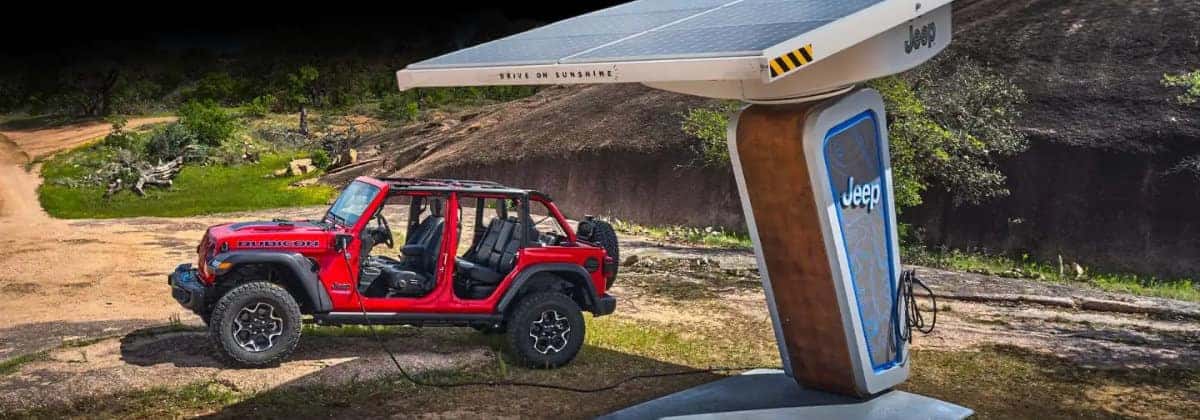
Charging At Home Vs. On The Go
Plug-in charging is where the Jeep 4xe shines. Most owners charge overnight at home.
Public charging stations can also recharge the battery quickly.
Here’s a comparison of charging options:
| Charging Option | Charge Speed | Availability |
|---|---|---|
| Home Level 2 Charger | Fast (~2 hours) | Easy (install in garage) |
| Standard Wall Outlet | Slow (~12 hours) | Universal |
| Public Charging Station | Varies (2–3 hours) | Growing network |
Tip: If you drive short distances daily, charging at home is usually enough. For longer trips, rely on hybrid mode and plan charging stops if you want more electric miles.
Common Misunderstandings
Many buyers think the Jeep 4xe is a self-charging hybrid like some Toyota models. But those vehicles only use regenerative braking and engine charging, never plugging in. The Jeep 4xe is a plug-in hybrid—for full electric range, you must plug it in.
A second insight: Some drivers expect quick battery recovery during highway trips. In reality, the battery charges much more during city driving, where you brake often.

Is The Jeep 4xe Right For You?
If you want an SUV that can drive short distances on electric power and switch to gas for longer trips, the Jeep 4xe is a smart choice. Just remember: it cannot fully charge itself. Plug-in charging is required for maximum electric range.
The best use case is for owners who can charge at home and do most of their driving locally. If you rely only on self-charging, you’ll miss out on the electric benefits.
For more technical info, check Jeep’s official guide: Jeep 4xe Hybrid Overview.
Frequently Asked Questions
Does The Jeep 4xe Need To Be Plugged In?
Yes, to get the full electric range, you must plug in the Jeep 4xe. It can recover some charge while driving, but never a full recharge.
Can I Drive The Jeep 4xe Without Charging?
You can drive it like a regular hybrid if you don’t plug in. The gas engine will take over, and you’ll get some electric boost, but you won’t have pure electric driving.
How Far Can The Jeep 4xe Go On Electric Power?
The Jeep 4xe can travel up to 21 miles on electric power when fully charged. After that, it switches to hybrid mode.
Is Regenerative Braking Enough To Charge The Battery?
No, regenerative braking gives only a small recharge usually 5 15% per trip. Plug-in charging is needed for full battery.
Can The Jeep 4xe Charge Itself While Parked?
No, the Jeep 4xe only self-charges while driving, using braking or the engine. To fully recharge, you need to plug it in.
The Jeep 4xe offers exciting technology and flexibility, but understanding its charging system is key to getting the most from your SUV. Knowing the difference between self-charging and plug-in charging helps you plan your driving and maximize efficiency.



















