The crankshaft position sensor (CKP) is a small but vital component in your 2002 Jeep Grand Cherokee. It plays a crucial role in telling your engine's computer, the Powertrain Control Module (PCM), exactly where the crankshaft is at any given moment.
This information is essential for the PCM to manage critical engine functions like fuel injection timing and ignition timing. Without a properly working CKP sensor, your Jeep simply won't run correctly, or might not run at all.
Understanding how this sensor works, the signs of its failure, and how to replace it can save you time, money, and a lot of frustration. This guide will walk you through everything you need to know about the crankshaft position sensor for your 2002 Jeep Grand Cherokee.
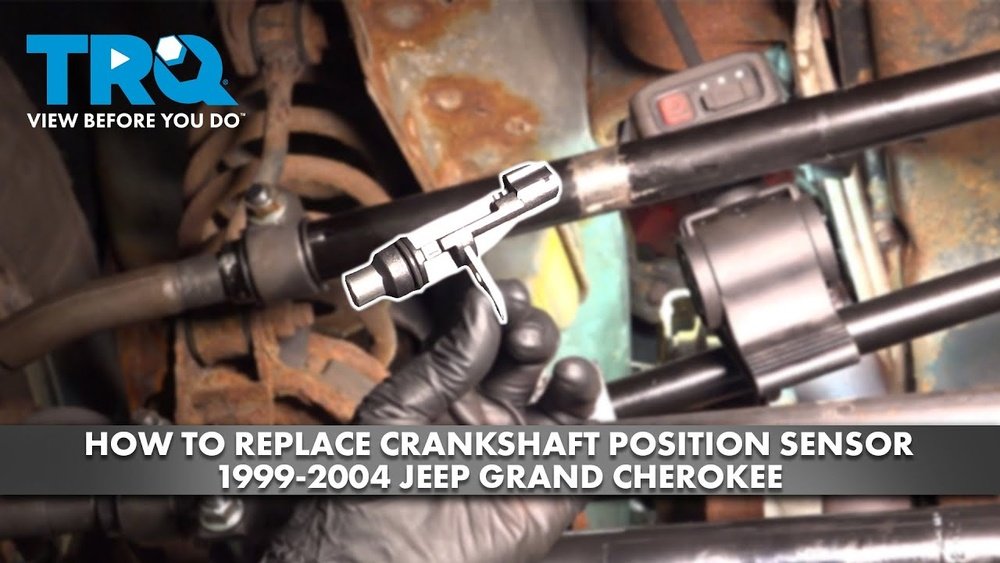
What Does The Crankshaft Position Sensor Do?
The crankshaft is the heart of your engine. It converts the up-and-down motion of the pistons into rotational motion, which ultimately powers your wheels.
The crankshaft position sensor's job is to monitor this rotation. It's typically mounted near the crankshaft pulley or flywheel.
As the crankshaft spins, a toothed wheel or a reluctor ring attached to it passes by the sensor. The CKP sensor detects these teeth or notches and sends a signal, a series of electrical pulses, to the PCM.
This signal tells the PCM two key things:
- Crankshaft Speed: How fast the engine is rotating.
- Crankshaft Position: The precise rotational angle of the crankshaft.
With this data, the PCM can precisely time when to:
- Inject fuel into the cylinders.
- Fire the spark plugs to ignite the fuel.
Think of it like a conductor leading an orchestra. The CKP sensor is the conductor, and the PCM is the orchestra.
The conductor tells each musician (fuel injectors and ignition coils) exactly when to play their part. If the conductor gives the wrong timing, the music (engine performance) will be off.
Symptoms Of A Failing Crankshaft Position Sensor
A faulty CKP sensor can manifest in several ways, often leading to symptoms that might initially be mistaken for other engine problems. It’s important to recognize these signs to diagnose the issue correctly.
Engine Cranks But Won’t Start
This is one of the most common and definitive symptoms. If the PCM receives no signal, or an erratic signal, from the CKP sensor, it doesn't know the position of the crankshaft.
Because it can't determine the correct timing for fuel delivery and spark, it will prevent the engine from starting.
You’ll hear the starter motor engaging and turning the engine over, but the engine won’t catch and run.
Stalling Or Hesitation
If the CKP sensor starts to fail intermittently, it might send incorrect or incomplete signals to the PCM while the engine is running. This can cause the engine to hesitate, stumble, or even stall unexpectedly, especially at idle or when coming to a stop.
The PCM might momentarily lose track of the crankshaft’s position, leading to misfires or a temporary shutdown of fuel or spark.
Rough Idling
An erratic signal from a failing CKP sensor can disrupt the precise timing the PCM needs to maintain a smooth idle. This can result in a noticeable vibration or shaking of the vehicle when it’s stopped, with the engine RPMs fluctuating erratically.
Check Engine Light (cel) Illumination
The CKP sensor is a monitored component. If the PCM detects a fault with the CKP sensor’s signal (e.g., no signal, erratic signal, signal out of expected range), it will trigger the Check Engine Light (CEL) on your dashboard. The specific diagnostic trouble code (DTC) related to the CKP sensor will be stored in the PCM’s memory, which can be read using an OBD-II scanner. Common codes include P0335, P0336, P0337, P0338, P0339, and P0340 (though P0340 is often related to the camshaft position sensor, they can sometimes be confused).
Poor Fuel Economy
While not as direct a symptom as stalling or no-start, a consistently faulty CKP sensor can lead to inefficient engine operation. If the timing is slightly off due to incorrect sensor data, the engine may not burn fuel as efficiently, resulting in a noticeable decrease in your Jeep’s miles per gallon (MPG).
Difficulty Starting In Hot Weather (less Common But Possible)
In some cases, CKP sensors can become more sensitive to heat. When the engine compartment gets very hot, the sensor's internal components might degrade, leading to intermittent signal loss.
This can make the Jeep difficult to start after it has been driven and parked while hot, but might start fine once it cools down.
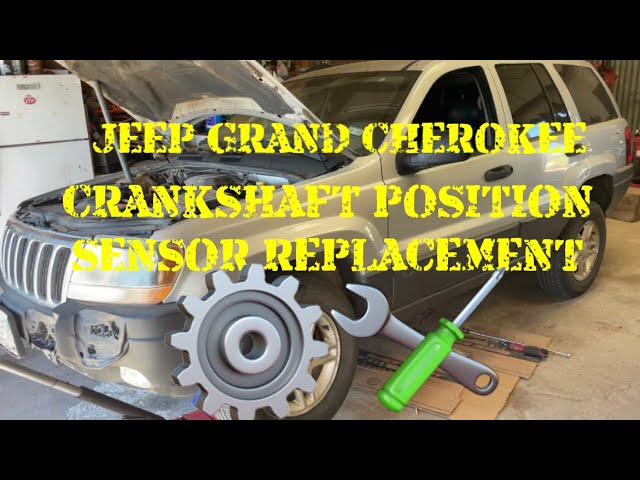
Diagnosing A Faulty Crankshaft Position Sensor
Before replacing the CKP sensor, it’s crucial to properly diagnose the issue. Several factors can mimic CKP sensor failure, and a proper diagnosis will save you unnecessary parts and labor costs.
Reading Diagnostic Trouble Codes (dtcs)
The first step is to use an OBD-II scanner to read any stored DTCs. As mentioned, codes like P0335 are strong indicators of a CKP sensor problem. However, a code alone doesn’t always mean the sensor is bad; it indicates a problem with the signal.
Checking The Sensor Wiring And Connector
Inspect the wiring harness leading to the CKP sensor. Look for any signs of damage, such as:
- Chafing: Wires rubbing against metal parts, causing insulation damage.
- Cuts or breaks: Physical damage to the wires.
- Corrosion: Especially at the connector, where moisture can cause electrical resistance.
- Loose connections: Ensure the connector is securely plugged in.
A damaged wire or a corroded connector can easily cause erratic signals or a complete loss of signal, just like a faulty sensor.
Testing The Sensor Itself
While more involved, the CKP sensor can be tested using a multimeter. The procedure varies slightly depending on the sensor type (inductive or Hall effect), but generally involves checking for resistance across its terminals when it’s unplugged from the vehicle.
You can also check for the AC voltage signal it produces while the engine is being cranked (if it’s still producing a signal).
Consult a service manual specific to your 2002 Jeep Grand Cherokee for precise testing procedures and resistance values.
Inspecting The Tone Ring/reluctor Wheel
The CKP sensor reads a toothed wheel or a reluctor ring attached to the crankshaft. If this wheel is damaged, has missing teeth, or is obstructed by debris, it will send incorrect signals to the sensor, leading to similar symptoms as a bad sensor.
This is less common but worth checking if other diagnostics point to a CKP issue.
Considering Other Potential Causes
Don’t rule out other possibilities that can cause no-start or stalling conditions:
- Fuel pump issues: If the engine isn’t getting fuel, it won’t start.
- Ignition system problems: Bad spark plugs, coils, or ignition control modules can prevent spark.
- Camshaft position sensor (CMP): While different from the CKP, a faulty CMP sensor can also cause starting and running issues, and sometimes codes can be confused.
- PCM failure: Though rare, a faulty PCM can misinterpret signals or fail to process them correctly.
Replacing The Crankshaft Position Sensor On A 2002 Jeep Grand Cherokee
Replacing the CKP sensor on a 2002 Jeep Grand Cherokee is a moderately difficult DIY job. The exact location can vary slightly depending on the engine (4.
0L inline-6 or 4. 7L V8), but it's generally found on the side of the engine block, near the transmission bell housing, where it reads the flywheel or flexplate.
Tools And Parts Needed
- New Crankshaft Position Sensor: Ensure you get the correct part number for your specific engine.
- Socket Set and Ratchet: Common sizes like 10mm, 13mm, or similar.
- Extension for Ratchet: To reach the sensor.
- Torque Wrench: To tighten the sensor bolt to the correct specification.
- Penetrating Oil (Optional): If the bolt is stubborn.
- Safety Glasses and Gloves: Always protect yourself.
- OBD-II Scanner: To clear codes after replacement.
- Shop Rags: For cleanup.
Step-by-step Replacement Guide
- Disconnect the Battery: For safety, always disconnect the negative battery terminal before working on electrical components.
- Locate the Sensor: On the 4.0L engine, the CKP sensor is typically located on the driver’s side of the engine block, near the rear, above the oil pan and behind the starter motor. On the 4.7L V8, it’s usually located on the passenger side of the engine block, near the transmission bell housing. You may need to access it from underneath the vehicle.
- Access the Sensor: You might need to remove or reposition other components to gain clear access. This could include the starter motor, heat shields, or parts of the exhaust system, depending on your specific Jeep’s configuration.
- Unplug the Electrical Connector: Carefully release the locking tab on the electrical connector and pull it straight off the sensor. Inspect the connector for any signs of damage or corrosion.
- Remove the Mounting Bolt: The sensor is usually held in place by a single bolt. Use the appropriate socket and extension to loosen and remove this bolt. The sensor might be slightly seized; you may need to gently pry it or use penetrating oil.
- Remove the Old Sensor: Once the bolt is out, gently pull the old sensor straight out of its bore. Be prepared for a small amount of residual oil to drip out.
- Install the New Sensor:
- Ensure the bore where the sensor sits is clean.
- Insert the new CKP sensor into the bore. It should fit snugly.
- Reinstall the mounting bolt. Do not overtighten it, as this can damage the sensor or the engine block. Tighten it to the manufacturer’s specified torque (typically around 20-30 ft-lbs, but always verify).
- Reconnect the Electrical Connector: Push the electrical connector firmly onto the new sensor until it clicks into place.
- Reassemble Any Removed Parts: Reinstall any components that were removed for access.
- Reconnect the Battery: Reconnect the negative battery terminal.
- Clear DTCs: Use your OBD-II scanner to clear any stored diagnostic trouble codes.
- Start the Engine: Start your Jeep and let it run. It should start and idle smoothly. Test drive to ensure all symptoms are gone.

Common Mistakes To Avoid During Replacement
Even with a straightforward part like the CKP sensor, DIYers can make mistakes that lead to further problems.
Using The Wrong Part
This is perhaps the most common error. The 4.
0L inline-6 and the 4. 7L V8 engines use different CKP sensors.
Furthermore, even within the same engine type, different model years or sub-models might have variations. Always verify the part number against your vehicle's VIN or by consulting a reliable auto parts database.
Overtightening The Mounting Bolt
The CKP sensor housing is often made of plastic or a softer metal. Overtightening the mounting bolt can strip the threads in the engine block or crack the sensor housing, leading to an oil leak or a failed installation.
Always use a torque wrench and the correct specifications.
Damaging The Wiring Or Connector
The wiring harness and connector are delicate. Yanking on the wires instead of carefully releasing the connector’s locking tab can break the connector or damage the wires, creating a new electrical problem. Be gentle and methodical.
Not Cleaning The Sensor Bore
If the bore where the sensor sits is full of dirt, oil sludge, or metal shavings, it can prevent the new sensor from seating correctly. This can lead to an inaccurate reading or premature failure.
Clean the bore with a rag before installing the new sensor.
Forgetting To Clear Codes
Even after replacing a faulty sensor, the Check Engine Light might remain on until the codes are cleared with an OBD-II scanner. The PCM needs to be told that the fault has been resolved.
Ignoring Other Potential Issues
If you replace the CKP sensor and the problem persists, don't assume the new sensor is faulty. Go back to the diagnostic steps.
The original issue might have been wiring, a tone ring problem, or an entirely different component like the fuel pump or ignition system.
Crankshaft Position Sensor Lifespan And Maintenance
Crankshaft position sensors are generally durable components designed to last the life of the vehicle. However, they are exposed to engine heat, vibration, and potential contaminants, which can lead to eventual failure.
There is no specific preventative maintenance schedule for the CKP sensor itself.
The best approach is proactive maintenance of your Jeep’s overall engine health:
- Regular Oil Changes: Keeping the engine oil clean and at the proper level helps reduce overall engine temperature and wear.
- Inspect Wiring Harnesses: During routine maintenance, visually inspect visible wiring harnesses for any signs of damage or corrosion.
- Address Leaks Promptly: Oil or coolant leaks can drip onto sensors and wiring, potentially causing damage over time.
When a CKP sensor does fail, it’s usually due to age, heat exposure, or a manufacturing defect. There isn’t much you can do to “maintain” it, but being aware of the symptoms and diagnosing correctly will help you replace it efficiently when the time comes.

Understanding The 2002 Jeep Grand Cherokee’s Engine Options And Ckp Sensor Variations
Your 2002 Jeep Grand Cherokee likely came with one of two engine options: the robust 4.0-liter inline-six or the more powerful 4.7-liter V8. While both engines rely on a CKP sensor, the specific sensor and its location can differ. Understanding these variations is key to ensuring you purchase and install the correct part.
The 4.0l Inline-six Engine
This legendary engine, known for its durability and off-road prowess, uses a CKP sensor that typically reads off the flexplate (the plate that connects the torque converter to the crankshaft). The sensor itself is often mounted on the driver’s side of the engine block, near the rear, and may be somewhat obscured by the starter motor and exhaust components. The connector is usually a three-pin type.
The 4.7l V8 Engine
The optional 4.7-liter V8, offering more power and refinement, also uses a CKP sensor. On this engine, the sensor often reads off a reluctor ring integrated into the crankshaft itself or a dedicated tone ring. Its



















