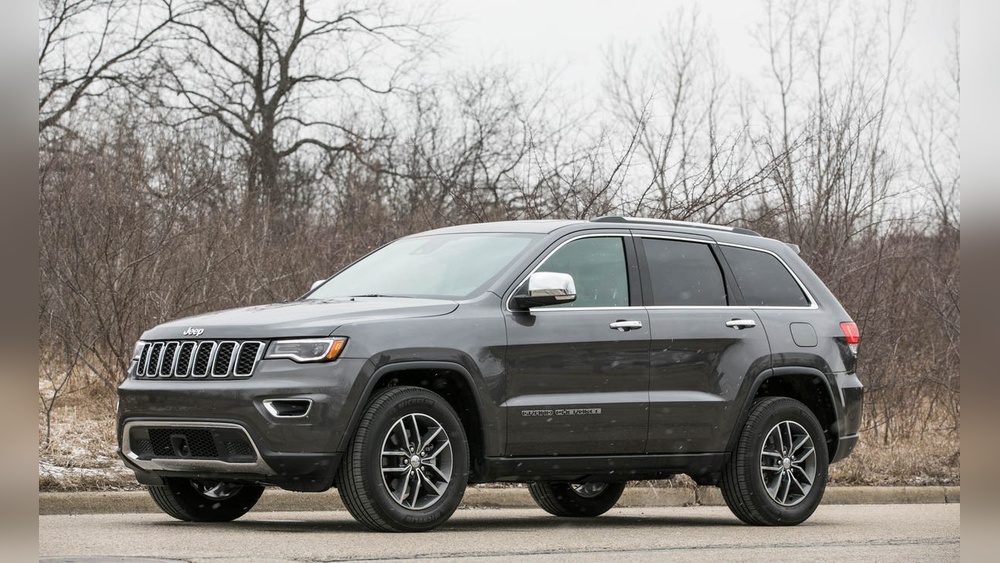
The Jeep Grand Cherokee is one of America’s most popular midsize SUVs. Many buyers choose it because they need a strong, versatile vehicle that handles family trips, outdoor adventures, and daily errands. But cargo space is often a key question: How much can you fit inside a Grand Cherokee? If you’re considering this SUV, understanding its cargo room will help you decide if it meets your needs.
Cargo Space Numbers For Jeep Grand Cherokee
The most recent Jeep Grand Cherokee models (2022 and newer) offer two main body styles: the standard two-row and the three-row Grand Cherokee L. Both versions have different cargo capacities. Here are the official numbers:
| Model | Rows of Seats | Cargo Space Behind Rear Seats (cu ft) | Cargo Space Max (cu ft) |
|---|---|---|---|
| Grand Cherokee (2-row) | 2 | 37.7 | 70.8 |
| Grand Cherokee L (3-row) | 3 | 17.2 | 84.6 |
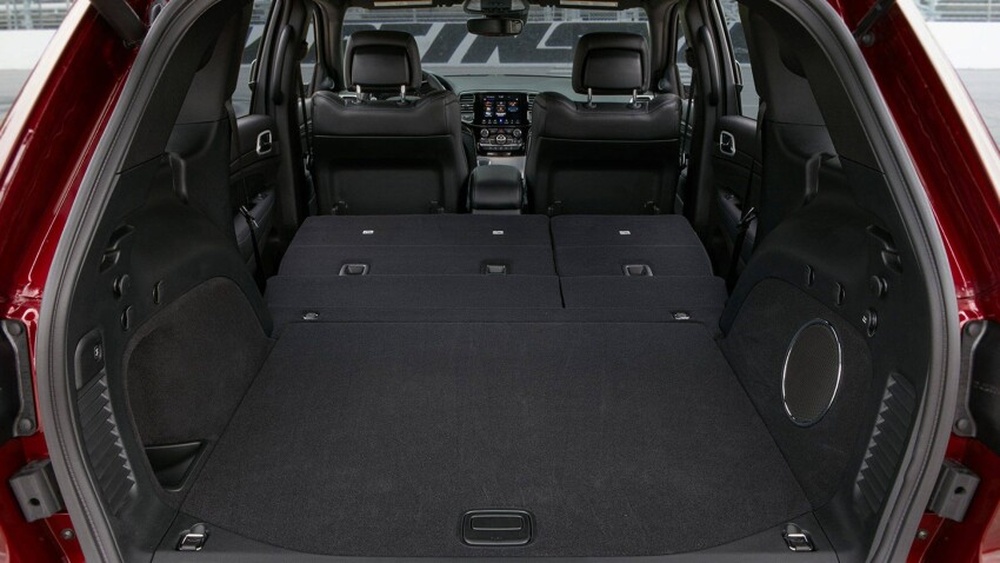
This means the regular Grand Cherokee gives you 37.7 cubic feet with all seats up, and up to 70.8 cubic feet with the rear seats folded. The Grand Cherokee L, with three rows, starts lower behind the third row (17.2 cu ft) but reaches a maximum of 84.6 cubic feet when both rear rows are folded.
Real-life Examples: What Fits In The Grand Cherokee?
Numbers are helpful, but what do they mean for everyday use? Here are some practical examples:
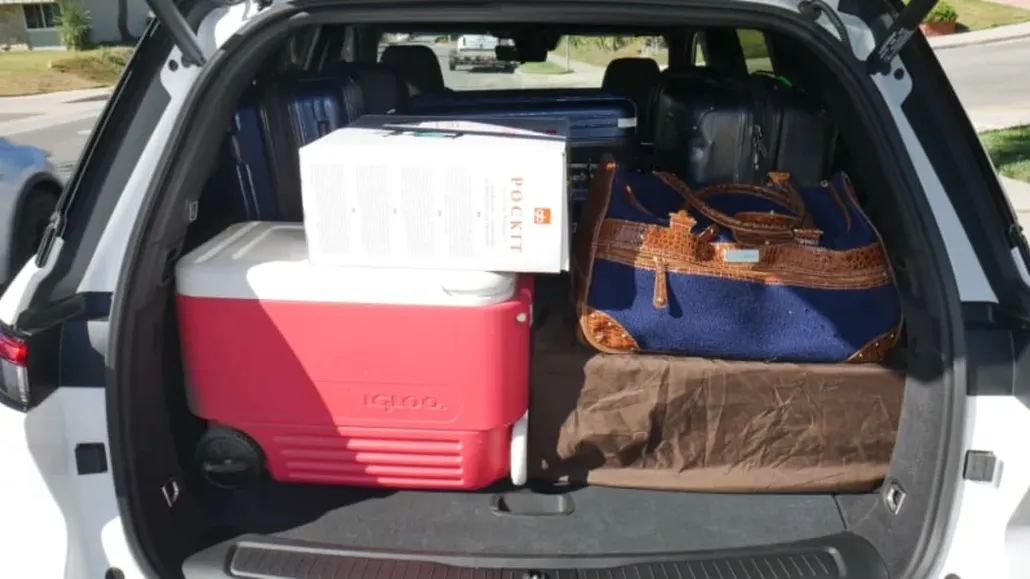
- With 37.7 cubic feet, you can fit:
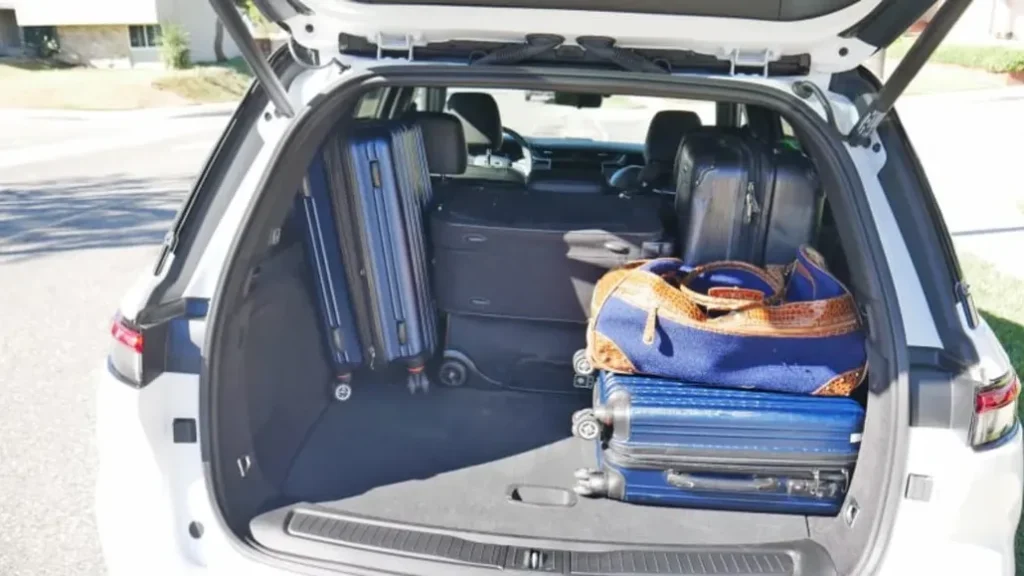
- Four large suitcases and a couple of smaller bags
- Two golf bags with extra gear
- A stroller plus groceries and sports equipment
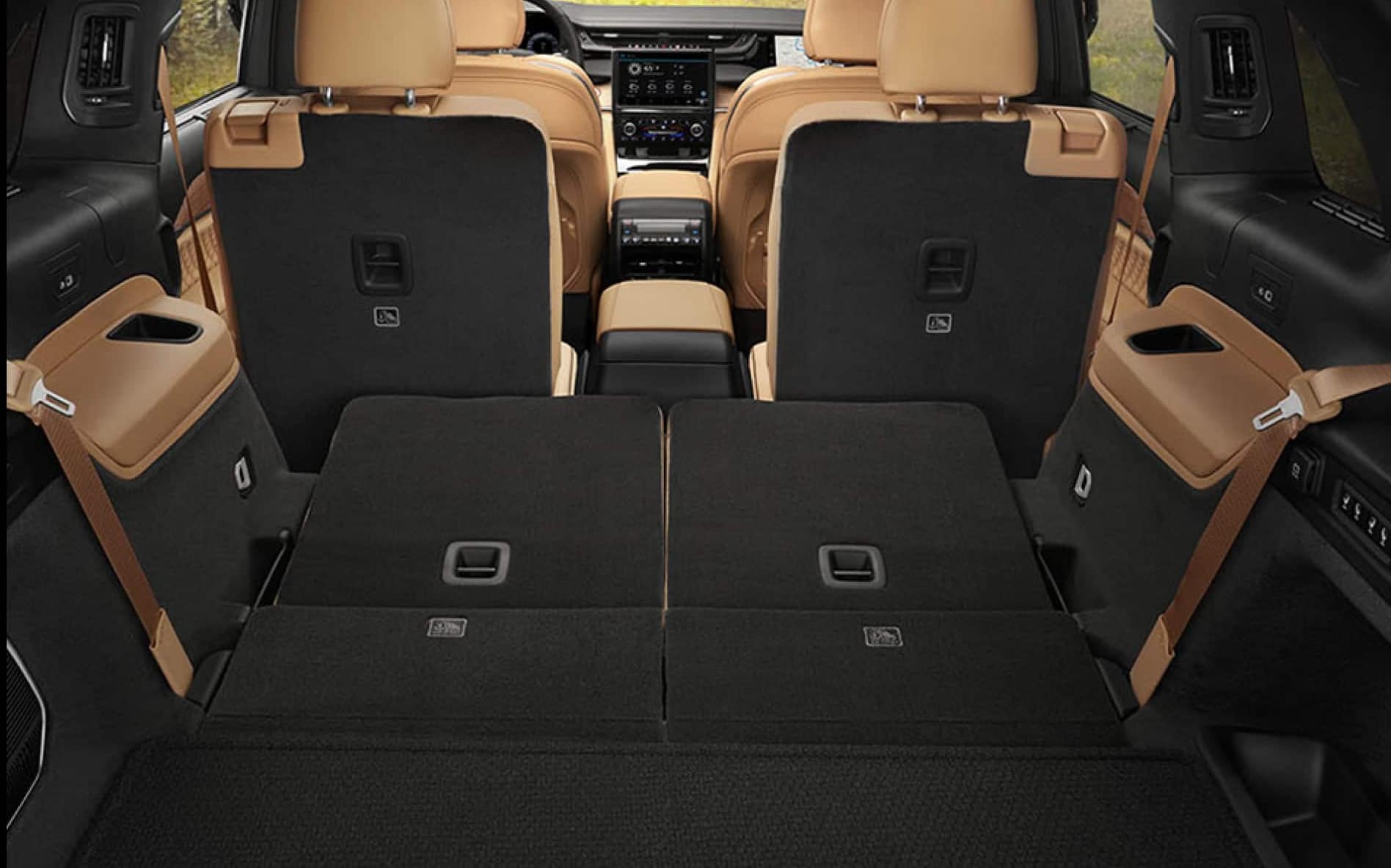
- If you fold down the second row, the 70.8 cubic feet lets you carry:
- A bicycle (with front wheel removed)
- Several moving boxes
- Large camping gear or a small piece of furniture
For the Grand Cherokee L, after folding all rear seats, families can load bulky items like skis, coolers, or even a small mattress.
Cargo Features That Make A Difference
The Grand Cherokee offers more than just raw space. It includes smart features that help you use every inch:
- Split-folding rear seats: Both versions let you fold part of the second row, so you can carry long items and still seat passengers.
- Power liftgate: Makes loading easier, especially when your hands are full.
- Hidden storage: Under-floor compartments are great for keeping valuables out of sight.
- Tie-down hooks: Prevent your cargo from sliding around.
These features help maximize space, making the Grand Cherokee flexible for different needs.
Comparing Grand Cherokee To Other Suvs
How does the Grand Cherokee’s cargo space stack up against competitors? Here’s a quick comparison with two popular rivals:
| Model | Max Cargo Space (cu ft) | Seats Up (cu ft) |
|---|---|---|
| Jeep Grand Cherokee (2-row) | 70.8 | 37.7 |
| Ford Explorer | 87.8 | 18.2 |
| Toyota Highlander | 84.3 | 16.0 |
You can see the Grand Cherokee offers more cargo space behind the rear seats than most competitors. However, for maximum capacity, the Explorer and Highlander (both three-row) edge it out slightly.
Still, the Grand Cherokee is strong for families who need everyday space without always folding seats.
Tips For Making The Most Of Grand Cherokee Cargo Space
Many drivers don’t use their cargo space efficiently. Here are two tips that beginners often miss:
- Fold only part of the seat: If you need room for longer items, fold one side of the split seat. This lets you carry extra cargo and still have room for passengers.
- Use vertical space: Stack items carefully to take advantage of the height, especially with the Grand Cherokee’s tall cargo area.
Another useful idea: Keep small containers or organizers in the under-floor area to avoid clutter and make loading/unloading quicker.
Common Mistakes When Using Cargo Space
Some people expect to fit very large items without checking measurements. Always measure your item and compare it to the Grand Cherokee’s cargo width, length, and height. Also, don’t overload the cargo area weight limits are important for safety and handling.
Is The Grand Cherokee Right For Your Cargo Needs?
If you need a mix of passenger space and cargo flexibility, the Grand Cherokee fits well. The two-row model is great for couples or small families who often carry gear.
The Grand Cherokee L suits bigger families or those who need extra seats but still want the option to haul large loads.
For buyers who value convenience, the power liftgate and hidden storage are real advantages. If maximum cargo room is your top priority, check the Grand Cherokee L or compare with larger SUVs.
Frequently Asked Questions
How Much Cargo Space Does The Jeep Grand Cherokee Have With All Seats Up?
The two-row Grand Cherokee gives you 37.7 cubic feet behind the rear seats. The three-row Grand Cherokee L offers 17.2 cubic feet behind the third row.
Can The Grand Cherokee Fit A Bicycle Inside?
Yes. With the rear seats folded, you can fit a standard adult bicycle (usually with the front wheel removed) and still have space for other gear.
Is The Cargo Space Flat When Seats Are Folded?
Most Grand Cherokee models have a nearly flat cargo floor after folding the rear seats. This makes loading heavy or large items easier and safer.
What’s The Difference Between Grand Cherokee And Grand Cherokee L Cargo Space?
The Grand Cherokee L has three rows, so it starts with less cargo space behind the third row. However, with both rear rows folded, it offers 84.6 cubic feet, more than the two-row version.
Where Can I Find Official Specifications For Jeep Grand Cherokee Cargo Space?
For detailed specs and current model information, visit the Jeep official website.
The Jeep Grand Cherokee is a smart choice for buyers who need flexible cargo space. Whether you’re packing for a road trip, moving bulky items, or just running errands, it offers practical room and clever features.
Before buying, consider your typical needs, check the measurements, and try loading your usual items to see if it’s the right fit.
With its balance of space, comfort, and smart design, the Grand Cherokee stands out among midsize SUVs.