A daytime-running-light concern on a 2013 Grand Cherokee should begin with normal operating conditions. A light that appears off while the Jeep is parked may behave normally once the engine is running and the transmission leaves Park.
Quick Answer
The 2013 Grand Cherokee SRT manual states that DRLs, when equipped, come on at low intensity while the engine is running and the transmission is not in Park. They stay on until the ignition moves to Off or ACC, or the parking brake is engaged.
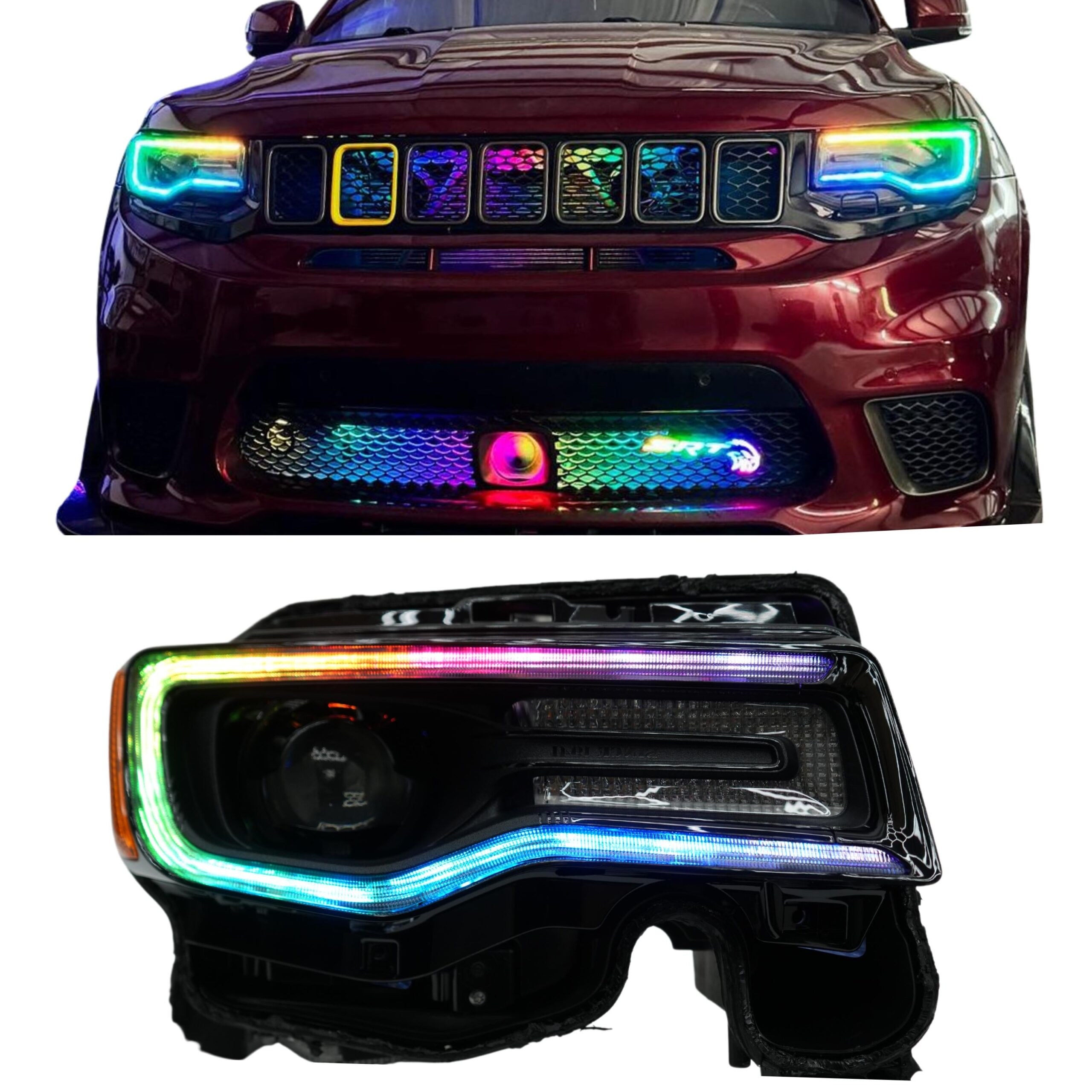
Match the manual to the exact Grand Cherokee.
Test under the right conditions
Secure the Jeep safely and observe the lamps during the conditions described in the manual. A parked inspection alone may create a false diagnosis.
Separate DRLs from headlamps
Daytime lamps are not a nighttime-lighting substitute. Test parking lamps, low beams and high beams as separate functions.
Check one side versus both
One dark side points toward a local lamp, connector or housing issue. Two dark sides call for a wider control, fuse or configuration review.
Inspect prior lighting work
Aftermarket bulbs, housings and wiring changes complicate diagnosis. Photograph the setup before removing anything.
Use the VIN for parts
Lamp technology may differ by equipment. Confirm the VIN and fitted housing before buying a replacement.
Key Details to Check
| Item | What to verify | Why it matters |
|---|---|---|
| Operating state | Engine, gear and parking brake | Normal DRL behavior depends on conditions |
| Failure pattern | One side or both | Guides diagnosis |
| Housing | Cracks, moisture and connector condition | Prevents repeat problems |
| Headlamp system | Parking lamps, low beams and high beams | Checks the full lighting setup |
| VIN | Exact vehicle equipment | Supports accurate part selection |
Step-by-Step Review
- Identify the trim and fitted lighting equipment.
- Read the 2013 manual section for DRLs.
- Observe the lamps under the described conditions.
- Check whether one side or both sides fail.
- Inspect housing moisture and previous modifications.
- Confirm replacement parts by VIN.
- Retest DRLs and normal headlights separately.
Common Mistakes to Avoid
- Testing only while the Jeep sits in Park.
- Using DRLs for nighttime driving.
- Ordering a housing from appearance alone.
- Ignoring water inside a lens.
- Changing wiring before reading the manual.
Practical Follow-Up
Write down whether the DRL concern affects one side or both, whether it changes after leaving Park, and whether the parking brake changes the result. These notes help a shop distinguish a configuration question from a failed component.
What to Save With the Vehicle
For 2013 Grand Cherokee daytime-running-light diagnosis, keep the model year, VIN, mileage, inspection date and one clear photo or receipt in the vehicle file.
A written 2013 Grand Cherokee daytime-running-light diagnosis result makes the next repair, parts order or workshop conversation easier to compare with this exact Jeep.
Deeper Review for 2013 Grand Cherokee Daytime-Running-Light Diagnosis
For 2013 Grand Cherokee daytime-running-light diagnosis, use the same order every time. Start with operating state, move to housing, and finish with vin.
Verify engine, gear and parking brake, note cracks, moisture and connector condition, and record exact vehicle equipment.
For 2013 Grand Cherokee daytime-running-light diagnosis, this repeatable sequence helps separate a genuine fault or fitment issue from a difference caused by weather, prior repairs or an incomplete first inspection.
Use One Controlled Follow-Up
Before approving parts or labor, revisit this step: Inspect housing moisture and previous modifications. If the outcome changes, write down what changed and when.
Avoid using drls for nighttime driving. The goal is not to collect guesses.
For 2013 Grand Cherokee daytime-running-light diagnosis, the goal is to keep the next decision tied to one Jeep, one operating condition and one verified result.
Final Inspection Checklist
- Confirm operating state: Engine, gear and parking brake.
- Review failure pattern: One side or both.
- Check headlamp system: Parking lamps, low beams and high beams.
- Complete this step: Retest DRLs and normal headlights separately.
- Avoid this mistake: Changing wiring before reading the manual.
Daylight Observation Notes
Take two photos of the Grand Cherokee: one while parked and one under the operating condition described in the manual. The comparison helps show whether the DRLs are acting normally.
Add a note about the parking brake, transmission position and headlight-switch setting. A lighting shop receives a clearer problem description when the owner records the exact state instead of saying only that the lights sometimes disappear.
Check the Housing Before Buying Parts
A cloudy or wet lens deserves attention before a replacement lamp is ordered. Inspect the connector area, look for damaged clips and note any non-factory wiring.
If one side has a different bulb or housing from the other, photograph both sides. Previous modifications can create a mismatch that a VIN-based parts search alone does not reveal.
Finish With a Full Exterior Walk-Around
After repair, test parking lamps, low beams, high beams, turn signals and hazards. Walk around the Jeep in daylight and again near dusk.
A DRL repair should not leave another exterior lamp untested. The final walk-around creates a simple baseline for the next inspection.
Separate Normal DRL Behavior From a Fault
The most useful question is not whether the lamp is visible in one photo. The useful question is whether the DRL follows the operating conditions described in the manual.
Test the Jeep safely, keep the headlamp switch state in your notes and compare both sides. When the result differs from the manual, carry the notes and VIN into the parts or workshop discussion.
Why do the lamps change outside Park?
The manual describes DRLs as operating under specific conditions when equipped.
Can I use DRLs at night?
No. Switch on normal headlamps for nighttime driving.
Should a complete housing be replaced first?
Only after the equipment and failed part are verified.
- How To Change Daytime Running Lights 2013 Jeep Grand Cherokee 2
- How To Change Daytime Running Lights 2013 Jeep Grand Cherokee
- How To Repair 2005 Jeep Grand Cherokee Shift Control Lights
Final Takeaway
Diagnose DRLs under the proper operating conditions. Separate normal behavior from a true fault, verify the fitted equipment and retest the entire exterior-lighting system after repair.