Many Jeep owners love the freedom of switching between a hardtop and a soft top. But before you lift off that hardtop, it’s important to know how much it weighs. The weight of a Jeep hardtop affects not just removal and storage, but also vehicle handling and fuel efficiency.
If you’re planning to remove, replace, or transport your Jeep’s hardtop, understanding the actual weight is essential.
Let’s break down the average weights, why they matter, and what you need to consider before handling a Jeep hardtop.

Average Jeep Hardtop Weights
Jeep hardtops come in different sizes and materials, depending on the model and year. The two most common models are the Jeep Wrangler and Jeep Gladiator. Here’s a quick look at typical weights for each:
| Jeep Model | Top Type | Weight Range (lbs) |
|---|---|---|
| Wrangler JK (2007-2018) | 2-door Hardtop | 100-120 |
| Wrangler JK (2007-2018) | 4-door Hardtop | 140-150 |
| Wrangler JL (2018+) | 2-door Hardtop | 110-120 |
| Wrangler JL (2018+) | 4-door Hardtop | 140-150 |
| Gladiator JT (2020+) | 4-door Hardtop | 140-150 |
Most modern 4-door Jeep hardtops weigh between 140 and 150 pounds, while the 2-door versions are a bit lighter, around 100 to 120 pounds. The Freedom Top (a modular, 3-piece hardtop for Wranglers) allows you to remove just the front panels, which weigh less—usually 12 to 16 pounds each.
Why Does Hardtop Weight Matter?
Weight is more than just a number. Here’s why it’s important:
- Ease of Removal: A 2-door hardtop may be removed by two people, but a 4-door version often requires three or four, or special lifting tools.
- Storage Needs: Heavier tops need secure, padded storage. Dropping a hardtop can cause expensive damage.
- Vehicle Handling: Extra weight high up can affect the Jeep’s center of gravity, especially if you add roof racks or gear.
- Fuel Efficiency: Heavier hardtops can add to your Jeep’s overall weight, possibly reducing miles per gallon.
Weight Differences: Hardtop Vs. Soft Top
Switching between a hardtop and a soft top changes your Jeep’s weight and driving feel.
| Top Type | Average Weight (lbs) | Main Benefit |
|---|---|---|
| Hardtop (4-door) | 140-150 | Insulation & Security |
| Soft Top (4-door) | 40-50 | Easy Removal |
Soft tops are much lighter—often less than half the weight of a hardtop. This makes removal easy but means less insulation from noise and weather.
Material Matters: Fiberglass Vs. Aluminum
Most Jeep hardtops are made from fiberglass, which is strong and relatively light. Some aftermarket options use aluminum or composite materials. Here’s how material affects weight:
- Fiberglass: Standard, good strength-to-weight ratio, weighs 100-150 lbs.
- Aluminum: Lighter, but more expensive and less common.
- Composite: Newer materials may offer both strength and lower weight.
Non-obvious insight: Some aftermarket hardtops with extra features (roof racks, sound deadening) can weigh much more than stock versions, sometimes exceeding 200 pounds.
Removing And Handling Your Jeep Hardtop
If you’re thinking about removing your hardtop, here’s what you need to know:
- Number of Helpers: For a 2-door, you may manage with one strong friend. For a 4-door, at least two people are needed to avoid damage.
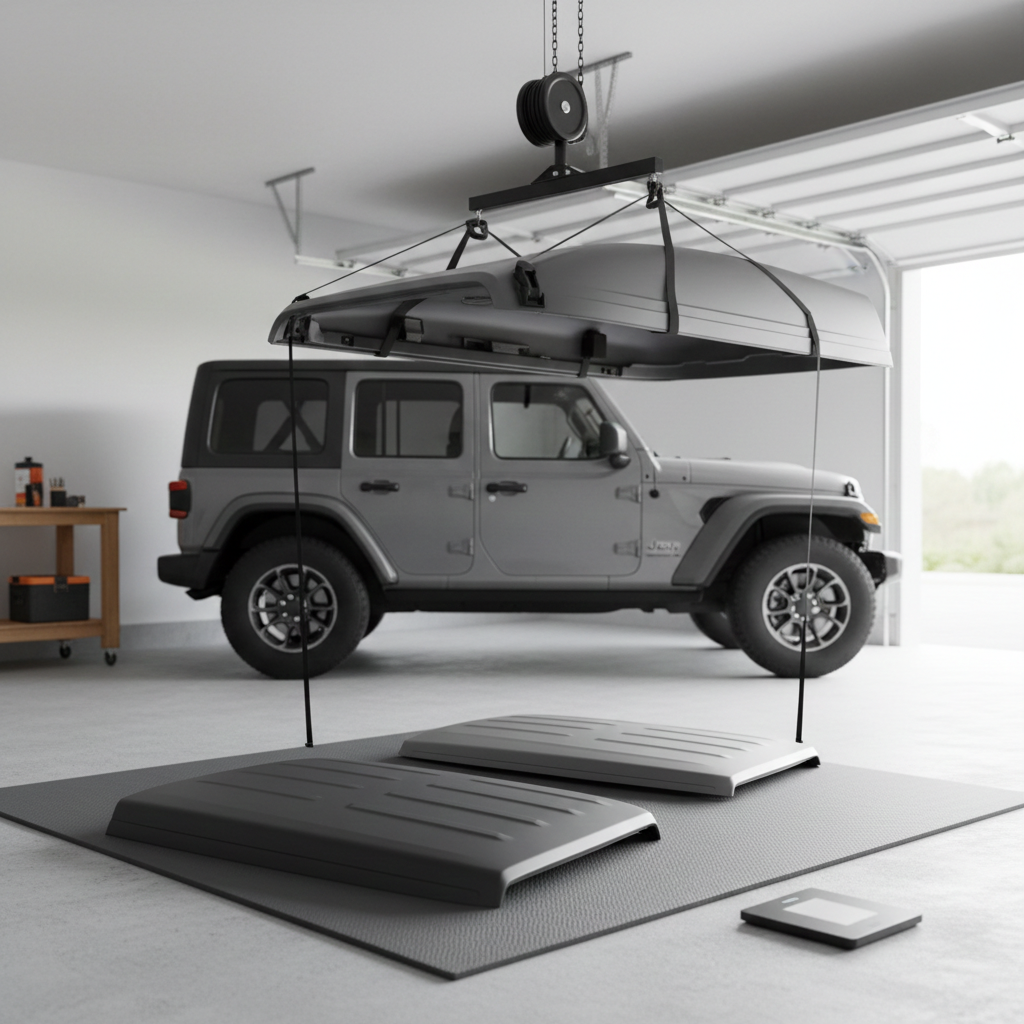
- Lifting Tools: Hardtop hoists can make removal much safer and easier, especially if you plan to switch tops often.
- Preparation: Disconnect wiring (defroster, wiper) and remove bolts before lifting.
- Storage: Always store the hardtop on a padded surface, away from direct sunlight.
Practical tip: Don’t forget to label and store your bolts and wiring connectors. Losing these is a common headache for beginners.
How To Weigh Your Jeep Hardtop
If you want the exact weight of your hardtop, here’s a simple method:
- Remove the hardtop carefully.
- Use a large bathroom scale. Place the hardtop on it, balancing it evenly.
- Weigh in sections if your top is modular (like a Freedom Top).
Non-obvious insight: The weight of factory hardtops can vary by year and by color (painted tops sometimes weigh a bit more due to extra layers).

Comparison: Factory Vs. Aftermarket Hardtops
Factory hardtops are designed for durability and fit. Aftermarket hardtops offer more features but can be heavier or lighter depending on materials.
| Brand | Material | Approx. Weight (lbs) | Notable Features |
|---|---|---|---|
| Mopar (OEM) | Fiberglass | 140-150 | Best fit, OEM quality |
| Rally Tops | Fiberglass | 155-165 | Extra insulation |
| DV8 Offroad | Composite | 120-140 | Lightweight options |
Always check the manufacturer’s specifications before purchase or installation.
Final Thoughts
Knowing the weight of your Jeep hardtop helps you make smart decisions about removal, storage, and even upgrades. While most Wrangler and Gladiator hardtops fall in the 100–150 pound range, small changes in model, year, or materials can make a big difference. Always plan ahead, get help when needed, and use the right tools for safety.
For those curious about official specs, you can find more information on the Jeep Wrangler Wikipedia page.

Frequently Asked Questions
How Much Does A Jeep Wrangler Hardtop Weigh?
A typical Jeep Wrangler hardtop weighs between 100 and 150 pounds, depending on whether it’s a 2-door or 4-door model and the year.
Can One Person Remove A Jeep Hardtop?
A single strong person can sometimes remove a 2-door hardtop, but a 4-door hardtop usually requires at least two people or a hoist for safety.
Does A Hardtop Affect Fuel Economy?
Yes, a hardtop adds weight and can slightly lower your Jeep’s fuel efficiency compared to a soft top, though the effect is usually small.
Are All Jeep Hardtops The Same Weight?
No, hardtop weight varies by model, year, material, and features. Aftermarket hardtops may be heavier or lighter than factory ones.
What Is The Lightest Jeep Hardtop Available?
Some aftermarket composite hardtops can weigh as little as 120 pounds for a 4-door model, but these may lack extra insulation or features found in heavier tops.