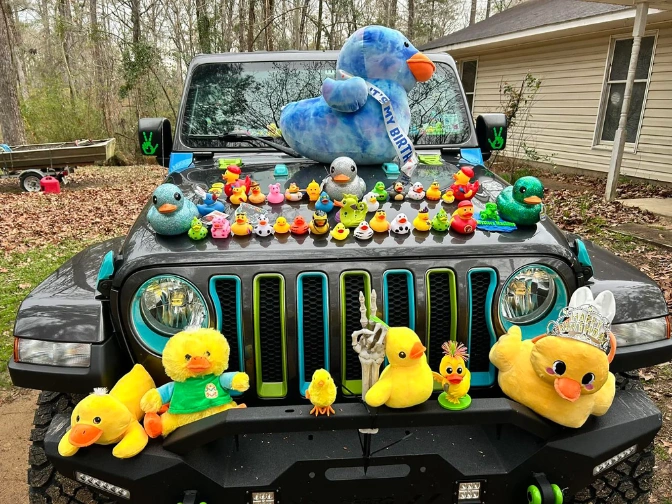
People often notice small rubber ducks inside or on the exterior of Jeeps—sometimes on dashboards, sometimes on mirrors, and often given from one Jeep owner to another. This quirky trend may seem strange at first glance, but it has become a popular tradition in the Jeep community.
The practice is friendly, unexpected, and has created new connections between strangers. So, why do people put ducks in Jeeps, and what does this say about the culture of Jeep owners? Let’s explore the history, meaning, and impact of this unusual but uplifting phenomenon.
The Origin Of Ducking Jeeps
The act of leaving a rubber duck on a Jeep is called “Jeep Ducking” or simply “Ducking.” This trend started in 2020 in Ontario, Canada. During the COVID-19 pandemic, a Jeep owner named Allison Parliament wanted to spread kindness and positivity. After a difficult personal encounter, she bought a bag of rubber ducks and placed one on a stranger’s Jeep with a note. The simple act made both people smile, and soon the idea spread through social media.
Jeep Ducking quickly grew into an international movement. Owners began to buy bags of small rubber ducks, decorate them, and leave them on other Jeeps as a sign of community. It is now common to see posts online with hashtags like #DuckDuckJeep, showing ducks left on windshields, mirrors, or dashboards.
The trend is especially popular in the United States, Canada, and Australia.
Why Ducks? The Symbolism
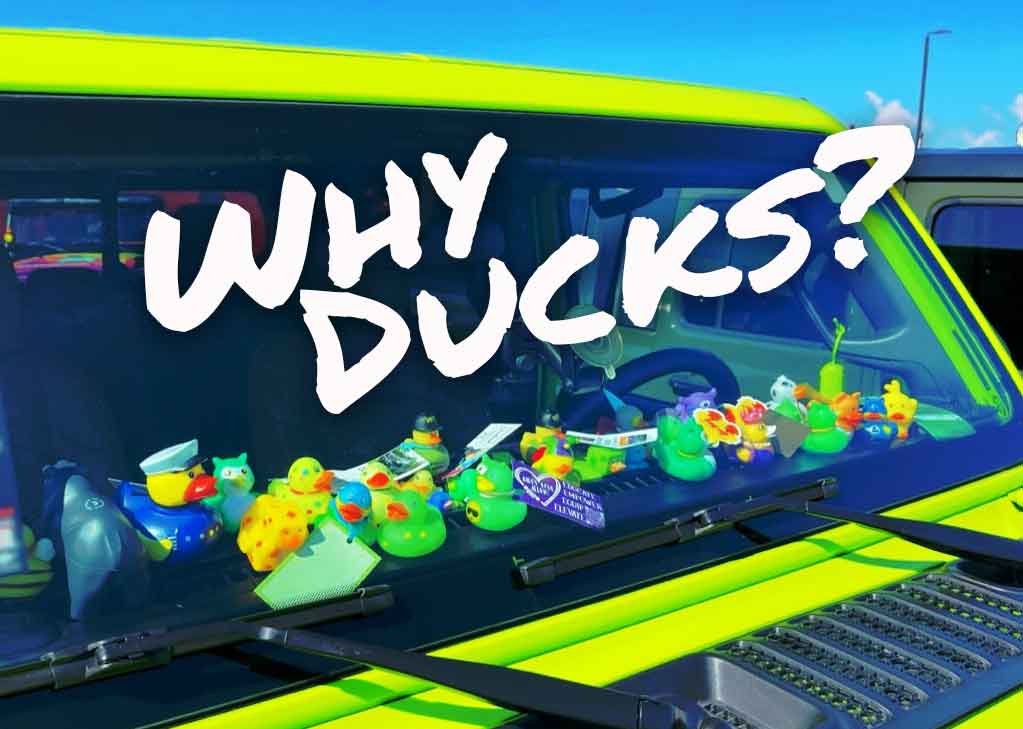
Ducks may seem like an odd choice, but their meaning is mostly playful. Rubber ducks are small, cheap, and easy to find. They are also symbols of fun, light-heartedness, and nostalgia—reminding many people of childhood baths or toys. The goal is to surprise someone with a small, harmless gift and brighten their day.
For Jeep owners, ducks have become a badge of honor. Some people collect ducks they receive, displaying them on their dashboards as a sign of how many times they’ve been “ducked.” Others pass the ducks forward, sharing the joy with other drivers. The duck is not just a toy; it’s a symbol of friendship and goodwill.
How Jeep Ducking Works
The process is simple:
- Buy a bag of rubber ducks.
- Write a positive note or tag (optional).
- Spot a Jeep in a parking lot.
- Place the duck somewhere visible—on the mirror, door handle, or hood.
- Take a picture (optional) and share it online with the #DuckDuckJeep hashtag.
Most Jeep owners see the duck as a compliment, not a prank. Some even carry extra ducks in their car, ready to “duck” Jeeps they see during their day.
Community And Connection
Jeep Ducking is more than a game; it’s a way to connect with others. The Jeep community is known for being open and friendly. Owners often wave to each other on the road (the “Jeep Wave”). Ducking adds another layer of interaction, especially for people who feel isolated or want to make new friends.
The tradition also encourages random acts of kindness. People feel happy when they find a duck, and many want to pass on the good feeling. Some ducks have notes with messages like “You’ve been ducked!” or “Have a great day!” This small surprise can turn a bad day into a good one.
Impact On The Jeep Brand
Ducking has had a positive effect on the Jeep brand. It creates a sense of belonging and loyalty. Jeep dealerships sometimes join the trend, giving out ducks with new cars or at events. Social media is filled with stories and photos of ducked Jeeps, which helps advertise the brand in a unique way.
In 2021, Jeep even acknowledged the trend officially. Their social media accounts shared posts about ducking, and Jeep events sometimes include duck-themed activities. This organic, customer-driven movement has become part of the brand’s identity.
Statistics And Trends
While there are no exact numbers, social media gives clues to the trend’s size. On Instagram, the #DuckDuckJeep hashtag has over 200,000 posts as of 2024. In Jeep owner groups, many members share stories of being ducked for the first time or show off their growing duck collections.
The trend is strongest in North America but is spreading to other countries where Jeep vehicles are popular. Some car rental companies have even started leaving ducks in Jeeps for tourists as a welcome gesture.
Ducking Vs Other Car Traditions
Jeep Ducking is not the only car-related tradition, but it is unique in its focus on kindness and surprise. Here’s a quick comparison with other popular car culture practices:
| Tradition | Main Activity | Purpose |
|---|---|---|
| Jeep Ducking | Leaving rubber ducks on Jeeps | Spread positivity, create community |
| Car Spotting | Taking photos of rare cars | Share online, appreciation |
| Mini Car Meets | Gathering with other car owners | Socialize, show off cars |
How To Join In
Anyone with a Jeep can join the ducking trend. Here are a few tips:
- Use clean, new rubber ducks. Avoid anything that could damage the car.
- Add a small note with a positive message.
- Only leave ducks on other Jeeps—other car owners may not understand the tradition.
- Respect private property and follow local laws.
A common mistake is leaving ducks where they might block a driver’s view. Always place ducks in a safe, visible spot.
Non-obvious Insights
- Collectible Ducks: Some Jeep owners seek out rare or themed ducks. Holidays, sports teams, and custom-painted ducks are especially prized. A unique duck can become a conversation starter at Jeep events.
- Charity and Events: Ducking has inspired charity drives and fundraisers. Some Jeep groups organize “duck drops” for children’s hospitals or community events, using the trend to support good causes.
Ducking Around The World
Ducking started in North America, but it is now seen in Australia, the UK, and parts of Europe. Different regions add their own twist, like using local animal toys or special notes in the local language. While the rubber duck is the most common, the main idea—making someone smile—remains the same.
Collecting Ducks: Dashboard Displays
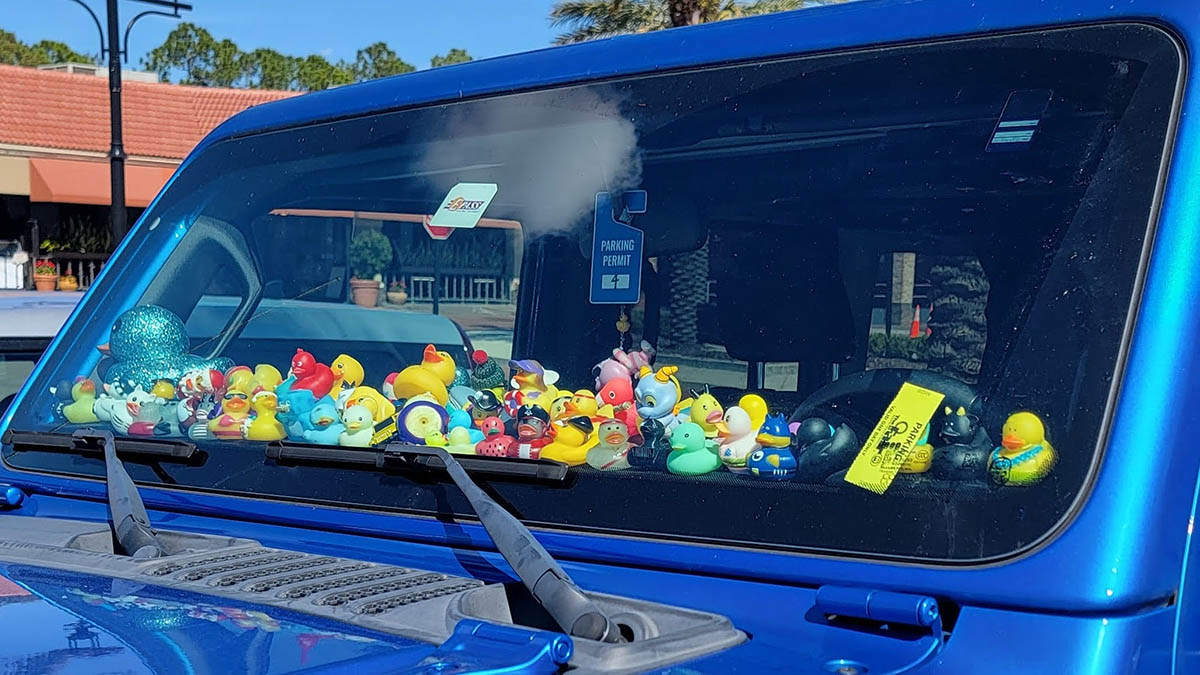
Many Jeep owners display their ducks proudly. You might see a line of ducks on a dashboard or attached to the inside of a windshield. Some create “duck racks” or use sticky tape to keep ducks in place.
Here’s how duck collections vary:
| Number of Ducks | Display Style | Owner’s Attitude |
|---|---|---|
| 1-5 | Dashboard corners | New to ducking, curious |
| 6-20 | Full dashboard line | Regular participant |
| 21+ | Custom racks, mirrors | Enthusiast, collector |
Frequently Asked Questions
What Is Jeep Ducking?
Jeep Ducking is the act of leaving a rubber duck on another Jeep, usually with a positive note, as a friendly gesture among Jeep owners.
Is Ducking Only For Jeep Wranglers?
While Wranglers are the most common, ducking can be done on any Jeep model. The spirit of the tradition is what matters.
Do All Jeep Owners Like Being Ducked?
Most enjoy it, but a few may not know the tradition. If you’re unsure, add a note explaining Jeep Ducking.
Can I Duck Cars Other Than Jeeps?
It’s best to stick to Jeeps. Other car owners may not understand and could be confused or even annoyed.
Where Can I Learn More About Jeep Ducking?
For more details, check the Jeep Ducking Wikipedia page.
The tradition of putting ducks in Jeeps shows how a simple, playful gesture can bring people together. It’s about spreading smiles, building community, and making life’s ride a little more fun—one rubber duck at a time.