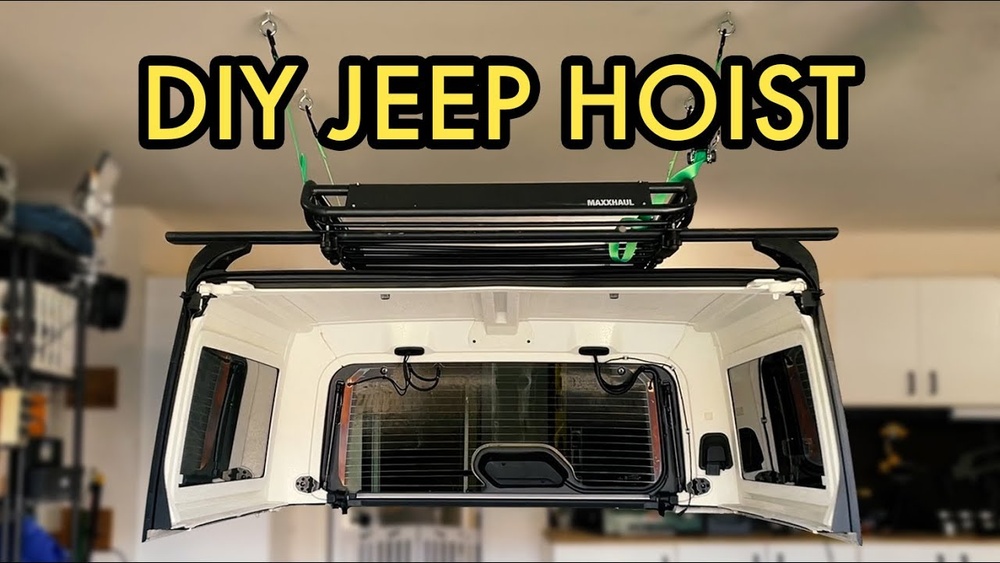
If you own a Jeep with a hardtop, you know removing and storing it can be a real challenge. Hardtops are heavy, awkward, and often require two or more people to lift safely. That’s where a Jeep hardtop hoist comes in. This clever device lets you lift and store your hardtop using pulleys, ropes, and simple hardware—often all by yourself. Building your own hoist at home is not just cost-effective but also highly rewarding. In this guide, you’ll learn how to make a Jeep hardtop hoist using easy-to-find materials, practical steps, and important safety tips.
Why Build A Jeep Hardtop Hoist?
A hardtop hoist makes removal fast, safe, and stress-free. You don’t need extra hands or risk damaging your Jeep. Many owners try to lift the hardtop alone and end up with scratched paint or even back injuries. With a hoist, you save time and keep your hardtop in top shape for years.
Another benefit: a home-built hoist can be much cheaper than commercial models, which often cost $150–$300. By making it yourself, you get a custom fit for your garage and Jeep model.
What You Need: Tools And Materials
Let’s start with the basics. Here’s a list of common materials for a manual pulley-style hoist—the most popular and simplest DIY solution.
- 2-4 heavy-duty pulleys (minimum weight capacity: 200 lbs each)
- Nylon or polyester rope (at least 50 feet, rated for 300 lbs)
- Two strong ceiling hooks or eye bolts (suitable for your garage ceiling joists)
- Two ratchet straps or wide webbing straps
- Drill with wood bits
- Wrench and sockets
- Carabiners (strong, locking type)
- Stud finder
- Measuring tape
If you want an electric hoist, you’ll need a motorized winch, power outlet, and possibly extra hardware. However, a manual system is easier for most DIYers.
Planning Your Hoist System
Before you start drilling, measure your garage and Jeep hardtop. Most Jeep hardtops (like on a Wrangler) weigh 80–140 lbs and are about 60–70 inches wide. Make sure the ceiling where you’ll mount the hoist is strong enough—never attach to drywall alone.
Here’s how different hoist types compare:
| Type | Cost | Difficulty | Best For |
|---|---|---|---|
| Manual pulley | $40–$80 | Easy | Most DIYers |
| Electric hoist | $100–$250 | Moderate | Frequent use |
| Commercial kit | $150–$350 | Easy | No DIY needed |
For most people, the manual pulley system is perfect.
Step-by-step: How To Build Your Hoist
Follow these steps to build a reliable hoist:
1. Mark Ceiling Joist Locations
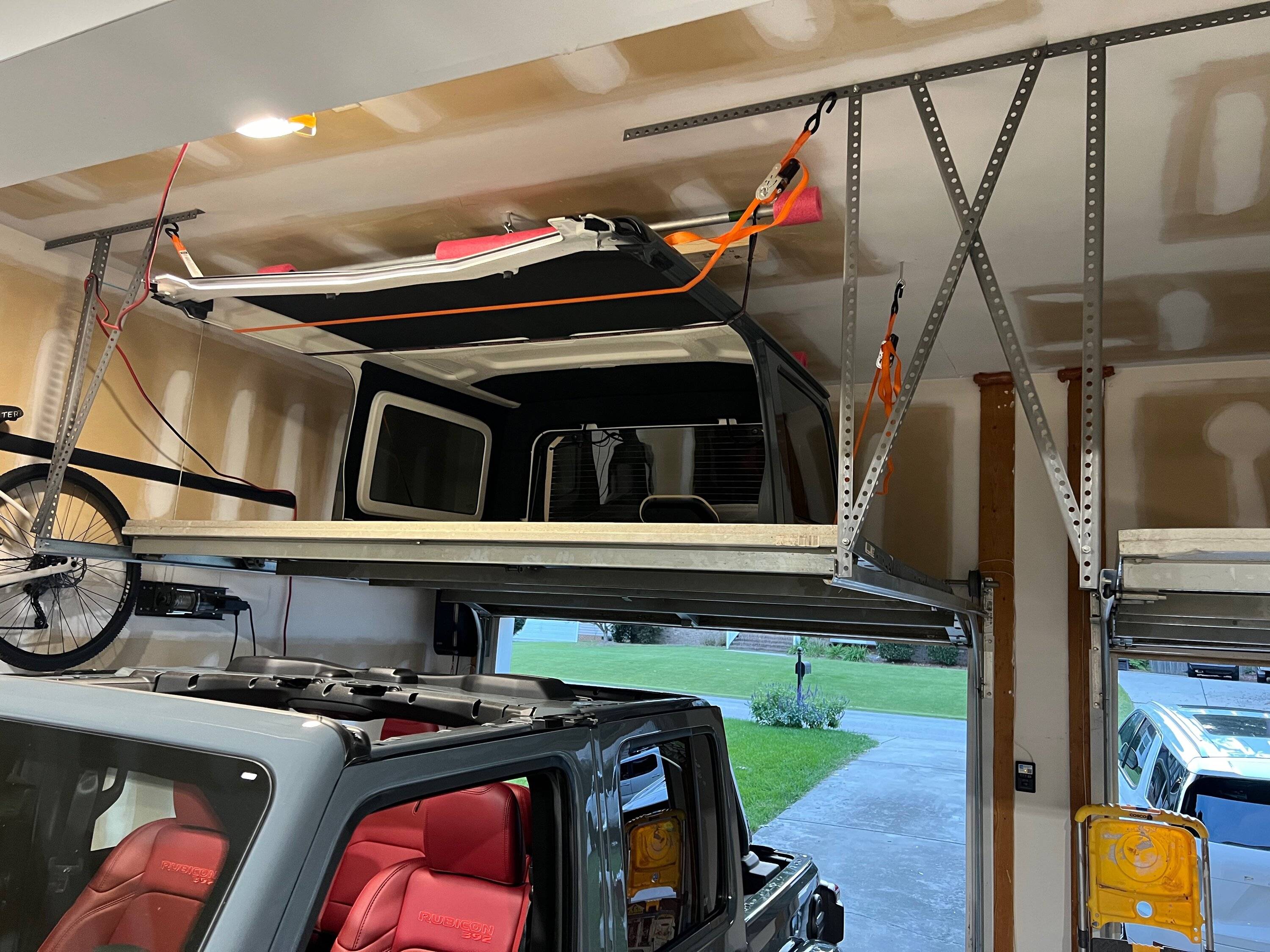
Use a stud finder to locate strong ceiling joists. Mark two points about 3–4 feet apart (matching your Jeep’s hardtop width). These are where the eye bolts will go.
2. Install Eye Bolts
Drill pilot holes into the joists. Screw in the eye bolts until they are tight and secure. Double-check for any movement—they must hold the full weight.
3. Set Up The Pulleys
Attach one pulley to each eye bolt. If you want smoother lifting, use two pulleys per side (one at the ceiling, one on the strap). This reduces the effort needed.
4. Prepare The Straps
Thread the ratchet straps or webbing under the hardtop, spacing them evenly. Secure each strap’s ends with carabiners so they connect to the pulleys’ hooks.
5. Run The Rope
Pass the rope through the pulleys, creating a simple block-and-tackle system. Make sure the rope is long enough to reach your hands at ground level.
6. Test The System
Before removing your hardtop, test the system with something heavy (like a sandbag). Slowly lift it and watch for any slipping, bending, or creaking. Fix any problems now.
7. Lift The Hardtop
Remove the Jeep’s hardtop bolts. Place the straps under the top, connect everything, and slowly pull the rope. The hardtop should rise evenly. Once it’s high enough, tie off the rope securely to a wall cleat or heavy hook.
8. Storage
With the hardtop in the air, you can either leave it suspended (if the system is secure) or roll it onto a storage rack or dolly for longer periods.
Safety Tips And Practical Insights
- Always check all fasteners before lifting. One weak bolt can cause failure.
- If possible, have a friend nearby during your first use.
- Use nylon webbing rather than thin rope under the hardtop—this spreads the load and prevents damage.
- Never exceed the weight rating of any part.
- Mark the lift area to keep kids and pets away.
- Consider adding a backup strap as a secondary safety in case the main system fails.
Many beginners forget to check their ceiling’s strength. If you’re unsure, ask a contractor or use an overhead beam. Another common mistake is using cheap rope. Always buy rated hardware—your Jeep’s hardtop costs much more than the parts!
Example: Manual Pulley Hoist Vs. Electric Hoist
Here’s a quick look at the differences:
| Feature | Manual Pulley Hoist | Electric Hoist |
|---|---|---|
| Setup Time | 1–2 hours | 2–4 hours |
| Maintenance | Low | Medium |
| Lifting Speed | Slower | Faster |
| Power Needed | No | Yes |
Common Mistakes To Avoid
- Using drywall anchors instead of mounting into joists.
- Forgetting to test the system before first use.
- Not using enough straps to support the hardtop evenly.
- Over-tightening straps, which can crack fiberglass.
A well-built hoist will last for years. If you ever upgrade to a new Jeep, you can often adjust the system rather than rebuild it.
Frequently Asked Questions
How Much Does It Cost To Build A Jeep Hardtop Hoist?
Most DIY systems cost $50–$100, depending on hardware quality and the number of pulleys used. This is much cheaper than buying a commercial kit.
Is A Hardtop Hoist Safe To Use Alone?
Yes, if built correctly and all parts are rated for at least 200 lbs. Always double-check fasteners and test with a heavy object before lifting your hardtop.
Can I Use An Electric Winch Instead Of Pulleys?
Absolutely. An electric winch makes lifting easier, but you’ll need power in your garage and may spend more on hardware. Always follow the winch’s instructions.
Will This System Work For All Jeep Models?
The basic idea works for most Wranglers and similar Jeeps. For larger tops (like Gladiator models), check the weight and size before building.
Where Can I Find More Resources Or Videos?
You can find detailed guides and diagrams on the official Jeep website for extra help.
Building your own Jeep hardtop hoist can save money and make life easier. With the right tools, strong materials, and careful planning, you’ll enjoy open-air adventures without stress.