Towing a Jeep Cherokee can look simple from the outside, but there are several important steps and safety tips you must follow. Whether you’re towing for emergency reasons or planning to flat tow behind an RV, knowing the correct process can prevent damage and keep everyone safe.
This guide will show you how to tow a Jeep Cherokee the right way, explain the key differences between methods, and help you avoid common mistakes. You’ll learn what equipment you need, how to prepare your vehicle, and practical advice that even experienced drivers sometimes miss.
Choosing The Right Towing Method
The method you choose depends on your Jeep Cherokee model and your towing needs. Not all Cherokees can be towed the same way. Here’s a quick comparison:
| Towing Method | When to Use | Pros | Cons |
|---|---|---|---|
| Flat Tow (All Four Wheels Down) | Most Trailhawk models with 4WD | No trailer needed, easy for RVs | Not suitable for all trims |
| Trailer Tow (All Wheels Up) | Any model or trim | No risk to transmission | Requires trailer, more cost |
| Dolly Tow (Front Wheels Up) | Front-wheel drive models | Cheaper than trailer, protects transmission | Not for 4WD/AWD |
Before you tow, check your owner’s manual. Some Jeep Cherokee trims, especially those with 4WD or AWD, can only be towed on a trailer. Towing the wrong way can seriously damage your transmission.
Preparing Your Jeep Cherokee For Towing
Proper preparation makes towing safer and avoids expensive repairs. Here are the main steps:
- Inspect Your Vehicle: Check for leaks, tire pressure, and visible damage.
- Check Transmission Type: Most modern Cherokees have automatic transmissions. These are usually not safe for flat towing unless your manual specifically says so.
- Disconnect the Battery: For longer tows, disconnect the battery to avoid electrical drain.
- Secure Loose Items: Remove or tie down anything inside that could move during transport.
- Adjust Mirrors: Make sure your towing vehicle’s mirrors are set to see the Cherokee clearly.
For flat towing, you must also shift the transfer case into neutral (4WD models only). This prevents damage to the drivetrain.
Essential Towing Equipment
You need the right tools to tow safely. Missing even one can make the job dangerous.
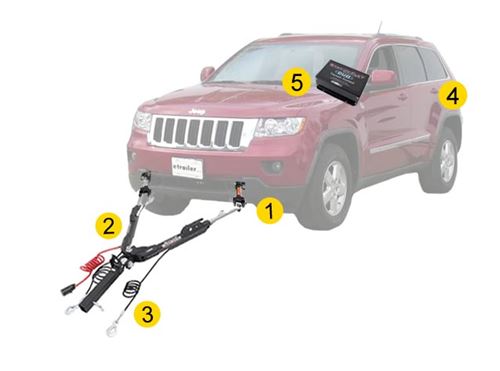
- Tow Bar: Used for flat towing; attaches to the front of your Cherokee.
- Safety Chains: Always use chains as backup in case the tow bar fails.
- Trailer or Dolly: Choose based on your Cherokee’s drivetrain.
- Brake Lights Wiring Kit: Required by law in most states.
- Wheel Straps: Secure your Jeep to the trailer or dolly.
Here’s a comparison of tow bar types:
| Tow Bar Type | Best For | Average Price | Ease of Use |
|---|---|---|---|
| Fixed Tow Bar | Short, straight distances | $150-$300 | Harder to attach |
| Adjustable Tow Bar | Long-distance, RV towing | $300-$700 | Easy to attach |
Step-by-step: How To Tow A Jeep Cherokee
Follow these steps for the safest towing experience:
- Choose the Correct Method: Decide between flat, trailer, or dolly towing based on your Cherokee’s drivetrain.
- Park Both Vehicles on Level Ground: This helps with attaching equipment safely.
- Attach Tow Bar or Trailer: Connect the tow bar or trailer according to manufacturer instructions. Double-check all connections.
- Connect Safety Chains: Cross chains under the tongue for extra security.
- Install Brake Light Wiring Kit: Plug the kit into your Cherokee’s lights so brake signals match your towing vehicle.
- Check Tire Pressure: Inflate tires to the recommended PSI.
- Release Parking Brake: Never tow with the parking brake engaged.
- Shift Transfer Case to Neutral: Only for 4WD models; follow the Jeep manual exactly.
- Test All Connections: Walk around and check everything one last time.
- Drive Slowly at First: Test brakes and steering at low speed before heading onto busy roads.
Practical Tips For Safe Towing
- Keep Your Speed Low: Most experts recommend a maximum of 55 mph while towing.
- Avoid Sudden Turns: Turning too sharply can cause the Cherokee to jackknife or detach.
- Watch Your Weight: The Jeep Cherokee weighs between 3,500–4,000 lbs. Make sure your towing vehicle can handle this.
- Use Extra Caution in Rain or Snow: Stopping distances increase, and the Cherokee may sway.
One mistake people make is forgetting to check local laws. Some states require extra brakes or specific lighting. You can find state requirements at AAA.
Common Mistakes To Avoid
- Ignoring the Owner’s Manual: Always follow Jeep’s specific towing instructions.
- Towing with Incorrect Equipment: Using a tow bar on a non-flat towable model can destroy the transmission.
- Failing to Secure the Steering Wheel: If the steering wheel is not locked, your Cherokee can drift side to side.
- Not Checking Tire Pressure: Low tire pressure makes towing dangerous.
- Leaving the Parking Brake On: This can cause brake damage and fires.

Real-world Example
Mike, an RV owner, tried to flat tow his Jeep Cherokee without checking the manual. His transmission failed after 20 miles, costing him over $2,000. The lesson? Always confirm your model’s tow-ability before starting.
Frequently Asked Questions
Can I Flat Tow Any Jeep Cherokee Behind My Rv?
No. Only certain trims, usually Trailhawk with a specific transfer case, can be flat towed. Most Cherokees need a trailer or dolly.
What Happens If I Tow My Cherokee With All Wheels On The Ground But It’s Not Flat Towable?
You risk severe transmission and drivetrain damage. Always check your manual or ask a Jeep dealer.
Is It Legal To Tow A Jeep Cherokee In All States?
Laws vary. Some states require brake lights, safety chains, and auxiliary brakes. Check local regulations before towing.
How Much Does Towing Equipment For A Jeep Cherokee Cost?
Tow bars range from $150–$700. Trailers can cost over $1,000. Wiring kits are about $50–$150. Always buy quality equipment.
What’s The Safest Towing Speed For A Jeep Cherokee?
Stay below 55 mph. Higher speeds increase risk and make stopping harder, especially in bad weather.
Towing a Jeep Cherokee safely requires planning, the right equipment, and careful attention to both your vehicle and local laws. With these steps, you can avoid costly mistakes and make your trip smooth and stress-free. Always consult your owner’s manual and check for updates, since towing rules and vehicle designs can change.
Stay safe and enjoy your journey.