Getting your Jeep Wrangler to drive straight and handle well is important for both safety and fun. If your steering feels loose, your tires wear unevenly, or your Jeep pulls to one side, it’s a sign your wheel alignment is off. While many owners take their Jeep to a shop, learning how to align your Wrangler at home can save money and give you a better understanding of your vehicle. This guide will help you get your Jeep’s alignment back on track with simple, clear steps.
Why Alignment Matters For Jeep Wranglers
Proper alignment is about more than just comfort. It affects tire life, fuel economy, and off-road performance. Misaligned wheels can cause:
- Uneven tire wear
- Poor steering response
- Increased suspension stress
Jeep Wranglers, especially those with lift kits or big tires, need regular checks. Even hitting a curb or a hard trail can throw things off. Most experts recommend checking alignment every 6,000 miles or after any major suspension change.
Tools And Materials You Need
Before you begin, gather these tools:
- Tape measure (at least 6 feet)
- Jack and jack stands
- Marker or chalk
- 19mm socket (or your Jeep’s lug nut size)
- Wrenches for adjusting tie rods
- Straight edge or carpenter’s square
You’ll also need a level, a flat workspace, and possibly a friend to help measure. Some tools, like toe plates or alignment jigs, can make the job easier, but they’re not required for basic alignment.
Key Alignment Angles Explained
Jeep Wranglers use a solid front axle, which makes alignment different from most cars. The three main angles are:
| Angle | What It Is | Typical Jeep Value |
|---|---|---|
| Toe | Angle tires point in/out | 1/16″ to 1/8″ toe-in |
| Camber | Tilt of tire in/out at top | Usually 0° (not adjustable stock) |
| Caster | Angle of steering axis | 4° to 7° positive |
Of these, toe is most likely to go out of spec and is the easiest to adjust at home.
Step-by-step: How To Align Your Jeep Wrangler
1. Check Your Tires And Suspension
Start with proper tire pressure and check for worn or damaged suspension parts. Fix any issues before adjusting alignment. Worn bushings, ball joints, or tie rods can make alignment impossible.
2. Level The Jeep
Park your Wrangler on a flat, level surface. Use a bubble level to check, or measure from the ground to the frame at each corner. If one side is higher, alignment will be inaccurate.
3. Set The Steering Wheel Straight
Center your steering wheel and lock it in place. This ensures your measurements are accurate and your Jeep won’t pull after the alignment.
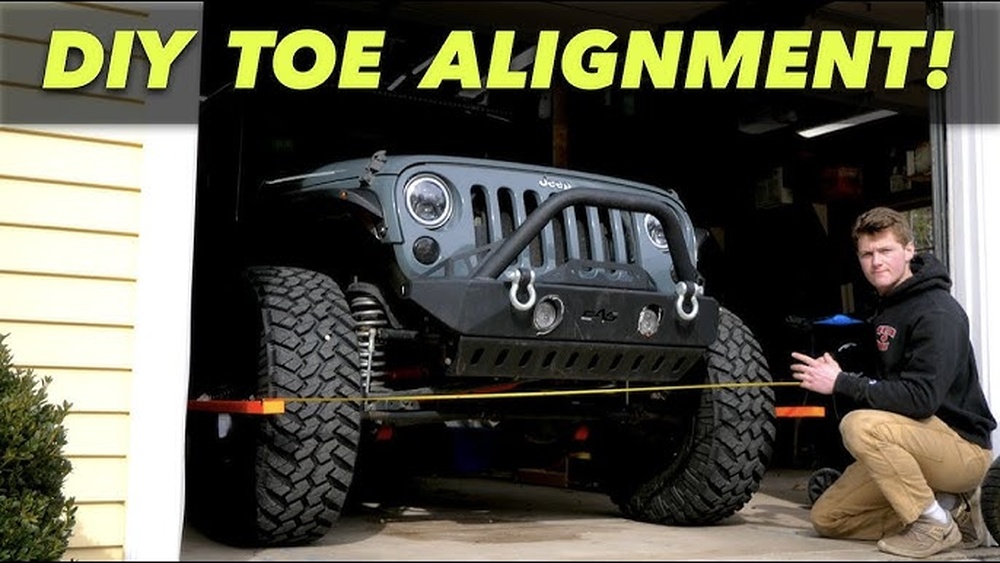
4. Measure Toe
Mark a spot on the front of each tire at hub height. Use the tape measure to find the distance between these marks at the front and back of the tires.
- Toe-in: Front measurement is shorter than the rear (good).
- Toe-out: Front is longer (bad for Wranglers).
Write down both numbers. The difference should be about 1/16″ to 1/8″ toe-in for most Jeeps.
5. Adjust Toe
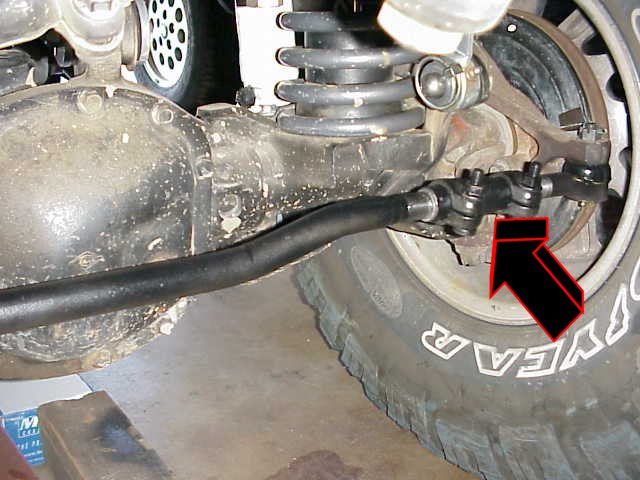
If adjustment is needed, loosen the clamps on the tie rod (the bar connecting both front wheels). Rotate the tie rod:
- Clockwise: Pulls fronts of tires in (adds toe-in).
- Counterclockwise: Pushes fronts out (adds toe-out).
Make small adjustments, then re-tighten clamps and re-measure. Repeat until you reach the correct toe setting.
6. Check And Adjust Caster
Caster angle affects high-speed stability and return-to-center feel. Most Wranglers have fixed camber and caster, but if you have adjustable control arms, you can fine-tune this angle.
A simple method is to use an angle finder on the steering knuckle. Adjust the length of the lower control arms to change caster:
- Longer arms: More positive caster (good for highway driving).
- Shorter arms: Less positive caster (easier off-road turning but less stable).
Set caster between 4° and 7° positive, as close as possible to factory specs.
7. Double-check And Test Drive
After all adjustments, tighten all bolts. Lower the Jeep and take it for a short drive. Notice any pulling, wandering, or crooked steering wheel. Re-check your measurements and repeat steps if needed.

Diy Vs. Professional Alignment
Is a home alignment good enough? For most basic adjustments—especially after installing a lift kit or new tie rods—DIY works well. But for complex issues, like bent axles or uneven caster, a professional alignment shop with laser tools is best.
| DIY Alignment | Shop Alignment |
|---|---|
| Low cost | More expensive ($100+) |
| Can fix toe and minor issues | Checks all angles precisely |
| Needs time and patience | Quick and accurate |
Common Mistakes To Avoid
- Ignoring worn parts: Always fix damaged suspension parts before aligning.
- Measuring with Jeep lifted: Always measure with the Jeep’s weight on the tires.
- Skipping test drives: Road feel can reveal small errors.
- Guessing measurements: Use a tape measure for accuracy.
An easy trick: Mark the tie rod’s original position before turning it. This helps if you need to undo a change.
Practical Tips For Jeep Owners
- Rotate tires after alignment to even out any past wear.
- Re-check alignment after hard off-roading, as impacts can shift settings.
- Keep a log of your measurements and adjustments for future reference.
If you want to dive deeper into Jeep alignment specs, the Jeep Wrangler Wikipedia page offers helpful technical details.
Frequently Asked Questions
How Often Should I Align My Jeep Wrangler?
You should check alignment every 6,000 miles or after any major suspension change. Off-road driving and lift kits can make more frequent checks necessary.
Can I Align My Jeep Wrangler After Installing A Lift Kit?
Yes, but a lift kit changes suspension geometry. Always re-measure and adjust toe and caster after lifting your Jeep.
What Are Signs My Wrangler’s Alignment Is Off?
Watch for uneven tire wear, steering that pulls, or a crooked steering wheel. Any of these signs mean it’s time to check your alignment.
Do I Need Special Tools To Align My Jeep?
For basic toe adjustments, you only need a tape measure and wrenches. For caster or camber, adjustable control arms and an angle finder help, but aren’t always needed.
What’s The Risk Of Not Aligning My Jeep?
Poor alignment can cause rapid tire wear, unsafe handling, and higher fuel costs. It can also stress steering and suspension parts, leading to expensive repairs.
A well-aligned Jeep Wrangler is safer, more fun to drive, and saves you money in the long run. With a few basic tools and patience, you can keep your Jeep tracking straight on any road or trail.