Removing the fenders from a Jeep JK is a common upgrade for many off-road enthusiasts. Whether you want to install aftermarket fenders, gain more clearance, or repair damage, knowing how to take off the stock fenders safely is important. Many beginners worry about damaging their Jeep or missing hidden fasteners. This guide will walk you through the process, highlight key details, and help you avoid mistakes.
Tools And Preparation
Before starting, gather the right tools. You’ll need:
- Socket set (mainly 10mm and 8mm sockets)
- Trim removal tool or flathead screwdriver
- Ratchet
- Torx bit set (mainly T30)
- Safety gloves
Make sure your Jeep is parked on a flat surface. Turning the front wheels outward helps you reach bolts in the wheel wells. It’s best to remove the fenders when the Jeep is clean, as mud and dirt can hide fasteners.
| Tool | Purpose | Average Cost (USD) |
|---|---|---|
| Socket set | Remove bolts | $20 – $50 |
| Trim removal tool | Pop clips | $5 – $15 |
| Torx bit set | Remove screws | $15 – $30 |
Step-by-step Fender Removal
Removing the fenders is straightforward, but patience matters. Each step is important for avoiding scratches and broken clips.
1. Remove Wheel Well Liners
Start with the plastic liners inside the wheel wells. Use a trim tool or flathead screwdriver to pop out the push pins and clips. These are usually stubborn, so work slowly to avoid breaking them. Some pins may require twisting before removal.
If the liners are dirty, clean them first so you can see the clips clearly. Set all clips aside for reuse or replacement.
2. Locate And Remove Bolts
The Jeep JK fender is held by several bolts along the inner edge. Most are 10mm or 8mm bolts, and some may use T30 Torx screws. Use your socket and ratchet to loosen them.
Don’t force the bolts. If any seem stuck, spray with penetrating oil and let it sit for a few minutes. This prevents snapping the bolt or damaging the threads.
| Location | Number of Bolts | Typical Socket Size |
|---|---|---|
| Front fender (per side) | 7-9 | 10mm |
| Rear fender (per side) | 6-8 | 8mm |
3. Disconnect Turn Signals
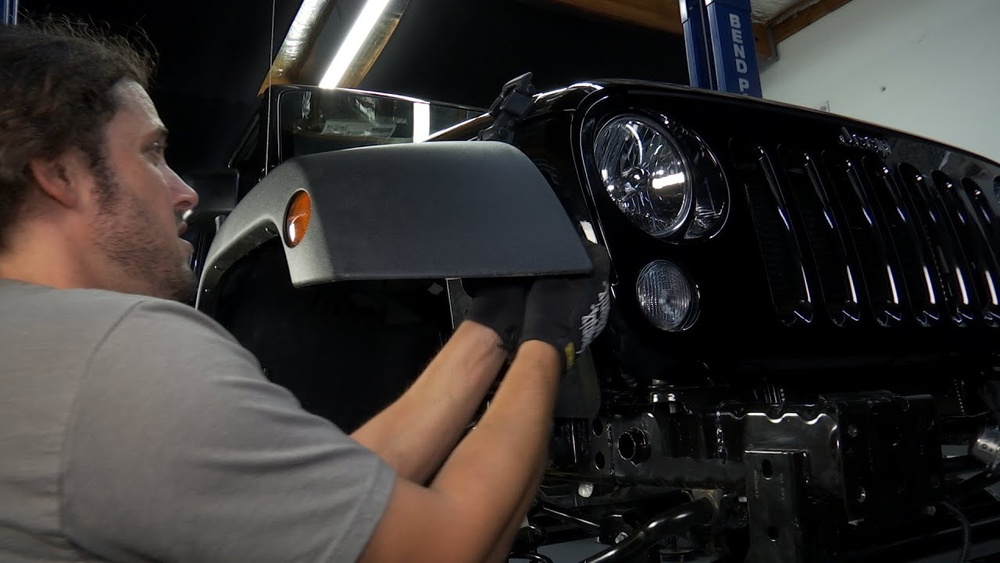
Some Jeep JKs have fender-mounted turn signals. Look behind the fender and find the wiring harness. Gently unplug it before you pull the fender away. If you forget this step, you risk damaging the wires.
Not all models have this feature, so check your Jeep’s specs.
4. Pop Off The Fender
With all bolts and clips removed, grip the fender firmly. Pull outward with steady force. You’ll hear popping sounds as the plastic clips release.
It’s normal for some clips to break. Jeep fenders use tough plastic clips, and replacements are cheap. If you plan to reuse the fender, remove any broken clips from the body.
5. Inspect And Clean
After removal, inspect the area for rust or damage. Clean the exposed body panels with a soft cloth. This is a good time to apply rust protection or touch-up paint, especially if you plan to install new fenders.

Common Mistakes And How To Avoid Them
Many beginners make mistakes that are easy to prevent:
- Breaking clips: Most clips are not reusable. Always have spare clips ready.
- Forgetting the wiring: If your Jeep has turn signals in the fender, unplug them before pulling.
- Losing bolts: Keep bolts and clips in a labeled container.
- Scratching paint: Wear gloves and use plastic trim tools to avoid scratching.
- Rushing: Take your time. Yanking too hard can crack the fender.
One non-obvious tip: If you plan to install aftermarket fenders, check their fit before removing the stock ones. Some brands require minor trimming of the body. Reading reviews on sites like Quadratec can help you choose fenders that fit your Jeep JK without extra work.
Aftermarket Fender Options
Many Jeep owners upgrade to aftermarket fenders for durability and style. Here’s a quick comparison:
| Type | Material | Price Range (USD) | Pros | Cons |
|---|---|---|---|---|
| Tube Fenders | Steel/Aluminum | $250 – $600 | Strong, off-road ready | Heavy, may need painting |
| Flat Fenders | Plastic/Steel | $200 – $500 | More clearance, modern look | Less protection |
| OEM Style | Plastic | $150 – $350 | Easy install, matches Jeep | Less durable |
If you drive in salty regions, choose aluminum fenders to resist rust. Another insight: Some aftermarket fenders come with their own hardware, so you don’t need to reuse old bolts or clips.
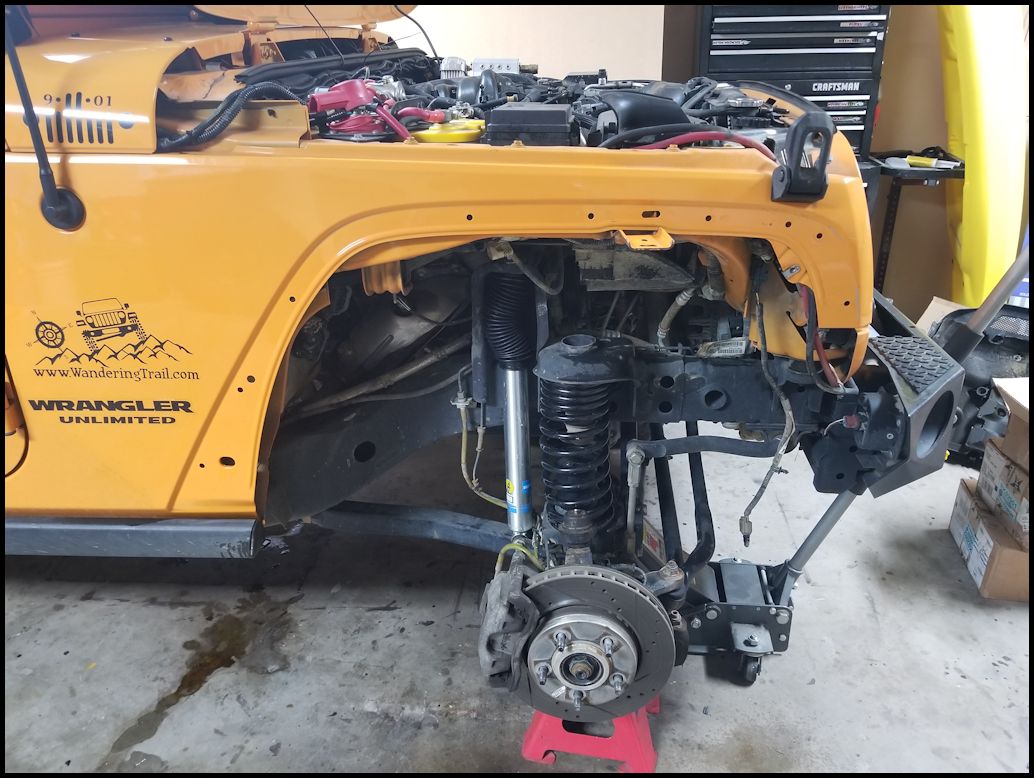
Practical Tips For Smooth Removal
- Use a trim removal tool instead of a metal screwdriver for popping clips. This reduces scratches.
- Keep a flashlight handy. Some bolts are deep in the wheel well and hard to see.
- If you break a clip or bolt, don’t panic. Replacement kits cost under $20 and are easy to find.
- Label all bolts and hardware. The front and rear fender bolts are not always the same size.
- Test fit new fenders before final installation. Sometimes holes don’t align perfectly, and you may need to adjust.
Frequently Asked Questions
What Is The Average Time To Remove Fenders On A Jeep Jk?
Most people finish in 1 to 2 hours per side. If you’re new, allow extra time for stuck bolts and hidden clips.
Are Special Tools Needed For Removing Jeep Jk Fenders?
No, standard socket and trim removal tools are enough. A Torx set is helpful for some screws, but not mandatory for all models.
Can I Reuse The Fender Clips After Removal?
Usually not. Most clips break during removal. Buy a replacement set for reinstallation.
Do I Need To Disconnect The Battery Before Removing Fenders?
It’s not required unless you’re working near electrical parts or wiring for turn signals. If in doubt, disconnect the battery for safety.
Will Removing The Fenders Affect My Jeep’s Warranty?
If you install aftermarket fenders correctly, it usually won’t affect the warranty. However, improper installation or damage to wiring may void coverage. Check your warranty terms before making changes.
Removing Jeep JK fenders is a manageable task with the right tools and patience. With careful steps, you can upgrade your Jeep’s look and performance without risk. Always work slowly, keep hardware organized, and check fitment before installing new fenders.
By following these tips, you’ll avoid common mistakes and keep your Jeep ready for adventure.