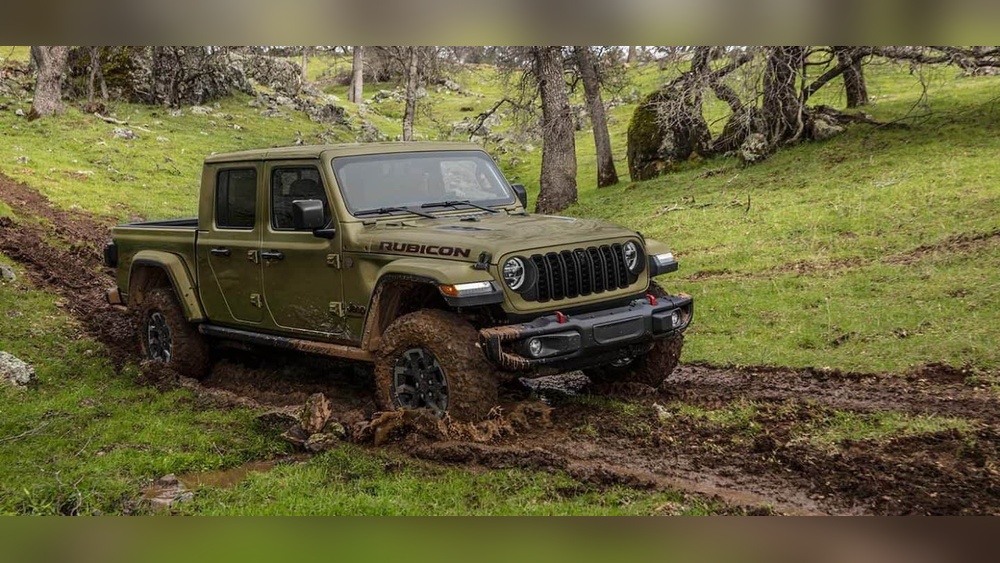
The Jeep Gladiator is a unique midsize truck that brings legendary off-road capability to everyday drivers. One of its key features is the 4×4 system, which allows you to tackle rough terrain, snow, mud, and other challenging conditions. Many new owners are excited about the potential of 4×4, but using it correctly is essential for both safety and performance.
If you want to get the most from your Gladiator’s four-wheel drive, understanding how and when to use each mode is crucial.
Understanding The Jeep Gladiator 4×4 System
The Jeep Gladiator comes with a part-time 4×4 system, which means you can switch between two-wheel drive and four-wheel drive as needed. This flexibility makes the truck practical for both daily driving and off-road adventures. There are four main 4×4 modes you need to know:
- 2H (Two-Wheel Drive High)
- 4H (Four-Wheel Drive High)
- N (Neutral)
- 4L (Four-Wheel Drive Low)
Each mode serves a specific purpose, and using the wrong one at the wrong time can cause damage or reduce control.
2h (two-wheel Drive High)
2H is the default setting for most driving situations. In this mode, power is sent only to the rear wheels. This mode is ideal for:
- Dry pavement
- Highway driving
- City streets
Why use 2H? It offers the best fuel economy and tire life because there is less mechanical resistance. Using 2H on good roads ensures your Gladiator drives smoothly and efficiently.
When to avoid 2H: If the road is slippery or you are going off-road, you need more traction. Switching to a 4×4 mode will keep you safer in those situations.

4h (four-wheel Drive High)
4H is designed for situations where you need extra traction at higher speeds, such as:
- Rainy, snowy, or icy roads
- Gravel or dirt roads
- Light off-roading
In 4H, power is sent to all four wheels, which helps prevent slipping. You can shift from 2H to 4H while driving at speeds up to 45 mph (72 km/h). This is called “shift-on-the-fly.” For best results, slow down and keep your wheels straight while shifting.
Important: Do not use 4H on dry pavement. The increased traction can cause stress on the drivetrain, leading to wear or damage.
| Mode | Best For | Max Speed |
|---|---|---|
| 2H | Normal roads | No limit |
| 4H | Slippery/off-road | Up to 45 mph |
N (neutral)
N (Neutral) is a special mode that disconnects the transmission from the wheels. In this mode, the vehicle will not move under its own power.
When to use Neutral:
- Flat towing the Gladiator behind another vehicle (such as an RV)
- Certain recovery situations
Do not drive in Neutral. It is only for towing or when you need to move the vehicle without starting the engine. Always check your owner’s manual before using Neutral for towing to avoid transmission damage.
4l (four-wheel Drive Low)
4L is for extreme conditions and slow-speed maneuvers. It provides maximum power and control by increasing torque and reducing speed.
Use 4L for:
- Steep hills (up or down)
- Deep mud, sand, or snow
- Rock crawling
- Pulling a stuck vehicle
To engage 4L, bring your Gladiator to a complete stop, shift the transmission to Neutral, then move the transfer case lever to 4L. You will hear and feel a solid engagement.
Never use 4L on dry or hard surfaces. It can cause drivetrain binding and damage.
| Mode | Speed Range | Typical Use |
|---|---|---|
| 4H | 0–45 mph | Loose/slippery surfaces |
| 4L | 0–25 mph | Extreme off-road |
Practical Steps: How To Switch Between Modes
Switching between modes is simple if you follow these steps:
- 2H to 4H: Slow down to under 45 mph. While driving straight, pull the 4×4 lever to 4H.
- 4H to 4L: Stop the vehicle completely. Put the transmission in Neutral. Pull the lever straight back to 4L.
- 4L to 4H: Stop and put transmission in Neutral. Push the lever forward to 4H.
- 4H or 2H to Neutral: Stop, put transmission in Neutral, move lever to N.
Tip: If the system feels stuck, gently roll the vehicle a few inches and try again.

Common Mistakes To Avoid
Many beginners make errors when first using their Gladiator’s 4×4. Here are some to watch out for:
- Engaging 4×4 on dry pavement (can damage drivetrain)
- Switching to 4L while moving (always stop first)
- Forgetting to shift back to 2H after leaving slippery surfaces
- Using Neutral mode for normal driving
Knowing these mistakes can save you from costly repairs and keep your Jeep running smoothly.
Real-world Example
Imagine you’re driving up a snowy mountain road. Start in 2H, but if you notice slipping, slow down and shift to 4H. If the snow gets deeper and you need to climb a steep, rutted path, stop, shift to Neutral, and engage 4L for maximum traction.
Comparing Modes At A Glance
Here’s a quick summary for easy reference:
| Mode | Surface | Traction | Fuel Economy |
|---|---|---|---|
| 2H | Dry roads | Normal | Best |
| 4H | Wet/snowy | High | Lower |
| 4L | Off-road/extreme | Maximum | Lowest |
| N | Towing | None | N/A |
Non-obvious Insights
Many drivers don’t realize that tire pressure plays a big role in 4×4 performance. Lowering your tire pressure slightly off-road can improve grip. Also, always engage 4×4 before you get stuck, not after. Preventing a problem is easier than escaping from one.
Final Thoughts
Using the 4×4 system on your Jeep Gladiator is simple once you understand the basics. Each mode has a specific use, and switching between them correctly can keep you safe while protecting your vehicle. Take time to practice in a safe area before heading into challenging terrain.
With the right knowledge, your Gladiator can take you almost anywhere.
Frequently Asked Questions
Can I Shift From 2h To 4h While Driving?
Yes, you can shift from 2H to 4H while moving, as long as you are driving under 45 mph and the wheels are straight.
When Should I Use 4l In The Jeep Gladiator?
Use 4L for very rough terrain, steep inclines, deep mud, or snow. Always stop the vehicle before engaging 4L.
Is It Safe To Use 4h On Dry Pavement?
No. Using 4H on dry pavement can damage your drivetrain. Use it only on loose, slippery, or uneven surfaces.
What Does Neutral (n) Mode Do?
Neutral disconnects the transmission from the wheels. It is only for flat towing your Gladiator or certain recovery situations.
Where Can I Learn More About Jeep 4×4 Systems?
You can find detailed information at the official Jeep 4×4 Systems page.