Many Jeep owners love the freedom of removing their tops, whether it’s a soft top, hard top, or the lightweight panels of a Wrangler. But storing these tops safely, especially inside a storage bag, can be tricky. Damage, scratches, and wasted space are common problems if you don’t follow the right steps.
Packing your Jeep top in a bag isn’t just about keeping it clean—it protects your investment and makes handling easier, especially if you plan to swap tops often or travel with them.
Knowing exactly how to put Jeep tops in a bag can save you time, space, and money. This guide covers not only the basic steps but also tips many beginners overlook. You’ll see clear comparisons between bag types, learn practical packing methods, and discover the best ways to avoid common mistakes.
Understanding Jeep Top Types
Before packing, it’s important to know which Jeep top you’re dealing with. Each type requires a slightly different approach.
Soft Top
A soft top is made from fabric and folds easily. It’s lighter but can wrinkle or tear if packed carelessly.
Hard Top
A hard top is heavy, often made from fiberglass or plastic. It can scratch or chip if not padded.
Freedom Panels
Wrangler’s freedom panels are smaller roof pieces, easy to remove and store but prone to scuffs.
Here’s a quick comparison of the main Jeep tops:
| Top Type | Weight | Fragility | Packing Difficulty |
|---|---|---|---|
| Soft Top | Light | Medium | Easy |
| Hard Top | Heavy | High | Challenging |
| Freedom Panels | Medium | High | Moderate |
Choosing The Right Bag
Not all bags are equal. Using the wrong bag can lead to scratched panels or even broken parts. Here are the main bag types Jeep owners use:
| Bag Type | Protection | Ease of Carry | Price Range |
|---|---|---|---|
| OEM Jeep Bags | High | Good | $100–$300 |
| Generic Soft Bags | Medium | Excellent | $40–$120 |
| Hard Shell Cases | Very High | Fair | $250–$500 |
OEM bags are made for your Jeep model, with extra padding and custom fit. Generic bags can work, but might not give full protection. Hard shell cases are best for long-term storage or shipping.
Tip: Check for thick padding, water-resistant lining, and strong zippers. Avoid bags that feel flimsy or don’t close tightly.
Step-by-step: Packing Your Jeep Top
Follow these steps for safe, efficient packing. This method works for most Jeep tops and bags.
- Clean the Top: Wipe down panels with a soft cloth. Remove dust, mud, or debris. This prevents scratches during storage.
- Remove Hardware: Take off any bolts, latches, or clips. Keep them in a zippered pouch inside the bag.
- Lay Out Bag: Open the bag fully. Place padding or foam inside if not built-in.
- Position the Top: For soft tops, fold gently (never force). For hard tops and panels, lay them flat or stand upright, depending on bag design.
- Use Dividers: If your bag has dividers, separate panels so they don’t touch.
- Secure Panels: Strap or Velcro panels in place to stop movement.
- Zip Up Carefully: Close zippers slowly, checking for snags.
- Store Bag Upright: Place bag in a dry spot, upright if possible, to keep shape.
Packing hard tops can be tricky. Always ask for help if the top is heavy—dropping it can cause expensive damage.
Common Mistakes To Avoid
Many Jeep owners make these errors:
- Overstuffing the bag: This bends panels or tears fabric.
- Skipping cleaning: Dirt scratches paint and fabric.
- Ignoring hardware: Small parts get lost easily.
- Wrong bag size: A loose bag lets panels slide, a tight bag causes stress.
An overlooked detail: Always check bag seams for weakness. A broken seam can spill panels and ruin your top.

Practical Tips For Long-term Storage
If you plan to store your Jeep top for months, follow these tips:
- Choose a climate-controlled area to avoid moisture damage.
- Add silica gel packs inside the bag to absorb humidity.
- Check the bag every few weeks for mold or pests.
- For hard tops, never stack heavy items on top.
Surprisingly, sun exposure—even inside a bag—can fade soft top fabric. Store away from windows or direct light.
Real-life Example: Packing A Wrangler Freedom Panel
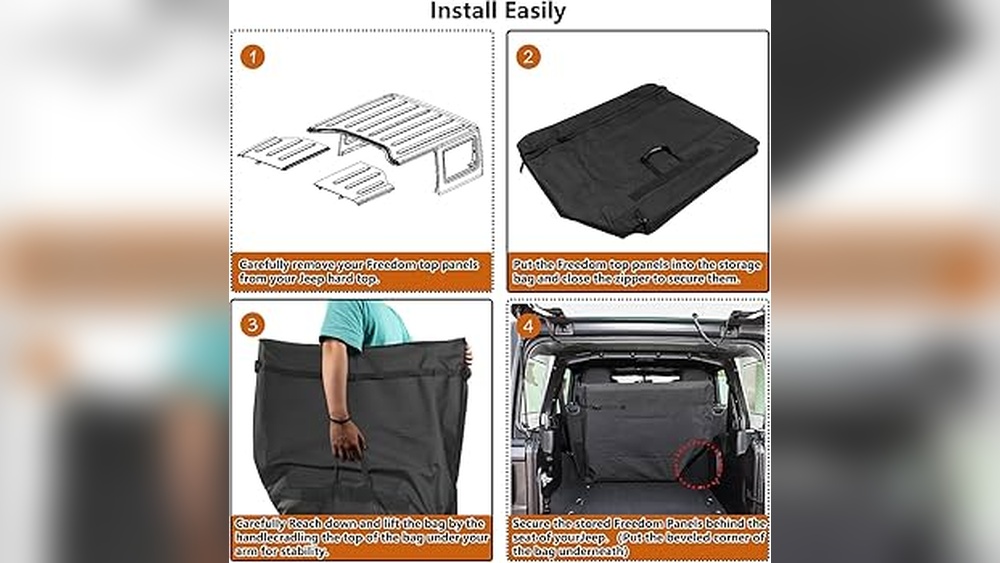
Let’s see how this works for a popular Jeep part. Freedom panels are lightweight, but their painted surface scratches easily.
- Clean each panel with a microfiber towel.
- Place foam sheets between panels.
- Slide panels into individual bag slots.
- Strap them firmly.
- Zip up and store upright.
A Jeep owner in Colorado found that using a hard shell case reduced scratches by 80% compared to a soft bag. Investing in the right bag pays off in the long run.

Benefits Of Proper Packing
Why go through all this trouble? Proper packing:
- Extends the life of your Jeep top
- Prevents costly repairs or replacements
- Makes swapping tops faster and easier
- Keeps hardware organized
According to a survey by Jeep forums, 67% of owners who use OEM or hard shell bags report fewer scratches and easier installation.
For more details on Jeep accessories and storage solutions, visit Jeep Official Accessories.
Frequently Asked Questions
How Do I Know Which Bag Fits My Jeep Top?
Check your Jeep model and year. OEM bags are labeled for specific models. Measure your top and compare with bag dimensions.
Can I Pack A Wet Soft Top In The Bag?
No. Always dry your soft top completely before packing. Moisture causes mold and damages fabric.
Is It Safe To Store A Hard Top Outside In The Bag?
It’s not recommended. Even with a water-resistant bag, temperature changes and sunlight can damage the top. Store indoors if possible.
How Often Should I Check My Stored Jeep Top?
Inspect every month for signs of moisture, pests, or damage. This prevents problems from growing unnoticed.
What’s The Best Way To Organize Hardware When Packing?
Use a small zippered pouch or resealable bag. Label it and keep inside the main storage bag to avoid losing bolts and clips.
Packing your Jeep top in a bag may seem simple, but doing it right protects your vehicle and makes life easier. With careful cleaning, the right bag, and a few smart steps, you’ll keep your Jeep top safe and ready for adventure.