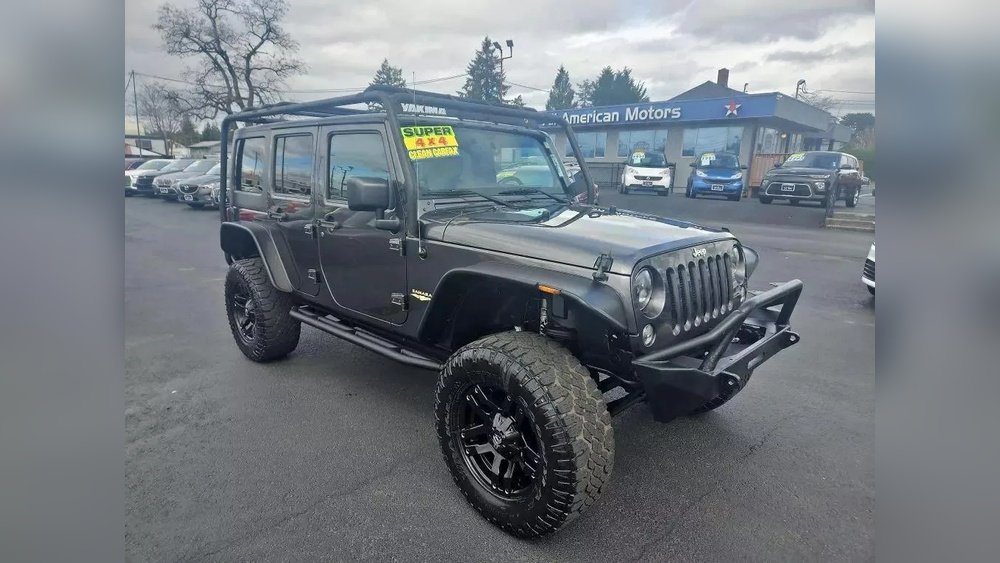
Few things feel more exciting for Jeep owners than tackling tough trails or slippery roads. The ability to switch your Jeep into 4-wheel drive (4WD) lets you go places other cars cannot.
But making the switch isn’t always clear, especially for beginners. Getting it wrong can damage your Jeep and leave you stuck.
This guide explains, step by step, how to put your Jeep in 4WD, covers different Jeep models, and shares tips to avoid common mistakes. By the end, you’ll feel confident to use 4WD safely whenever you need it.
Understanding 4wd In Jeeps
Most Jeeps come with either part-time or full-time 4WD systems. Part-time 4WD is common in models like the Wrangler and Gladiator. Full-time 4WD appears in Jeeps like the Grand Cherokee and Cherokee with the Quadra-Trac or Quadra-Drive systems.
The main purpose of 4WD is to send power to all four wheels, improving traction. This is especially useful on mud, snow, sand, or rocky terrain.
Here’s a quick comparison of the most common Jeep drive modes:
| Drive Mode | Use Case | Speed Limit |
|---|---|---|
| 2WD | Dry, paved roads | No limit |
| 4WD High | Snow, mud, light off-road | Up to 55 mph |
| 4WD Low | Deep mud, rocks, steep hills | Below 30 mph |
How To Put Your Jeep In 4wd
Putting your Jeep in 4WD is simple once you know the steps. The process can vary depending on your model and year. Always check your owner’s manual for specifics.
Step-by-step Guide For Most Jeeps
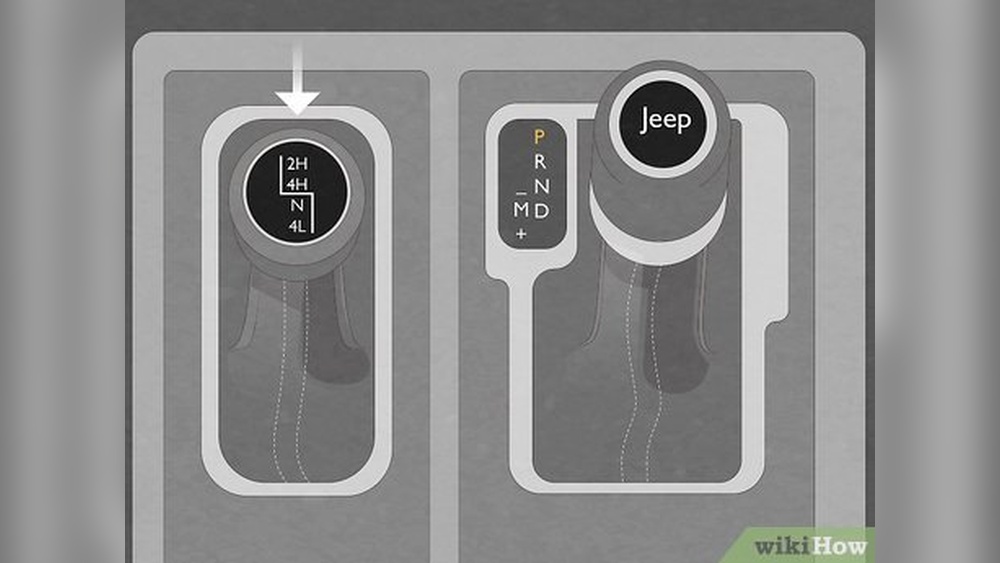
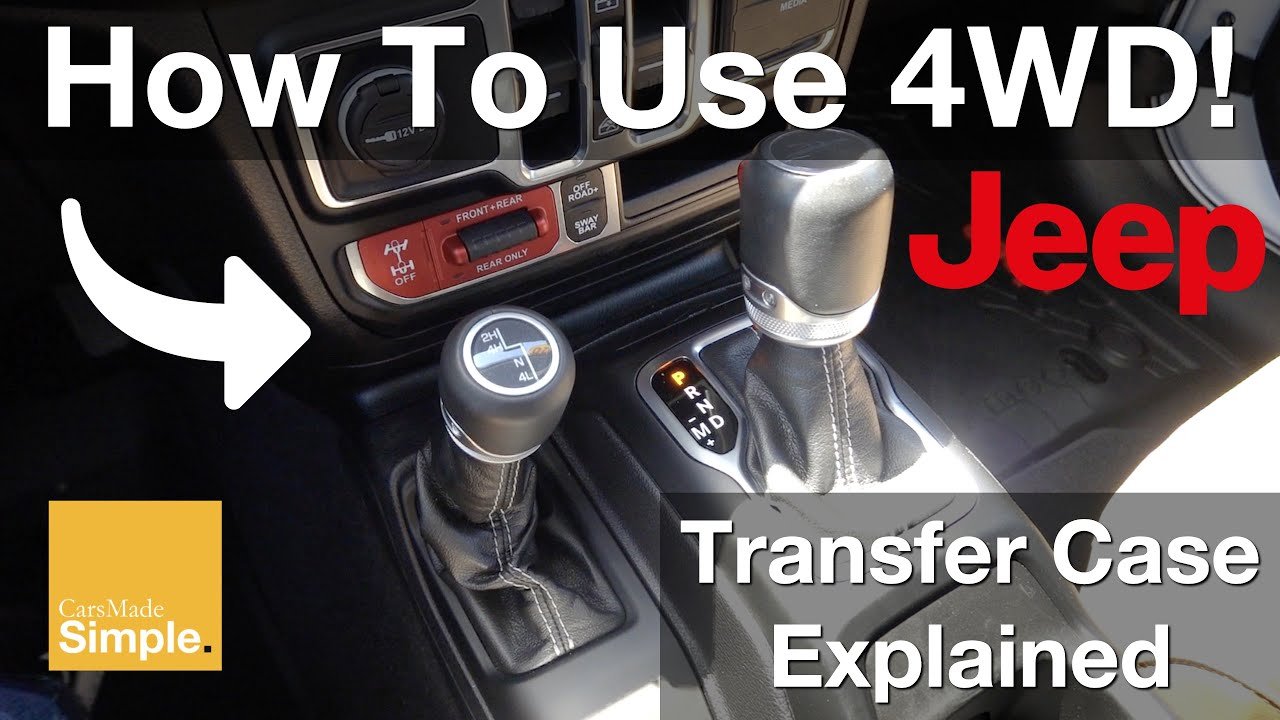
- Identify your 4WD system: Older Jeeps often have a lever; newer ones may use a knob or electronic switch.
- Know your drive modes: Most Jeeps have 2H (two-wheel drive high), 4H (four-wheel drive high), and 4L (four-wheel drive low).
- Switching to 4H (4WD High):
- Slow down to below 55 mph.
- For most models, you can shift into 4H while moving. Just pull the lever or turn the knob from 2H to 4H.
- You may hear a click or feel a slight change.
- Switching to 4L (4WD Low):
- Stop the Jeep completely.
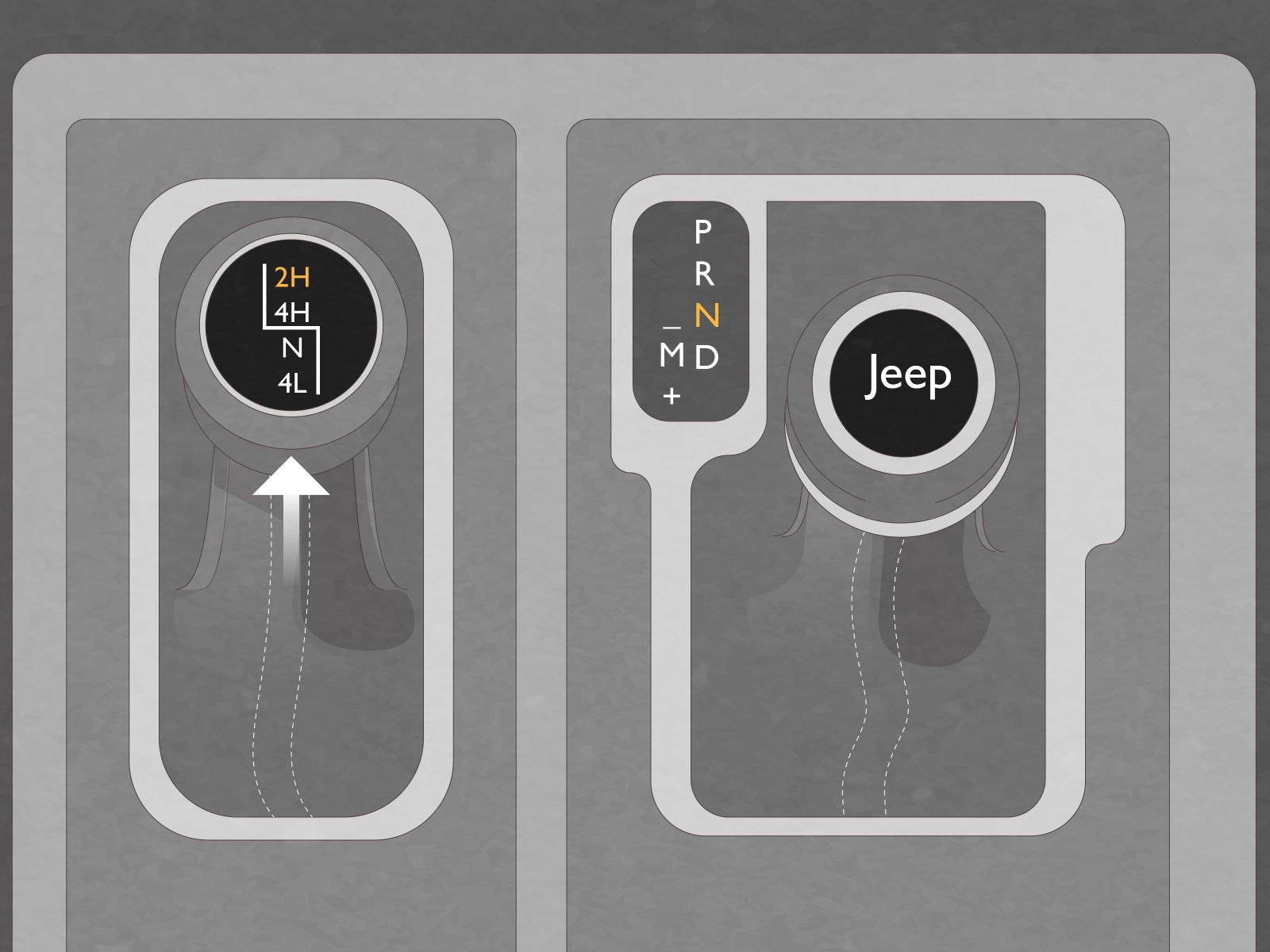
- Shift the transmission into neutral (N).
- Move the 4WD lever or knob from 4H to 4L.
- Wait for the system to engage; you may feel a stronger click.
- Put the transmission back into drive or reverse.
Here’s how the process looks for two popular Jeep models:
| Model | 4WD Engagement | Special Notes |
|---|---|---|
| Jeep Wrangler | Manual lever shift | Shift to 4H while moving; 4L only when stopped |
| Jeep Grand Cherokee | Electronic knob | Shift to 4H at low speed; 4L requires neutral |
Practical Tips
- Use 4H for slippery conditions or light off-road.
- Use 4L only for deep mud, rocks, or steep climbs.
- Never use 4WD on dry pavement; it can damage the system.
- Always return to 2H when back on regular roads.
Common Mistakes And How To Avoid Them
Many Jeep owners make errors when switching to 4WD. Here are some to watch for:
- Shifting to 4L while moving: This can harm your transfer case. Always stop first.
- Using 4WD on dry roads: 4WD increases tire wear and stresses the drivetrain.
- Ignoring speed limits: Going too fast in 4WD can cause overheating or mechanical issues.
- Not returning to 2H: This causes unnecessary strain and lower fuel efficiency.
A surprising mistake is forgetting to use neutral when shifting to 4L. This is a common error among beginners, especially with electronic systems.
When To Use 4wd
Knowing when to use 4WD is just as important as knowing how. Here are situations where 4WD is recommended:
- Snowy or icy roads
- Mud and sand
- Rocky trails
- Steep hills
If you’re unsure, check the road conditions. If tires slip or you feel loss of control, switch to 4WD.
Real-world Example
Imagine driving a Jeep Wrangler on a snow-covered highway. As you notice your tires slipping, slow down below 55 mph and shift from 2H to 4H. You’ll feel more grip and control. If you later reach a steep, snowy hill, stop the vehicle, shift to neutral, and move the lever to 4L. Now you have maximum torque to climb.

Jeep 4wd Systems: Key Differences
Jeep offers several 4WD systems. Here’s a quick comparison of two popular types:
| System | Operation | Best For |
|---|---|---|
| Part-Time 4WD | Manual engagement | Off-road, variable terrain |
| Full-Time 4WD | Automatic, always active | Mixed conditions, daily driving |
If your Jeep has full-time 4WD, you don’t need to manually switch modes for most situations. But part-time systems require you to shift as road conditions change.
Non-obvious Insights
Many beginners think 4WD improves braking, but it doesn’t. It only helps with traction.
Also, 4WD can make turning harder on tight corners due to wheel binding. If you hear strange noises or feel resistance, switch back to 2H.
Another overlooked fact: Using 4L increases torque but reduces speed. This is ideal for crawling over rocks but not for driving faster than 30 mph.
Frequently Asked Questions
Can I Shift Into 4wd While Driving?
Yes, you can shift into 4H while moving at low speeds (below 55 mph) in most Jeeps. For 4L, always stop and shift the transmission into neutral first.
Does 4wd Improve Fuel Efficiency?
No, using 4WD usually lowers fuel efficiency. Only use it when needed to avoid wasting gas.
Is 4wd Needed For All Off-road Driving?
Not always. For light dirt or gravel, 2WD may be enough. Use 4WD for challenging terrain like mud, snow, or rocks.
What Happens If I Use 4wd On Dry Pavement?
Using 4WD on dry roads can cause tire wear and damage the transfer case. Only use 4WD when traction is low.
Where Can I Find More Details About Jeep 4wd Systems?
You can read detailed information on Jeep’s official site: Jeep 4×4 Systems.
Putting your Jeep in 4WD isn’t difficult, but it does require attention and care. Understanding your system, knowing the steps, and avoiding common mistakes will keep your Jeep running smoothly and ready for adventure.
Always check your manual for details on your specific model and use 4WD only when conditions demand it.
With these skills, you can explore with confidence and protect your vehicle for years to come.