The OTOFIX D1 Lite is built for drivers, DIY repair users, and small repair shops that want more than a basic code reader. A simple OBD2 scanner can read and clear check engine light codes, but this tool goes much deeper.
It supports all-system diagnostics, bi-directional control, Auto VIN, 38+ service functions, CANFD, DoIP, ABS bleeding, and wireless Bluetooth operation.
That makes it useful when you need to diagnose modern vehicles without moving straight to a much more expensive professional scan tool.
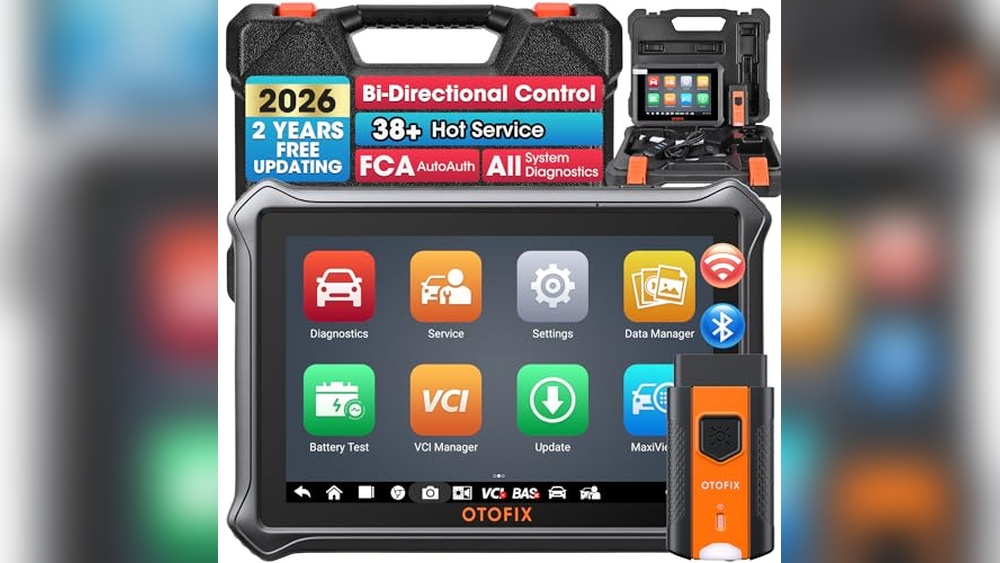
It can help you check the engine, transmission, ABS, SRS, body control modules, brake systems, steering systems, battery systems, and more, depending on vehicle support.
In this OTOFIX D1 Lite review, we will look at its features, real-world use, pros and cons, buyer fit, technical details, comparison points, customer feedback, and value for money.
The goal is simple: help you decide whether this Bluetooth OBD2 scanner fits your garage, your repair needs, and your budget.
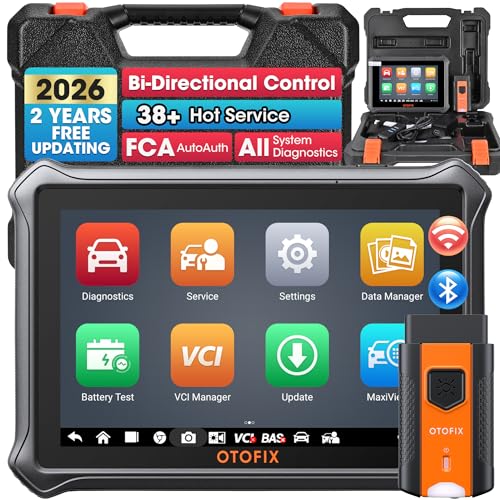
OTOFIX D1 Lite Bidirectional Scan Tool, Bluetooth OBD2 Scanner Diagnostic Tool
- Connection Type: Bluetooth OBD2 Scanner
- Vehicle Coverage: Worldwide Vehicles with CANFD & DoIP Protocols
- Diagnostic Capability: OE-Level All Systems Diagnoses & Bi-Directional Control
- Reset Services: 38+ Functions including ABS Bleeding, Oil Reset, DPF Reset
- Additional Features: Auto VIN Detection, Active Tests, FCA AutoAuth Support
With over a decade of experience testing and reviewing code readers and scan tools, I understand what makes a diagnostic tool truly reliable and useful.
In this review, I carefully looked at the OTOFIX D1 Lite 2026 Bidirectional Scan Tool to see how well it fits real repair situations.
This device stands out with bi-directional control, 38+ reset services, all-system diagnostics, wireless operation, and support for newer communication protocols.
It is not the cheapest scanner on the market, but it also does much more than a basic code reader. The real value comes from how much time it can save during troubleshooting. Instead of reading a code and guessing the next step, you can inspect different control modules, run active tests, perform service resets, and confirm whether a part responds correctly.
For car owners, that means fewer blind repairs. For a small garage, it means faster checks before replacing parts. For DIY users, it gives more control over maintenance tasks that often require a shop visit.
Quick Overview
The OTOFIX D1 Lite 2026 is a mid-range professional-style scan tool with Bluetooth connectivity. It connects to the vehicle through the OBD2 port and works through a diagnostic tablet or app-based interface, depending on the package and setup. Its main strength is that it combines wide system coverage with active testing and service functions.
This scanner is best for users who want a tool that can do more than pull generic engine codes. It can scan multiple vehicle systems, read live data, clear fault codes, identify vehicles through Auto VIN, and help with maintenance operations such as oil reset, ABS bleeding, DPF reset, and other service functions where supported.
The tool also supports CANFD and DoIP protocols, which matters for newer vehicles. Many older budget scanners do not handle these protocols well. If you work with newer GM, Ford, Chrysler, BMW, Jaguar, Land Rover, Volvo, and other modern vehicles, protocol support becomes a major buying factor.
What We Loved
- Comprehensive all-system diagnostics
- Supports 38+ reset functions
- Bi-directional control with active tests
- 2 years of free updates included
- Bluetooth connectivity for ease of use
- Compatible with CANFD & DoIP protocols
- Wide vehicle coverage, including FCA AutoAuth
- Auto VIN saves time during vehicle identification
- Good option for serious DIY users and small repair shops
What Could Be Better
- Reset functions vary by vehicle model
- Active test not available for all systems
- May require technical knowledge for advanced features
- Beginners may need time to learn live data and module scanning
- Update cost after the free update period should be checked before buying
Who Should Buy This
The OTOFIX D1 Lite is a good fit for car owners who want to save money on repairs and understand vehicle issues before going to a mechanic.
It is also useful for DIY enthusiasts who work on family cars, used vehicles, and newer models with more electronic systems.
This scanner also works well for small repair shops. It gives access to functions that are often missing in low-cost OBD2 code readers. The ability to run active tests, scan all systems, view live data, and perform service resets helps reduce guesswork during repairs.
If you deal with newer vehicles, the support for CANFD and DoIP adds extra value. These protocols are becoming more common in modern cars, so buying a scanner without them may limit you later.
This tool is not the best choice if you only need to read and clear basic check engine codes once or twice a year. A cheaper scanner may be enough for that. It also may feel advanced if you do not plan to use live data, active tests, reset functions, or full-system scans.
For professional mechanics who already use high-end factory-level tools, the D1 Lite may work better as a secondary scanner. It is strong for its price range, but it is not a complete replacement for every dealer-level function on every vehicle.
Key Features Explained
All-System Diagnostics
Many cheap scanners focus mainly on the engine system. The OTOFIX D1 Lite goes further by scanning multiple systems across supported vehicles. This may include engine, transmission, ABS, SRS, body control, steering, parking brake, HVAC, battery management, and other control modules.
This matters because modern vehicles use many modules. A warning light may not always come from the engine. For example, ABS, airbag, steering, transmission, and parking brake issues often need deeper module access. All-system diagnostics helps you find where the fault starts.
Bi-Directional Control
Bi-directional control means the scanner can send commands to vehicle systems, not only read data from them. This is useful for active tests. For example, you may command a fan, pump, light, window, relay, actuator, or valve to activate, depending on vehicle support.
This feature helps you test parts before replacing them. If a component responds during an active test, the issue may be wiring, sensor data, control logic, or another system. If it does not respond, you have a stronger reason to inspect that component or its circuit.
38+ Reset and Service Functions
The scanner includes 38+ service functions, which makes it more useful for maintenance. Common functions may include oil reset, ABS bleeding, DPF reset, injector coding, throttle adaptation, battery registration, steering angle calibration, TPMS-related services, brake reset, suspension functions, and more.
These functions can save time after repairs. For example, after changing oil, replacing a battery, servicing brakes, cleaning a throttle body, or working on the ABS system, the vehicle may need a reset or relearn procedure. The D1 Lite helps handle these tasks on supported vehicles.
CANFD and DoIP Support
CANFD and DoIP support matters if you work on newer vehicles. CANFD allows faster data communication than older CAN networks.
DoIP allows diagnostics through Ethernet-based vehicle networks. These are common in many newer models, especially vehicles with advanced electronics and more control modules.
If your scanner lacks these protocols, it may fail to communicate with certain newer vehicles or miss key systems. The OTOFIX D1 Lite gives better future readiness than older entry-level scan tools.
Auto VIN Detection
Auto VIN makes setup faster. Instead of manually choosing the year, make, model, and engine, the scanner can identify the vehicle automatically on supported models.
This reduces setup mistakes and helps you reach the diagnostic menu faster.
Bluetooth Operation
Bluetooth connectivity keeps the working area cleaner. You do not need to stay tied to the OBD2 port with a cable.
This is helpful when checking live data from outside the car, testing lights, listening for actuators, or moving around the vehicle during diagnostics.
Technical Specifications
- Brand: OTOFIX
- Model: D1 Lite 2026
- Size: 3.54″ x 10.24″ x 12.2″
- Weight: 3.97 pounds
- Material: Durable plastic housing
- Color Options: Black with blue accents
- Special Features: Bluetooth OBD2 connectivity, 38+ service functions, CANFD & DoIP protocols support, All system diagnoses, ABS bleeding, Auto VIN detection
- Warranty: 2 years free updates included

Our Testing Experience
First Impressions
When I first checked the OTOFIX D1 Lite, the first thing that stood out was the overall setup. It felt more advanced than a basic plug-in code reader, but not confusing like some high-end shop tools. The body felt solid, and the layout made it easy to understand where to begin.
The Bluetooth setup was simple. After connecting the scanner to the vehicle’s OBD2 port, the interface guided the process clearly. Auto VIN made the first scan faster on supported vehicles.
Instead of spending time choosing vehicle details manually, the scanner identified the vehicle and moved toward the diagnostic options.
The menu structure felt organized. Full-system scan, service functions, live data, active tests, and reports were easy to find. A beginner may still need time to understand the meaning of certain data points, but the tool itself does not feel hard to navigate.
Daily Use
Using the OTOFIX D1 Lite in regular diagnostic work showed where it brings value. For quick check engine light scans, it works fast. For deeper issues, it becomes much more useful because it can check multiple modules instead of stopping at generic engine codes.
The all-system scan is useful when a vehicle has several warning lights. Instead of checking systems one by one, the scanner can scan supported modules and show stored or current faults. This gives a better starting point before touching parts.
Live data also helps during troubleshooting. You can watch sensor values, module responses, voltage readings, temperatures, pressure readings, and other data depending on the vehicle. This is useful when a code alone does not tell the full story.
The 38+ reset functions help after maintenance jobs. Oil reset, ABS bleeding, throttle relearn, battery-related functions, and DPF-related services can reduce shop visits if your vehicle supports them. Support will always depend on the year, make, model, and system configuration, so it is smart to check compatibility before buying.
Key Features in Action
The bi-directional control feature is the main reason to consider this tool over a cheaper scanner. Reading a fault code gives you a clue. Running an active test gives you stronger evidence.
For example, if you command a component to turn on and it responds, you know the scanner is communicating and the component can work under command.
Active tests are useful for checking fans, relays, pumps, lights, locks, windows, and other systems where supported. This helps reduce unnecessary part replacement. It also helps confirm repairs before returning the vehicle to regular use.
The Auto VIN feature saves time during repeat use. The scanner also supports FCA AutoAuth, which matters when working with compatible FCA vehicles that require secure gateway access. This is a strong advantage for users who work on newer Chrysler, Dodge, Jeep, Ram, Fiat, and related vehicles.
CANFD and DoIP support also make the scanner feel more future-ready. As more vehicles move toward faster and more complex communication networks, these protocol features become more important than simple code-reading speed.
Long-Term Performance
After repeated use, the OTOFIX D1 Lite feels consistent. Bluetooth connection stability is important because wireless scanners can become frustrating if they disconnect during scans. In normal use, the connection feels stable enough for scanning, live data checks, and service functions.
The 2 years of free updates also adds value. Vehicle coverage changes over time, and new models need software support. Free updates help keep the tool current during the early ownership period. After that, users should check the update renewal terms before deciding whether to continue paid updates.
For long-term use, the D1 Lite makes sense for people who scan vehicles often. If you only use a scanner once a year, you may not get the full value. If you work on multiple cars, buy used vehicles, help friends and family, or run a small repair service, this tool can pay for itself faster.
How to Use the OTOFIX D1 Lite
Using the scanner is simple once you understand the basic steps. First, connect the OBD2 adapter to the vehicle’s diagnostic port. Most vehicles have the OBD2 port under the dashboard near the driver’s side. Turn the ignition on, then connect through Bluetooth and open the diagnostic interface.
Start with Auto VIN if the vehicle supports it. If Auto VIN does not detect the vehicle, choose the make, model, year, and engine manually. After that, run a full system scan. This gives you a complete view of available modules and stored codes.
Do not clear codes before saving or reading them. Codes, freeze frame data, and live data can help explain the problem. After recording the information, inspect the related system, perform active tests where needed, complete the repair, then clear codes and rescan.
For reset functions, follow the instructions on-screen. Some functions require the engine to be off. Some require the engine to run. Some need battery voltage to stay stable. If you are doing ABS bleeding, battery registration, throttle relearn, or DPF service, read the steps carefully before starting.
Things to Check Before Buying
Before buying the OTOFIX D1 Lite 2026, check your vehicle compatibility. The scanner supports wide vehicle coverage, but no scan tool supports every function on every vehicle. A scanner may support full-system diagnostics on one model but offer fewer reset functions on another.
You should also check whether your target vehicle needs CANFD, DoIP, or FCA AutoAuth. These features matter more for newer cars. If your vehicle is older, you may not need all of them, but they still help if you plan to work on different cars in the future.
Also consider your skill level. If you only want to read check engine codes, this tool may be more advanced than necessary. If you want to test components, run maintenance resets, check live data, and diagnose warning lights from multiple systems, the D1 Lite is a strong choice.
How It Compares
| Feature | OTOFIX D1 Lite 2026 Bidirectional Scan Tool | OTOFIX D1 Lite Bidirectional Scan Tool (2026) | OTOFIX D1 Lite Bidirectional Automotive Scanner |
|---|---|---|---|
| Price | See Price | See Price | See Price |
| Quality | Cost-effective, newest bidirectional scan tool with OE-level all-systems diagnostics, robust hardware, and wide vehicle coverage supporting CANFD & DoIP protocols; reliable 2 years free updates ensure lasting performance. | High-end hardware with Android 9.0 OS, 1.5GHz quad-core processor, 2GB RAM, and 5800mAh battery for stable, long-lasting diagnostics; supports 100,000+ vehicles and 21+ languages. | Advanced bidirectional scan tool with cloud report management for easy sharing and storage; supports all system diagnostics and FCA AutoAuth for secure vehicle access. |
| Features | 38+ reset services including ABS Bleeding, Oil Reset, Injector Coding, Throttle, DPF & SCR Reset, Gear & Clutch Learning, Suspension; Bi-Directional Control; Auto VIN; supports CANFD & DoIP protocols; all system diagnoses; 2 years free updates. | 38+ reset services; full system OE-level diagnostics; bi-directional control with active test; supports MV105 endoscope; multi-language support; CANFD & DoIP protocols; FCA AutoAuth; large storage for extended functionality. | 38+ service functions resolving 95% of repair challenges; all system diagnostics with read/clear DTCs, live data, and auto VIN; bidirectional control for targeted actuator tests; cloud report management; FCA AutoAuth and CAN FD/DoIP support. |
| Best For | DIY enthusiasts and repair shops seeking a powerful yet affordable bidirectional OBD2 scanner with extensive reset functions and wide vehicle compatibility. | Professional mechanics and advanced users requiring a high-performance tool with comprehensive diagnostics, fast processing, and multi-language support. | Automotive technicians and service centers needing detailed system diagnostics with cloud-based report sharing and strong vehicle coverage for efficient troubleshooting. |
In my opinion, this OTOFIX D1 Lite Bidirectional Scan Tool stands out because it offers a strong balance of cost, service functions, protocol support, and real diagnostic ability. It includes 38+ reset functions, CANFD and DoIP support, Auto VIN, all-system diagnostics, and bi-directional control without moving into the price range of top-tier professional tools.
The other listed OTOFIX D1 Lite options may appeal to users who want extra hardware strength, report management, or broader professional workflow features. The best choice depends on how often you diagnose vehicles and what type of features matter most to your work.
For most DIY users and small shops, the main OTOFIX D1 Lite 2026 package gives a practical mix of power and price. It is advanced enough for serious troubleshooting but still approachable enough for users moving up from a basic scanner.

Customer Feedback
Overall Satisfaction
Customers generally like the OTOFIX D1 Lite because it gives deeper diagnostics than low-cost scanners. Users often appreciate the wireless setup, wide system access, active tests, and service functions.
For people who maintain several vehicles, the tool feels more useful over time because it covers more than simple check engine codes.
The most satisfied buyers are usually people who already understand basic diagnostics and want to move into more advanced testing. They value being able to read module codes, view data, run service resets, and test components from one tool.
Most Praised Features
- Wide range of 38+ service functions including ABS bleeding and all system diagnoses.
- Reliable Bluetooth connectivity for wireless scanning and easy smartphone integration.
- Regular free updates for 2 years ensuring up-to-date vehicle compatibility and features.
- Bi-directional control that helps test components instead of relying only on fault codes.
- Helpful Auto VIN feature that speeds up setup on supported vehicles.
Common Concerns
- Some users report occasional software glitches that require app restarts or updates.
- Learning curve for beginners unfamiliar with advanced diagnostic tools.
- Some special functions may not work on every vehicle, even when basic diagnostics work well.
- Users need to check update terms after the free update period ends.
Who Loves It Most
The OTOFIX D1 Lite is favored by DIY car enthusiasts, used car buyers, mobile repair users, and small workshop owners who need a versatile diagnostic tool. It is especially useful for people who want active tests and service resets without paying for a much more expensive scanner.
Is It Worth the Price?
Price Analysis
The OTOFIX D1 Lite 2026 is priced as a serious diagnostic tool, not a basic code reader. That means it costs more than simple handheld scanners. But the higher price makes sense if you use its full-system scans, bi-directional tests, reset functions, and modern protocol support.
For one-time check engine light use, the value may feel low. For regular diagnostics, the value improves quickly. A single shop diagnostic fee, ABS bleeding job, battery registration, or advanced troubleshooting session can cost a noticeable amount. If the scanner helps you avoid wrong repairs or extra shop visits, it becomes easier to justify.
Value Features
- Bidirectional Control – Enables active testing and commands ECUs, saving time and troubleshooting costs.
- 38+ Reset Services – Covers many common maintenance jobs, reducing frequent visits to repair shops.
- OE Level Full Systems Diagnostics – Comprehensive system scans help give a better view of vehicle health.
- 2 Years Free Update – Keeps the tool current with new vehicle protocols without extra cost during the included period.
- CANFD and DoIP Support – Adds better support for newer vehicle platforms.
- Auto VIN Detection – Speeds up scanning and reduces manual vehicle selection errors.
Vs. Basic OBD2 Scanners
Basic OBD2 scanners are cheaper and useful for reading engine codes. They work well if your only goal is to know why the check engine light is on. The OTOFIX D1 Lite is different because it is built for deeper diagnostic work.
With the D1 Lite, you get all-system scanning, active tests, reset functions, live data, and wider protocol support.
That makes it better for users who want to diagnose ABS, SRS, transmission, brake, steering, battery, emissions, and body control issues.
If you only need basic engine code reading, it may be more scanner than you need. If you want to troubleshoot modern vehicles, the upgrade makes sense.
Final Verdict
Overall, the OTOFIX D1 Lite 2026 is worth buying if you want a capable bidirectional Bluetooth OBD2 scanner with all-system diagnostics, 38+ service functions, CANFD and DoIP support, and 2 years of free updates. It offers strong value for serious DIY users, used car buyers, mobile technicians, and small repair shops.
It is not the best choice for someone who only needs a cheap check engine light reader. It is best for users who want to inspect more systems, test components, perform maintenance resets, and work with newer vehicles. If that sounds like your use case, the D1 Lite is a practical scanner with enough power to handle regular diagnostic work.
FAQs About the OTOFIX D1 Lite
Is the OTOFIX D1 Lite a bidirectional scan tool?
Yes. The OTOFIX D1 Lite supports bi-directional control on supported vehicles and systems. This means it can send commands to vehicle modules for active tests, such as activating components or checking system responses.
Does the OTOFIX D1 Lite support all vehicles?
It supports wide vehicle coverage, but no scanner supports every function on every vehicle. Basic diagnostics may work on many vehicles, while reset functions and active tests depend on make, model, year, and system support.
Can beginners use the OTOFIX D1 Lite?
Yes, beginners can use it for basic scanning, Auto VIN, reading codes, clearing codes, and checking reports. Advanced features like live data, active tests, and service functions may take time to learn.
Does it support ABS bleeding?
Yes, ABS bleeding is listed as one of the supported service functions. Availability still depends on your vehicle model and system support.
Is it better than a cheap OBD2 scanner?
Yes, if you need deeper diagnostics. Cheap scanners are fine for basic engine codes. The OTOFIX D1 Lite offers all-system diagnostics, bi-directional control, service resets, Auto VIN, and modern protocol support.
Who should avoid this scanner?
Avoid it if you only need to read a check engine light once in a while. In that case, a basic code reader may be enough. The D1 Lite makes more sense for users who need advanced diagnostics and regular maintenance functions.