When you drive a Jeep, seeing a strange light on the dashboard can be worrying. These Jeep warning lights help you understand if your vehicle has a problem, needs maintenance, or is just giving you information.
Many drivers ignore these lights, thinking they’re not serious, but this can lead to bigger issues and expensive repairs. Knowing what each warning light means is a skill every Jeep owner should have.
It keeps you safe, saves money, and gives peace of mind.
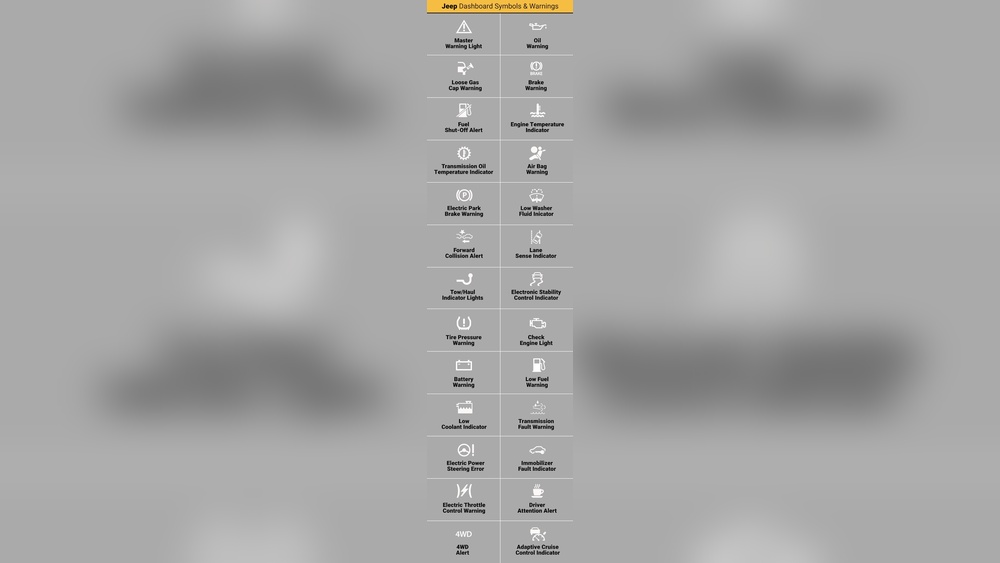
Jeep vehicles are designed for adventure, but even the toughest SUV needs care. Modern Jeeps have a dashboard full of symbols—some are easy to understand, others are confusing. This article will explain the most common Jeep warning lights, what actions to take, and mistakes many drivers make.
Whether you drive a Wrangler, Cherokee, or Grand Cherokee, this guide will help you stay prepared for anything your Jeep tries to tell you.
Understanding Jeep Warning Lights
Dashboard warning lights are a vehicle’s way of talking to you. They use symbols and colors to show the type and urgency of an issue.
- Red lights mean immediate action—something is unsafe.
- Yellow/Amber lights are warnings—check soon.
- Green/Blue lights are information—features are active.
Each light has a unique symbol. Some are universal, but Jeeps also have model-specific lights.
Why You Should Never Ignore Warning Lights
Many people think a warning light isn’t urgent if the car still runs fine. This is a mistake. Ignoring lights can:
- Cause breakdowns at the worst time
- Lead to expensive engine or transmission repairs
- Lower your Jeep’s resale value
- Risk your safety or others on the road
An example: A check engine light can mean a loose gas cap, but it can also signal a serious engine problem. The cost difference between fixing a small issue and a major repair is huge. Taking warning lights seriously is always the smart choice.
Most Common Jeep Warning Lights And Their Meanings
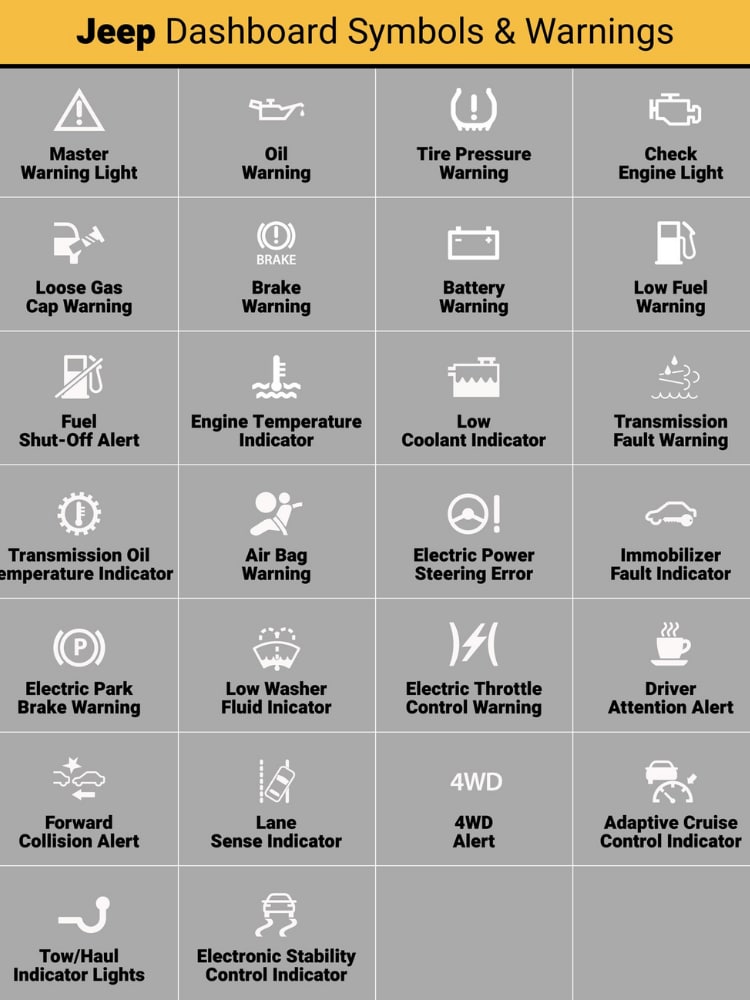
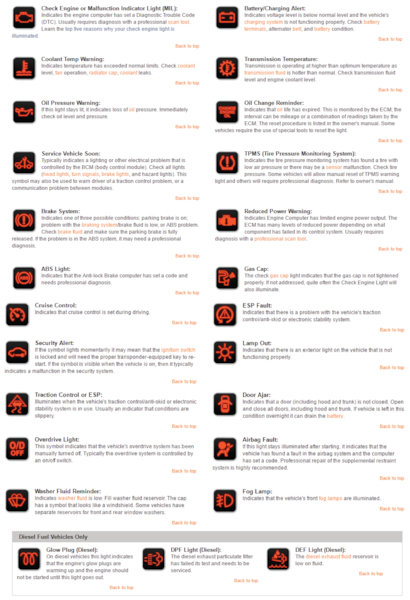
Jeep dashboards have dozens of symbols. Here are the most common ones and what you should do when you see them.
1. Check Engine Light
Symbol: Yellow Engine Outline
This light comes on for many reasons—emissions, sensors, fuel problems, or engine damage. If it flashes, pull over immediately. If it stays solid, drive carefully and get your Jeep checked soon. Many Jeep owners miss that even a loose gas cap can trigger this light.
2. Oil Pressure Warning
Symbol: Red Oil Can
Low oil pressure can ruin an engine fast. Stop your Jeep right away. Check the oil level and add oil if needed. If the light stays on, call for help. Driving with low oil can destroy the engine.
3. Battery/charging System Warning
Symbol: Red Battery
This shows the battery isn’t charging. It could be a bad alternator, loose cable, or old battery. If driving, turn off extras (AC, radio) and head to a mechanic. Many drivers confuse this with a dead battery, but it usually means a charging problem.
4. Brake System Warning
Symbol: Red Circle With Exclamation Mark Or “brake”
It means low brake fluid, worn pads, or a problem with the ABS. Stop and check your brakes. Never drive if you feel brakes are weak or spongy.
5. Tire Pressure Monitoring System (tpms)
Symbol: Yellow Horseshoe With Exclamation Mark
One or more tires are under-inflated. Check pressure soon. Low tire pressure can cause unsafe handling and poor gas mileage.
6. Abs Warning
Symbol: Yellow “abs”
The Anti-lock Braking System isn’t working right. Your regular brakes still work, but ABS won’t help you in emergencies. Drive carefully, especially in wet or icy conditions.
7. Coolant Temperature Warning
Symbol: Red Thermometer
Means your engine is overheating. Stop immediately. Wait for the engine to cool, check coolant level, and add if needed. Never remove the radiator cap while hot.
8. Airbag Warning
Symbol: Red Person With Circle
There’s a problem with the airbag system. If you crash, airbags may not work. Get this checked quickly.
9. Traction Control Warning
Symbol: Yellow Car With Swerving Lines
Shows the traction control system is off or not working. You may have less grip on slippery roads.
10. Service 4wd Warning
Symbol: Yellow “service 4wd”
There’s an issue with the four-wheel drive system. You may still drive, but avoid tough terrain until it’s fixed.
11. Seat Belt Reminder
Symbol: Red Person With Seatbelt
Simple but important. Buckle up for safety.
12. Low Fuel Warning
Symbol: Yellow Gas Pump
You’re running low on fuel. Fill up soon to avoid getting stranded.
13. Door Ajar Warning
Symbol: Red Car With Open Doors
One or more doors are not fully closed. Stop and check all doors.
14. Engine Temperature Warning
Symbol: Red Engine With Thermometer
Similar to coolant warning but can mean other temperature issues.
15. Malfunction Indicator Light (mil)
Symbol: Yellow Engine
Often confused with the check engine light. It covers many issues—emissions, sensors, etc.
16. Transmission Temperature Warning
Symbol: Red Gear With Thermometer
Transmission is overheating. Stop and let it cool. Driving with this light on can damage your transmission.
17. Automatic Headlight Indicator
Symbol: Green Headlight
Shows automatic headlights are on.
Jeep Warning Lights: Comparison By Model
Different Jeep models have unique warning lights. Here’s a quick comparison:
| Warning Light | Wrangler | Cherokee | Grand Cherokee |
|---|---|---|---|
| Check Engine | Yes | Yes | Yes |
| Oil Pressure | Yes | Yes | Yes |
| Service 4WD | Yes | No | Yes |
| Airbag | Yes | Yes | Yes |
| Transmission Temp | No | Yes | Yes |
This shows that some warning lights, like Service 4WD, are more common in certain models.
How To Respond When A Jeep Warning Light Appears
Seeing a warning light is stressful. Here’s how to react wisely:
- Stay calm. Panic can make things worse.
- Check the owner’s manual. Every Jeep has a manual with symbol explanations.
- Assess the situation. Is the car driving normally? Are there strange sounds or smells?
- Act based on color:
- Red: Stop as soon as safe.
- Yellow: Schedule a checkup soon.
- Green/Blue: Just information.
- Don’t ignore flashing lights. These usually mean urgent problems.
- Call for help if unsure. Towing is cheaper than engine replacement.
Many drivers overlook the owner’s manual, but it often has more detailed explanations than online sources. Also, some warning lights disappear after restarting the engine—this doesn’t always mean the problem is fixed. A scan at a repair shop is best.
Common Mistakes Jeep Owners Make With Warning Lights
Even experienced drivers make mistakes with warning lights. Here are errors to avoid:
- Ignoring a flashing check engine light. This often signals a major problem.
- Assuming the issue is minor because the car still drives.
- Continuing to drive with a red warning light.
- Relying only on online forums instead of a mechanic’s diagnosis.
- Mistaking indicator lights for warning lights. Example: Headlight indicator is not a warning.
A non-obvious insight: Many Jeep drivers think the TPMS light is only about tire pressure, but it can also mean a sensor failure. Another: The ABS light doesn’t mean you have no brakes, but it does mean you could skid or lose control in an emergency.
Jeep Warning Light Differences: Led Vs. Analog Dashboards
New Jeeps have digital dashboards, while older models use analog. The way lights appear can change:
| Feature | LED Dashboard | Analog Dashboard |
|---|---|---|
| Clarity | High, symbols are bright | Lower, sometimes hard to see |
| Number of Lights | More (often over 30) | Fewer (about 20) |
| Customization | Can show text explanations | Only symbols, no text |
| Maintenance Tips | Often includes reminders | No reminders |
If you drive an older Jeep, keep the manual handy—symbols are harder to identify.
Preventing Jeep Warning Lights: Maintenance Tips
You can avoid many warning lights by caring for your Jeep:
- Check fluids (oil, coolant, brake) monthly.
- Inspect tire pressure every two weeks.
- Clean battery terminals to prevent charging issues.
- Have brakes checked at every service.
- Replace sensors as recommended.
- Schedule regular engine diagnostics (every 12 months).
A tip most beginners miss: Many lights come on due to loose connections, not broken parts. Checking battery cables, gas caps, and sensors can prevent false alarms.
https://www.youtube.com/watch?v=Ym7MFXb9U_gJeep Warning Light Myths And Facts
Many myths exist about Jeep warning lights. Here are facts:
- Myth: A warning light means you must stop immediately.
Fact: Only red lights require stopping. Yellow means check soon.
- Myth: You can reset lights by disconnecting the battery.
Fact: This can hide problems and may cause electrical issues.
- Myth: All warning lights mean expensive repairs.
Fact: Some lights are minor issues, like a loose gas cap.
Technology Behind Jeep Warning Lights
Modern Jeeps use OBD-II systems to monitor and report issues. These systems check sensors, emissions, and other parts. When a problem is found, a signal is sent to the dashboard. Mechanics use scan tools to read codes and find the cause.
Jeep warning lights are more advanced than in older cars. They can detect problems before you notice symptoms. This makes maintenance easier but requires owners to pay attention to lights and codes.
Jeep Warning Light Data: How Often They Appear
According to a study by AAA, check engine lights are the most common dashboard warning in SUVs. In Jeeps, about 30% of owners report seeing this light once a year. TPMS lights are next, especially in winter, when tire pressure drops.
Data also shows most drivers wait 3-7 days before checking a warning light. This delay increases repair costs by 20% on average. Acting quickly is always cheaper.

Where To Find Reliable Jeep Warning Light Information
Not all websites give accurate info. For clear explanations and official Jeep data, visit the Jeep owner portal or trusted car sites like Consumer Reports. Always compare online advice with your owner’s manual.
Frequently Asked Questions
<!– wp:rank-math/faq-block {"questions":[{"id":"faq-question-5dbdbc6957e8","title":"What Should I Do If My Jeep Check Engine Light Comes On?","content":"First, check if it’s flashing or solid. If flashing, stop driving and get help. If solid, check the gas cap and engine for obvious issues. Schedule a diagnostic soon.
“,”visible”:true},{“id”:”faq-question-d05b0f6016e9″,”title”:”Can I Drive With The Tpms Light On?”,”content”:”You can drive, but check tire pressure as soon as possible. Low pressure can make handling unsafe and reduce gas mileage.
“,”visible”:true},{“id”:”faq-question-7616f5d50b51″,”title”:”Is It Safe To Ignore The Abs Warning Light?”,”content”:”No. While regular brakes work, you lose anti-skid protection. Drive carefully and get the ABS checked, especially before bad weather.
“,”visible”:true},{“id”:”faq-question-900ad1b6e1a4″,”title”:”Why Does My Jeep’s Battery Light Come On Even With A New Battery?”,”content”:”The battery light often means a charging system problem, not the battery itself. It could be the alternator or wiring. Have a mechanic check the system.
“,”visible”:true},{“id”:”faq-question-0928ea98ea0a”,”title”:”How Can I Reset A Jeep Warning Light?”,”content”:”Some lights reset after fixing the issue (like tightening the gas cap). Others need a scan tool. Never reset lights without solving the cause.
Even the best Jeep needs attention. Understanding warning lights protects your vehicle and keeps you safe. Don’t ignore dashboard symbols—use them as your guide to smart maintenance. With this knowledge, you’ll be ready for any adventure your Jeep throws at you.
“,”visible”:true}]} –>What Should I Do If My Jeep Check Engine Light Comes On?
First, check if it’s flashing or solid. If flashing, stop driving and get help. If solid, check the gas cap and engine for obvious issues. Schedule a diagnostic soon.
Can I Drive With The Tpms Light On?
You can drive, but check tire pressure as soon as possible. Low pressure can make handling unsafe and reduce gas mileage.
Is It Safe To Ignore The Abs Warning Light?
No. While regular brakes work, you lose anti-skid protection. Drive carefully and get the ABS checked, especially before bad weather.
Why Does My Jeep’s Battery Light Come On Even With A New Battery?
The battery light often means a charging system problem, not the battery itself. It could be the alternator or wiring. Have a mechanic check the system.
How Can I Reset A Jeep Warning Light?
Some lights reset after fixing the issue (like tightening the gas cap). Others need a scan tool. Never reset lights without solving the cause.
Even the best Jeep needs attention. Understanding warning lights protects your vehicle and keeps you safe. Don’t ignore dashboard symbols—use them as your guide to smart maintenance. With this knowledge, you’ll be ready for any adventure your Jeep throws at you.