The Jeep Wrangler JK has built a strong reputation among off-road enthusiasts and everyday drivers alike. Its tough design, open-air experience, and upgradeable parts make it a favorite for adventures.
But when you look underneath, you’ll see much of its capability comes from its front suspension system. If you want to maintain, upgrade, or simply understand your Wrangler JK, learning about the front suspension diagram is a great start.
This guide explains the key parts, how they work together, and why every detail matters.
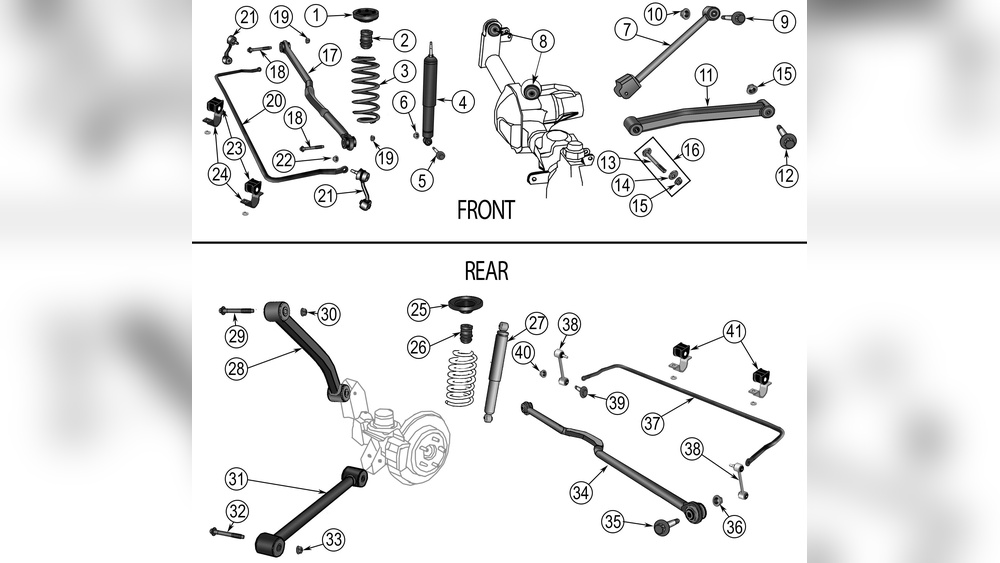
Why The Front Suspension Matters On The Wrangler Jk
The front suspension is more than just a group of metal pieces. It keeps your ride smooth, helps your Jeep handle rough trails, and protects other parts from damage. The Wrangler JK uses a solid axle design, known for strength and simplicity. But even simple systems have details that matter.
A well-maintained front suspension improves steering, tire wear, and safety. If any part is worn out or damaged, you could face problems like strange noises, poor handling, or even dangerous driving conditions. Knowing what each part does—and how it fits into the diagram—will help you spot issues early and keep your Jeep running strong.
Key Components In The Jeep Wrangler Jk Front Suspension Diagram
Understanding the front suspension begins with knowing each part. Here’s a breakdown of the main components you’ll see in a typical Wrangler JK front suspension diagram.
1. Solid Front Axle
The heart of the system is the solid front axle. This heavy-duty beam connects both front wheels and supports the vehicle’s weight. Unlike independent suspension, the solid axle keeps wheels at the same angle, which is ideal for off-roading.
2. Coil Springs
Coil springs sit above the axle and support the Jeep’s weight. They compress over bumps, helping to absorb shocks and keep the tires in contact with the ground.
3. Shock Absorbers
Next to the springs, you’ll find shock absorbers. These dampen the bouncing motion after hitting a bump. Without good shocks, the Jeep would bounce uncontrollably.
4. Control Arms
The upper and lower control arms connect the axle to the Jeep’s frame. They manage the up-and-down movement of the axle while keeping it in the right position. On the JK, these are usually strong steel arms, and there are four for each side (two upper, two lower).
5. Track Bar
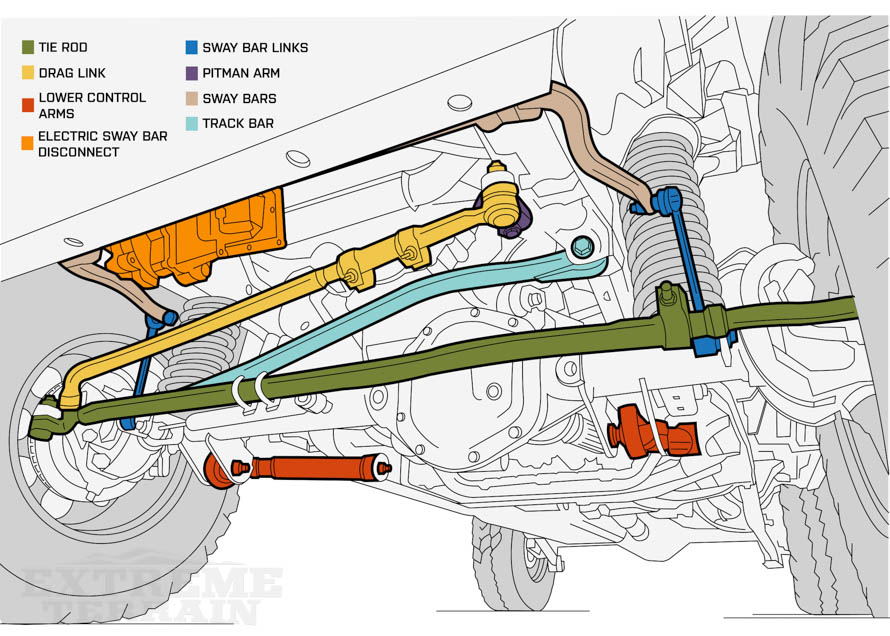
The track bar (or panhard bar) keeps the axle centered under the Jeep. It runs from one side of the frame to the opposite side of the axle. If this bar is loose or bent, the Jeep may wander on the road.
6. Sway Bar (stabilizer Bar)
The sway bar helps control body roll during turns. It links the left and right sides of the suspension. Off-roaders often disconnect this bar for better wheel movement, but it’s important for road safety.
7. Steering Linkages
The tie rod and drag link connect the steering box to the wheels, allowing you to turn the Jeep. Worn steering parts can cause loose steering or uneven tire wear.
8. Ball Joints
Ball joints act as pivots for the steering knuckles. They allow for smooth steering and suspension movement. When ball joints wear out, you may hear clunks or feel vibrations.
9. Bump Stops
Bump stops are small rubber or foam pieces that prevent the suspension from compressing too far. They protect the axle and frame from damage when landing hard or carrying heavy loads.
10. Brackets And Bushings
Brackets hold parts in place, while bushings allow for smooth movement and absorb vibrations. Worn bushings can lead to noisy, rough rides.
A Visual Look: Typical Wrangler Jk Front Suspension Diagram
Seeing how these parts fit together can clear up a lot of confusion. Below is a simple data table showing the key components and their functions:
| Component | Main Function | Common Issues |
|---|---|---|
| Solid Front Axle | Holds wheels, supports weight | Bending, seal leaks |
| Coil Springs | Absorb shocks, support vehicle | Sagging, breaking |
| Shock Absorbers | Reduce bounce | Leaking, loss of damping |
| Control Arms | Guide axle movement | Bushing wear, bending |
| Track Bar | Centers axle | Loose bolts, bending |
| Sway Bar | Reduces body roll | Link wear, broken bushings |
| Steering Linkages | Connect steering box to wheels | Joint wear, loose ends |
| Ball Joints | Allow steering pivot | Wear, noise, looseness |
| Bump Stops | Limit suspension travel | Missing, damaged |
How The Parts Work Together
Each part of the front suspension has its own job, but they all work as a team. When you hit a bump, the coil springs compress and the shocks dampen the motion. The control arms guide the axle, while the track bar keeps it centered.
The sway bar keeps the Jeep from leaning too far, and the steering linkages let you point the wheels where you want to go.
If one part fails, it can affect the others. For example, a worn bushing in the control arm can cause the axle to shift, making the steering feel loose. A damaged track bar can cause the Jeep to wander, which is dangerous at high speeds.
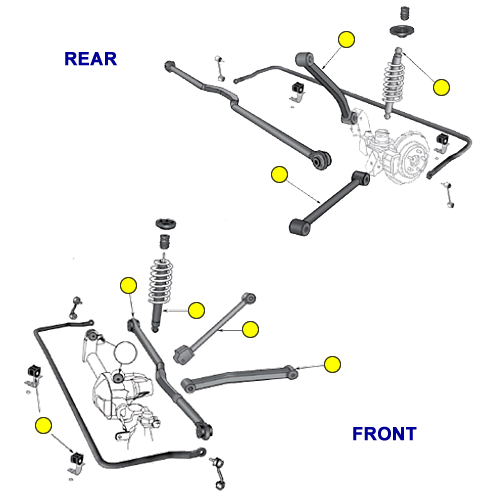
Comparing Wrangler Jk Front Suspension To Other Systems
Not all suspensions are the same. The Wrangler JK’s solid axle is different from the independent front suspensions found on many modern SUVs. Here’s a quick comparison:
| Feature | Wrangler JK (Solid Axle) | Modern SUV (Independent Front Suspension) |
|---|---|---|
| Strength | Very strong, good for off-roading | Lighter, but less strong |
| Ride Comfort | Good, but can feel stiffer | Smoother on pavement |
| Articulation | Excellent for rough terrain | Limited articulation |
| Maintenance | Simple, fewer moving parts | More complex, more parts |
| Customization | Easy to lift and upgrade | Upgrades are limited |
The solid axle may not offer the smoothest ride on highways, but it shines off-road. For many Jeep fans, this is a worthwhile tradeoff.
Common Suspension Problems And Warning Signs
Even strong suspension systems need attention. Here are some signs that your Wrangler JK’s front suspension may need work:
- Clunking or rattling when driving over bumps
- Steering feels loose or wanders on the road
- Uneven tire wear
- Nose-diving when braking
- Excessive body roll in turns
Ignoring these signs can lead to bigger problems, such as damaged tires, poor control, or even accidents.
How To Inspect Your Wrangler Jk Front Suspension
Catching problems early can save money and keep your Jeep safe. Here are some steps to follow:
- Visual Check: Look for bent, broken, or rusty parts. Pay close attention to bushings, ball joints, and bolts.
- Push Test: Push down on the front bumper. If the Jeep bounces more than once or twice, the shocks may be worn out.
- Check for Leaks: Inspect shocks for oil leaks.
- Steering Feel: If the steering feels loose or you hear clunks, check tie rods, drag links, and ball joints.
- Look for Uneven Tire Wear: This can signal alignment or suspension problems.
It’s a good idea to do a quick inspection every few months, especially if you drive off-road or on rough roads.
Upgrading The Wrangler Jk Front Suspension
Many Jeep owners choose to upgrade their suspension for better performance or a higher ride height. Here’s what to consider:
- Lift Kits: These raise the Jeep’s height, allowing for larger tires and more ground clearance. But a lift changes the angle of suspension parts, which can cause extra wear if not installed properly.
- Heavy-Duty Shocks and Springs: Upgrading to stronger shocks and springs improves handling and load capacity.
- Adjustable Control Arms and Track Bars: These help correct alignment after lifting the Jeep.
- Quick-Disconnect Sway Bar Links: These let you disconnect the sway bar for better off-road movement, then reconnect for road safety.
Here’s a table comparing common upgrade options and their benefits:
| Upgrade | Benefit | Consideration |
|---|---|---|
| 2″–4″ Lift Kit | More ground clearance, fit larger tires | May need driveshaft or brake line adjustments |
| Heavy-Duty Shocks | Better control, smoother ride off-road | Stiffer ride on pavement |
| Adjustable Track Bar | Centers axle after lift | Needs proper adjustment |
| Quick Disconnect Sway Bar Links | Improved off-road articulation | Must reconnect for safe road driving |
Most beginners miss the importance of adjusting the track bar and control arms after lifting their Jeep. Not doing this can cause “death wobble”—a violent shake at highway speeds. Also, it’s easy to overlook small bushings, but they make a big difference in ride quality and noise.
Tips For Maintaining Your Wrangler Jk Front Suspension
- Keep Bolts Tight: Off-roading can loosen bolts. Check them regularly.
- Lubricate Moving Parts: Some components have grease fittings—use them.
- Replace Worn Bushings: Don’t ignore squeaks or clunks.
- Balance and Align Tires: Prevents uneven wear and handling issues.
- Inspect After Every Off-Road Trip: Check for damage or loose parts.
A little attention goes a long way. Many Jeep owners discover that fixing small suspension issues early saves money and avoids major repairs.
When To Seek Professional Help
Simple inspections and minor repairs can be done at home. But if you find:
- Cracked or bent parts
- Major leaks
- Unusual noises that don’t go away
- Steering that feels unsafe
It’s best to see a qualified mechanic. Suspension problems can quickly get worse if ignored.
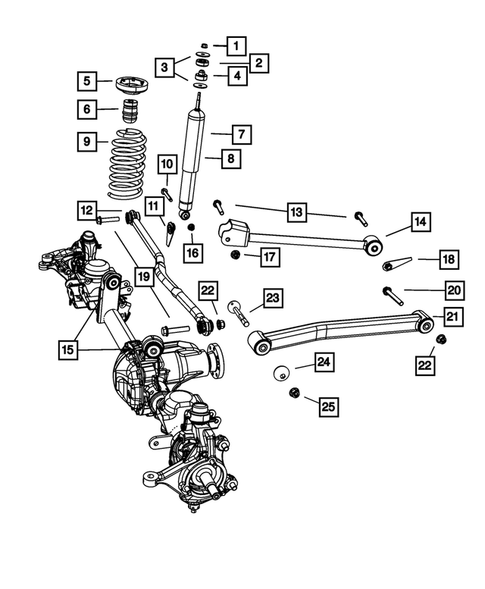
Frequently Asked Questions
<!– wp:rank-math/faq-block {"questions":[{"id":"faq-question-7840cf04baa9","title":"What Is The Main Advantage Of The Solid Front Axle On The Wrangler Jk?","content":"The solid front axle gives the Wrangler JK excellent strength and wheel articulation, making it ideal for off-roading. It allows both wheels to move together, so the Jeep can handle rough trails and obstacles better than most SUVs with independent suspension.
“,”visible”:true},{“id”:”faq-question-881c17d5772a”,”title”:”How Often Should I Check My Wrangler Jk Front Suspension?”,”content”:”It’s smart to check the front suspension every 3,000 to 5,000 miles, or after any tough off-road trip. Look for loose bolts, worn bushings, and leaks. Regular checks help catch small problems before they become serious.
“,”visible”:true},{“id”:”faq-question-5b2710eeda0b”,”title”:”Can I Upgrade My Wrangler Jk Suspension Myself?”,”content”:”Many owners install lift kits, shocks, or sway bar links at home with basic tools. However, some upgrades—like adjusting track bars or control arms—require special knowledge. If you’re unsure, it’s safer to have a shop do the work.
“,”visible”:true},{“id”:”faq-question-91012ef162f6″,”title”:”What Is “death Wobble” In A Jeep Wrangler Jk?”,”content”:”Death wobble is a violent shaking of the front end, usually at highway speeds. It’s often caused by loose or worn suspension parts, especially the track bar, tie rod ends, or control arm bushings. Fixing it usually means tightening or replacing these components.
“,”visible”:true},{“id”:”faq-question-ab215fdbd79c”,”title”:”Where Can I Find Official Diagrams Or More Technical Information?”,”content”:”The best place is the Jeep factory service manual or trusted Jeep forums. For detailed diagrams, you can also check Wikipedia’s Jeep Wrangler page for links to technical resources and diagrams.
The front suspension is the backbone of the Jeep Wrangler JK’s legendary capability. Understanding its diagram, knowing each part, and spotting problems early will help you get the most from your Jeep—on or off the road. With a bit of attention and care, your Wrangler JK will handle whatever adventure comes next.
“,”visible”:true}]} –>What Is The Main Advantage Of The Solid Front Axle On The Wrangler Jk?
The solid front axle gives the Wrangler JK excellent strength and wheel articulation, making it ideal for off-roading. It allows both wheels to move together, so the Jeep can handle rough trails and obstacles better than most SUVs with independent suspension.
How Often Should I Check My Wrangler Jk Front Suspension?
It’s smart to check the front suspension every 3,000 to 5,000 miles, or after any tough off-road trip. Look for loose bolts, worn bushings, and leaks. Regular checks help catch small problems before they become serious.
Can I Upgrade My Wrangler Jk Suspension Myself?
Many owners install lift kits, shocks, or sway bar links at home with basic tools. However, some upgrades—like adjusting track bars or control arms—require special knowledge. If you’re unsure, it’s safer to have a shop do the work.
What Is “death Wobble” In A Jeep Wrangler Jk?
Death wobble is a violent shaking of the front end, usually at highway speeds. It’s often caused by loose or worn suspension parts, especially the track bar, tie rod ends, or control arm bushings. Fixing it usually means tightening or replacing these components.
Where Can I Find Official Diagrams Or More Technical Information?
The best place is the Jeep factory service manual or trusted Jeep forums. For detailed diagrams, you can also check Wikipedia’s Jeep Wrangler page for links to technical resources and diagrams.
The front suspension is the backbone of the Jeep Wrangler JK’s legendary capability. Understanding its diagram, knowing each part, and spotting problems early will help you get the most from your Jeep—on or off the road. With a bit of attention and care, your Wrangler JK will handle whatever adventure comes next.